

Published March 23, 2026 03:54AM
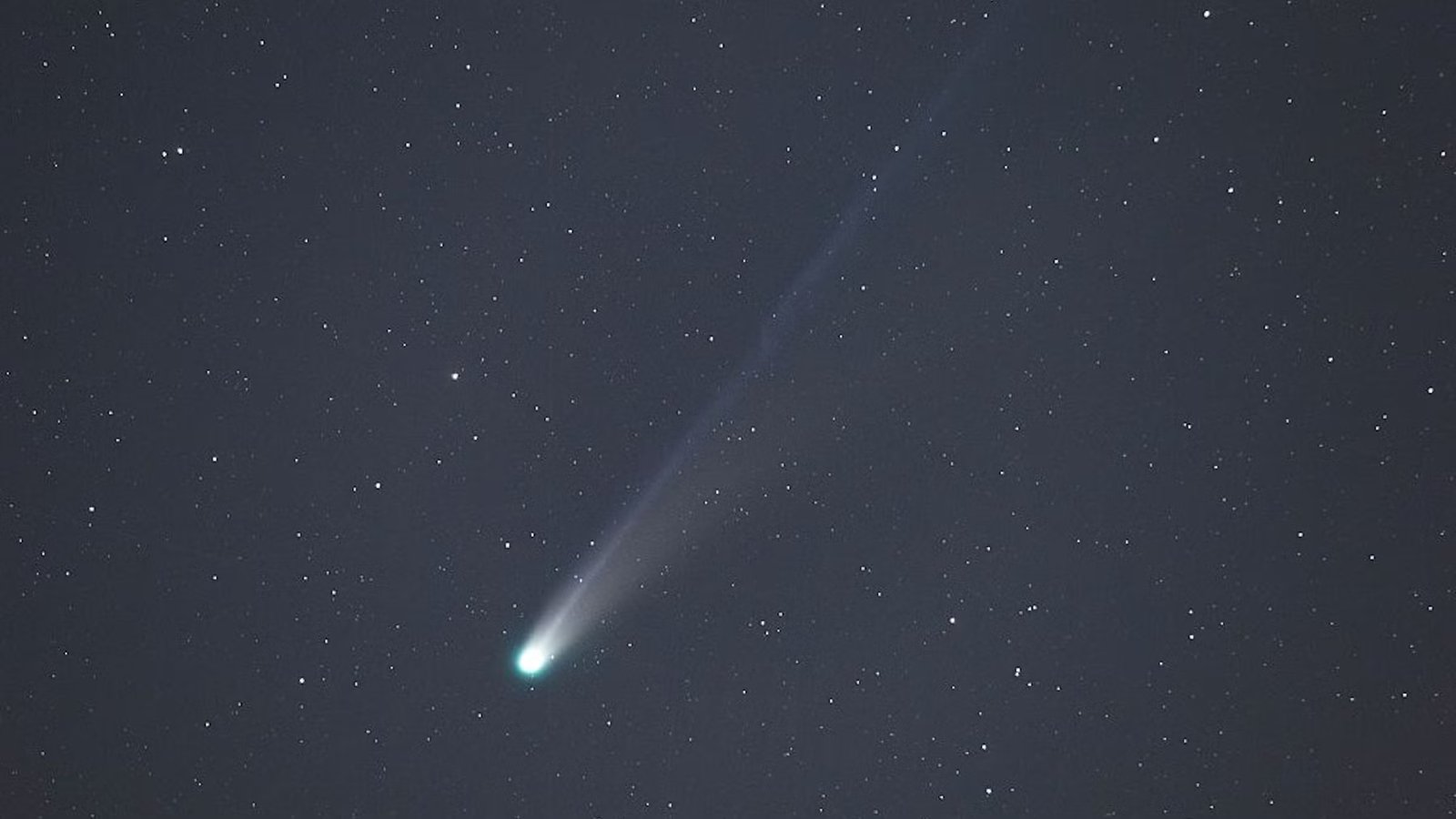
A vivid comet could soon adorn the evening sky. If it survives its early April approach toward the sun, the cosmic orb could even become visible to the naked eye, and possibly as bright as Venus.
Yet a lot has to go right for this to happen, and astronomers are crossing their fingers that it does because Comet C/2026 A1 (MAPS) is a special type of snowball.
It’s known as a sungrazer, a term used for any comet that gets especially close to the sun (within 850,000 miles). Comet MAPS, named for a group of French astronomers who helped find it in January, will get as close as 465,000 miles from the sun; that’s roughly the round-trip distance from Earth to the moon.
This proximity could spark an incredible early April comet show. Or, it could end in disappointment, with the cluster breaking apart as it nears our bright star.
Here’s what to know about seeing Comet MAPS in early April, including when we’ll know its fate and where to watch if all goes to plan.
Will Comet C/2026 A1 Become Visible to the Naked Eye?
Like the northern lights, comet visibility is a big guessing game. We can’t get close enough to study the object’s composition—mostly ice, rock, and gases—so we don’t know how they’ll fare near the sun.
Sometimes, like the show-stopping Comet Tsuchinshan-ATLAS of 2024, they turn spectacular. “The gas and dust released form a temporary atmosphere called a coma and can also produce a few tails,” says Eric Gustafson, senior educator at the Saint Louis Science Center’s James S. McDonnell Planetarium.
Astronomers are also giddy about Comet MAPS’ size, as larger snowballs are often likelier to withstand their closest approach to the sun, known as perihelion. “Some estimates suggest its diameter could be about 2 kilometers [1.2 miles],” says Gustafson, noting this is larger than most sungrazers. “The comet stands a chance of surviving perihelion. If this comes true, could it be the next great comet?”
When to Look for Comet C/2026 A1
According to Gustafson, if the comet can endure perihelion on April 4, it could reach an apparent magnitude of -4. That’s roughly as bright as Venus, which many stargazers admired with the unaided eye during last month’s planet parade.
Comet MAPS would look especially bright around April 4 and 5. It may even become visible during the day, but Gustafson says it’s too close to the sun to see safely during daylight hours.
And unfortunately, this sight greatly favors the southern hemisphere. In the northern hemisphere, including the U.S., it would appear just barely above the southwest horizon at dusk, making it tricky to see, according to stargazing app Star Walk.
How to Watch Comet C/2026 A1 in the U.S.
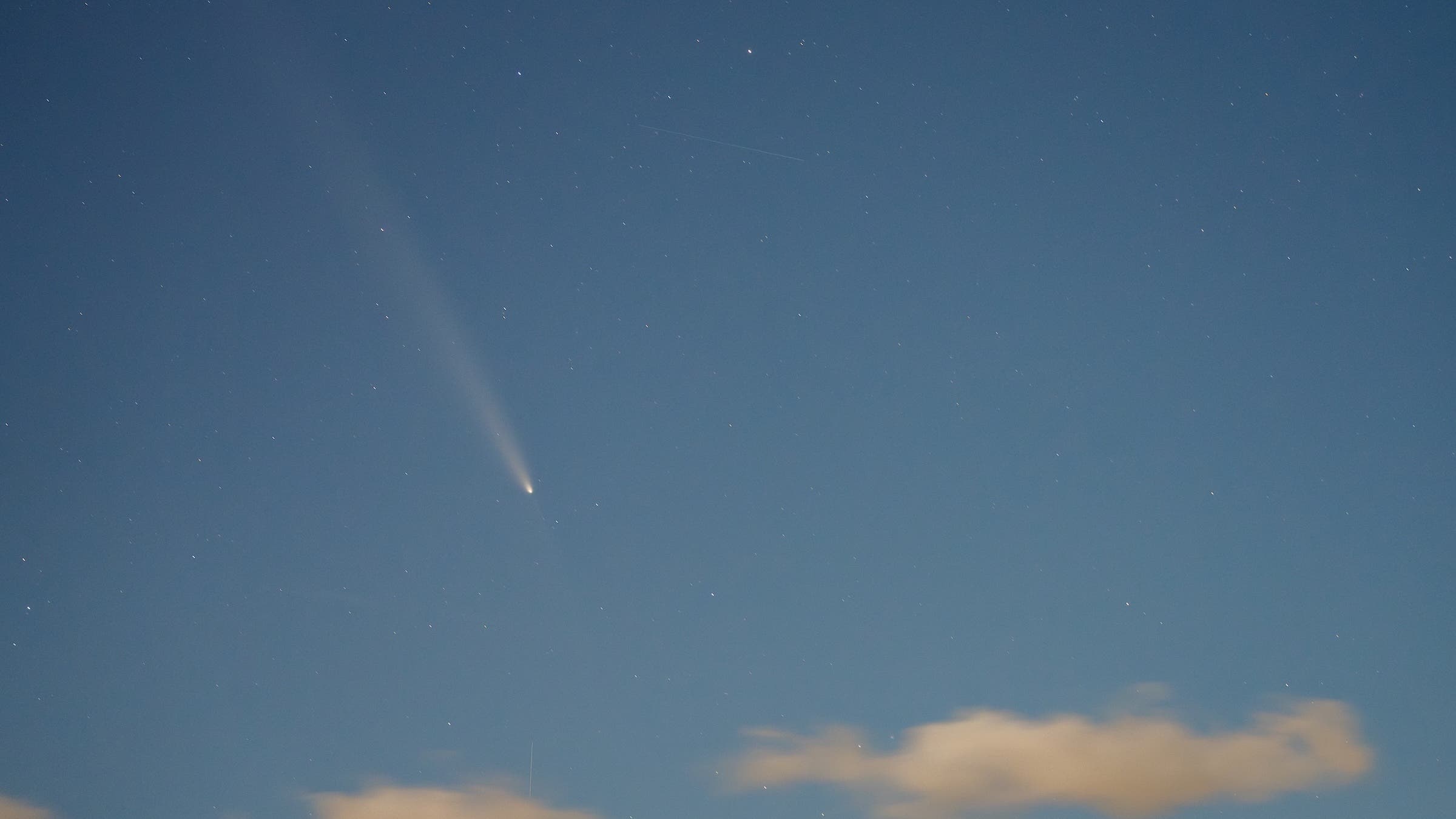
While viewing is much better in the southern hemisphere, we could still be in for a celestial treat up north. “The one hope we have for seeing this comet is, if it behaves like other great comets of the past, they often develop extremely long tails that can stretch over 40 degrees of the night sky,” says Gustafson. For scale, that’s longer than the Big Dipper.
If this happens, we would see the tail above the southwest horizon on April 4 and a few days after, says Gustafson. That means you should find a perch with clear views of the southwest horizon.
In addition to a getaway with unobstructed southwest vistas, you’ll want a lookout with dark skies. Light pollution can obscure a comet’s glow, so use a light pollution map, or consider dark-sky getaways like the Oregon Outback or Big Bend, to enhance the show.
If the comet gets as bright as estimated, you won’t necessarily need binoculars to admire it, but they always help. Just wait to point them until after the sun has fully set.
Where to See Comets in the U.S.
Time will tell whether or not Comet MAPS reaches its potential come April 4. If it doesn’t, all is not lost. With strong telescopes, you can often see smaller comets throughout the year, and many observatories welcome the public to experience this celestial awe. Here are six observatories to visit for viewing comets, or other space sights.
Kitt Peak National Observatory: Tucson, Arizona
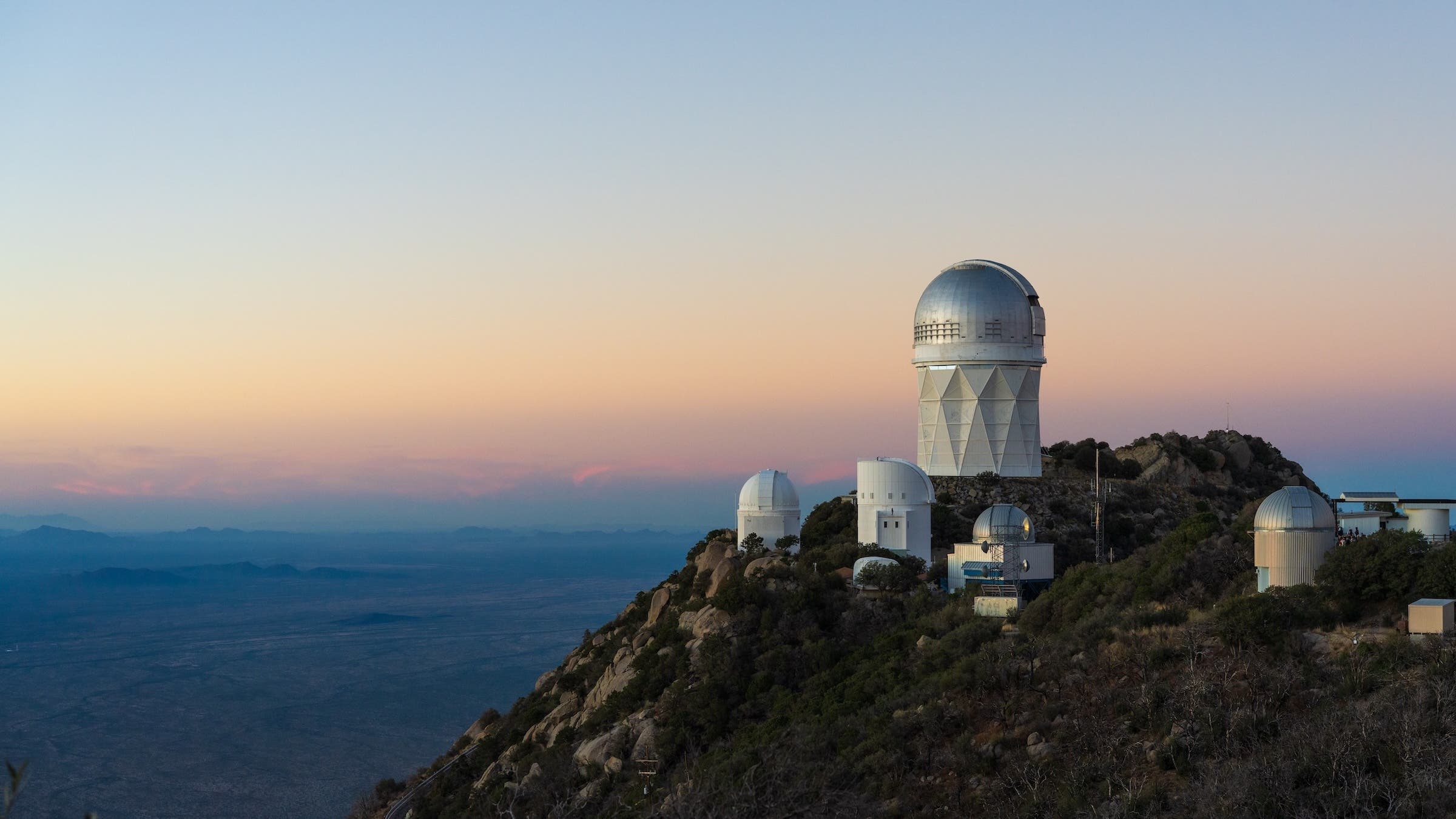
Perched atop the Quinlan mountains’ highest point, Kitt Peak National Observatory gets you closer to the heavens for stellar sky-watching. It welcomes guests to spy on nebulae, comets, and galaxies through several of its powerful telescopes. The observatory runs ticketed nightly observing sessions as well as the chance to experience Kitt Peak as a visiting astronomer, with all-night access to its public telescopes and accommodations in the stargazing hub’s dorm rooms.
Griffith Observatory: Los Angeles, California
Millions of stargazers have peered through Griffith Observatory’s telescopes since 1935. In fact, more sky-watchers viewed Halley’s Comet (1986) and Comet Hale-Bopp (1997) through the observatory’s Zeiss gear than any other telescope on Earth. Today, its free public sessions let stargazers get up close and personal with myriad celestial marvels. Observations run from 7 to 9:30 P.M. most nights.
McDonald Observatory: Fort Davis, Texas
Set in West Texas’ Chihuahuan Desert, McDonald Observatory enjoys inky skies and, with its powerful technology, clear views into deep space. Sign up for an evening star party to learn about the night sky and look through the observatory’s optical aids. Special ticketed viewing nights let users peek through the 36-inch or 82-inch telescopes, which get you close to galaxies and planets.
Saint Louis Science Center: Saint Louis, Missouri
The Saint Louis Science Center’s McDonnell Planetarium runs monthly star parties, where patrons can look through the facility’s numerous telescopes with narration from planetarium experts. The museum also hosts pop-up stargazing festivities timed to exciting astronomical events, such as bright comets or planet conjunctions.
Sunriver Nature Center & Observatory: Sunriver, Oregon
With over a dozen telescopes available to the public, the Oregon Observatory makes it easy to peruse our solar system and beyond. The NASA-backed facility hosts ticketed stargazing sessions year-round. Expect views of globular clusters, nebulae, binary stars, and, when they’re visible, comets. With solar telescopes, you can even safely look at the sun. The observatory is located right beside Sunriver Resort, which hosts after-dark experiences like new moon yoga and sound baths.
Adirondack Sky Center and Observatory: Tupper Lake, New York
You’ll find some of the Northeast’s darkest skies in Upstate New York’s Adirondacks. The Adirondack Sky Center and Observatory in Tupper Lake takes advantage of these pristine nightscapes with free public stargazing and telescope access on most clear nights. Check the center’s Facebook page for updates on gatherings.
