

Published March 24, 2026 03:49AM
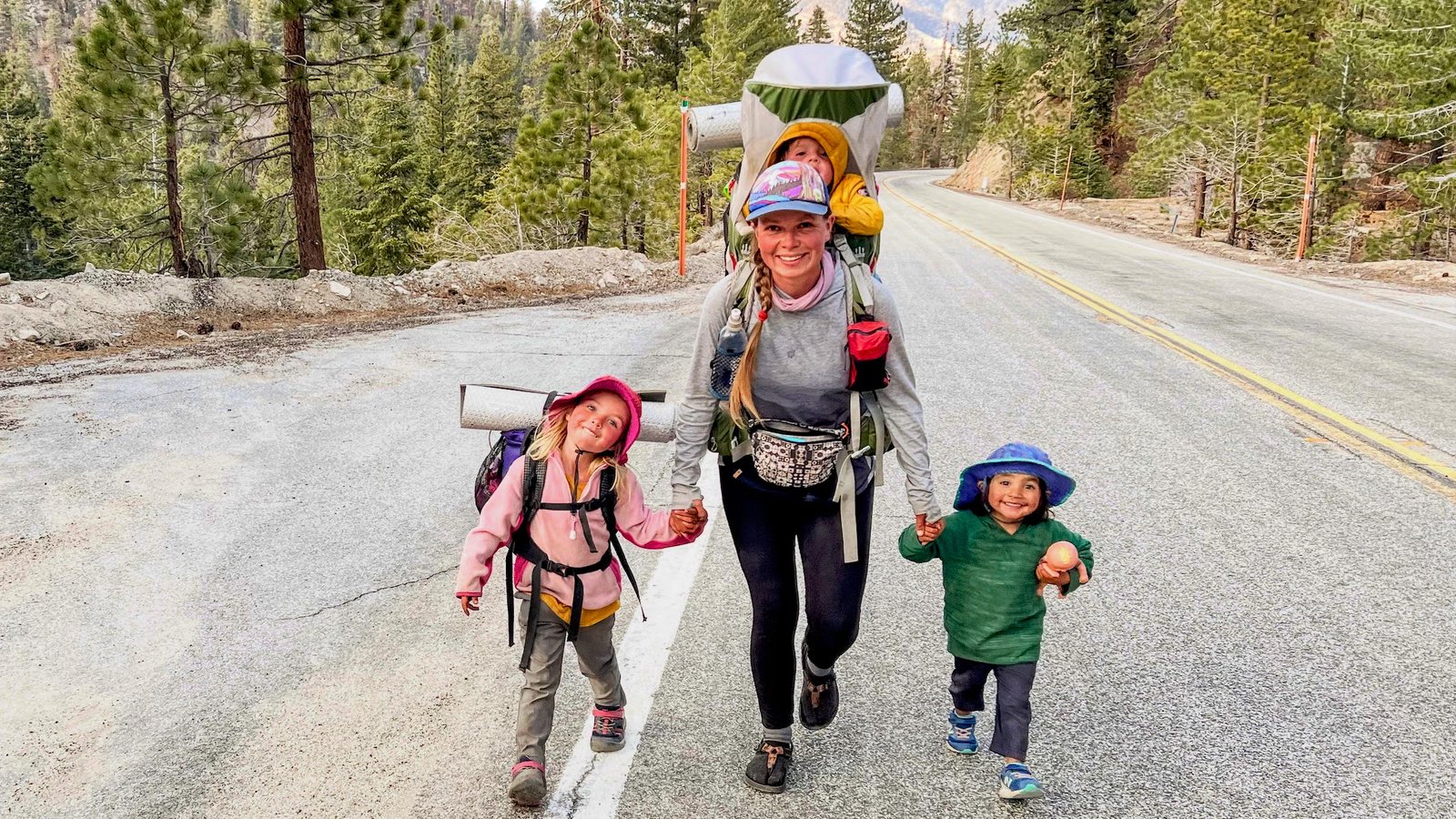
I heard about the Netteburgs before I met them. Word spreads fast on the Pacific Crest Trail (PCT), and it’s hard to keep a low profile as a family of seven with matching yellow sun hoodies hiking 20-plus miles a day.
Fellow PCT thru-hikers spoke about them with awe: thru-hiking the 2,650-mile trail in 2023, a record snow year, was hard enough; doing it with kids seemed unimaginable. Especially when one of those kids was two years old.
I was coming up on three months into my own thru-hike of the Pacific Crest Trail, headed north past Lake Tahoe, when I learned about the family. As I trekked along, questions kept springing into my mind. At resupply stops, I wondered: How do they carry enough gear and food for five kids?
When my mind wandered during the day, I thought: What do they do about school?
Ending my days with tired legs, I questioned: How much more tired would I be if I were two feet shorter?
By the time I got in touch with parents Olen and Danae, texting back and forth as we came in and out of cell service on trail, the logistics of the family’s feat had occupied my thoughts for days.
(Photo: Courtesy Danae Netteburg)
When I first talked to the parents on the phone, and later met Danae and three of the five Netteburg kids on the trail in southern Oregon, they were so… normal. They’ll be the first to admit their lifestyle is unusual, sure. But no one in the family thinks of themselves as superhuman.
Rather, Olen cracked dad jokes that elicited eye rolls from the kids. Danae kept a watchful eye over the young ones. The kids giggled as they shared a story of their mom getting caught skinny dipping by a group of Boy Scouts in Wyoming during their hike of the Continental Divide Trail (CDT).
Like most other trail parents I’ve talked to, Olen and Danae emphasized the gratitude they felt to spend so much time out in nature.
“In life, you either have time or you have money. And if you happen to have the good fortune to have a little bit of time and a little bit of money, just take advantage of it,” Olen said in our initial conversation in the summer of 2023, an adage he repeated two years later from the family’s home in Michigan.
The Netteburgs first raised their kids in the central African nation of Chad, where they worked as doctors at a hospital in the small city of Bere. The family’s thru-hike of the Appalachian Trail (AT) in 2020 wasn’t too big of a change for the kids, who were already used to homeschooling and self-reliance.
By the time they began the 3,100-mile CDT in 2022, they had a new family member in tow: Piper, who was eight months old at the time. She took her first steps at the trail’s northern terminus on the U.S.-Canada border. After another condensed year of homeschool and another summer in the wilderness of the American West, the family completed their Triple Crown (thru-hiking the AT, CDT, and PCT) at the southern terminus of the PCT in November 2023. They celebrated with a trip to Disneyland.
Since completing the PCT, the Netteburgs have settled down in southwest Michigan. Lyol, 16, and Zane, 14, are in high school, while Addison and Juniper, 11 and 10 respectively, attend the local forest school. Olen works long shifts at the emergency room, and Danae cares for Piper, now four, at home. But memories of the thru-hikes are never too far away.
“I remember singing ‘Veggie Tales’ at night,” Addison says.
“I remember that I had pigtails in my hair,” Piper chimes in.
“On the Appalachian Trail, there was this one place where there was this waterfall, and we went swimming there,” Lyol recalls.
The Netteburgs may be unique, but they’re certainly not alone. While most travelers on America’s storied long trails are twenty-something soul searchers or retirees fulfilling a lifelong dream, a small group has traversed the continent on foot before they’re old enough to drive.
Asher Chisholm was on the way home from hockey practice when he had the idea to thru-hike the Appalachian Trail. The ten-year-old had been talking with his mom, Jennie, in the car about it.
The two, in addition to Asher’s three brothers, had chatted with AT thru-hikers while they were bagging peaks in the White Mountains near their home in Salem, New Hampshire. If they could handle the Whites, the hikers told them, they could handle the AT. And they could certainly handle the Whites. They’d been summiting their home state’s 4,000-foot peaks for most of their young lives.
“As soon as we could walk, we were starting to hike,” Brody, Asher’s 19-year-old brother, says.
The thru-hikers gave them a vote of confidence—as long as they could deal with being wet, cold, and unshowered for long stretches. That didn’t sound like too big of a problem for the boys.
“My mom asked me in the car what I thought about it. I was like, ‘Yeah, we should do it,’” Asher, now 16, says. “Then we went home, I asked my brothers, and we were all on board.”
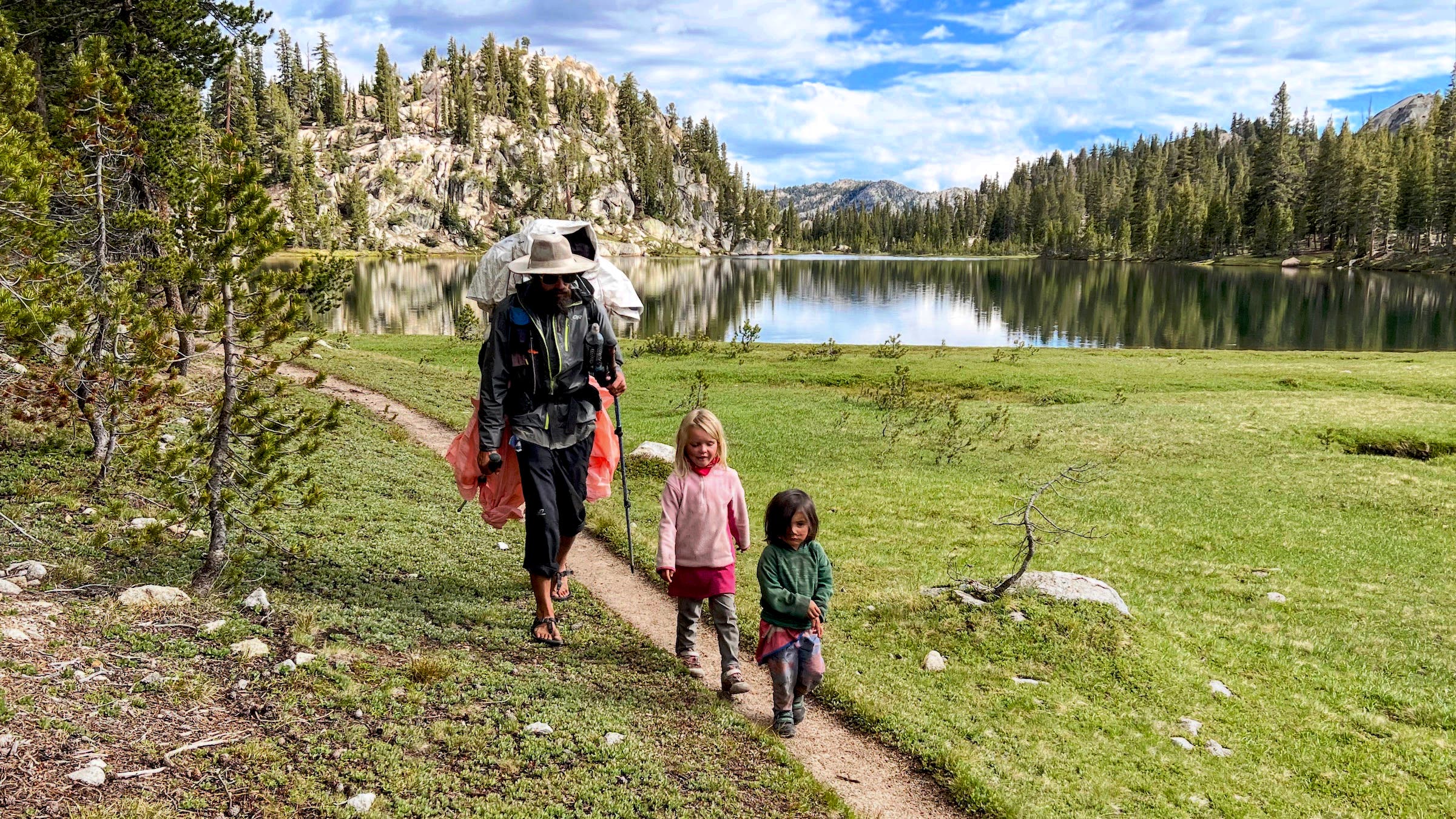
Unlike other kids with AT dreams, Asher didn’t have to wait until he was an adult to start his thru-hike. The Chisholm family—Asher, Elliot (17), Brody, Ben (20), and Jennie—began the 2,200-mile trail in the spring of 2021, when Asher was 11. Their gear was heavy and easily waterlogged. They weren’t the fastest hikers on the trail. They got hangry. And, as promised, they were wet and cold a lot of the time.
“I think that the first big thing that we had to learn was just being OK with it, whether it’s raining or cold or we are hungry or whatever’s going on,” Ben says.
“I learned to take the small wins. On a day when it would be raining and we’d get a small break in the rain, I’d just be like, ‘Alright, this is awesome,’” Brody adds.
By the halfway point of the AT, the family was already plotting their Triple Crown. They would go on to complete the PCT in 2022 and the CDT in 2023, with a thru-hike of the 800-mile Arizona Trail thrown in there, too.
On the trail, there were no distractions from the inevitable conflicts that arose. Being a teenager is an emotional rollercoaster in any circumstance. But on the whole, it’s hard to stay mad when you’re spending time in nature together.
“What we’re going through out there is really hard, so everything just seems like a bigger deal in the moment,” Brody says. “When you’re hungry, you can snap at someone. Then you just give them some time, space out, and if you talk about it later you’re going to be best friends, you’re just going to laugh about it.”
Marketa Daley’s three children weren’t quite old enough to bicker with each other when the family began hiking the Pacific Crest Trail in March 2022. But they were at the prime age for complaining.
“The kids would have this awesome surge of energy and then something would happen. The wind was blowing too hard. It was too cold. It was too hot,” Daley says. “I felt like I was on a roller coaster of emotions as well. Feeling really grateful about being out there and then feeling like I really don’t know why we’re here.”
Fielding complaints from young children, as any parent knows, isn’t specific to the trail. This would all be happening at home, anyway, she figured, with three kids under five years old. At least she was in more scenic surroundings.
“I had a beautiful view to look at while we were dealing with these terrible things that toddlers experience,” Daley says.
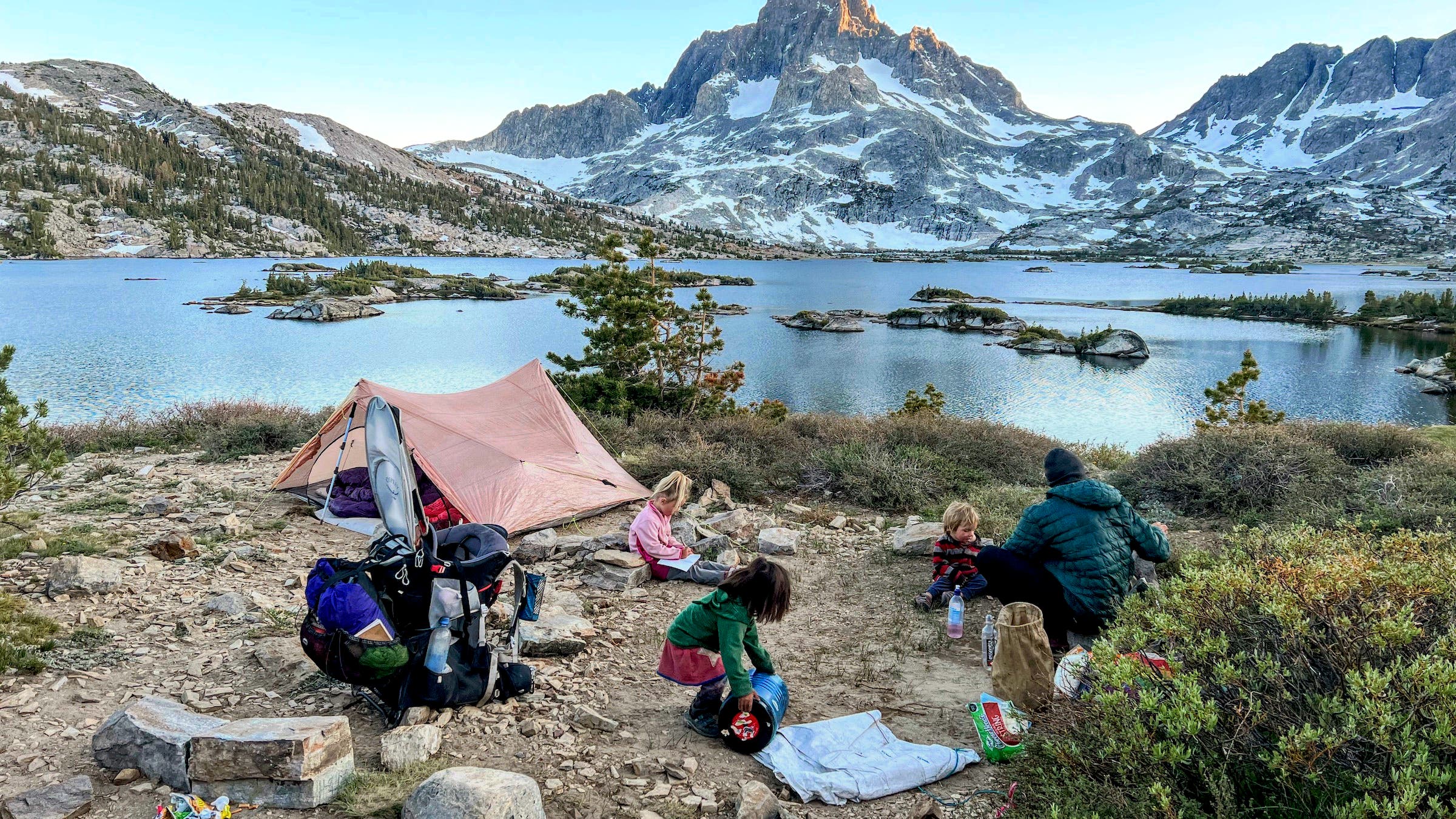
Similar to other families, and thru-hikers writ large, the Daleys started the PCT not knowing if they could do it. And sure enough, the expected ten-mile days turned into eight-mile days as the kids adjusted to life on trail. Built into each day of hiking was plenty of time to play, to look at interesting sticks and rocks, to set up camp early so the kids could wind down and sleep for “however long they needed to.”
“Nothing is yours out in nature. You don’t go and grab a stick and say, ‘it’s mine,’” Daley says. “It belongs to the forest. There was always that element of, ‘We all play together, and we share everything.’”
The family had done day hikes and short trips together in their home state of California before starting this monumental journey. But this was a new type of challenge. Home wasn’t mere hours or days away. In fact, they wouldn’t live indoors again for months.
The first week was rough, as the family adjusted to long stretches of desert trail in ever-changing spring conditions. A few days in, the kids left behind some dolls they had brought for emotional support. Luckily, a group of hikers behind the Daleys picked them up and returned the toys to the kids when they caught up. All around them, supportive fellow thru-hikers kept them going on the hard days.
Then came the Internet.
“Agua Dulce is where I opened up Instagram, and there was a message from someone saying, ‘I’m gonna call the police and send CPS on you,’” Daley says. “That was just such a shitty moment. I started crying.”
Despite the overwhelming support, both on trail and online, Daley’s growing platform on Instagram attracted negativity from those claiming she was putting her kids in danger. But she felt that her kids were safe—thriving, in fact.
Dennis Coonan, program manager of the Sports Medicine Center at Children’s Hospital Colorado, says that hiking with kids comes with some unique risks. Children tend to be quicker to dehydrate, fatigue, and get hungry. Their growing bodies have open growth plates, increasing the potential for overuse injuries. And they might not be able to communicate their issues as well as an adult. But outside of the potential for injury, he says, there’s not much downside to a thru-hike for children.
“A kid is learning their body: what feels right, what doesn’t feel right, that sort of thing is extremely important for them,” Coonan says. “In general, it’s outdoors and it’s exercise. There’s not a better thing for a kid to be doing, because it does benefit their growth, both mentally and physically.”
“Those people are probably people who don’t understand what you’re doing,” Daley says of the social media haters. “And that’s OK. Not everyone needs to understand. I know it’s not for everyone.”
As the messages, good and bad, kept flooding in, Daley, her husband David, and their three kids were hitting their stride. With the first 700 miles of the trail done, they entered the Sierra, the most grueling, remote, and stunning section. They knew they weren’t going to finish the entire border-to-border trek that year. But that was OK.
“They’re really strong, they’re really capable,” Daley says of her kids. “The Sierra were a really fundamental moment in the hike when it was like, ‘We’re doing it. This is awesome. We’re spending time together as a family, and that’s what this hike is all about.’”
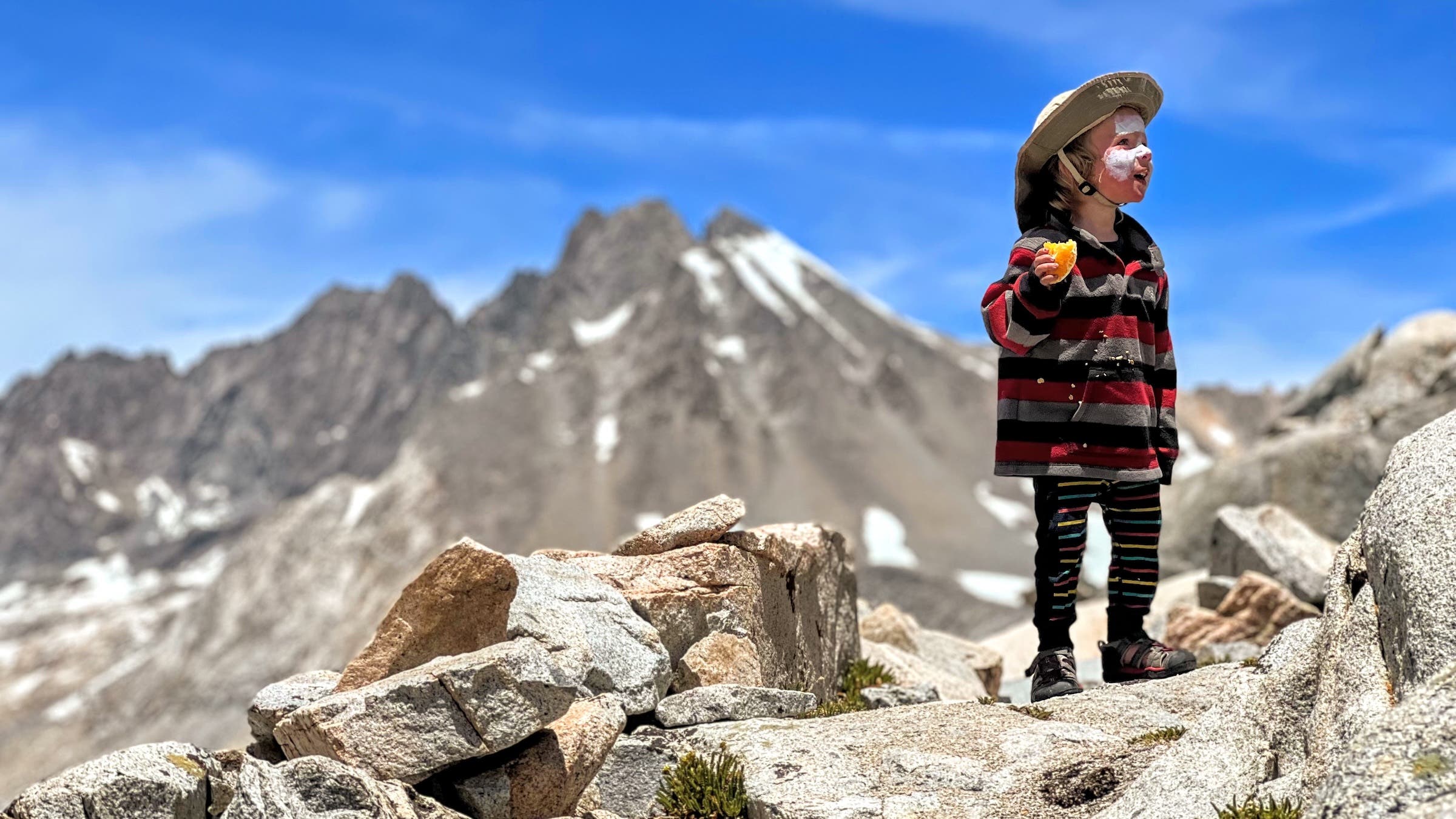
In 2024, American parents spent an average of 1.45 hours per day caring for their children, according to the Bureau of Labor Statistics. Between kids’ school and extracurriculars and parents’ work lives, there’s a lot that gets in the way of quality family time.
On a thru-hike, it’s the opposite.
“The best form of entertainment I can find is my brothers: talking with them, hanging out with them, doing things with them,” Brody Chisholm says. “On the AT, we were just hiking and in our own heads, thinking and passing the time.”
Of course, there are the unique challenges that come with being in the woods for months. The lack of distractions is idyllic—until you have a nine-year-old complaining about how bored they are. When I asked the Netteburgs what advice they would give to other families considering a hike, 11-year-old Addison said, “You have to keep your kids entertained, or else they probably won’t enjoy it as much.”
Then there’s the physical challenge. For the parents, 50-plus-pound packs were standard. Standa Daley, who had not yet turned two when the family started the PCT, added 25 pounds to his mom’s pack, leaving her husband to shoulder a majority of the family’s supplies in his 60-pound pack. Ditto for the Netteburgs and their youngest, Piper (trail name: “Dead Weight”).
But for many of those committed to a family thru-hike, the benefits far outweighed the costs.
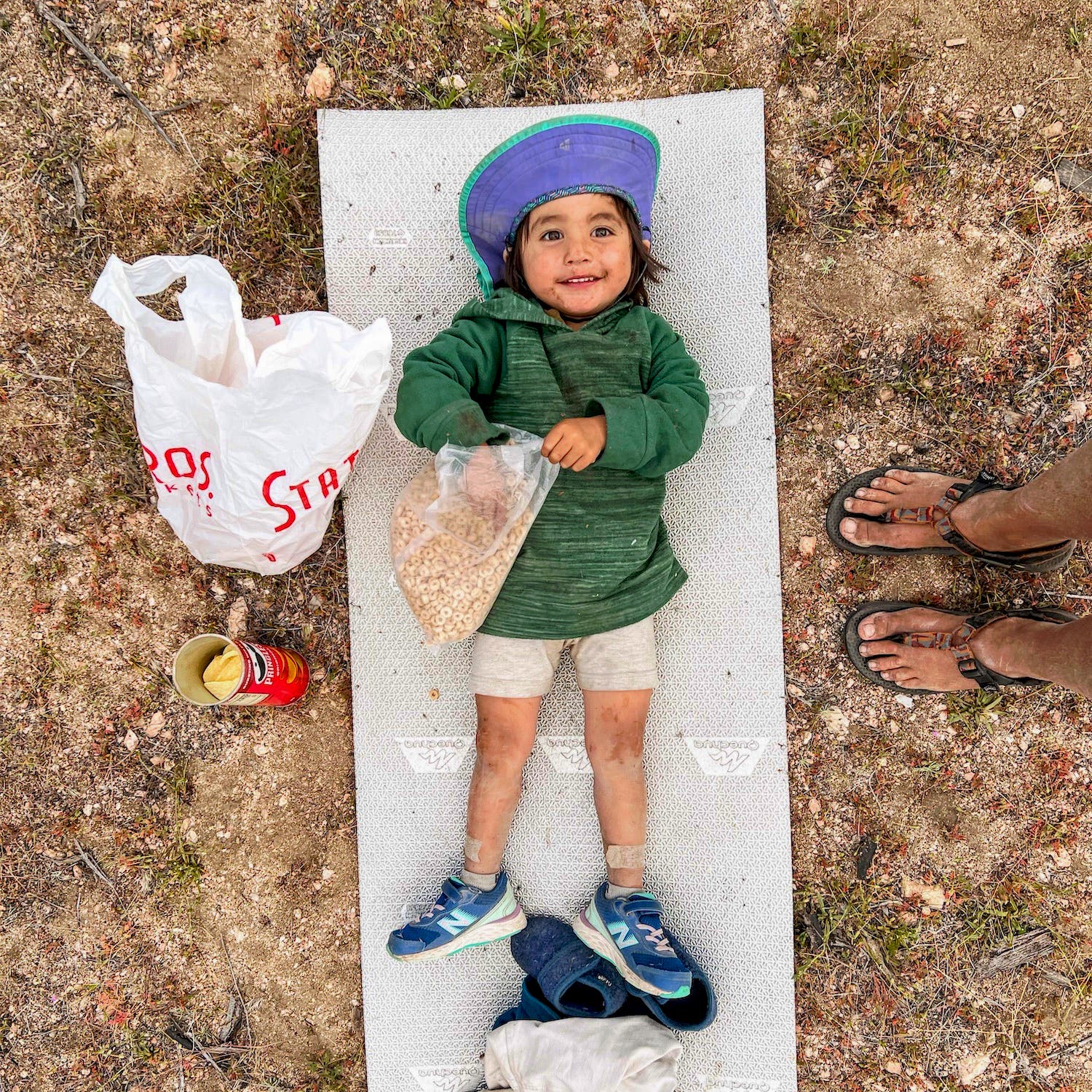
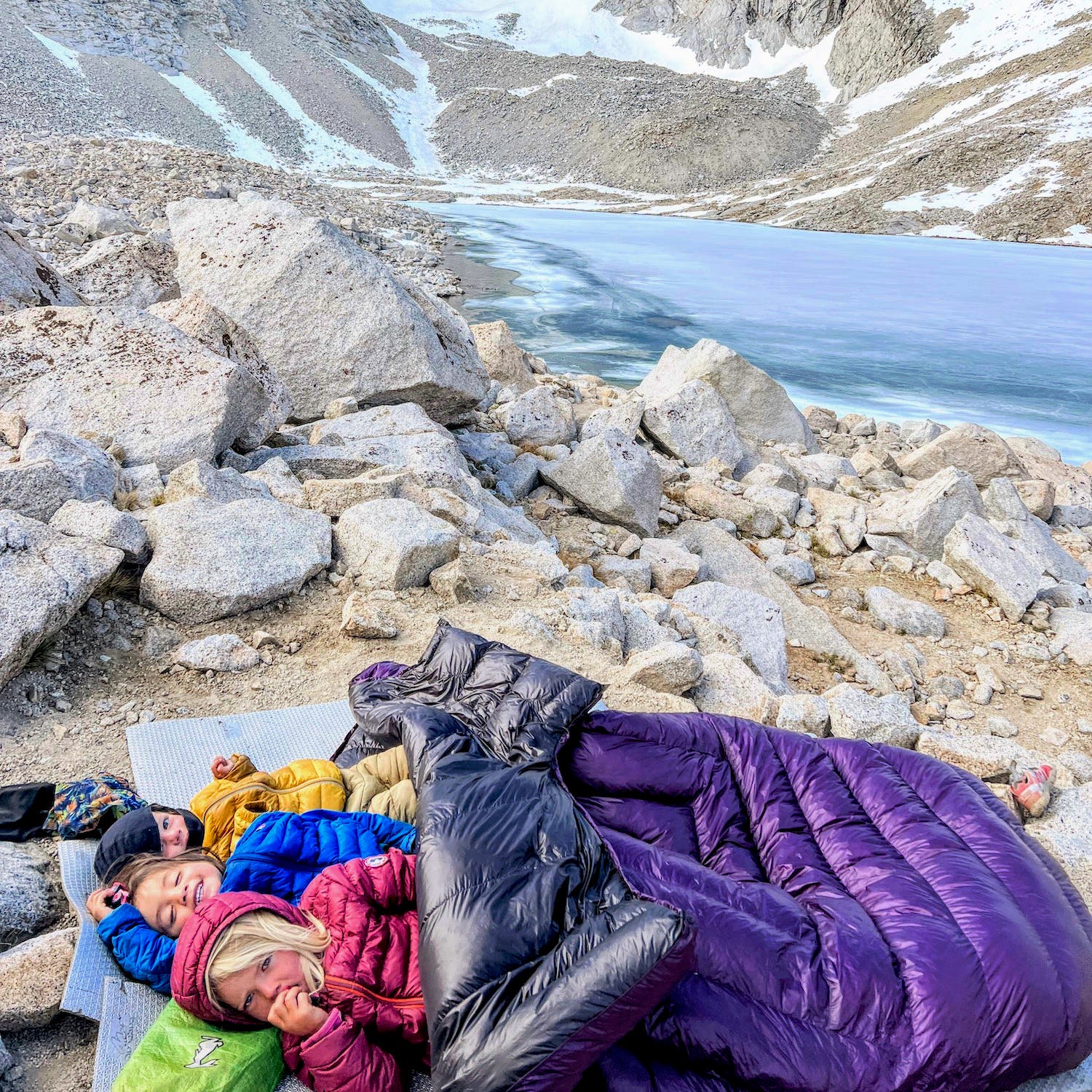
For a few months at a time, the Netteburgs, Chisholms, and Daleys spent 24 hours together every day. On trail, they counted salamanders and jumped into ice-cold creeks. They made toys out of styrofoam they picked up on the side of the road. They set up camp together every night, sharing quilts and tents. They sang songs from Frozen, laughed, cried, and sweated together, connecting with the natural world around them—and each other.
And while the youngest kids might not remember everything, the effects of a thru-hike persist long after they’re back home. Family time is treasured. Attention spans are lengthened. The outdoors becomes a place of solace.
“A lot of the character-building moments will stick with me,” Ben Chisholm says. “The tough scenarios and situations where, beforehand, I didn’t necessarily know that I could do that. I think that’ll stick with me.”
