

Published March 25, 2026 08:19AM
In 2024, German slackliner Friedi Kühne broke the world record for the highest highline walk. With a parachute strapped to his back, he walked between two tethered hot air balloons floating 8,500 feet above the ground—and then jumped off. Kühne told Outside what it’s like to cross a span that big, and how he prepared for the stunt.
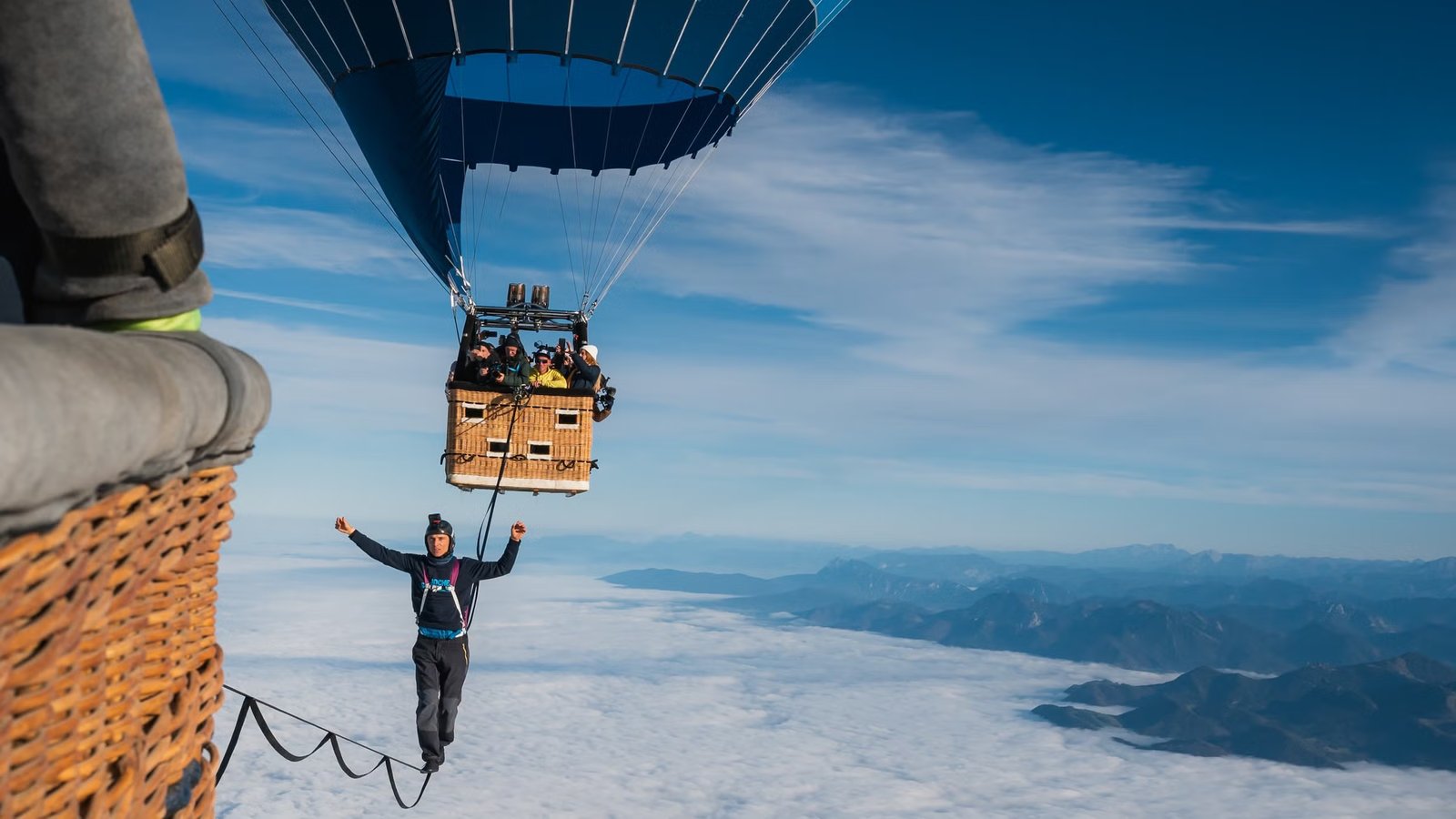
As I stood more than a mile above the earth, suspended between two hot air balloons with nothing but a parachute on my back, there was nowhere else to go but forward—or plummet downward, I suppose. It was November 9, 2024, and I was attempting to set the Guinness World Record for the highest traverse of a slackline at an altitude of 8,202 feet between two hot air balloons.
With a safety leash attached, I began my 62-foot-long walk between the two balloons. The first step triggered a surge of adrenaline that transformed my mind and body. Then, I entered a flow state—senses sharpened, past and future gone, fully present in survival mode. As long as it doesn’t tip into panic, the adrenaline keeps one alert, strong, and responsive.
I’ve walked across longer slacklines, oftentimes free solo, without a leash to attach me to the line. But never while suspended between two moving anchors. With this slackline, both ends were attached to balloons and moved up and down, side to side, while spinning. At one point, the balloons were spinning so fast that within three steps, I saw the entire horizon shift. I was above the town of Riedering in Germany, and suddenly I saw my hometown in the Alps off in the distance. That movement almost threw me off. Then, the tension shifted from tight to saggy. My focus tightened. I had only one shot at this world record, and I needed to stay calm. Suddenly, I entered a flow state: an optimal level of consciousness characterized by enhanced performance and concentration.
As I reached the second balloon basket, I felt myself return to reality. Both Lukas Irmler, my slacklining buddy, and I were once again world record holders. But the record wasn’t enough. Then, I put on a parachute, took off my leash, and fell off the line to return to Earth.
That was great fun.
Though the hot air balloon mission was record-worthy, I’m drawn to free solo slacklining. It’s pure control and balance under pressure, with the ultimate consequence: death. Because you know that your life is at stake, once you finish your free solo, it’s like stepping out of the flow state and back into the real world—a feeling of freedom and strength and proof that you trust yourself and nothing is impossible.
Highlining Between Two Moving Balloons
A slackline is a flat webbing, usually nylon or polyester, tensioned between two anchors like trees, buildings, or canyon walls. Unlike a tightrope, which is rigid and static, a slackline is constantly moving, demanding continuous, dynamic balance. When set high enough that a fall could cause serious injury or death, typically 30 feet or more, we refer to it as a highline.
Our hot air highline dream began a decade earlier, in 2014, when my friend Lukas Irmler and I set out to break the record for the highest slackline above ground. From the start, finding the right team—and pilots willing to help—was the real challenge.
We rigged the slackline with the balloons touching, the 62-foot line stretched between their baskets. Length wasn’t the only challenge—we’ve walked lines nearly two miles long. The real difficulty was linking the balloons and coordinating pilots, gas burners, and the weight in each basket. We also built a quick-release system so pilots could instantly detach the line if needed; the balloons would drift apart, leaving a slackliner hanging beneath one balloon, forced to be pulled up or to drop with a parachute.
The biggest challenge was the movement. A slackline is already unstable—stretchy and constantly shifting, unlike a fixed tightrope. Add two moving hot air balloons, and it became unlike anything we’d ever faced.
Nature, Nurture, and the Ability to Overcome
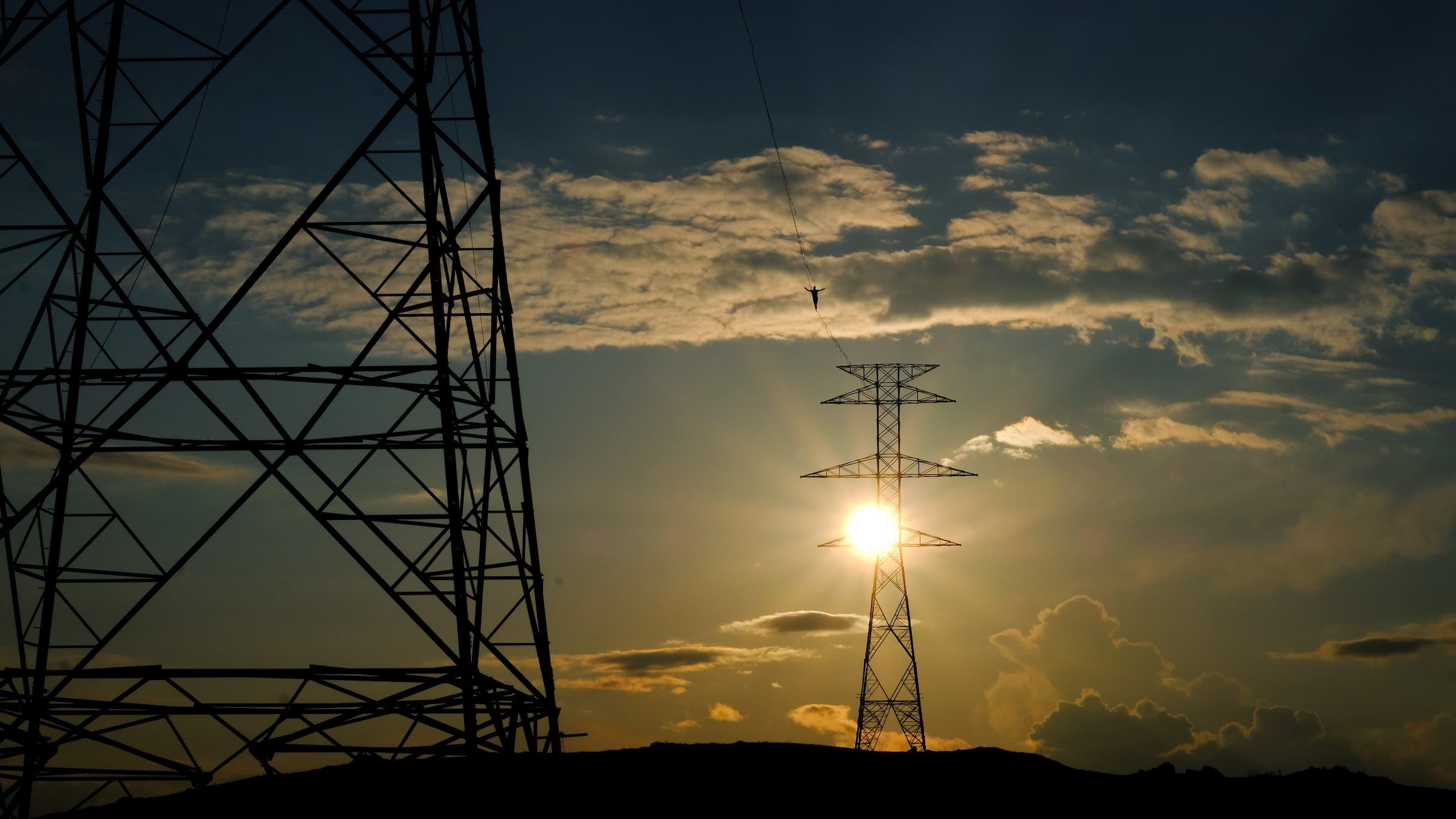
Walking a slackline takes a certain mindset—part natural, part trained. To some extent, you may be born with this mindset, but you can also train it. I started over water, where a fall hurts but won’t kill you. Then the lines got higher, the stakes rising from broken bones to certain death. Over the last decade or so, I’ve broken a number of records, including blindfolded and free-solo highlining, but the sport is so new that records are constantly being updated.
The longest slackline that I’ve ever walked is just under two miles. At the time, it was by far the longest ever set up, twice the previous record. But I took a couple of falls, had to remount, and it didn’t count as a full send across. Then again, one year, I held the longest slackline record. The next year, an American broke it. That’s just how the sport works. It’s still so young, and many athletes are keen to push the limits continually.
Entering a Flow State While Highlining
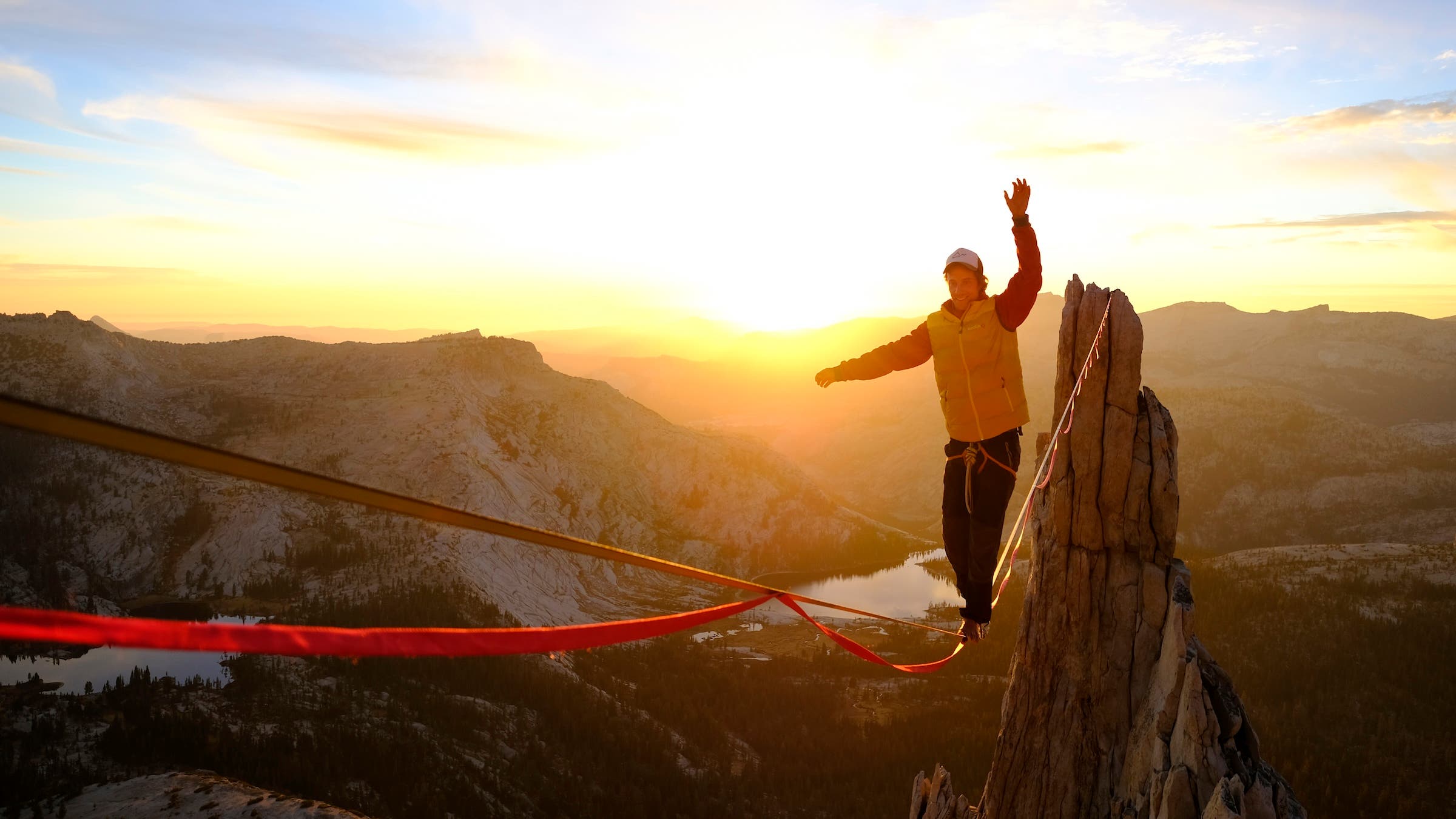
Like most sports, slacklining requires some degree of natural ability. But one must also train coordination, physical strength, and agility. To practice crazy balance on a thin piece of webbing, often high in the air, you need to be passionate and in love with slacklining. You also need to fall in love with the community because most of the time, you won’t be alone.
But why do we do stunts like this? That’s the greatest question of them all. For me, it involves proving to myself and to others that I trust my abilities. Through that proof of trust, I gain greater self-confidence and freedom—freedom from fear and the ability to reach a point where giving up or failing is no longer an option. Once you get to that point, you feel lighter and stronger. It’s difficult to convey that feeling fully.
Above the Abyss
Many of these stories are outlined in my new book, Above the Abyss: Finding Strength, Stillness, and Survival on the Slackline. It retraces the last 15 years of my slacklining career across canyons and between skyscrapers.
Mostly, though, it speaks to being courageous and following our dreams. Free solo highlining, or whitewater kayaking, or rock climbing, or base jumping—whatever the extreme sport, most are modern inventions. But I believe they serve as a way to reconnect with the same emotions that our ancestors experienced. It comes from surviving and overcoming what might otherwise seem impossible.
As told to Madison Dapcevich. This interview was edited for space and content.
