

Rescuers used an Apple Crash Detection alert to find a fatal plane crash site in Northern California, leading to a several-week closure of a large wilderness area.
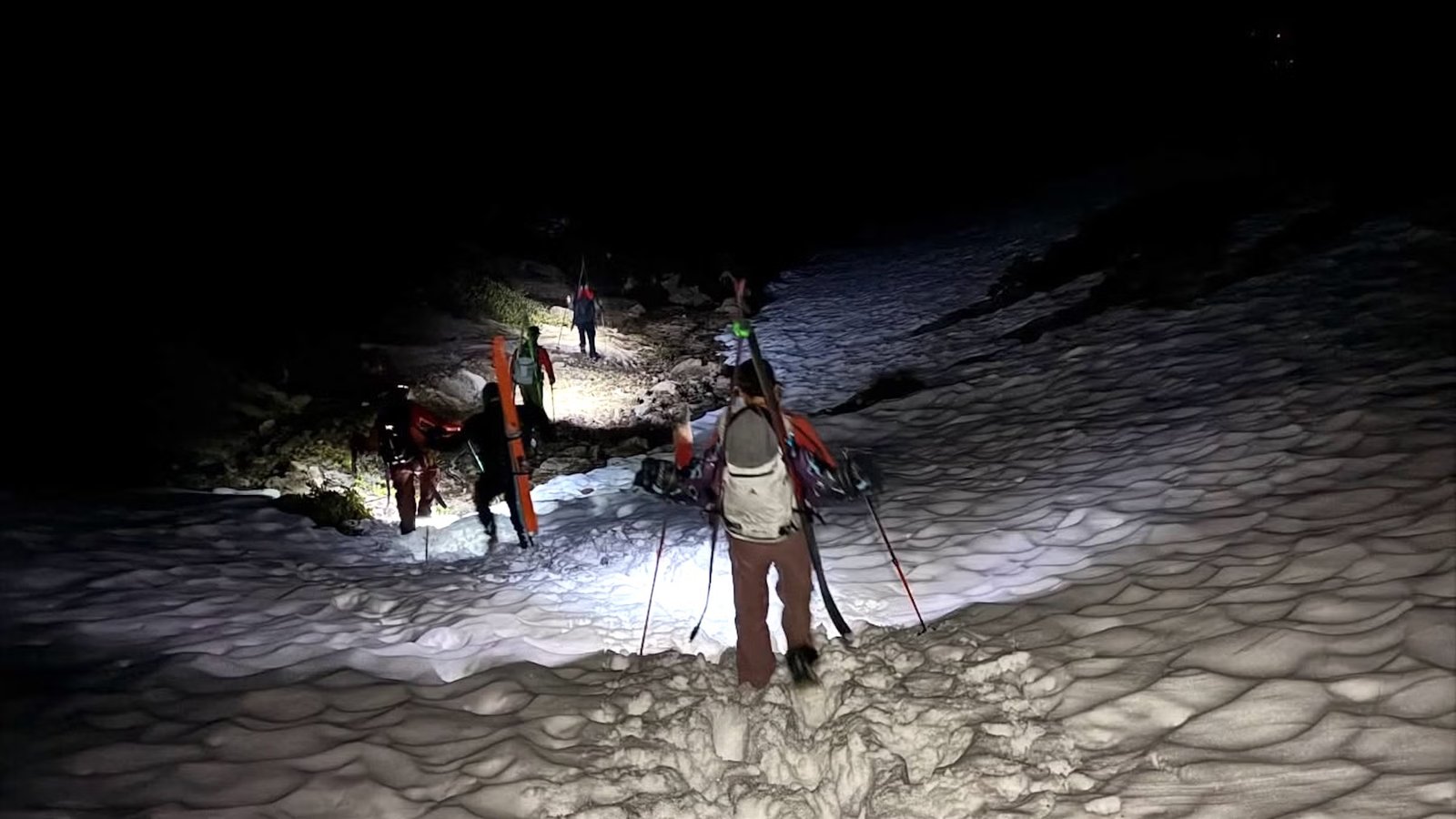
Local authorities dispatched Tahoe Nordic Search and Rescue, triggering a massive backcountry response (Photo: TNSAR)
Published March 25, 2026 03:43PM
A pilot died on March 22 when his small plane crashed in a remote wilderness area near Lake Tahoe in Northern California. The incident triggered a massive backcountry response from local search and rescue teams. Officials told Outside they were alerted to the accident after the man’s Apple Crash Detection was activated and pinpointed the location of the crash.
Elise Soviar, a spokesperson for the Placer County Sheriff’s Office (PCSO), told Outside that the pilot, James Wholey, 79, crashed his plane while flying in the Granite Chief Wilderness en route to the Truckee Tahoe Airport. Officials have not yet determined the cause of the crash. Following the accident, the U.S. Forest Service (USFS) closed a swath of nearby wilderness and trails.
“The U.S. Forest Service has issued a closure surrounding the incident location for public safety while the National Transportation Safety Board [NTSB] completes their investigation into the crash,” USFS representative Lauren Faulkenberry told Outside. Officials expect the closure to last until at least April 7.
Keith Holloway, a spokesman for the NTSB, told Outside that the agency is just beginning its investigation into the cause of the crash and won’t have findings for some time. Holloway said one of his agency’s investigators began an initial inquiry on March 25. The NTSB will release a preliminary report within 30 days, but the final report, which will reveal the probable cause of the crash, could take up to two years.
“The NTSB does not determine or speculate on the cause of an accident during the on-scene phase of the investigation,” Holloway said. “This stage is considered the fact-gathering phase.”
Wholey’s plane was a Beechcraft A36 Bonanza, a six-seater, single-engine craft. It disappeared from radar in the Granite Chief Wilderness, a 25,000-acre protected area in California on the west shore of Lake Tahoe.
Just as the plane fell off radar, the PCSO said in an online statement that the agency received an alert from Wholey’s Apple Crash Detection system—a feature on the latest iPhone and Apple Watch models. Crash Detection automatically calls 911 when it detects a crash and pinpoints the site of an incident.
The PCSO immediately dispatched Tahoe Nordic Search and Rescue (TNSAR), triggering a massive backcountry response. While two TNSAR rescuers flew by helicopter to the crash site, another ground team of more than 20 rescuers began trekking cross-country to reach the downed plane, according to a post from TNSAR on Facebook. Rescuers on a snowcat and snowmobile also responded.
The USFS closure covers roughly 225 acres surrounding the crash site, and a large portion of the Five Lakes Trail, a popular hiking area outside of Tahoe.
Dan Whitten is a retired search-and-rescue coordinator who worked for California’s San Bernardino County Sheriff’s Department for 26 years. He told Outside that the closure allows investigators proper time to determine what went wrong.
“Depending on how the plane went down, the debris and evidence could be spread across a wide area, and particularly with snow cover like this, it may take some time to locate all of it,” Whitten said.
Whitten said the terrain surrounding the crash is mountainous, and that debris, downed trees, and spilled fuel could all pose dangers to hikers.
“If that plane had a full bag of gas on board, depending on where it hit and given the proximity to the lakes, there may or may not be a hazardous materials issue there to deal with,” Whitten said.
The closure would help prevent disaster tourism, Whitten added.
“Especially when you’re that close to an area, like Lake Tahoe, with high tourist traffic, disaster tourism is a real issue,” he said.
