The journey to the titanium spork wound through Hollywood, forks with knives for handles, and a bizarre American craze for turtle soup.
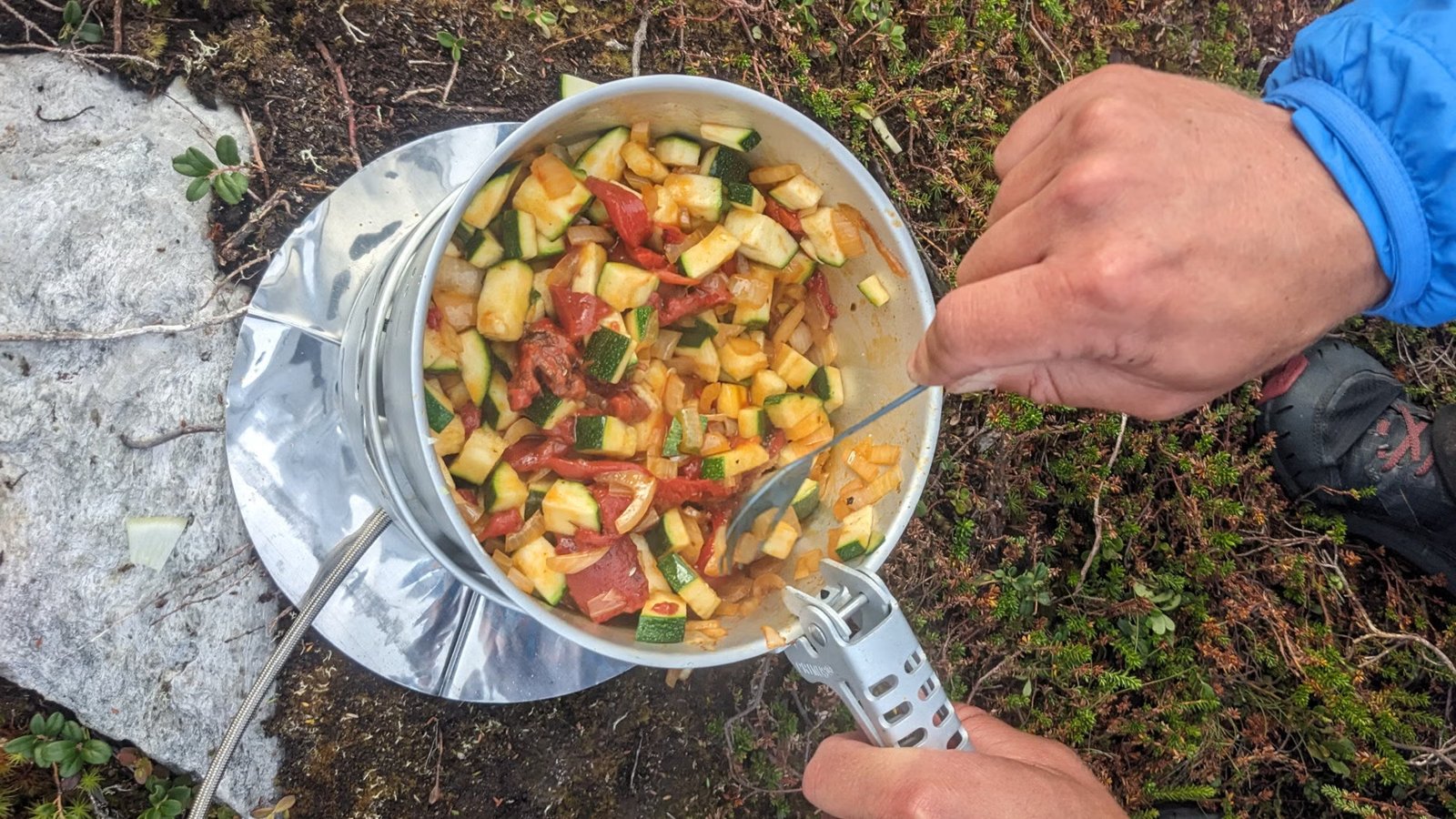
It’s a great eating utensil, and also a solid cooking one. (Photo: Adam Roy)
Published March 29, 2026 06:00AM
There are very few items that I have taken on every single backpacking trip I have ever been on. I am always pursuing marginal gains in warmth, weight, or something else, swapping my tents for tarps for ponchos and acquiring so many backpacks that they’ve spilled out of my storage space and into the office where I’m writing this. But ever since I first shoved a bulky synthetic sleeping bag into a giant pack as a pre-teen, I have never packed a bag that doesn’t have a spork in it.
I have carried a spork up and down the mountains of Snowdonia National Park in Wales, deep into the Darién Gap, and through the Syrian Civil War. I have eaten tea leaf salad in a Burmese tea shop, plantains in the Panamanian jungle, and more of those Good To-go Quinoa Bowls than anyone should, all with a spork. Across the world, people see my spork and they say “that’s cool!” Because it is, a spork is a very cool idea.
It’s also probably an older one than you think. Long before we had sporks, we had combination spoon-forks. In his 1797 book Letters Written During a Short Residence in Spain and Portugal, English poet Robert Southey noted “I could not, however, buy a silver spoon without a silver fork.” We don’t know if Southey had happened upon a proto-spork, or one of the many inferior hybrids with separate spoon and fork ends. But it’s clear that by the 19th century, as roads, trains and boats took people further than their grandparents could have dreamed of traveling, people knew we could do better than carrying both a spoon and a fork on our trips.
Andrew Hills, of Naugatuck, Connecticut, designed a “culinary fork and spoon” that looks like it belongs in some kind of veterinary implements museum and, frankly, scares me. Hills was not alone: The 1860s saw a flurry of patents for travel cutlery, though much of it took the form of a three-piece set that nested together, or the questionably safe combination of a spoon or fork with a knife blade serving as the handle. The closest to a modern spork that the pre-Civil-War era got was this deformed knife-fork-spoon abomination that Nathan Ames patented in 1861. The people yearned for a single-piece cutlery solution, but strained to find it. With the old world dying and the new one struggling to be born, it was a time of monsters.
It was not until the Confederacy had been vanquished, emancipation proclaimed, and Lincoln shot that the spork as we know it arrived. On February 3, 1874, Samuel W. Francis of Rhode Island, was granted a patent by the US patent office for a “a new and Improved Combined Knife, Fork, and Spoon.”
“Improved” was right. Francis’ patent drawing has a complete spoon bowl with tines appearing out the front. It’s not quite at the level of perfection that my MSR titanium model is, but it’s pretty close. Describing his contribution to humanity’s future, Francis wrote “The object of this invention is to combine in a convenient manner, in one implement, a knife, fork, and spoon. To this end I group the several elements closely together, using the bowl of the spoon as the central element, around or upon which the remaining elements are placed. I form the knife on one edge of the spoon-bowl, while the fork-tines are placed at the front end of said bowl.” The cutting blade isn’t really obvious in the drawing, and I prefer not to put blades inside my mouth, so I think we can all be glad that one didn’t stand the test of time. But in its basic form, the spork had been born.
Not long after Francis patented his design, a new food trend hit American society. Long before the cronut and everything being Dubai-flavored, a craze for terrapin soup swept across the eastern seaboard in the 19th century. The helpless and much persecuted turtles were cooked in a rich, creamy soup with chunks of meat. It was the perfect dish for a utensil with the ability to both scoop and spike. Soon major silverware suppliers began to list “terrapin forks” in their catalogs. Some of the patented designs for these differed from Francis’s only in the number of tines and in the absence of a cutting blade.
While the basic spoon-fork form was by then well-established, it wasn’t until the 20th century had dawned and turtle-soup-crazed easterners had hunted diamondback terrapin nearly to extinction that we finally got the word “spork.”The Oxford English Dictionary notes use of the word in print as early as 1909, and the Century Dictionary and Cyclopedia of the same year defines “spork” as “A ‘portmanteau-word’ applied to a long, slender spoon having at the end of the bowl projections resembling the tines of a fork.” In 1951 Hyde W. Ballard of Westtown, Pennsylvania claimed to have been using the term since the previous year and applied for a trademark for what he called an “eating utensil.” Since then lawsuits and international trade battles have seen various corporate entities lay claim to the term, though none can claim to have invented this perfect culinary multitool.
By 1956, the word “spork” had appeared in Life in an advert with Hollywood actor George Gobel, star of the then-in-theaters comedy The Birds and the Bees, and his wife, Alice. “A spork,” Alice exclaims. “Why, George… I never had so much fun eating pancakes and Karo syrup!” Readers could buy their own sporks by sending one dollar and two syrup labels to the Karo Syrup Company.
Today, three-quarters of a century after Big Spork entered the corporate landscape, spork patents and trademarks are long expired or genericized. Spork no longer belongs to Ballard, or Plastico, who later won the right to use it in a legal battle: Spork is for everyone. Today’s variations include the Splayd, an Australian utensil which returns to Francis’ triple threat design and was allegedly designed to allow partygoers to eat without putting down their drink, and the fast food version, which was among Colonel Harland Sanders’s contributions to U.S. culinary history. You can buy a silly tactical spork now, or a laser-engraved custom wooden spork with your name on it.
Sporks, like all of us, are mostly the same but all a little bit different. Long-handled models are great for eating freeze-dried camping food or plastic sporks good for eating the kind of ice cream with little chunks of stuff in it. Francis’ initial design has been rebranded for eating ramen. Sporks have come a long way from their humble beginnings in Rhode Island, and as the traveler’s preferred eating utensil, they’re destined to go ever further. (If you happen to be in the market for a spork, you can check out my previous writing on the topic, but you can also get a very lightweight one for free at a range of fast food places.) As we enter the 152nd year of our coexistence with sporks, there is really no excuse to pack a backpack without one.
3 Sporks We Love
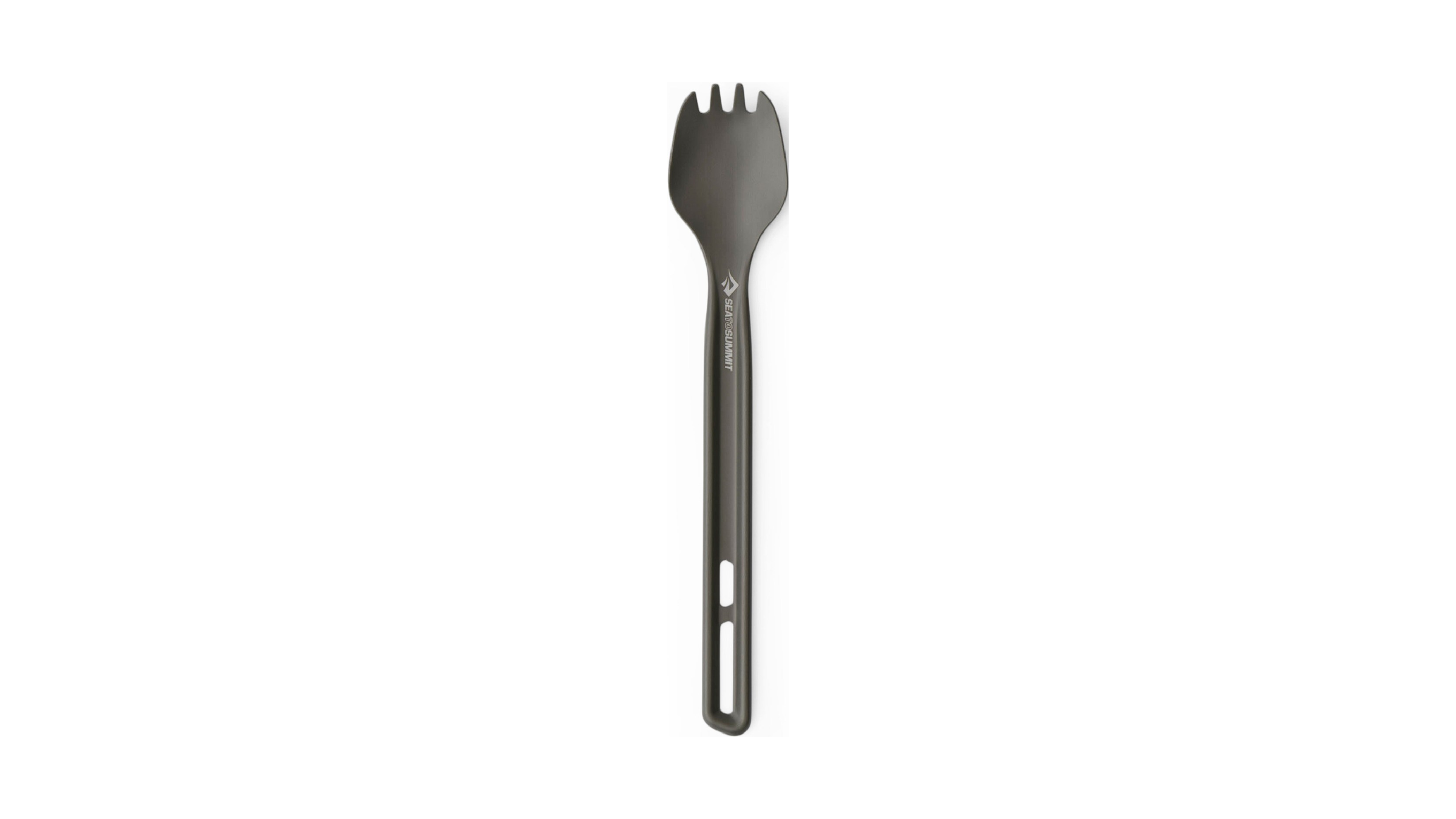
Sea to Summit Frontier Ultralight Long Handle Spork
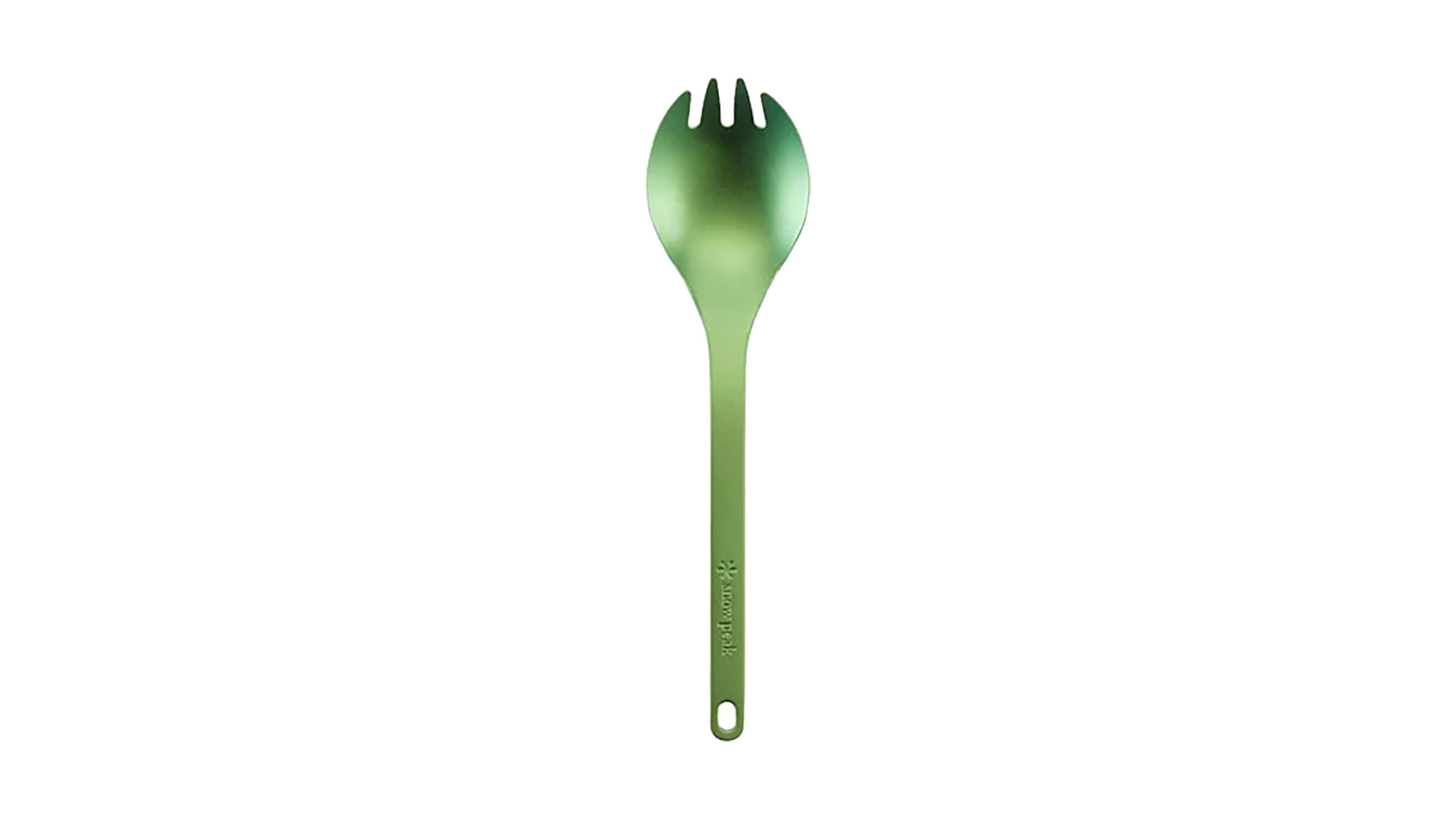
Snow Peak Titanium Spork
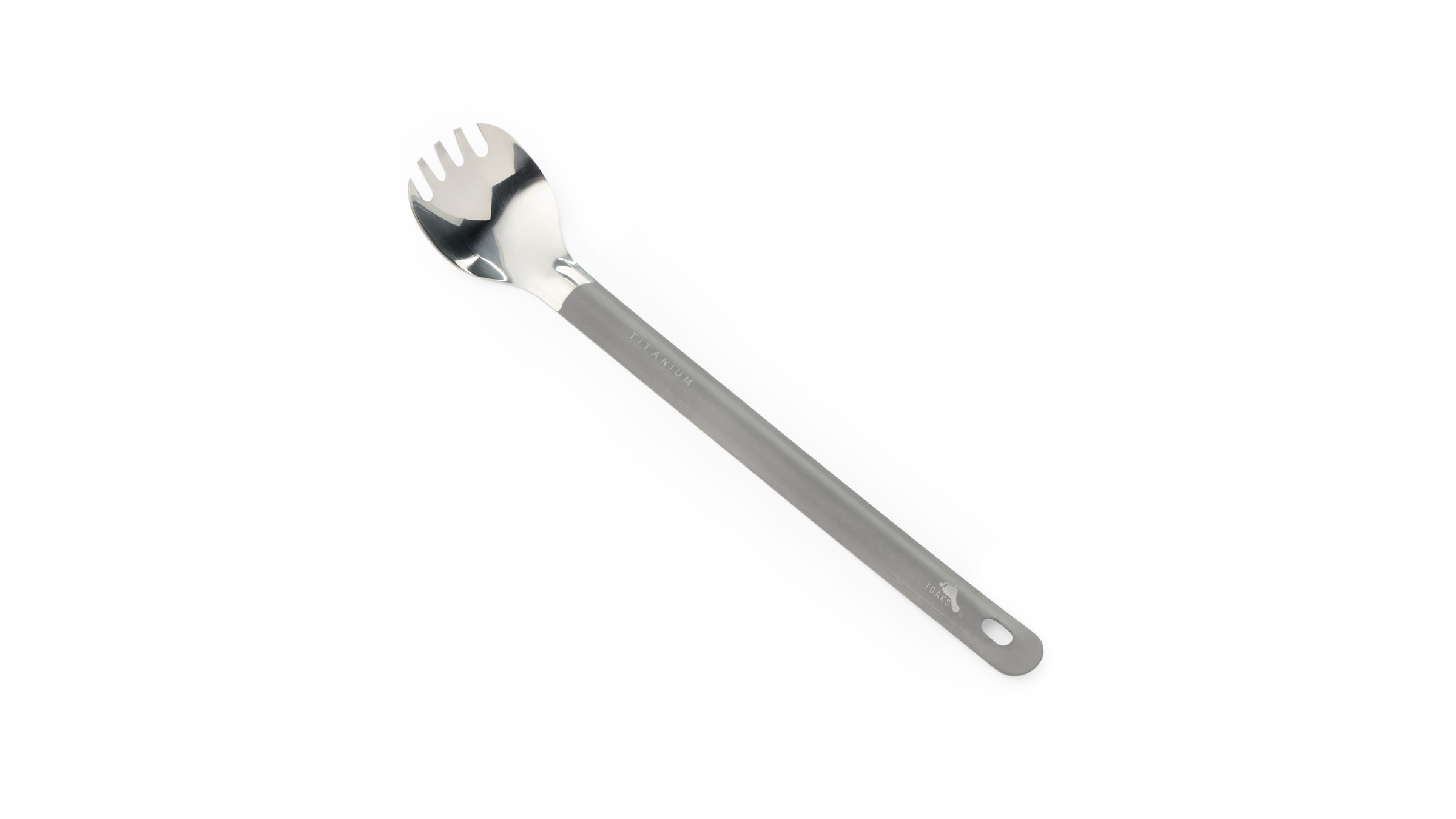
TOAKS Titanium Long Handle Spork with Polished Bowl