

Published March 30, 2026 09:00AM
After dozens of test laps, our expert testers named the Revel Rascal X0 the best trail mountain bike of 2026. The Specialized Stumpjumper 15 remains our top value pick. The Cannondale Habit Carbon Lt 1 is the most versatile trail mountain bike we’ve tested.
What defines a “trail bike” depends on who you ask and the terrain they ride. Broadly speaking, these are the mountain bikes most riders can take anywhere. They’re light enough to enter an amateur cross-country race and durable enough to withstand occasional bike park laps. Too much suspension travel pushes a bike toward a heavy, sluggish ride; too little creates a timid, fragile machine that struggles on rough terrain. The ideal trail bike lives somewhere in the middle.
For this guide, we partnered with the pros at Pinkbike to select the top performers from the latest Pinkbike Trail Bike Field Test in Bentonville, Arkansas. We define the trail category around balanced climbing and descending performance, with a roughly 40/60 uphill-to-downhill priority split. Rear-wheel travel ranges from 125–145mm, while front forks typically add about 10mm more suspension.
We evaluate pricing as if we were spending our own money. Flashy electronics and marketing copy don’t sway our rankings. Instead, each bike is judged on value and performance at its price point—meaning the most expensive option doesn’t automatically come out on top. The bikes in this guide earned their spot on the list of best trail mountain bikes of 2026 for their performance on the ups and the downs.
Best Trail Mountain Bikes: At a Glance
Editors’ Choice
Revel Rascal
Tested Build: X0
Weight: 30 lb (size: L)
Travel: 130 mm, 140 mm fork*
Frame: Carbon
Wheel size: 29”
Pros and Cons
+ Rewards energy put in
+ Responsive yet balanced handling
+ Quiet
– Seat tube angle isn’t as steep as some may like.
– No adjustments (if that matters to you)
Based on its agility, comfort, and performance, the Rascal unanimously ranked number one in the 2026 Pinkbike Trail Bike Field Test. Every time we rode the Rascal, we came back grinning. This spry 130mm-travel trail bike punches above its weight. Revel’s patented CBF dual-link suspension delivers excellent traction and efficiently turns pedal strokes into forward momentum. Like the Intense Spider, it favors building speed rather than bailing you out when things get rough.
Since our Field Test, Revel has dropped the “SL” label from the Rascal’s title, but don’t worry, the frame still carries that 200-gram weight savings. Revel decided against integrated frame storage in favor of simplicity and a lower weight. There are no on-the-fly frame adjustments, but Revel tailors key geometry numbers—like seat tube angle—to each frame size.
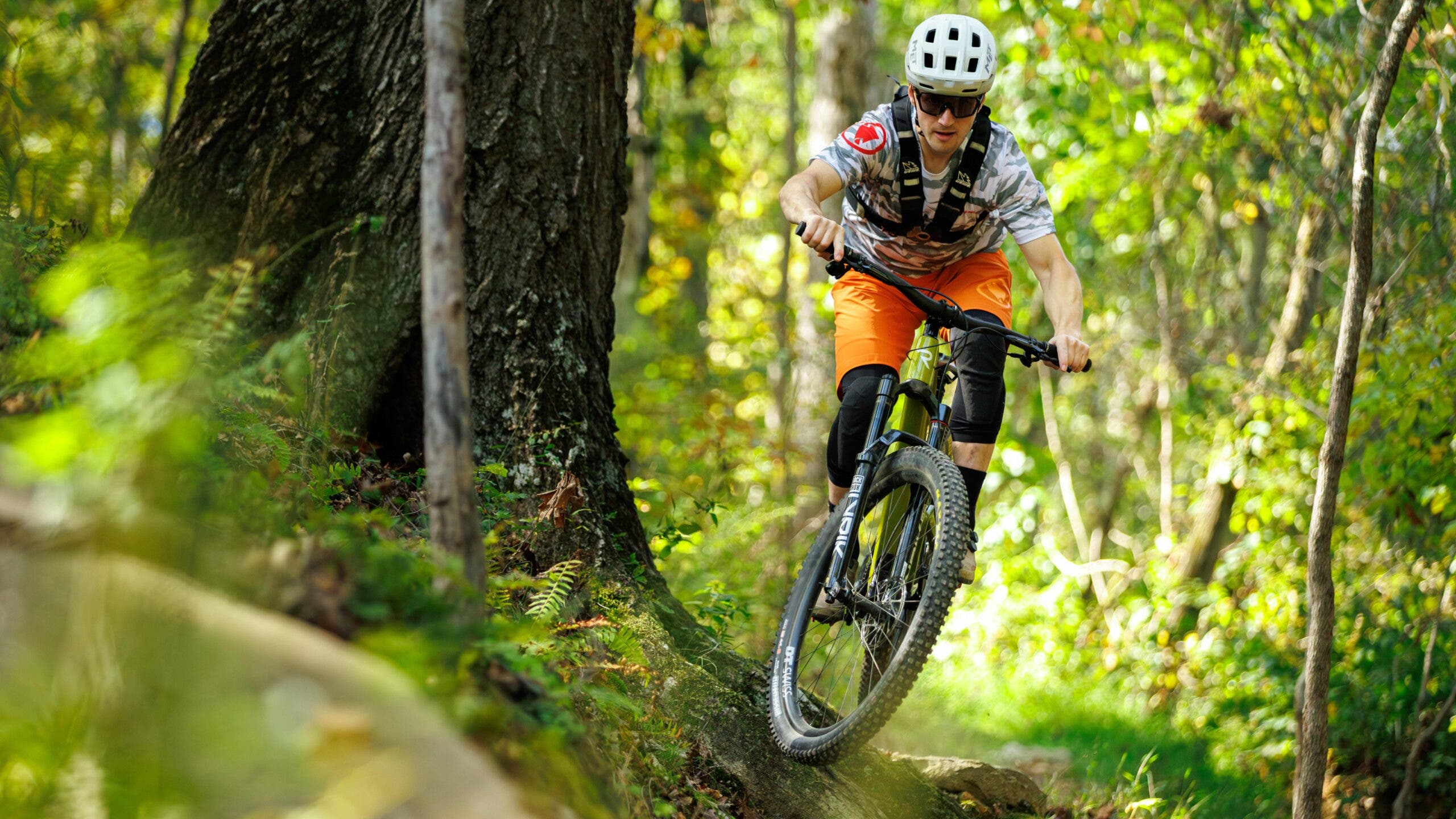
If you stand on the upper limit of the suggested rider height for a particular frame size, it’s worth paying attention to that seat tube angle – it’s not too slack, but there are steeper options out there. On the most brutal climbs, keeping the front wheel on the ground might mean leaning forward further than your natural seated position. Sliding the saddle forward in the seat clamp rails can compensate for that to a degree.
At $7,199, the Rascal X0 build is undeniably a large chunk of change. Compared with other premium bikes at this price point, however, it delivers strong value. Our test model featured a SRAM X0 Transmission drivetrain, carbon DT Swiss XMC 1200 wheels, and RockShox Ultimate suspension. If that’s out of your price range, more affordable builds are available.
(*Revel now specifies the Rascal with a 150mm fork)
Best Value Trail Bike
Specialized Stumpjumper 15
Tested Build: Comp Alloy
Weight: 36 lbs (size: S4)
Travel: 145 mm, 150 mm fork
Frame: Aluminum frame
Wheels: 29″ or MX
Pros and Cons
+ Sensitive suspension
+ Extensive adjustment capabilities
+ Descends like a bigger bike
– Heavy
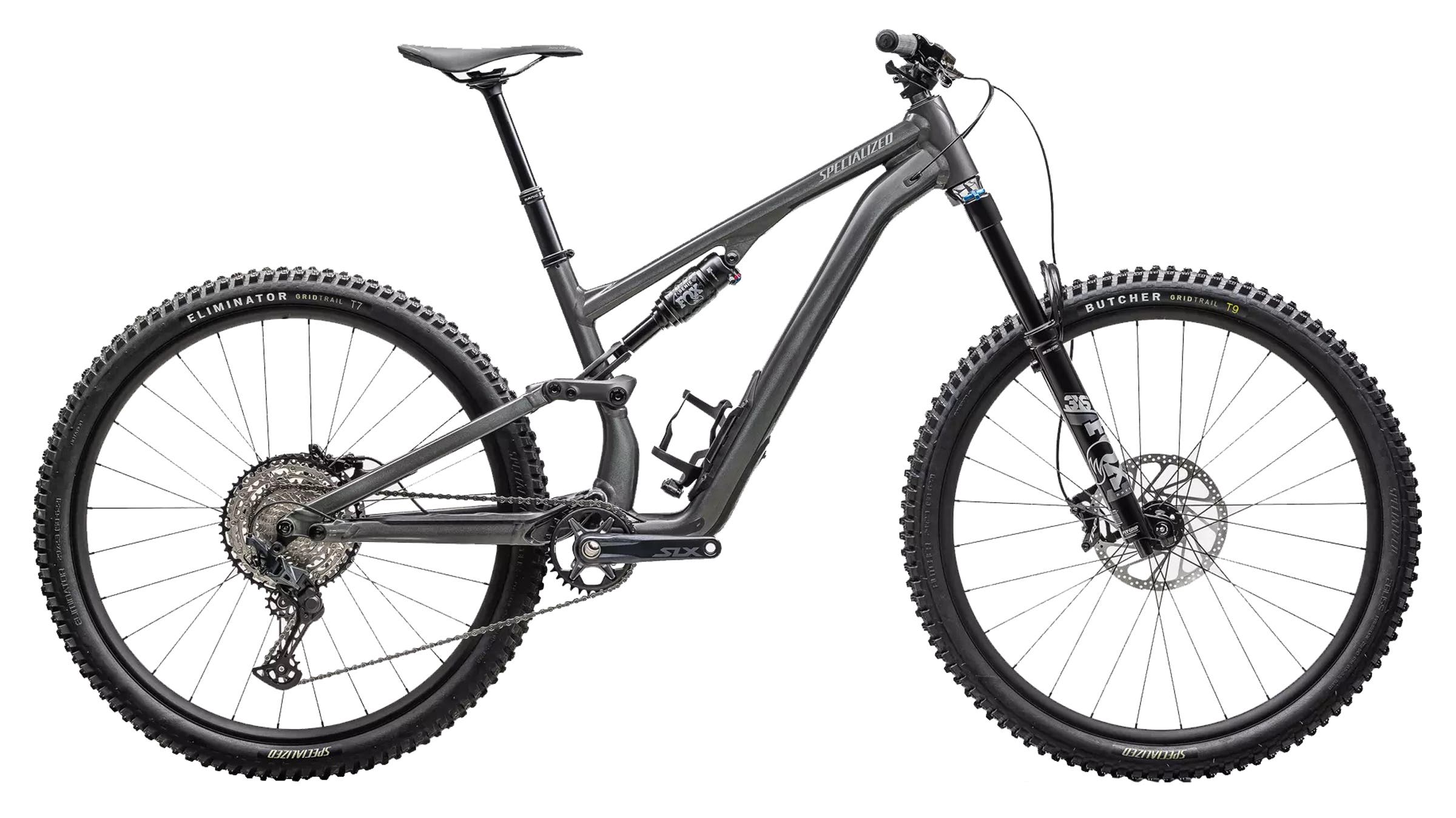
The Stumpjumper is Specialized’s now ubiquitous do-everything trail bike, with adjustability and adaptability integral to the bike’s character. This year’s update to the 15th iteration of the bike wasn’t some massive overhaul, but more of a refinement, with very similar geometry to the outgoing Stumpjumper EVO, and the introduction of the Genie shock. While not necessarily required, this shock is core to the bike’s purported improvement in suspension performance, and does achieve some impressive marks on paper.
The Stumpy’s ability to hum through rough and technical terrain is very impressive, thanks in part to its active suspension feel. Rear wheel traction is plentiful, meaning you can focus on putting down power without worrying about spinning out when things get tricky.
As terrain smooths out and climbs hit a more consistent gradient, the Stumpjumper 15 isn’t the most energetic of the bunch, due more to the active suspension and slack seat angle. Those looking to maximize the pep in the new Stumpjumper platform would benefit from adding more spacers to the Genie to reduce the extra volume and add some support through the main portion of the stroke. There’s a tradeoff with grip, but that’s to be expected.
The Stumpjumper 15 shines brightest in its stock setup, with the neutral headset orientation and high bottom bracket setting. No painting yourself into a corner—this is simply where the Stumpy feels most adaptable and ready to tackle varied terrain.
The geometry and corresponding handling of the bike feels natural, intuitive, and well-rounded, which lends itself to the varied riding one might expect to do on a capable trail bike. A few of us regularly referred to the bike as “safe” feeling, thanks to an easygoing nature that managed to extend even into some pretty gnarly sections of trail.
The Stumpjumper 15 should work well for new riders and experienced folks alike, growing with that skillset and adapting well to changes in terrain.
Best Adjustability
Trek Fuel EX
Tested Build: 9.8 XT Di2
Weight: 32.1 lb (size: L)
Travel: 145 mm, 150 mm fork
Frame: Carbon
Wheel size: 29″ (MX w/additional hardware)
Pros and Cons
+ Wide range of geometry and travel possibilities
+ Well-balanced suspension feel
+ Carbon and aluminum frame options
– Loud chainslap from XT derailleur
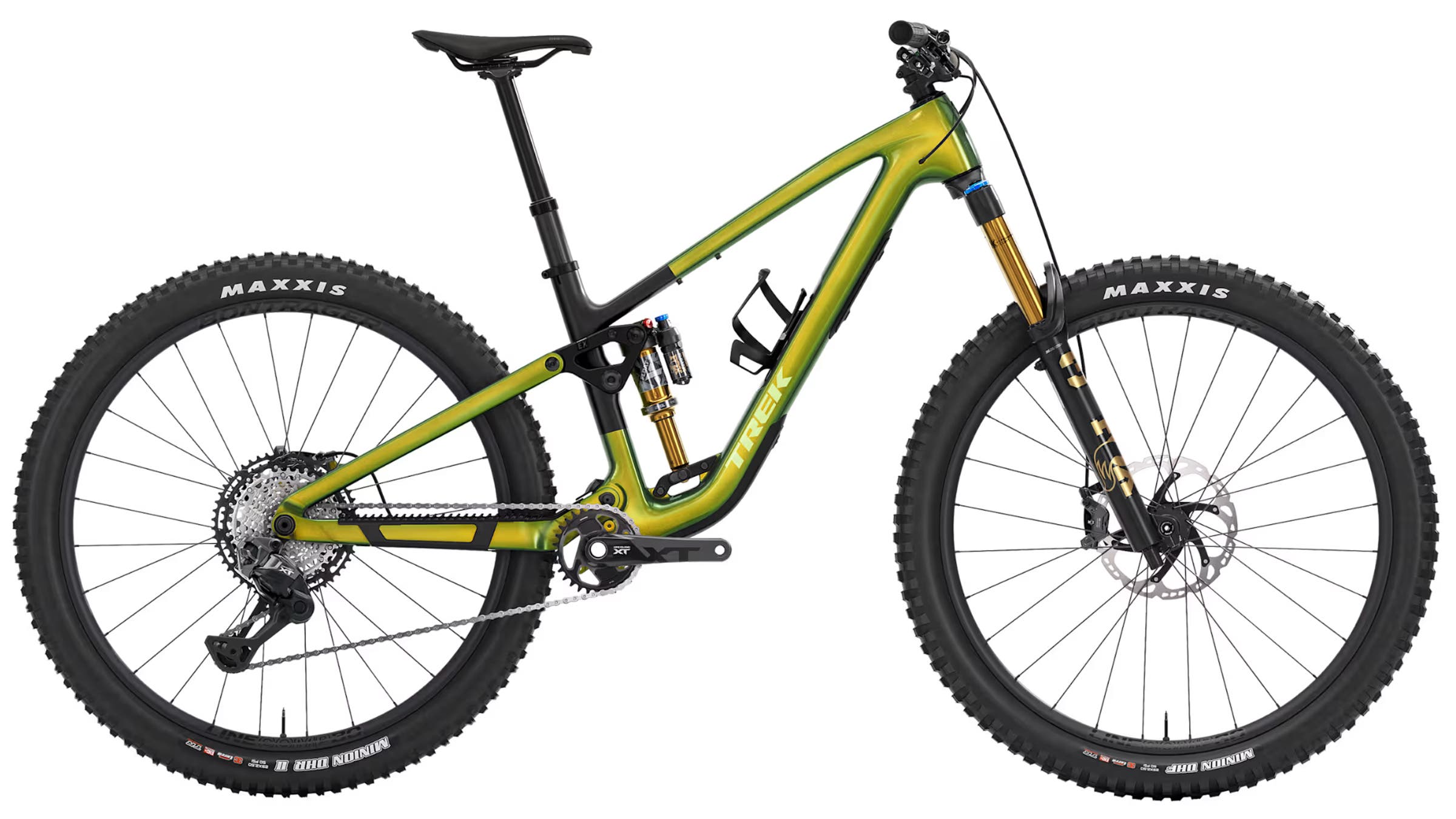
If there’s a bike that perfectly occupies the middle of the trail-bike spectrum, it’s the Trek Fuel EX. With 145mm of rear travel and a 150mm fork, it sits squarely between a nimble cross-country rig and a beastly enduro machine—but the numbers only tell part of the story.
The Fuel EX has a few clever tricks. It can run a fast-rolling 29” rear wheel or a more playful 27.5” option. Two shock-rate positions let you choose how sensitive the suspension feels, and travel can be increased by roughly 10mm at either end. It’s a lot of numbers, but the takeaway is simple: the Fuel EX adapts effortlessly from backcountry adventures to bike park laps.
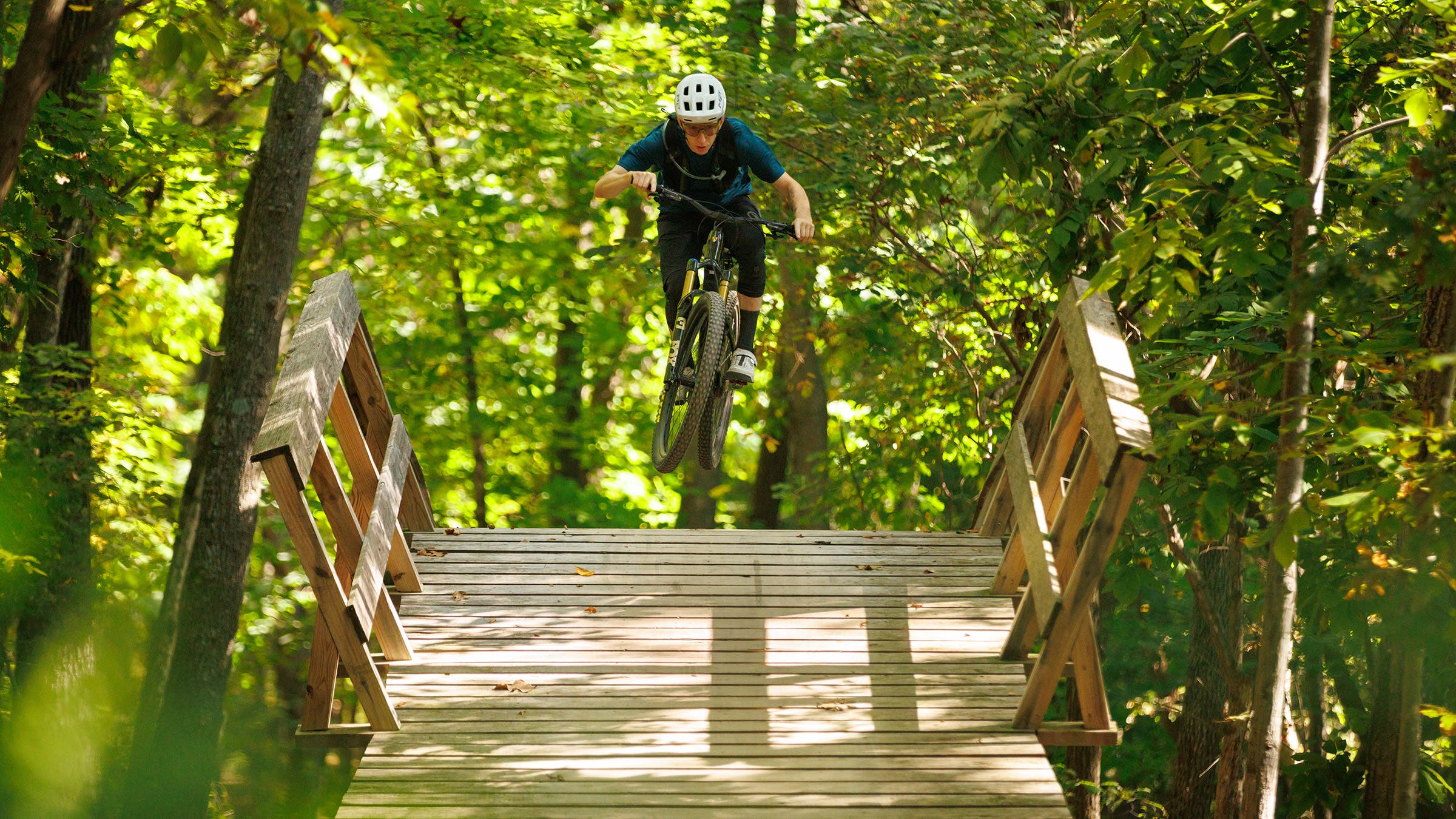
On the trail in stock form, it feels familiar and reliable—everything behaves as expected. Aside from some undesirable noises from the derailleur on our 9.8 XT Di2 test model, there were no surprises. It handled rougher descents better than the shorter bikes in our Field Test, yet it remained capable and engaging on flatter trails. Riders seeking out a more nimble bike that’s geared towards climbing should consider the Top Fuel—another adaptable bike from Trek that can cover multiple genres.
Carbon Fuel EX models carry a higher price tag, starting at $5,999, including top-tier Fox Factory suspension. Aluminum versions cost less but are slightly heavier, and the trade-off doesn’t compromise the bike’s features or capabilities.
Most Agile
Intense Spider
Tested Build: Custom Build
Weight: 30 lb (size: L)
Travel: 130 mm, 130 mm fork
Frame: Carbon
Wheel size: 29”
Pros and Cons
+ Light, energetic
+ Excellent cornering performance
+ Great aesthetic
– Slightly more demanding in rougher terrain
– À la carte build program doesn’t deliver the best value
– Interrupted seat tube may limit the maximum dropper post length
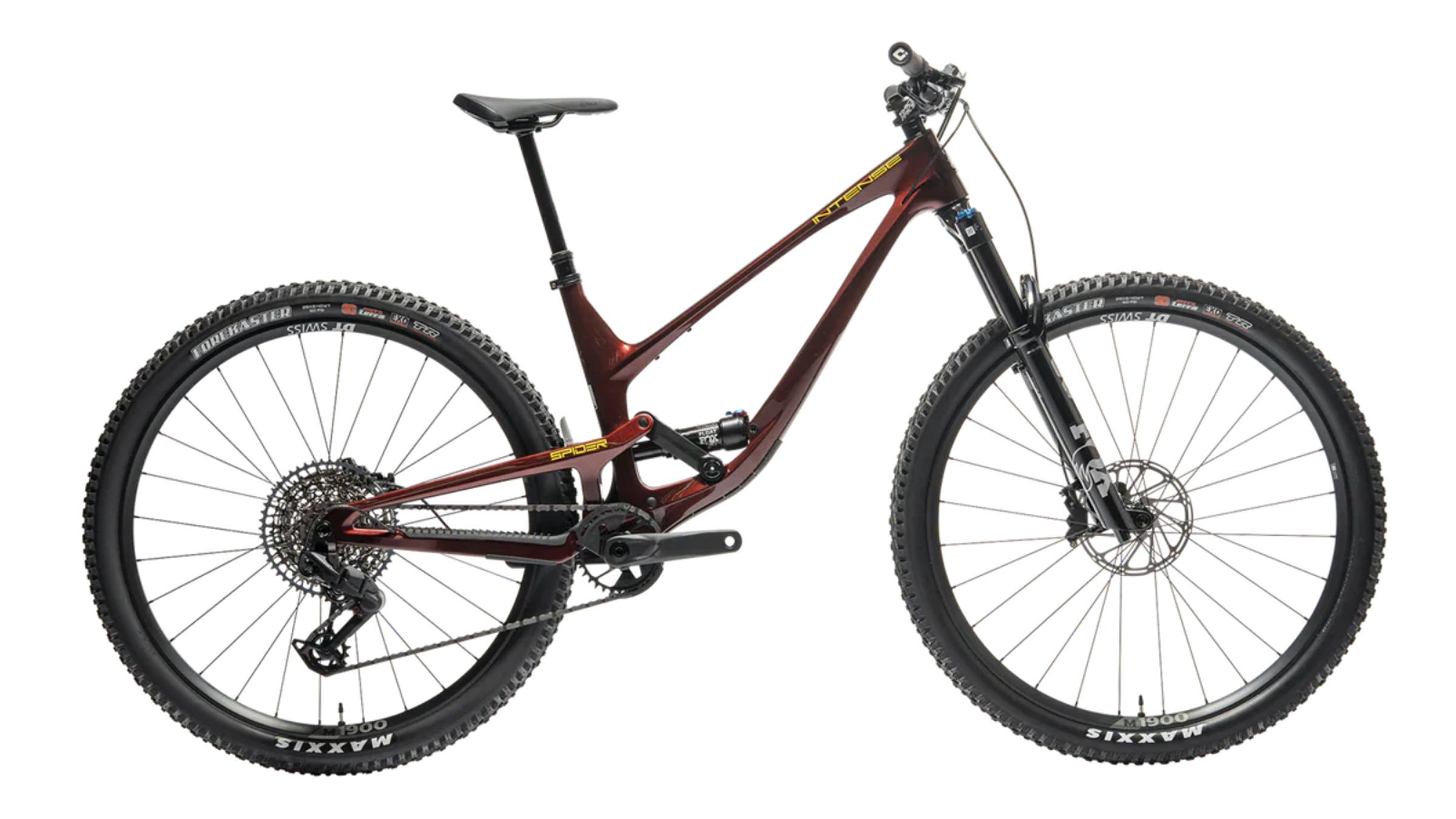
When Intense added the Spider to their lineup, it quickly won over riders. The Californian brand hadn’t launched a new bike in years, and the Spider hit all the right notes. Sharp lines streamline the frame while retaining Intense’s signature dual-link suspension. Looks alone don’t earn our approval—luckily, there’s a lot to love about this speedy trail bike.
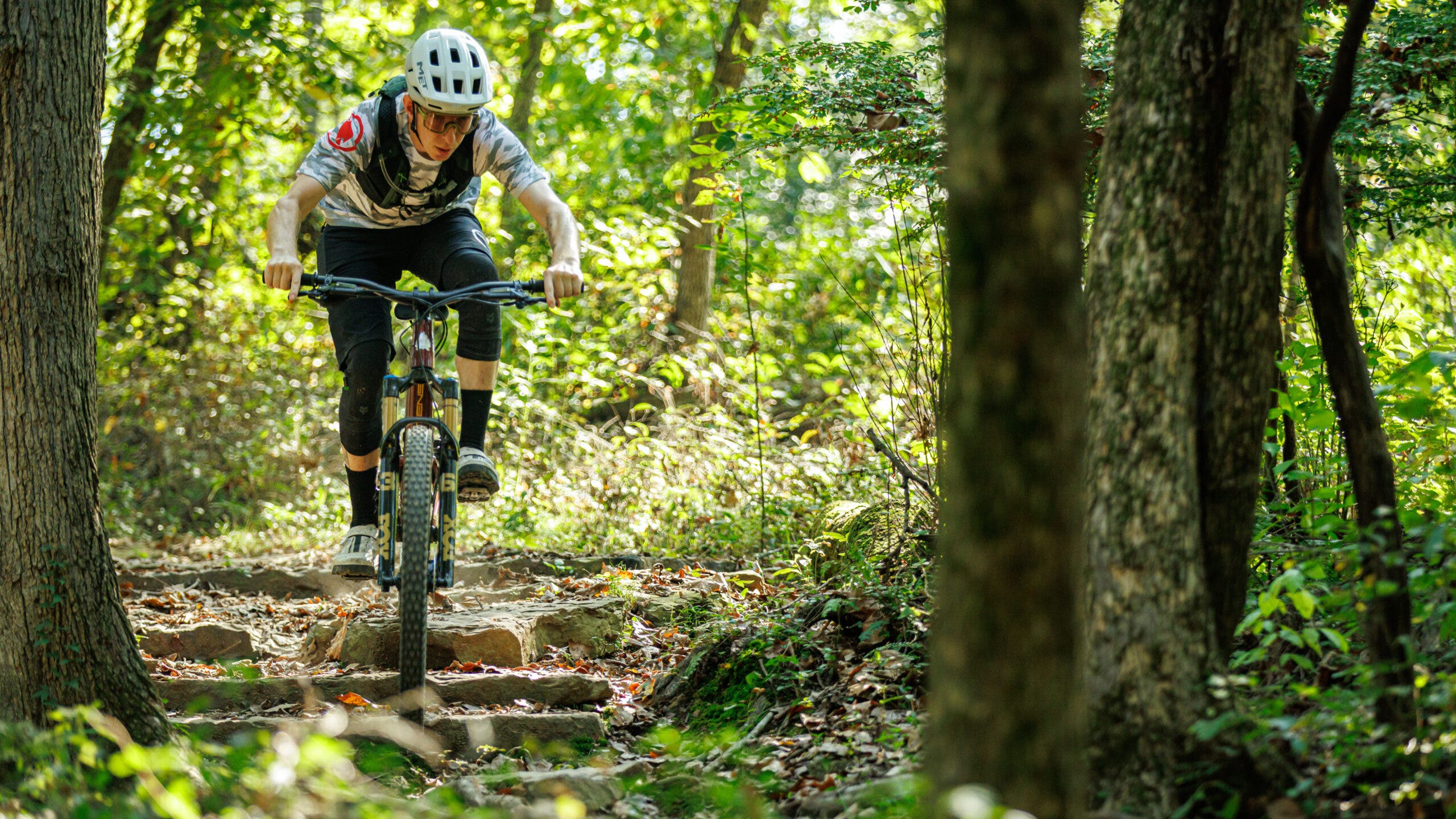
The Spider’s firm, snappy suspension accelerates on command and carves corners with intent. Pairing a 130mm rear frame with an equally long fork is unusual, and it exposes a minor drawback: on rough, rowdy, or steep terrain, the bike demands a strong arm and precision to stay on line. Smooth singletrack that encourages you to let go of the brakes is where the Spider truly shines.
While Intense’s custom parts selector lets riders choose their desired components, it doesn’t offer the greatest savings; the frame itself costs $3,000, and that’s not including a shock. Taller riders should keep tabs on their preferred amount of dropper post travel, too. The Spider’s dual-link suspension design interrupts the seat tube, meaning that you may not be able to lower the post in the frame and maximize the dropper post you’re hoping for.
All of that said, the Spider is one heck of a trail bike that craves speed and hugs corners. Plus, there are countless ways to build out a Spider with parts from most major component manufacturers.
Best Pedaling Efficiency
Propain Hugene
Tested Build: Signature Spec 2
Weight: 30.1 lb (size: L)
Travel: 130 mm, 140 mm fork
Frame: Carbon
Wheel size: 29”
Pros and Cons
+ Light and robust build
+ Efficient pedaller
+ Very solid, stable feel at speed
– Heavy front wheel weight bias
– Not the plushest ride
– Takes some experimentation with suspension and cockpit setup to really unlock its potential
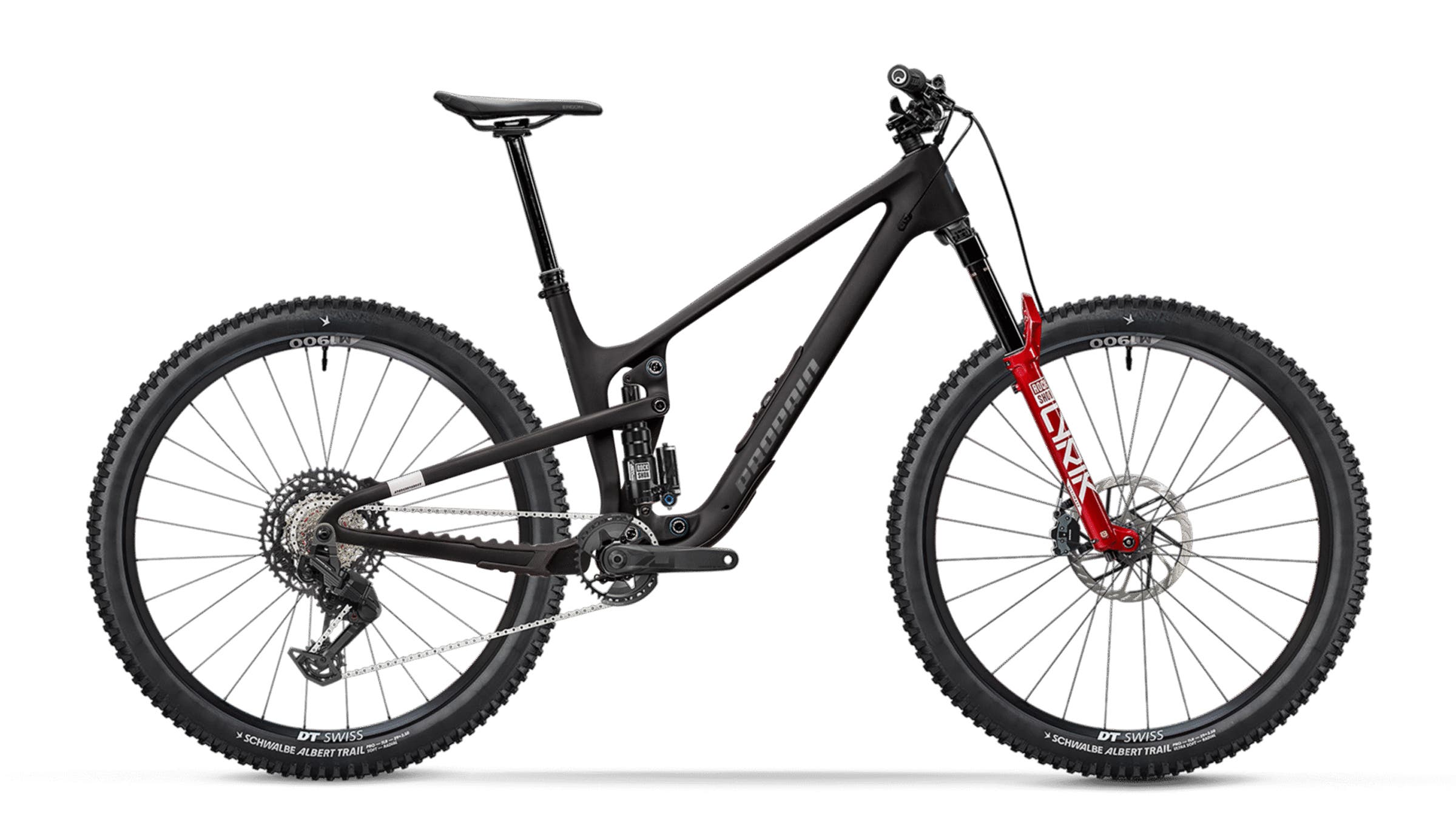
Propain aims to make mountain bikes that pedal efficiently, and the Hugene leads the charge. It’s the shortest-travel bike in Propain’s lineup, with 130mm of rear travel via the Pro10 suspension. The result is a bike built more for sprinting than relentlessly tracking the trail.
Despite a parts kit and geometry reminiscent of a longer-travel trail bike, the Hugene stays respectably light. The frame positions the rider low and forward, affecting both climbing and descending—almost as if it were designed around a 150mm fork rather than the standard 140mm. The Hugene prefers gentler gradients, but in the right conditions, it can rally with confidence.

The Hugene frame is clean and simple. It carries one standout feature: the downtube storage compartment, a handy spot for essentials like a spare tube, snacks, or a windbreaker. Reducing chainslap noise to a minimum is somewhat overlooked, but luckily, that can be resolved with cheap and effective solutions, such as an STFU chain damper. There are no geometry adjustments, so dialling in the shock pressure and damper settings to a sweet spot between comfort and support isn’t the easiest process. Likewise, that front-end height could be remedied with a higher-rise bar.
Builds start at $3,499 and come in three striking finishes: stealth black, matte copper, and one Propain calls “Violet Ash”. Each model can be customized with a wide range of trusted or boutique components, letting riders make the Hugene truly their own.
Best High-Pivot Trail Bike
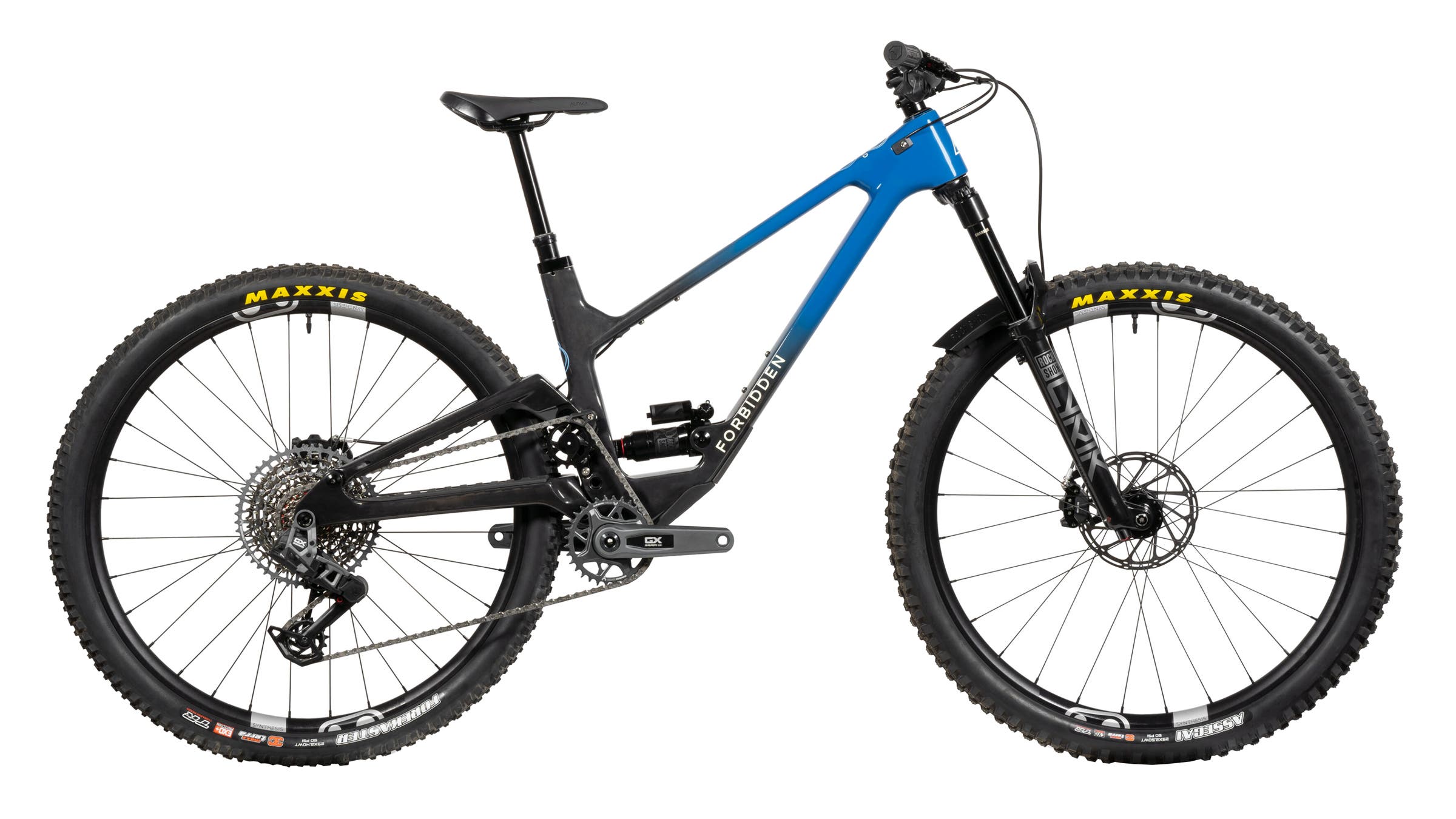
Forbidden Druid 2
Tested Build: Druid 2
Weight: 32.4 lbs (size: S2)
Travel: 130 mm, 150 mm fork
Frame: Carbon
Wheels: 29″ or MX
Pros and Cons
+ Descends like a longer travel bike
+ Extremely quiet ride
– The extra idler wheel can require more servicing
– XL frame’s chainstay grows extremely long through the travel
If you’ve ever ridden an idler-equipped high-pivot bike—meaning the bike’s main pivot is placed above the top of the chainring and the rear wheel axle—you know the calming effect that the rearward axle path brings to the nature of the ride. Forbidden has taken that to a trail bike, something seldom utilized on a 130-millimeter-travel bike. The original Druid won over fans of shorter travel bikes with its ability to handle descents as if it had magical powers—now, it’s transcendent. Even with a longer-travel model in the lineup, Forbidden’s enduro racer, Rhys Verner, claimed the top spot this season aboard the Druid V2.
We took the Druid V2 out on singletrack uphills and downhills with chunky rock outcrops, and the bike felt superbly balanced. Thanks to the high pivot design and the Super Deluxe rear shock, the Druid handled technical bumps with ease and had no trouble carrying speed. The Druid V2 thrives in singletrack because you can stay seated upright and comfy, and you don’t lose much speed when pedaling across roots.
However, the admirable suspension qualities of high-pivot bikes don’t come easily—they typically require more upkeep to maintain maximum drivetrain efficiency. Due to the precise placements of the pivots on the Druid V2, you cannot adjust the geometry. To pick between a 64 or 64.5-degree head tube angle, you’ll need to choose the specific frame member that houses either a 27.5 or 29-inch rear wheel. Although the brake line’s routing passes through the seatstay, it’s not a swap you’ll be making in the parking lot. On that note of chainstays, Forbidden scales their front to rear center lengths proportionally per size, so the same ratio is kept on all frame sizes. Even taller riders may have trouble wielding the 466-millimeter chainstay found on the XL frame size.
Overall, the Druid V2 is one of the more capable short-travel bikes for riders who prefer snappy handling. It might take a while for some riders to acclimatize to its lengthy rear triangle, but the unbelievably smooth descent is worth it.
Most Versatile
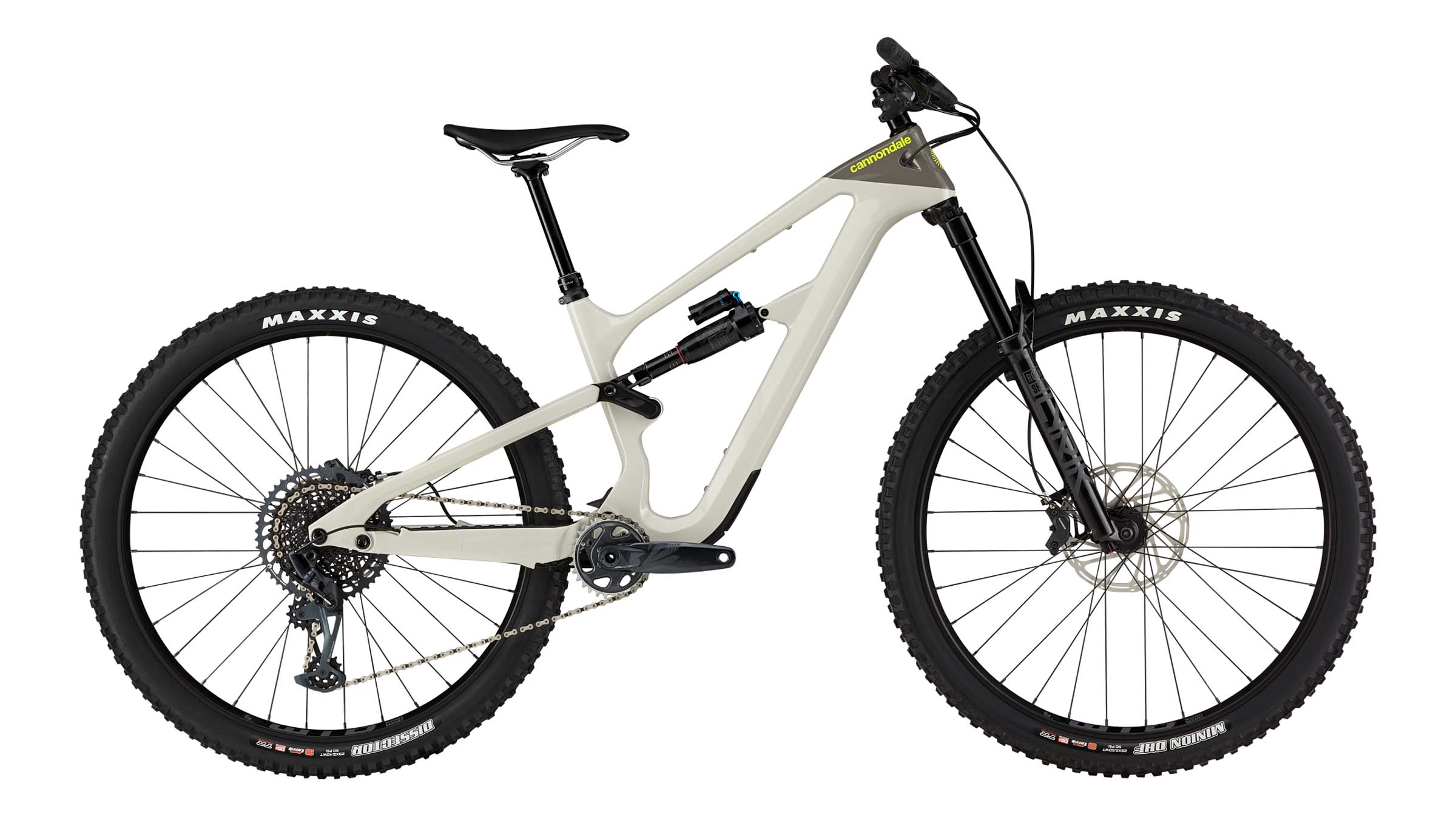
Cannondale Habit Carbon LT 1
Tested Build: LT 1
Weight: 31.4 lbs (size: L)
Travel: 140 mm, 150 mm fork
Frame: Carbon
Wheels: 29”
Pros and Cons
+ Balanced and composed in tricky situations
– Not super efficient on the uphill
When we covered the release of the Habit, it struck us just how sensible and conventional it was. There was no quirkiness to it, at least on the surface, and everything about it seemed to be pragmatic and well-judged. The Habit LT’s geometry, frame features, and simple layout all scream modern, sensible trail bike. The frame has some nice subtle features, with a rubber cover to stop your chainstay from gobbling up rocks, non-guided routing that is very easy to work with thanks to a removable panel on the downtube, ISCG threads, and a tried-and-true threaded bottom bracket.
Though it is a typical four-bar bike, the Habit has a comparatively low anti-squat value. This may be bad news for all-out efficiency on smooth roads, but it’s good news if you need your suspension to adapt to terrain on rougher climbs. The Habit is comfortable on undulating terrain thanks to that higher stack, and the suspension tracks and grips well. We sometimes used the climb switch for hard-pack fire roads or tarmac stretches, but for anything remotely rough, we set it to open and let it flow. It might not be the most suited to out-of-the-saddle pedaling hard, but the bike does strike a great balance between tracking and efficiency. The Habit LT is weighted on the front, balanced on most trails, and able to handle very steep trails because of this well-proportioned and pragmatic geometry. We’re not big believers in massive reaches, especially when combined with short rear ends—the grip the Habit achieves on any type of trail is a testament to this. Extra-regular is no bad thing.
Overall, this is a very well-executed bike that simply works very well. Balance, composure, maneuverability, and comfort can oftentimes seem like ideologies that are opposed to one another in bikes, and you can merely have two or three out of the four at best. The Habit LT makes a very strong argument that, as riders, we might just be able to have it all.
Best for Getting Air
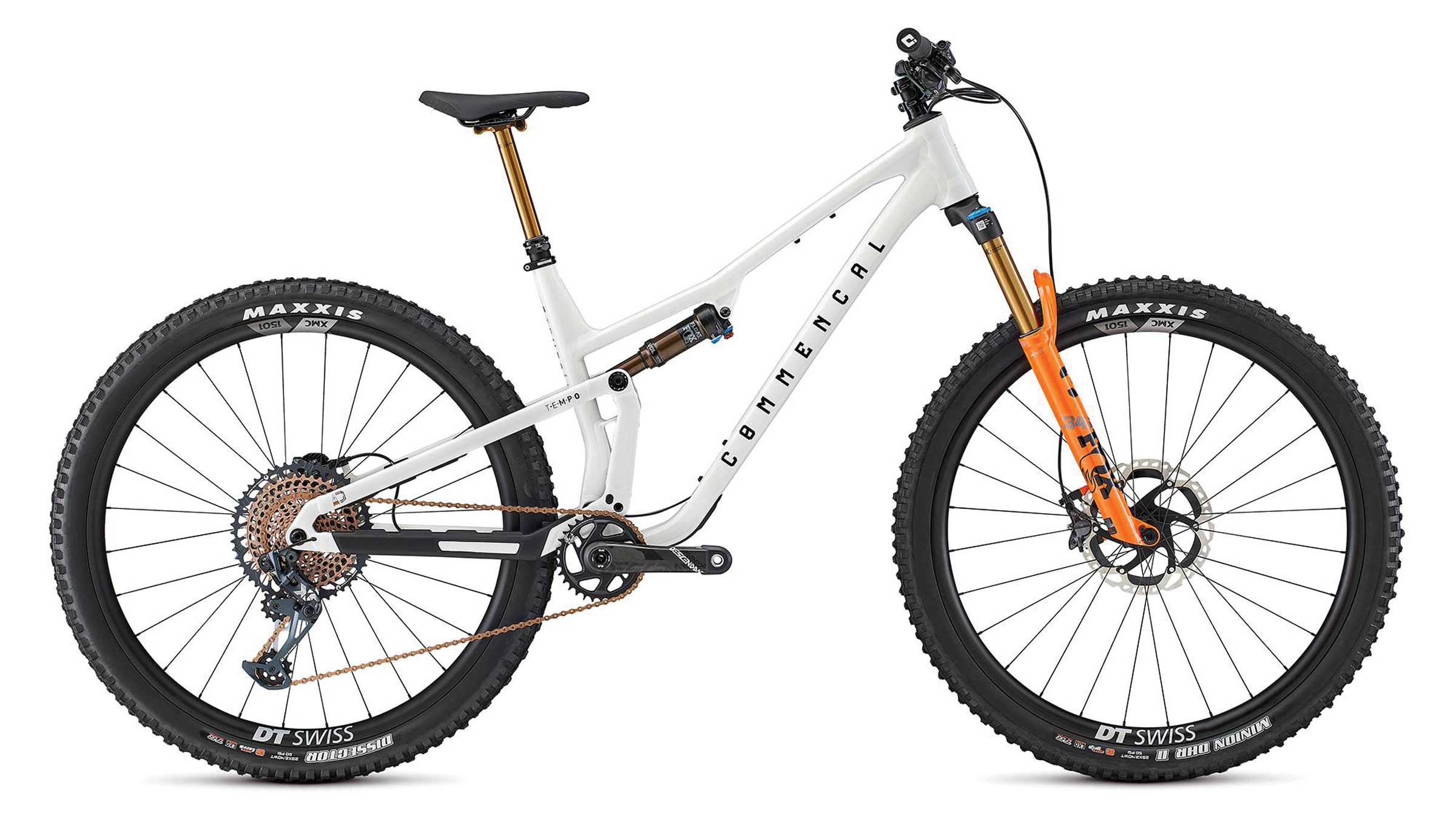
Commencal Tempo LTD
Tested Build: Tempo LTD
Weight: 31.1 lb (size: L)
Travel: 125 mm, 140 mm fork
Frame: Aluminum
Wheels: 29″
Pros and Cons
+ Quick and lively
+ Never met a jump or corner it didn’t like
– Thru-headset cable routing can make maintenance more difficult
No matter which direction the trail points, the Tempo is fast. It has a satisfying snappiness that rewards hard pedaling efforts, especially on rolling terrain where the bike can be pumped and pushed to maintain that momentum. It’s also a very energetic climber, which will be a welcome trait to anyone coming off of a longer travel machine with more subdued pedaling manners. Compared to longer, slacker bikes where you need to swing wide to navigate awkward switchbacks, the Tempo is happiest taking the inside line, following a tight, precise arc on its way upwards. We’d be tempted to call it a trail bike for riders who prioritize the climbs—except that it’s a blast on the downhills too.
The Tempo is the type of bike that can breathe new life into mellower trails while also holding its own on the rowdier stuff. Modern mountain bike categories can be nebulous at times, but this is a trail bike in the truest sense of the term, well-suited to spinning out the miles while also goofing off and hitting every lip and landing possible. Do we wish it didn’t have thru-headset cable routing and better-sealed frame bearings? You bet, but we wouldn’t consider either of those deal-breakers. The overall ride characteristics of the Tempo are overwhelmingly positive, enough so that we’d be willing to deal with a little extra shop time.
How to Choose a Trail Bike
The trail bike category is the most saturated in mountain biking, so it’s understandable if you’re feeling a bit overwhelmed. Fortunately, there are a few easy questions you can ask yourself to narrow the field.
What kind of riding will you be doing?
As much as you may want to answer this one with flowy, singletrack heaven, it’s important to be realistic about what you’ll actually be riding. This can be determined by the time of year that you mostly get out there (which will determine what the conditions will be like), which trails are most accessible to you, and which region you bike in. Are you planning on taking big trips consistently, or will you mostly stay local?
Will you be riding lift-accessed trails?
If most of the riding you’ll be doing is lift-accessed, you may want to look in the enduro category. If you’ll be doing a mix of both and are planning on hitting jumps, look for a bike that has enough travel but doesn’t compromise on the uphill either.
What’s your riding style?
If you prefer to charge through steep, technical sections, you could be looking at a very different bike than if you’re a more playful rider who likes to find side hits. Again, be honest with yourself about this. How do you actually ride, and what’s aspirational?
What’s your budget?
Yes, mountain bikes are expensive. But you do have options. Consider buying used (the market has finally gotten more reasonable this past year), by checking out Pinkbike’s marketplace or looking on Craigslist. Or, check out our best value bikes page for cheaper new bikes. If you’re thinking about buying a used bike (which can be an excellent option), watch this video from Pinkbike Originals.
Are you able to test it out?
You must take a bike at least for a spin around the block before you pull the trigger. You might find that you’re uncomfortable on a bike with a certain geometry that you’re not used to—and although sometimes it does take some more time on the bike—you’ll know if you’re just not sitting right. Taking it for a spin will also help the shop determine which size is best for you.
How We Test Trail Bikes
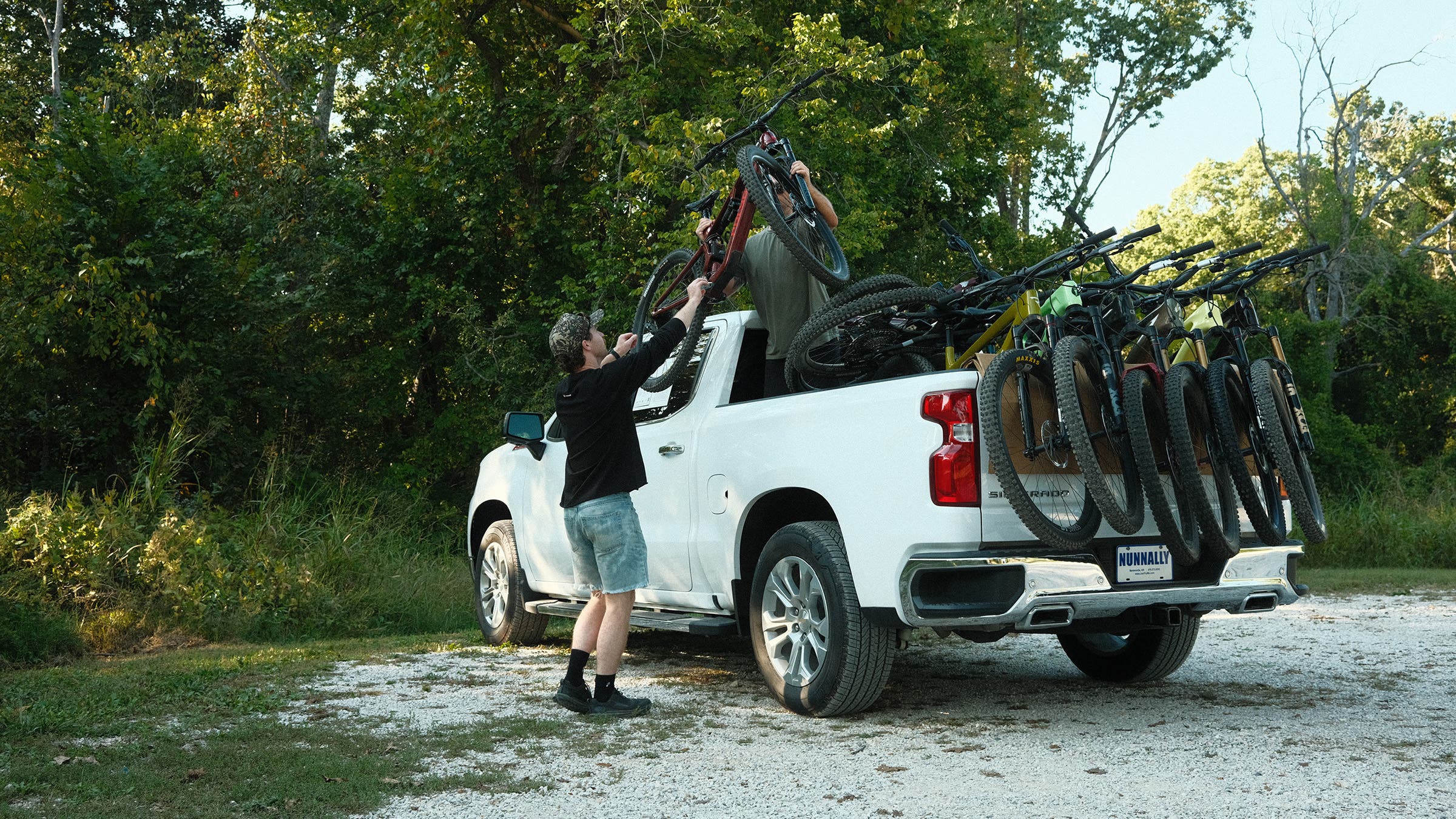
This year’s Trail Bike Field Test took place in Bentonville and Bella Vista, Arkansas, where a wide variety of trails provided ideal testing conditions. From chunky, rocky climbs to smooth, flowy jump lines, the region offered a little bit of everything—perfect terrain for evaluating trail bikes. All bikes were ridden on the same test loop to ensure accurate comparisons, since back-to-back testing is the best way to determine which models truly stand out. Testers also made sure to take time for some extended bonus loops in order to explore as much of the area’s seemingly endless trail network as possible.
We weighted climbing and descending performance equally, because on a trail bike, efficiency on the way up matters just as much as fun on the way down. Testers evaluated frame geometry for its impact on fit and handling, along with overall suspension performance. Components were also part of the equation, since underpowered brakes or fragile wheels can quickly limit a bike’s real-world capability.
Meet Our Lead Testers
Mike Kazimer
Mike Kazimer is Pinkbike’s editor-in-chief, and has been entrenched in the mountain bike world for well over 20 years. From crushing cardboard boxes as a shop grom to his current role as Pinkbike, he’s long been fascinated with the elegant simplicity of human powered machines. Based in Bellingham, Washington, Kazimer’s no stranger to wet weather, and his favorite rides tend to be long, technical forays deep into the forest.
Dario DiGiulio
Dario DiGiulio is a tech editor for Pinkbike. You can find him biking the trails of Bellingham, Washington year-round.
Matt Beer
Matt Beer is a tech editor for Pinkbike. He’s based in Squamish, B.C.
