

Following a fatal 60-foot fall on the popular Alum Cave Trail, a veteran guide breaks down the extreme ecosystem and hiker behavior that make the nation’s most popular park deceptively deadly.
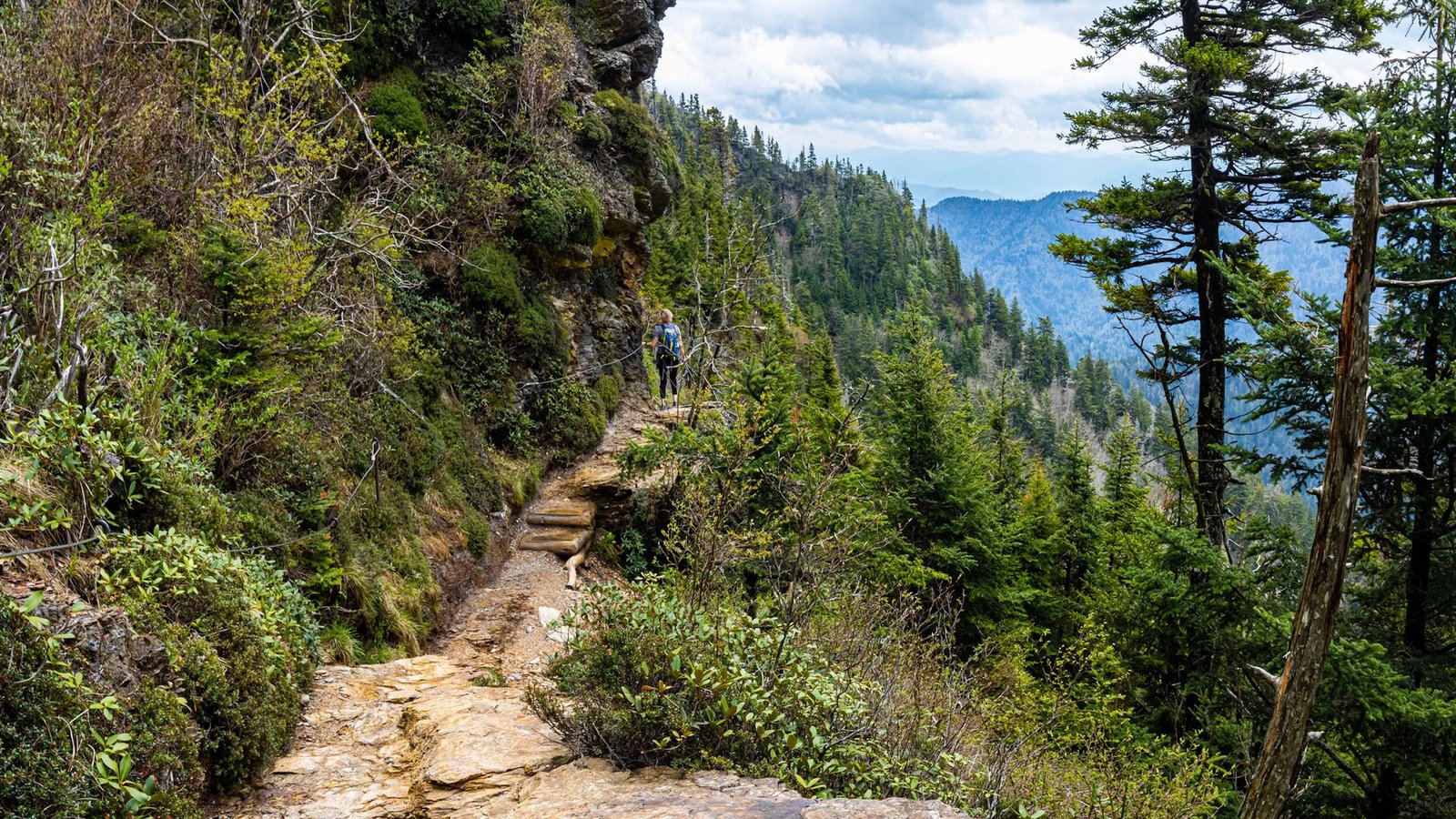
A steep, rocky section of the Alum Cave Trail in Great Smoky Mountains National Park (Photo: Billy McDonald/Getty Images)
Published April 1, 2026 03:45PM
Alum Cave Trail is one of the most popular and picturesque routes in Great Smoky Mountains National Park (GSMNP). It can also be unforgiving. On March 28, a 65-year-old hiker plunged 60 feet to her death from the trail’s steep upper reaches. Authorities have yet to release her name. Her death marked the fifth fatality in the national park to date in 2026.
What makes America’s most popular park also among the deadliest?
The Great Smoky Mountains encompass half a million acres of rolling, densely forested Appalachian foothills along the Tennessee-North Carolina border. Because the park is the nation’s busiest, with approximately 12 million visitors each year, it also has among the highest rates of deaths. Between 2010 and 2020, more than 100 people died inside its borders.
Vesna Plakanis is the owner of A Walk in the Woods, a guiding company based in the nearby town of Gatlinburg, Tennessee. Plakanis, 61, has lived in the area since the eighties and has been guiding hikers through the Smokies since 1998. She told Outside that the Alum Cave Trail is very popular, but also steep and exposed. It’s roughly five miles one-way and takes hikers to the top of Mount Le Conte.
Hiking on Cave Alum Trail
At 6,593 feet, Mont Le Conte is one of the highest peaks in Tennessee. The route to the summit is a serious endeavor, and one Plakanis said hikers often underestimate.
“It’s technically the shortest trail to the top of Le Conte,” Plakanis explained, “but you’re still gaining around 3,000 feet in elevation.” Around halfway up, the trail passes the Alum Cave bluffs, picturesque cliffside caves that have exploded on social media, further driving traffic to the route.
“There are a lot of people who go up there that just have no business being on that trail,” she said.
Le Conte’s summit is also home to a 100-year-old mountain lodge, the highest in the eastern U.S., where the woman who died in March was staying, Plakanis said.
A trip to this lodge is a bucket list item for many Smokies visitors, some of whom don’t realize how difficult it is to access via the Alum Cave Trail. The route is so treacherous that many hikers cling to fixed cables. In the area around the Alum Cave bluffs, it can be easy to lose footing.
“Those bluffs are a powdery, mineral-laden sandstone, constantly eroding,” Plakanis said. “It’s basically like walking on baby powder.”
Because the Smokies are a temperate rainforest, Plakanis added that the Alum Cave Trail is almost always slippery.
“Even if it’s not raining on you up there, you’re gonna get this cloud effect, a constant little ‘seep,’” Plakanis said. “That trail is always slick in some spots.”
What Makes the Great Smoky Mountains So Deadly?
The biggest mistake Plakanis sees visiting hikers make is underestimating the park’s dramatic climatic variance. Weather in the park often changes rapidly.
“It might be 80 degrees and sunny down here in Gatlinburg, but up in the mountains it could be snowing, there could be sleet, ice, or rain,” she said.
Preparedness also plays a factor. Plakanis said she regularly sees hikers starting on the trails wearing only shorts and a T-shirt, without water, snacks, rain gear, or proper footwear. Although elevations in the Smokies are low compared to parks in the American West, the park is still rugged.
“They don’t realize this is a pretty extreme ecosystem,” she said
GSMNP is also one of the few national parks in the country that doesn’t charge an entrance fee because several major highways run through the park. As a result, anyone who dies on these highways is counted among its death statistics. NPS mortality data show that out of the 65 people who died in the park between 2014 and 2019, 25 were involved in motor vehicle accidents.
A Particularly Chaotic Week in the Park
The March 28 death comes during an already chaotic period for the national park. A day prior, a married couple was hospitalized after a rockslide struck their car. Authorities later closed nearly eight miles of roadway to repair damage from the slide.
For more than a week now, officials in the park have been battling two wildfires: the Rabbit Creek and Fox Gap fires. The fires ignited on March 22 and 25, respectively. As of April 1, the two fires have burned over 150 acres.
