

Published April 3, 2026 04:34PM
Almost two months after a deadly Tahoe avalanche killed nine people in California on February 17, avalanche experts have published an official incident report on the tragedy. According to an analysis by the National Avalanche Center and the Colorado Avalanche Information Center, a wide range of factors—from weather to slope angle—contributed to the disaster. But perhaps most crucial was the decision by guides to have all 15 members of the party travel together amid worsening avalanche conditions.
“Exposing only one person at a time to avalanche terrain is an accepted best practice for backcountry travel,” the report notes. “This group consisted of 15 people. Analysis of past avalanche accidents has indicated that larger group sizes (four or more people) have a higher chance of being caught in avalanches.”
Rick Rogers was a member of the San Bernardino County Sheriff’s Search and Rescue team in California for 11 years. He also worked as a ski patroller for Heavenly Ski Resort in Tahoe from 2010 until his retirement in 2023. He’s familiar with the area where the deadly avalanche occurred.
“Not being privy to the decision-making process, the only way to mitigate this accident 100 percent would have been to stay in the huts and ride out the storm,” Rogers told Outside.
The 30-Degree Danger Zone
According to the report, the group “traveled below avalanche terrain and through the runout zone of an avalanche path during a period when a natural or human-triggered avalanche was likely to very likely.” The area recorded 111 inches of snowfall during the storm between February 15 and 19, the report stated, adding to an already precarious snowpack.
Rogers told Outside that he was also confused by the group’s decision to travel together amid the worsening avalanche conditions.
“My question is whether this group knew they were underneath the avalanche terrain during the storm. When you’re traveling through known avalanche terrain like that, it’s best to travel one person at a time or to stay put,” he said. “I was in the area for the storm, and it was dumping.”
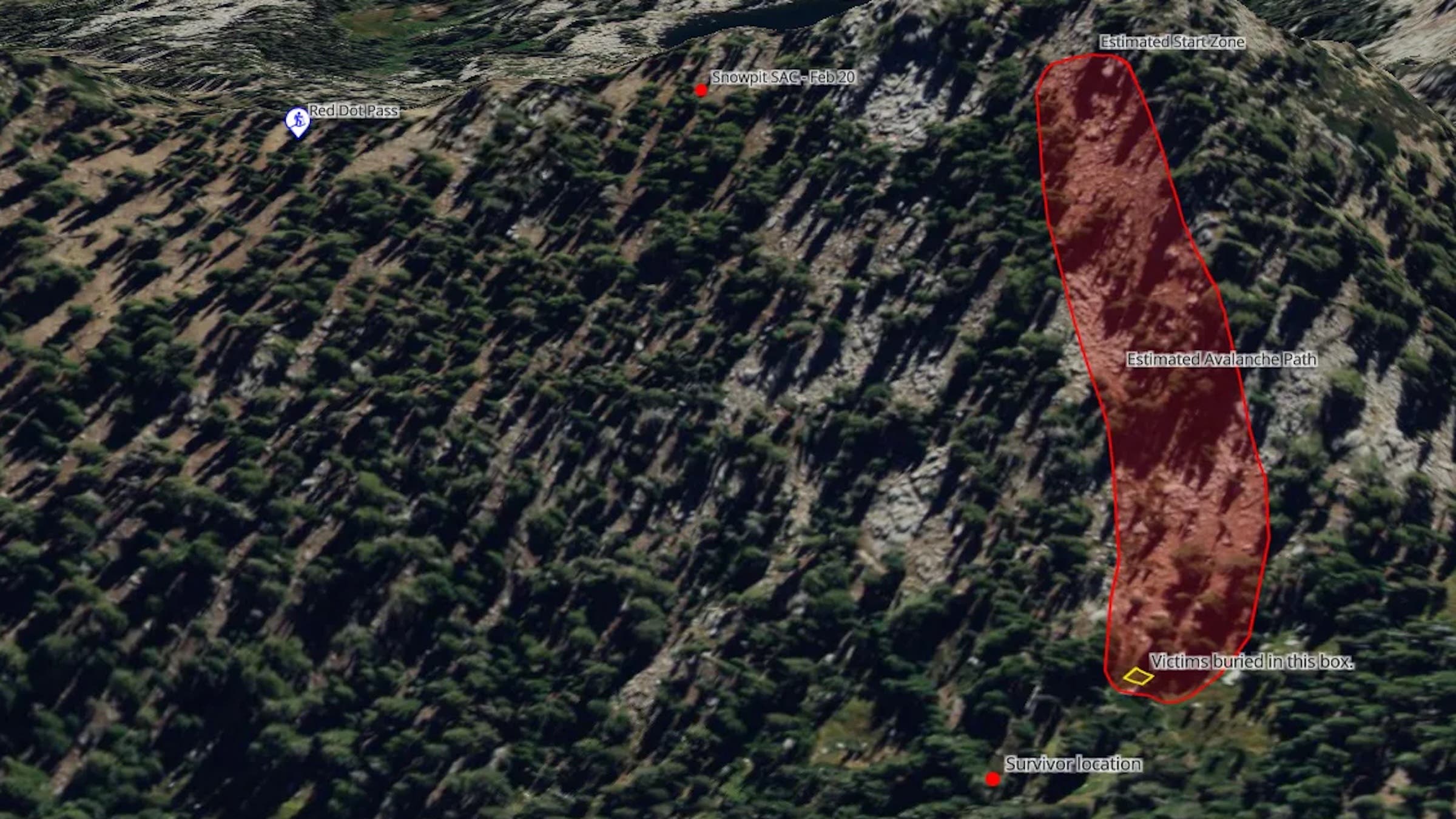
When touring the backcountry, several factors make certain terrain more prone to avalanches, one being the angle of the slope. According to a report published by the Sierra Avalanche Center, the avalanche likely started on a slope with an angle between 36 and 40 degrees. The burial site was located on a slope with a gradient of 22 to 25 degrees.
“Around 30-degree slopes are where avalanches tend to happen,” Rogers explained. “Any steeper, the snow tends to slough off during the storms. Less of an angle, the snow doesn’t run off.”
The report also notes that the group consisted of 15 people. Analysis of past avalanche accidents has indicated that groups of four or more people are more likely to be caught in avalanches. Larger groups tend to have a heightened risk tolerance, greater difficulty communicating, and a greater impact on the snowpack, according to the American Avalanche Association.
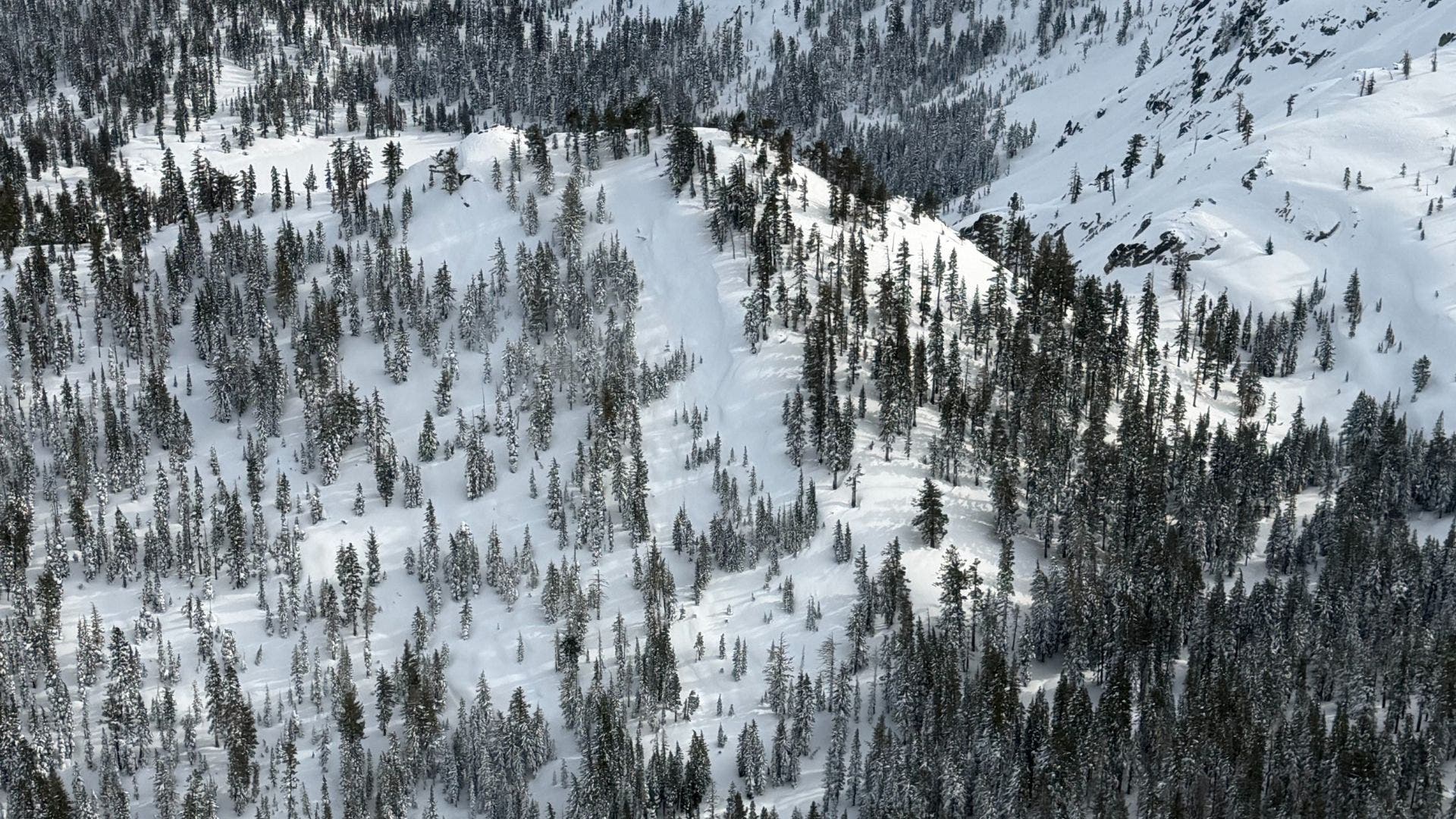
Another backcountry avalanche consideration is anchors—trees, rocks, or other features that can help stabilize the snowpack. Typically, it’s safer to ski in areas with more anchors when the snowpack is unstable. A satellite image of the avalanche area, however, showed its path cut through a well-established slide area, where there were few anchors for snow.
The Dangerous Physics of Wind-Loaded Slab
Officials measured wind gusts over 125 miles per hour in some areas near where the slide occurred, which Rogers says isn’t uncommon for major Pacific storms that roll through the area. What’s more important is how and where these high winds deposit snow.
“The wind contributes a lot to the creation of avalanches because it transports snow,” Rogers said.
Wind deposits snow on the leeward, or downwind, side of a ridgeline as it blows over. Wind also packs snow down. In the Sierra Avalanche Center’s report, the snow was described as a soft slab, meaning it moved as a single, cohesive chunk.
“As the air is flowing up and over the ridgeline, it swirls and deposits snow on the other side of the ridge. As you look at the ridgeline, one side may be scoured and rocky while the other side can have several feet of snow,” Rogers said.
According to the report, the group was skiing below that leeward slab of snow. Poor visibility would have made it difficult to see the snowpack, determine the slope angle, and spot anchors, the report said.
Sierra Cement and the Science of Snowpack
Because the Sierra Nevada mountain range is so close to the ocean, snow tends to have a high moisture content—sometimes called the snow water equivalent—making it particularly heavy. Snow water equivalent represents the depth of water that would result if the snowpack melted and serves as an important metric for forecasting avalanche danger. On the day of the avalanche, the SWE was 2.7 inches, indicating a very dense layer of snowfall.
“We refer to it as ‘Sierra Cement,’” Rogers said. “The more water, the heavier the snow, the more likely it is to slide.”
The avalanche report also noted a layer of facets, two to four inches thick. Facets are crystals that form in the snowpack when snow repeatedly melts, refreezes, and becomes buried. These layers can create unstable conditions, and if buried beneath a slab, they can trigger a snow slide.
“In this instance, there was a facet layer, which is a weak layer in the snowpack, then a rain crust, then four to six inches of new snow, and then we got a big storm,” Rogers said. “There was a lot of snow lying on top of a weak layer.”
Why Avalanche Airbags Weren’t Deployed
Search-and-rescue responders reported that some group members carried avalanche airbag backpacks, but none deployed them. Rogers added that this outcome is not surprising. Users must manually activate airbags to stay near the surface when caught high in a slide, but the airbags offer little protection if the avalanche buries them below the break.
The Unanswered Questions
For all the information provided in the report, there are still many questions about the incident. The cause of the avalanche—either human-triggered or natural—is still undetermined, the report said. Why the group decided to venture out in a storm, and their choice of path, also remains a mystery.
Two people, a guide and a client, who were not caught in the avalanche, were able to save the lives of four other buried victims. But the avalanche buried much of the evidence, and the information available comes from the group members who survived.
How to Stay Safe When in Avalanche Terrain
- Get the Forecast: Check your local avalanche center through the American Avalanche Association.
- Get Training: Take an avalanche safety course to learn to recognize hazardous conditions.
- Carry Essential Gear: Always carry a properly functioning avalanche transceiver (beacon), probe, and shovel.
- Practice Rescue Skills: Your team is your best form of safety. Ensure everyone knows how to properly use their gear.
- Evaluate Terrain: Avoid steep slopes of 30 degrees and more, and avoid traveling on or beneath unstable terrain.
- Watch for Red Flags: Recent avalanches, “whumpfing” sounds, and cracking snow are signs to avoid an area.
- Travel Separately: Only expose one person to potential risk at a time.
