

Updated April 9, 2026 12:16PM
Nepal’s Mount Everest guiding industry has been thrust into the international spotlight this week amid allegations that some trekking companies filed fraudulent insurance claims worth tens of millions of dollars. One allegation that’s generated a glut of headlines is that trekking guides poisoned clients with baking soda as a way to trigger an unneeded helicopter rescue.
This scandal has hit just as hundreds of climbing clients are beginning the hike to Everest Base Camp prior to their acclimatization hikes later in the month. Nepal’s Everest outfitters are watching the scandal, and whatever fallout comes from it, closely. Some told Outside that they worry the allegations, and the headlines created in their wake, will weaken Nepal’s climbing industry in the coming years.
Fallout From the Everest Rescue Scandal
- Guiding companies believe the current fraud scandal will hurt the Everest climbing business in 2027 and beyond.
- Outfitters feel that international media has wrongly lumped Mount Everest climbing companies in with trekking businesses at the center of a government probe
- Outfitters do not trust some of the claims in the government report on fraud—specifically that guides poisoned trekkers by lacing their food with baking soda
“The scandal won’t impact our business this year, because all of our clients have already booked,” Tashi Lakpa Sherpa, CEO of 14 Peaks Expeditions, told Outside “But it will have a big impact next year. Now whenever a client gets sick, they’ll wonder if they were poisoned.”
Tashi Lakpa Sherpa and others told Outside that they feel that the Everest climbing industry has been unfairly caught up in the scandal, which, up to this point, deals with outfitters that operated guided hikes, but not Everest climbing companies. Officials also told Outside they question the accuracy of some of the claims in the government’s report.
A Bombshell Report About Himalayan Fraud
The allegations stem from a sweeping 748-page report released in March by Nepal’s Central Investigation Bureau (CIB), a wing of the country’s police force that deals with organized crime. The report alleged widespread fraud tied to helicopter rescues and medical evacuations in the Himalayas. According to the report, trekking outfitters convinced clients to call for unneeded helicopter rescues in remote areas, and then billed the rescues at an inflated price to the international insurance companies. The guiding companies, helicopter operators, and even hospitals all received kickbacks from the insurance payouts, the report said. It also described a mafia-style network in which the same investors held stakes in companies at every step of the rescue chain.
The CIB estimated that the companies scammed insurance companies out of nearly $20 million during a two-and-a-half-year period.
In March, the CIB charged 32 people across several industries as part of the investigation. Among the defendants are officials from several trekking and helicopter charter companies.
“We have hard evidence of the companies and individuals involved in the fake rescue scam. All of them will be prosecuted, but it will take time,” Manoj Kumar KC, the chief of the CIB, told The Kathmandu Post in January. “We estimate that many companies identified by past probe committees and those currently under investigation by the CIB are still active.”
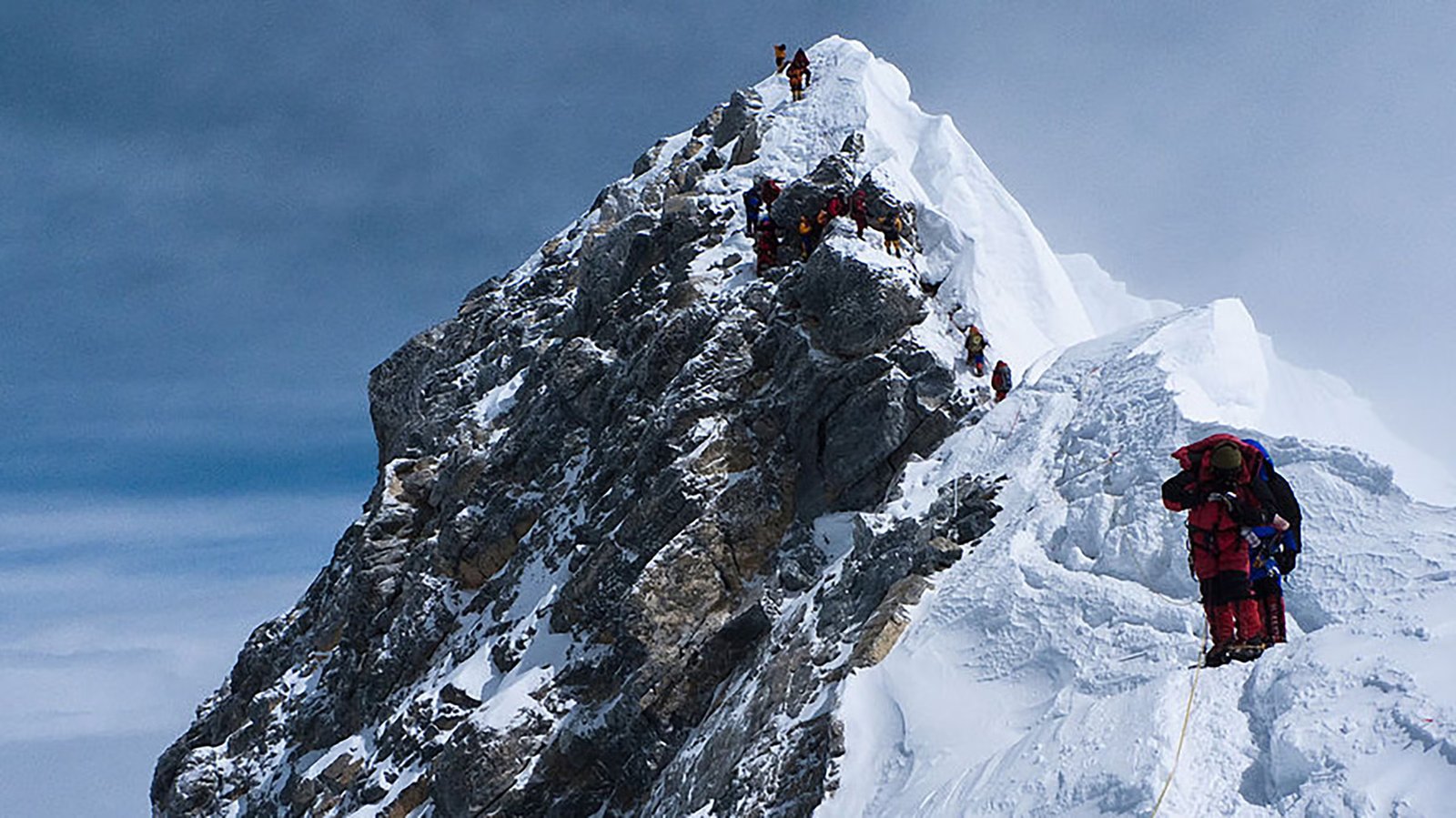
It’s worth noting, however, that the Everest climbing industry has not been part of the investigation. There’s an important delineation between climbing and trekking outfitters—the latter takes tourists on guided hikes across the Himalayas. Climbing outfitters, meanwhile, guide clients up Mount Everest and other punishing peaks.
Director of guiding company Elite Expeditions, Mingma David Sherpa, who is also a recently elected member of Nepal’s Parliament, said that the high-altitude guiding industry has been unfairly tarnished by the scandal. “It doesn’t make any sense,” he said. “The middlemen created this scandal, the media blew it up, and now it’s only made the innocent guides look bad. It’s complete misinformation.”
Doubts About Allegations of Poisoning
One claim in the report has triggered a glut of international headlines: an allegation that a trekking guide secretly added baking soda into hikers’ food to make them sick and trigger insurance-covered helicopter evacuations. The report, however, did not include a specific example of this claim. And the CIB appeared to walk back this claim in a statement provided to Climbing, Ouside’s sister publication. “To date, the official investigation has not found any evidence of ‘poisoning,’” the CIB said.
Officials from guiding companies and helicopter rescue firms who spoke to Outside said they doubt the validity of the poisoning claim.
“I can guarantee that to date there has not been a single instance of an Everest guide poisoning a client,” Tashi Lakpa Sherpa added.
Dan Stretch, senior manager of medical operations at Global Rescue, a membership-based evacuation and medical services organization that operates extensively in Nepal, called the baking soda story an “urban myth.” He said the story has circulated within the trekking industry for a decade or so.
“I remember it being discussed ten years ago,” he said. “If someone wanted to make a client sick, there are much easier ways to do it. What we usually see is simply people not acclimatizing properly.”
Sources told Outside that allegations of poisoning on Mount Everest date back to the 1980s. The most recent one circulated in 2018. That year, a medical-assistance company called Traveller Assist accused trekking operators and hospitals of orchestrating fraudulent helicopter rescues. Among the allegations was that trekkers’ food had been spiked with baking soda. A subsequent story in the Kathmandu Post, however, found that Traveller Assist misrepresented its relationships with global insurance companies.
On April 6, Nepal’s Ministry of Culture, Tourism, and Civil Aviation, which oversees climbing and trekking outfitters, as well as helicopter rescue operators, released a statement that called into question the poisoning claim.
“Claims of deliberate harm to trekkers, including the feeding of contaminated food, have not been substantiated by investigations conducted by the Central Investigation Bureau (CIB),” the statement said. “The ministry urges media outlets to verify such claims with official sources to avoid the spread of misinformation.”
The statement also said that the ministry would engage in a “zero-tolerance” policy toward operators proven to have engaged in fraud.
Reputational Damage Is a Tough Pill to Swallow
Jiban Ghimire, an expedition outfitter and Finance Director for the helicopter company Altitude Air, which was named in the report, says the controversy has already caused financial losses. Ghimire did not say how much money his company has lost. Two employees from the company were accused of creating false passenger manifests, and the case is currently pending trial. The employees in question have not been arrested, Ghmire said.
“The rescue stories have damaged the public’s trust in us,” he said.
Other sources told Outside that the scandal’s biggest fallout could come in the near future, if global insurers decline to cover trips in Nepal. Nepal’s trekking industry relies heavily on travel insurance policies that pay for expensive helicopter evacuations from remote mountain regions where healthcare isn’t available. If insurers decide the system is too vulnerable to abuse, they could simply withdraw coverage.
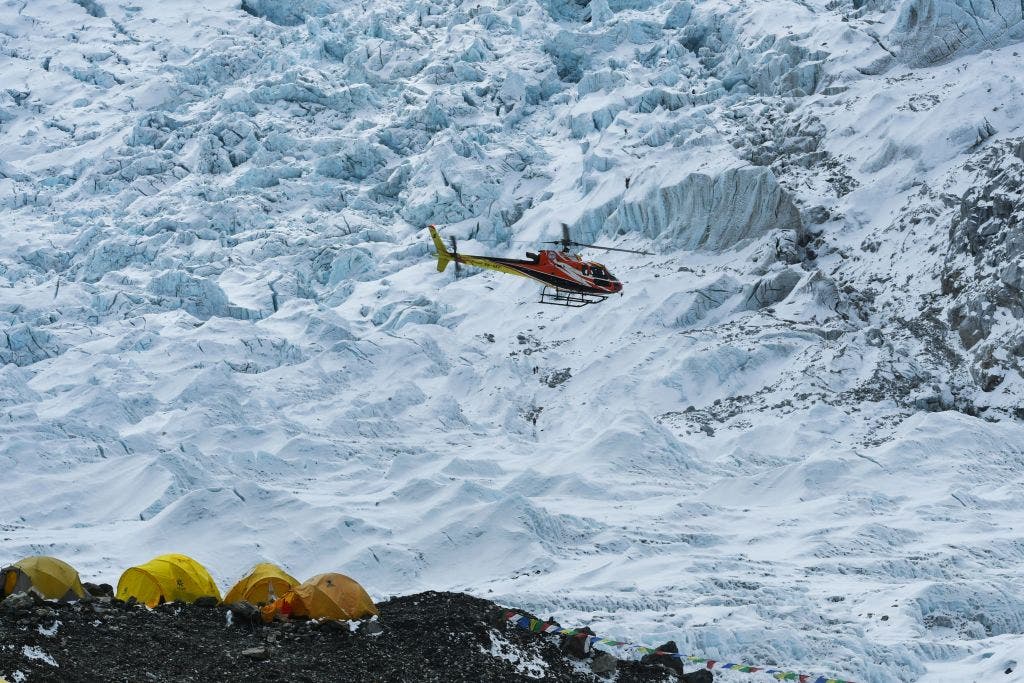
“Australians already have real difficulty getting medical insurance for Nepal,” Stretch said. “So there’s a real risk that insurance companies could pull out altogether. If it’s not profitable—if companies are paying out more than they’re taking in—eventually they’re going to question whether they should continue.”
Helicopter companies may also fly less frequently into the Himalayas, experts told Outside. To add to the pressures on Everest guides, Global Rescue, an evacuation and medical services company based in the U.S. announced that it would suspend all long-line rescue services for the 2026 climbing season. In 2025, these harrowing missions, in which a stricken climber is attached to a rope dangling from a helicopter, saved several climbers on Mount Everest. Global Rescue said it was ending the service because its best pilots were not flying in Nepal this season.
But the real metric of whether or not the scandal will impact business on Everest likely won’t be seen until later in the year. That’s when clients will start signing up for expeditions to the peak in 2027.
“I’m confident that everyone who successfully summits Everest this year will demonstrate to the world what the reality here is,” Mingma David Sherpa told Outside. “And I’m hopeful that next year will be even better.
