

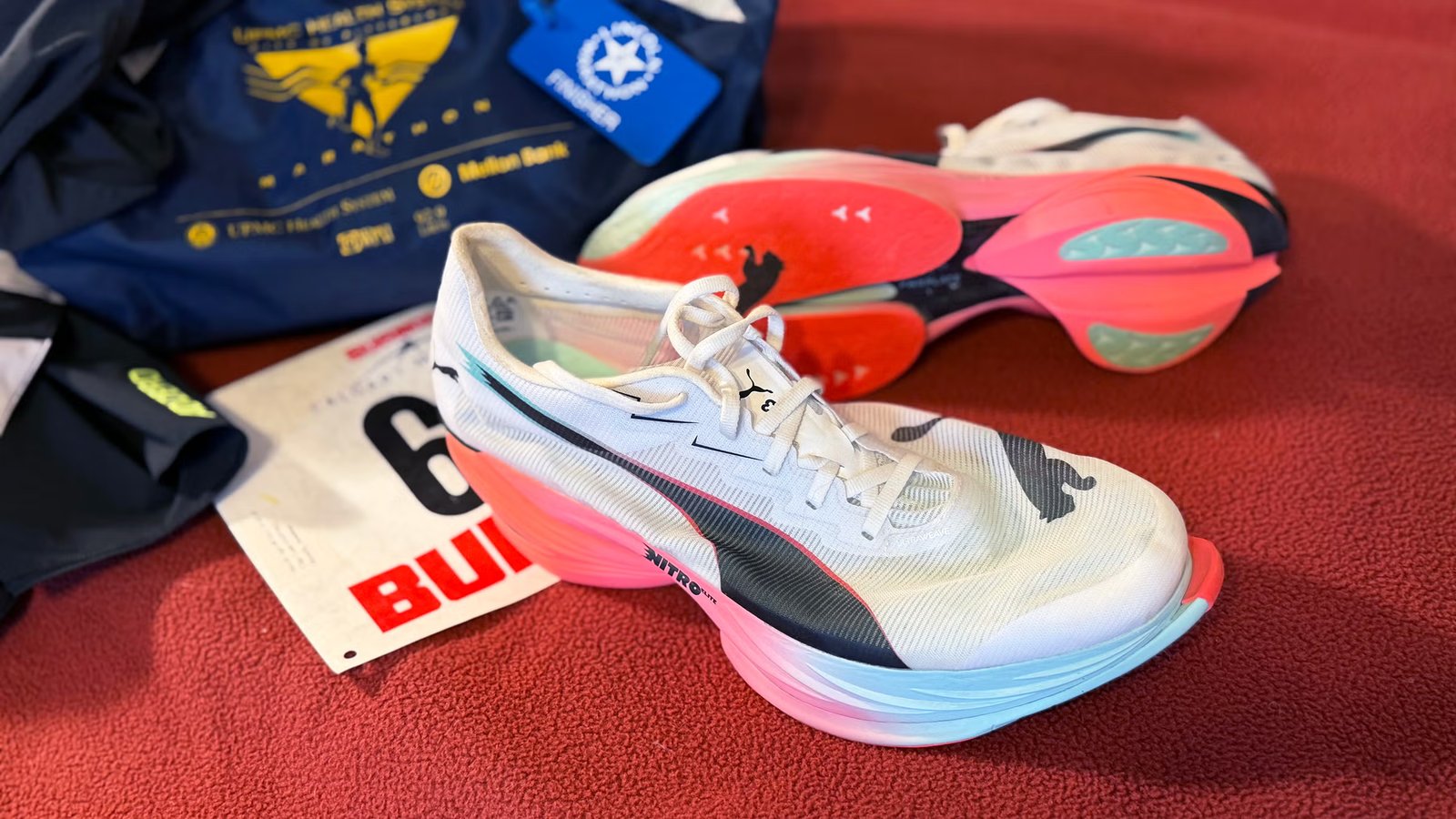
Published April 28, 2026 11:00AM
What’s New in April 2026: After six months of testing new racing shoes and comparing them to models previously tested over the last two years, we’ve added two new plated shoes and three new non-plated shoes. Our testers again selected the Nike Alphafly 3 as the best all-around carbon-plated marathon racing shoe for its bouncy, efficient ride and relatively stable feel. For a more adaptable, non-plated option, we recommend the Asics Megablast. The new Hoka Cielo X1 3.0 replaces the Cielo X1 version 2 as the bounciest race shoe, and the Adidas Adios Pro 4 takes top spot among the softest super shoes. In the non-plated category, the Asics Superblast 3 was named runner-up best marathon racing shoe overall; the Adidas Hyperboost Edge most supportive; and the R.A.D. UFO bounciest.
Training, fueling, hydration, and pace are the biggest factors in marathon success, but don’t underestimate the role the right racing shoes can make. Today’s racing shoes reduce impact, return energy, and provide the cushioning and stability to carry you through 26.2 miles. As shoe technology advances and new marathon racing shoes come out, we continually test them to determine the top picks. Here are the best marathon racing shoes available today, based on our testing.
At a Glance
Best Marathon Racing Shoes (Plated)
Best Marathon Racing Shoes (Non‑Plated)
Best Marathon Racing Plated Super Shoes
Eight years after the debut of the first super shoe, the thick-stacked, carbon-plated racers are ubiquitous at the front of every marathon and increasingly common among runners in the pack looking to optimize their performance. These shoes have been lab-proven to improve running economy by a few percentage points, making it easier to maintain a faster pace. Runners also report that they experience less muscular fatigue when running in a super shoe that complements their stride.
These are some of the super shoes that our testers found most comfortable and effective at marathon pace, but your experience may vary (as we found when we had multiple testers compare 19 super shoes in a head-to-head showdown). Every super shoe boasts some sort of ultralight, hyper-responsive foam with an embedded, curved carbon-fiber plate—but each delivers a surprisingly unique ride. You’ll have to experiment to find one that gives you wings.
See our “How to Choose Marathon Shoes” section for more guidance on whether you should consider a super shoe and how to select a pair that works for your stride.
Best Overall Marathon Racing Shoe (Plated)
Nike Alphafly 3
Weight: 7.8 oz (men), 6.2 oz (women)
Stack Height: 40–32 mm
Drop: 8 mm
Sizing: 6-15 (men’s), 5-12 (women’s)
Pros and Cons
+ Bouncy, propulsive midsole
+ Breathable, form-fitting upper
+ Lighter than ever
– Difficult to get on/off
– Unstable heel
Designed specifically for marathons, the Alphafly set a new standard as the fastest marathon shoe ever when Eliud Kipchoge wore them while breaking the 2-hour barrier in a staged marathon, clocking 1:59:40.2 in October 2019.
Now, in its third iteration, the Alphafly 3 continues to dominate as the ultimate marathon racing shoe. Designed with Nike’s Air Zoom Units in the forefoot and a PEBA-based midsole, our more competitive, efficient testers praised the Alphafly 3 for its bouncy, energy-efficient ride.
Subtle adjustments to the shoe’s geometry, including a wider footprint and carbon fiber plate, paired with repositioned Air Zoom Units and strategically sculpted midsole, give the Alphafly 3 a distinctly different feel from its predecessor. These changes effectively address some of the issues with the Alphafly 2, which many felt was heavy and clunky compared to the original.
The new Alphafly 3 is surprisingly nimble, weighing in as the lightest Alphafly to date. Even running as fast as 5k pace, I found the Alphafly responded quickly, encouraging a fast turnover. That said, it may be too sharp of a tool for some runners, as those who require a stable stance may find it a bit wobbly, especially in the heel.
The redesigned Atomkit 3.0 upper is about as race-y as you can get—extremely light and airy. Though a little tough to put on because of its tightly woven mesh (like previous models), the new upper is highly breathable and secure, with sawtooth laces that stay tied tight throughout the marathon.
Read our full Alphafly 3 review and how it compares to other racers in our Super Shoe Showdown.
Runner-up, Best Marathon Racing Shoe (Plated)
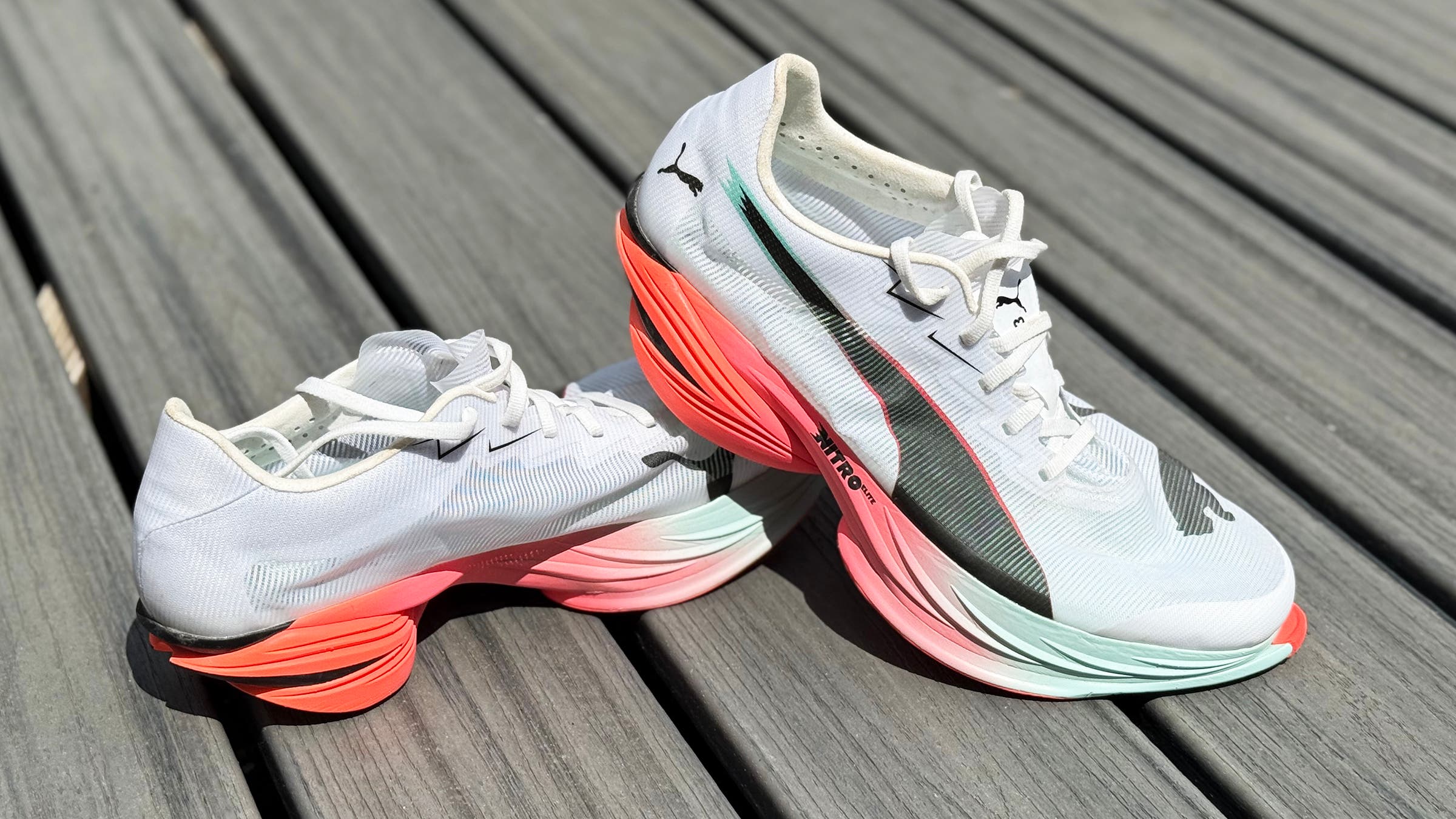
Puma FAST-R Nitro Elite 3
Weight: 6.0 oz (men), 5.2 oz (women)
Stack Height: 40–32 mm
Drop: 8 mm
Sizing: 7-12, 13, 14 (men’s), 5.5-11 (women’s)
Pros and Cons
+ Extremely lightweight
+ Versatile: performs well from mile to marathon
+ Razor-thin upper holds foot well
– The decoupled forefoot/rearfoot design can feel unstable
– Aggressive rocker not ideal for beginners
When the FAST-R Nitro Elite 3 first came out, it sent shockwaves through the industry, thanks to a Puma-funded study finding it was the most efficient shoe ever built. Wouter Hoogkamer and his team at the University of Massachusetts Amherst tested fifteen runners and found that every single one had between 3.1 percent and 3.6 percent better running economy than when running in other top-of-the-line super shoes. To put that into perspective, for a 3-hour marathon runner, this could mean saving over 4 minutes and 30 seconds, a truly unprecedented gain.
After our own testing, we can attest that this shoe is something special. At the heart is an innovative nitrogen-infused foam that’s made with A-TPU (Aliphatic-TPU). Puma’s team found A-TPU to be superior to any other foam in resilience, responsiveness, and energy return. We found it delivers one of the most propulsive-feeling push-offs we’ve experienced. Couple that with an aggressively curved, extra-long carbon fiber plate and a unique decoupled geometry that lets the forefoot move independently, and you get one heck of a rocket strapped to your feet.
In testing, I was surprised to find it had a great range. Even down to mile-pace, it felt capable. The decoupled forefoot and rearfoot, however, made transitions less smooth and stable for my stride than in most super shoes with full-length midsoles. This makes me a bit leery of recommending the shoe for marathons unless you take some time to adapt to the unique ride.
Most Stable (Plated)
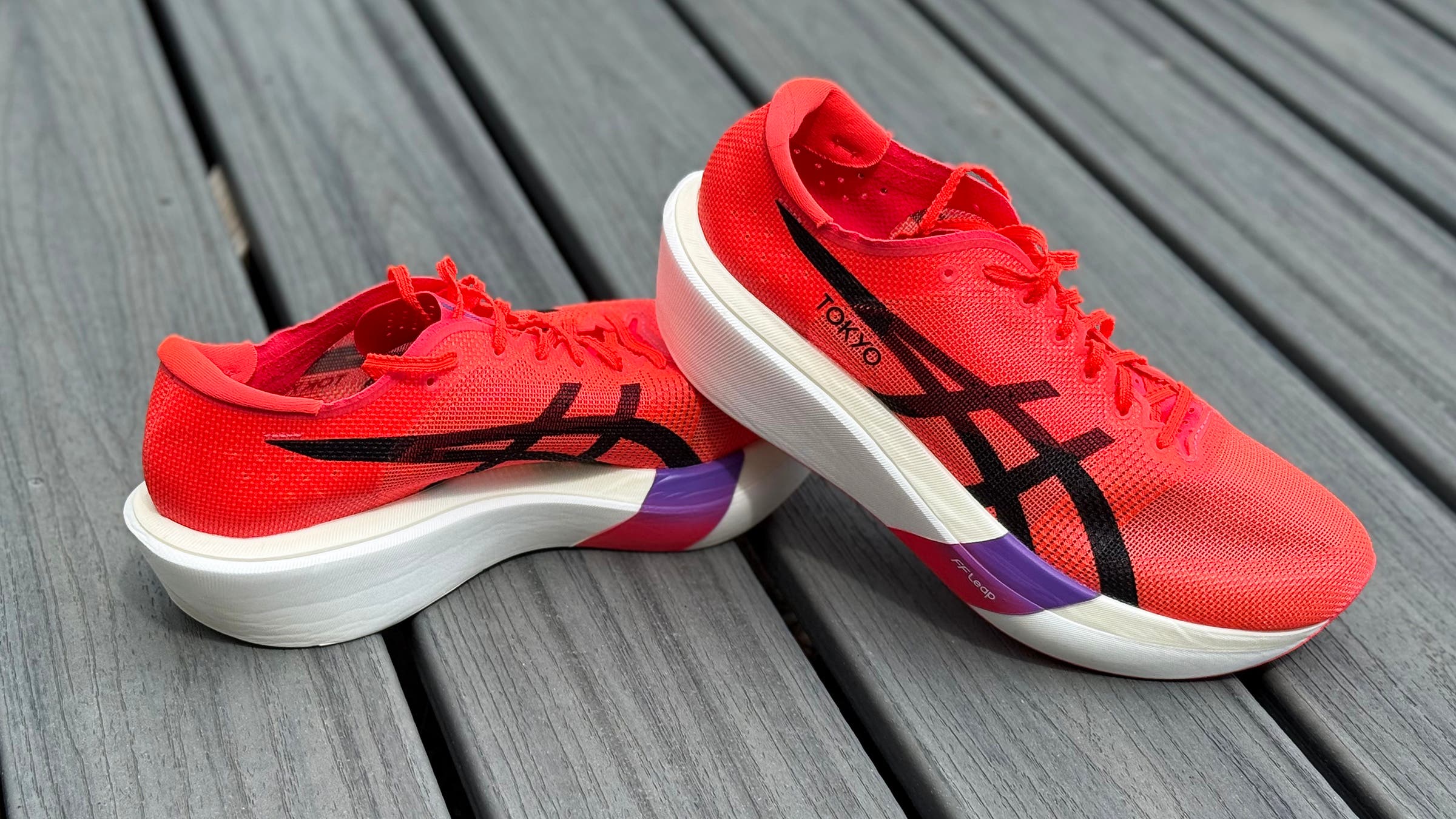
Asics Metaspeed Sky Tokyo
Weight: 5.9 oz (unisex)
Stack Height: 39.5-34.5 mm
Drop: 5 mm
Sizing: 3.5-13, 14, 15 (men’s), 5-16.5 (women’s)
Pros and Cons
+ Lightest super shoe we recommend for the marathon
+ Stable for a high-stack, lively midsole
+ Comfortable upper
– Not as bouncy as some other super shoes
In a world where super shoes are becoming softer and tippier, the Asics Metaspeed Sky Tokyo offers a refreshing balance: a highly energetic, cushioned ride with surprising stability. The tall, thick midsoles common in super shoes often create a wobbly sensation, making your stabilizing muscles work overtime to stay balanced—not what you want for the marathon.
For the latest Metaspeed series, Asics introduced a new A-TPU-based foam called FF Leap. According to the brand, FF Leap is 15 percent lighter, 13.7 percent bouncier, and 30 percent softer than their current super foam, FF Turbo Plus. Asics uses the two foams together to good results. Closest to the foot is FF Turbo Plus, offering a touch of firmness and added stability. A wide carbon fiber plate sits under that layer, followed by the softer, bouncier FF Leap just above the ground. The result is a ride that feels cushioned, stable, and protective.
The updated upper is an improvement over the previous version, providing better hold with more comfort. One tester noted, “It is light, it holds color elegantly, and keeps its shape throughout the run and over the life of the shoe.”
Even with all the upgrades to the midsole and upper, Asics managed to drop over half an ounce in overall weight. This makes it the lightest carbon-plated shoe we recommend for the marathon, as the 4.5-ounce Asics Metaspeed Ray is too squishy and unstable, and the 4.9-ounce adidas Pro Evo 2 is impossible to find.
The Metaspeed Sky Tokyo is an excellent marathon choice for beginners, intermediates, or any runner who wants to enjoy the benefits of super shoe technology while still having a supportive, predictable platform.
Bounciest
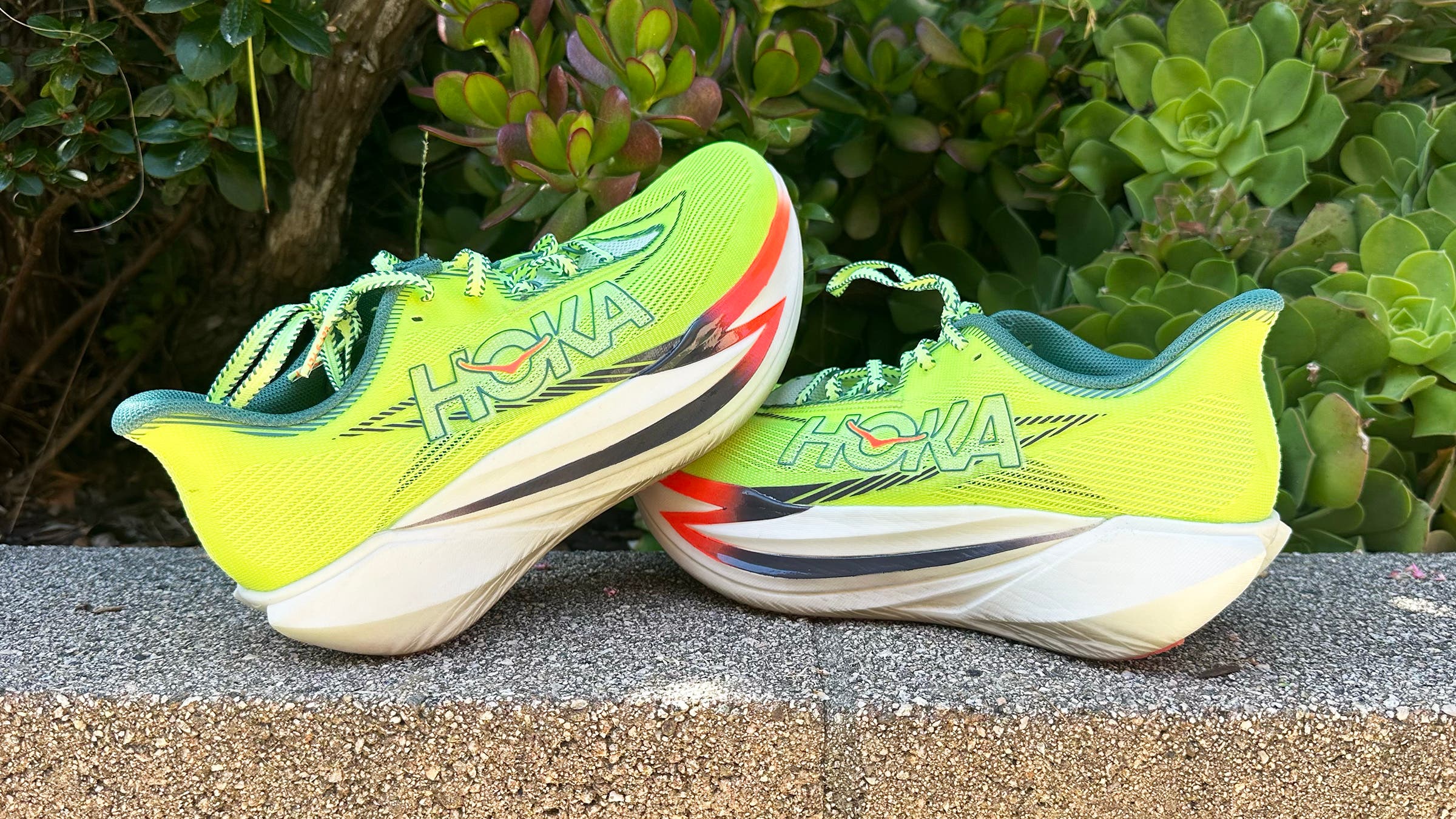
Hoka Cielo X1 3.0
Weight: 7.5 oz (unisex)
Stack Height: 38–31 mm
Drop: 7 mm
Sizing: 5-12, 13, 14 (men’s); 6-13, 14, 15 (women’s)
Pros and Cons
+ Lightweight
+ Energetic, bouncy midsole
– Soft foam is unstable
The all-new Hoka Cielo X1 3.0 delivers unmatched bounce with every stride. Weighing in at 7.5 ounces, a half ounce lighter than its predecessor, this is Hoka’s lightest and fastest race-day shoe. With a complete top-to-bottom redesign, the midsole features a re-tuned PEBA foam that’s noticeably softer and bouncier than the previous version. The embedded winged carbon fiber sits closer to the heel before scooping down under the forefoot, producing a powerful push off.
Hoka reworked the midsole geometry, reducing the rocker angle and widening the foam under the heel, with the aim of improving rearfoot stability. Our testing, however, found it was just as, if not more, unstable than its predecessor when running slowly. At an everyday pace, the soft and narrow midsole under the arch was extremely wobbly and unstable, causing my ankle muscles to work hard to stabilize. In contrast, at uptempo paces, each footstrike quickly bounced off the ground as if running on a trampoline, producing a fun, springy ride.
The improved upper features a new, stretchy, more breathable woven material that fit my medium-width foot well. An asymmetrical lacing system prevents pressure along the top of the foot and provides a smooth cinch.
If you’re able to handle a soft, unstable midsole, you’ll be rewarded with a bouncy ride that’s a ton of fun. Heel strikers, runners who need stability, or heavier runners who may compress the soft foam excessively, might find these too squishy for the marathon.
Best Zero Drop
Altra Vanish Carbon 2
Weight: 8.1 oz (men’s), 5.8 oz (women’s)
Stack Height: 36–36 mm
Drop: 0 mm
Sizing: 7-13, 14, 15 (men’s), 5.5-12 (women’s)
Pros and Cons
+ Highly cushioned
+ Wide toe box with fitted midsection
+ Balanced stance heel-to-toe
– Foam not as bouncy as some super shoes
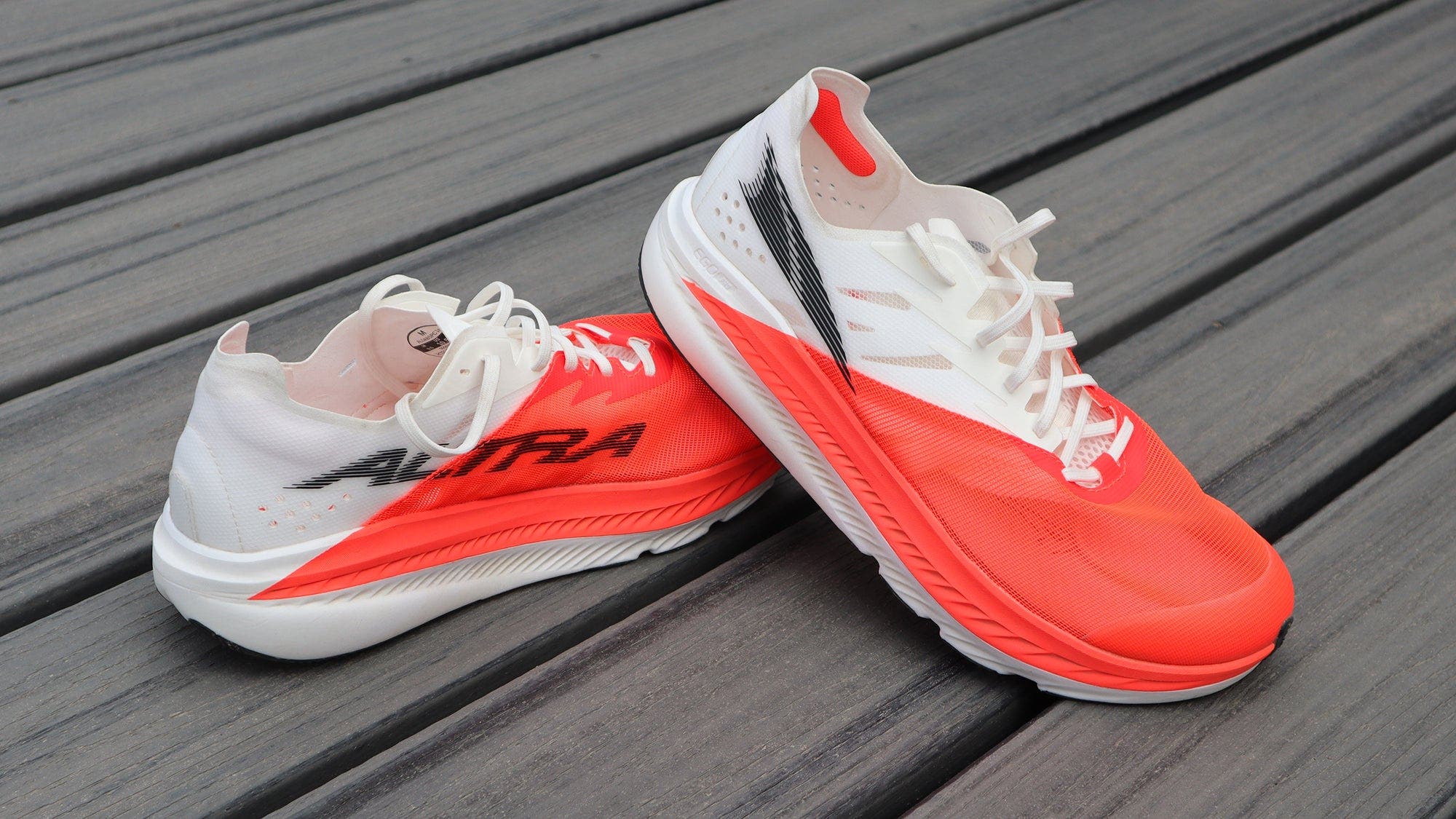
Unfortunately, there are not a ton of choices when it comes to highly cushioned zero-drop racing shoes. Fortunately, the only option is a really good one. Now in its second iteration, the Altra Vanish Carbon 2 features three more millimeters of softer, more flexible underfoot cushioning heel to toe. Embedded in the soft, nitrogen-infused, TPE-based midsole is a full-length carbon fiber plate that adds a bit of stabilizing and propulsive stiffness without feeling controlling.
The Vanish Carbon 2’s midsole doesn’t have as dramatic a trampoline sensation as some other marathon racing shoes, but it delivers a smooth, cushioned ride that’s hard to beat. Even as someone who typically struggles with zero-drop shoes, I found the Vanish Carbon 2 enjoyable and surprisingly easy to run in, thanks to the high stack and rockered profile. Testers said the low heel helped increase their cadence and kept them more on their toes.
Despite not having a ton of structure, the lightweight, breathable mesh upper does a surprisingly good job of securing your midfoot while your toes have room to splay in Altra’s signature wide toe box.
Read more about the Altra Vanish Carbon 2 in our Super Shoe Showdown.
Best Soft Super Shoe
Adidas Adizero Adios Pro 4
Weight: 7.1 oz (men’s 9.5); 6.1 oz (women’s 7.5)
Stack Heights: 39 mm-33 mm
Drop: 6 mm
Sizing: 6-13.5, 14.5 (men’s); 5-12 (women’s)
Pros and Cons
+ Soft and bouncy midsole
+ Smooth toe-off roll
+ Comfortable, great-fitting upper
– Thin laces can dig into foot
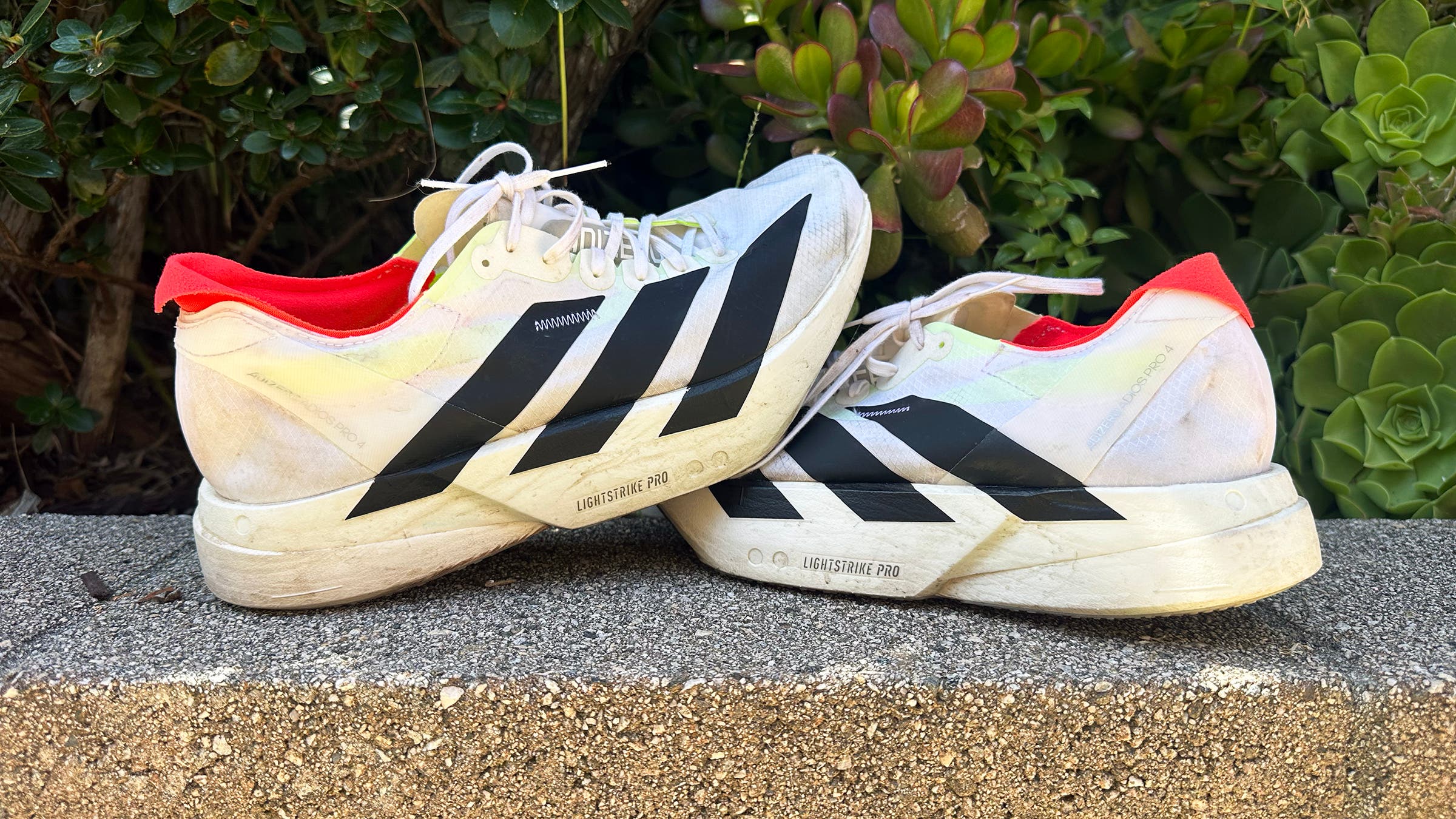
For those wanting a slightly softer underfoot feel, the Adidas Adizero Adios Pro 4 provides a well-cushioned ride with snappy toe-off. The midsole features a dual-layer of TPEE Lightstrike Pro, with Adidas’ signature carbon-infused Energy Rods embedded between the layers. The articulated rods, which echo the bones of the foot, provide stiffness to the otherwise soft midsole. An extended rocker, which starts early at 60 percent of the shoe’s length, allows the stiff sole to transition off the toe smoothly. At almost any pace, the Adios Pro 4 runs comfortably, with a ton of bounce.
One of the biggest upgrades over the Adios Pro 3 is the woven upper. The soft fabric allows a little one-way vertical stretch, so, even when laced securely, the foot never feels suffocated. My one gripe is that the thin shoelaces dug into the top of my foot when tied really tight. As expected from Adidas, the outsole grip is top-notch. A small patch of Continental rubber under the big toe adds durability, while the rest of the outsole is a proprietary Light Traction rubber.
The Adios Pro 4 seems to feel best with a forward-balanced stride. With my midfoot strike, the shoe encouraged a smooth, rhythmic cadence, and the forefoot rocker never felt forced or abrupt. Heel strikers and novice marathoners, however, should try out the ride before committing to racing in these, especially for the marathon, as the soft sink can feel unstable.
For serious runners, however, looking for a light, quick, comfortable race-day shoe for half to full marathons, it’s one of the best.
Read our full review of the Adidas Adizero Adios Pro 4.
Best Non-Plated Marathon Racing Shoes
Not everyone wants or needs a super shoe when covering 26.2 miles (See our “How to Choose” section for a discussion on why). Here are some recommended marathon shoes without a rigid carbon-fiber plate.
Best Marathon Racing Shoe (Non-Plated)
Asics Megablast
Weight: 8.1 oz (men’s size 9; women’s 10.5)
Stack Height: 45–37 mm*
Drop: 8 mm
Sizing: 3.5-13, 14 (men’s), 5-14.5, 15.5 (women’s)
*exceeds World Athletics legal stack height, read more.
Pros and Cons
+ Lively, responsive midsole
+ Impressively light
+ Stable, balanced ride
+ Versatile over a range of paces and distances
– Excessively roomy toe box
– Upper can feel loose and unsupportive
Beginner runners, who spend more time in contact with the ground than faster, more experienced runners, often find super shoes wobbly and tuned to optimize fast, efficient strides. For these runners, the Asics Megablast offers a stable, grounded platform that still provides generous cushioning and a forgiving, adaptable ride.
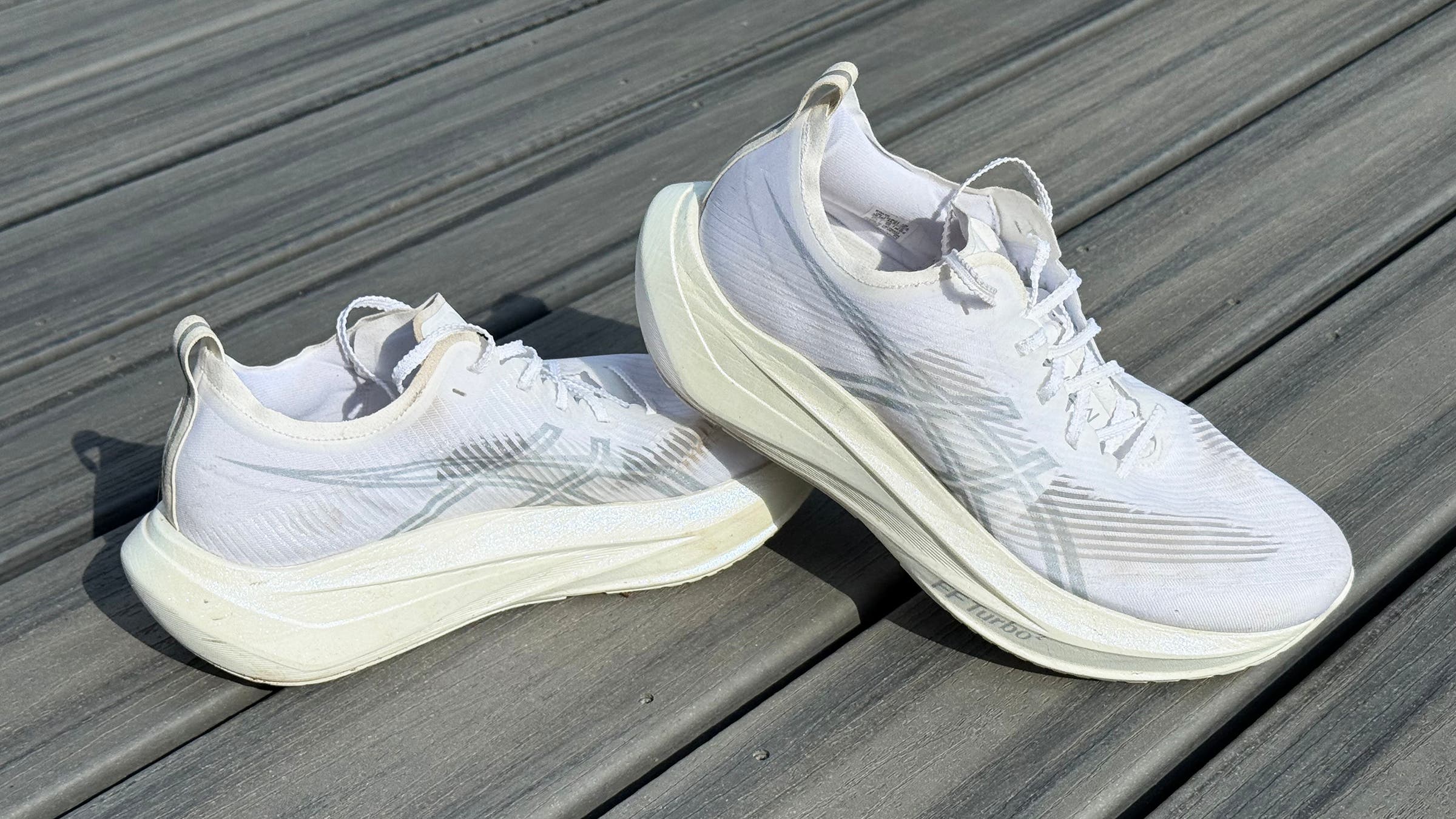
Featuring Asics’ new A-TPU-based FF Turbo Squared foam, it delivers a somewhat firm yet springy ride that’s surprisingly supportive despite its height (it’s the tallest shoe on this list—illegally high for elite racers). The rockered forefoot aids smooth transitions without the need for a controlling plate, and the lightweight build makes it easy to keep your cadence quick.
A razor-thin woven upper is highly breathable and fits quite wide and voluminous. Those with narrow feet might want to look elsewhere. Still, the Asics Megablast distills all the qualities we expect from supershoes into a more approachable shoe that can comfortably and speedily carry a wide variety of runners through 26.2 miles.
Read our full Asics Megablast Review.
Runner-up, Best Non-Plated Marathon Racing Shoe
Asics Superblast 3
Weight: 8.4 oz (men’s 9, women’s 10.5)
Stack Height: 46.5 mm–38.5 mm*
Drop: 8 mm
Sizing: 4.5-13, 14 (men’s), 6-13 (women’s)
*exceeds World Athletics legal stack height, read more.
Pros and Cons
+ Outstanding cushioning-to-weight ratio
+ Works well across all paces
+ Top-tier A-TPU foam is bouncy and fun
– Outsole showed signs of early wear
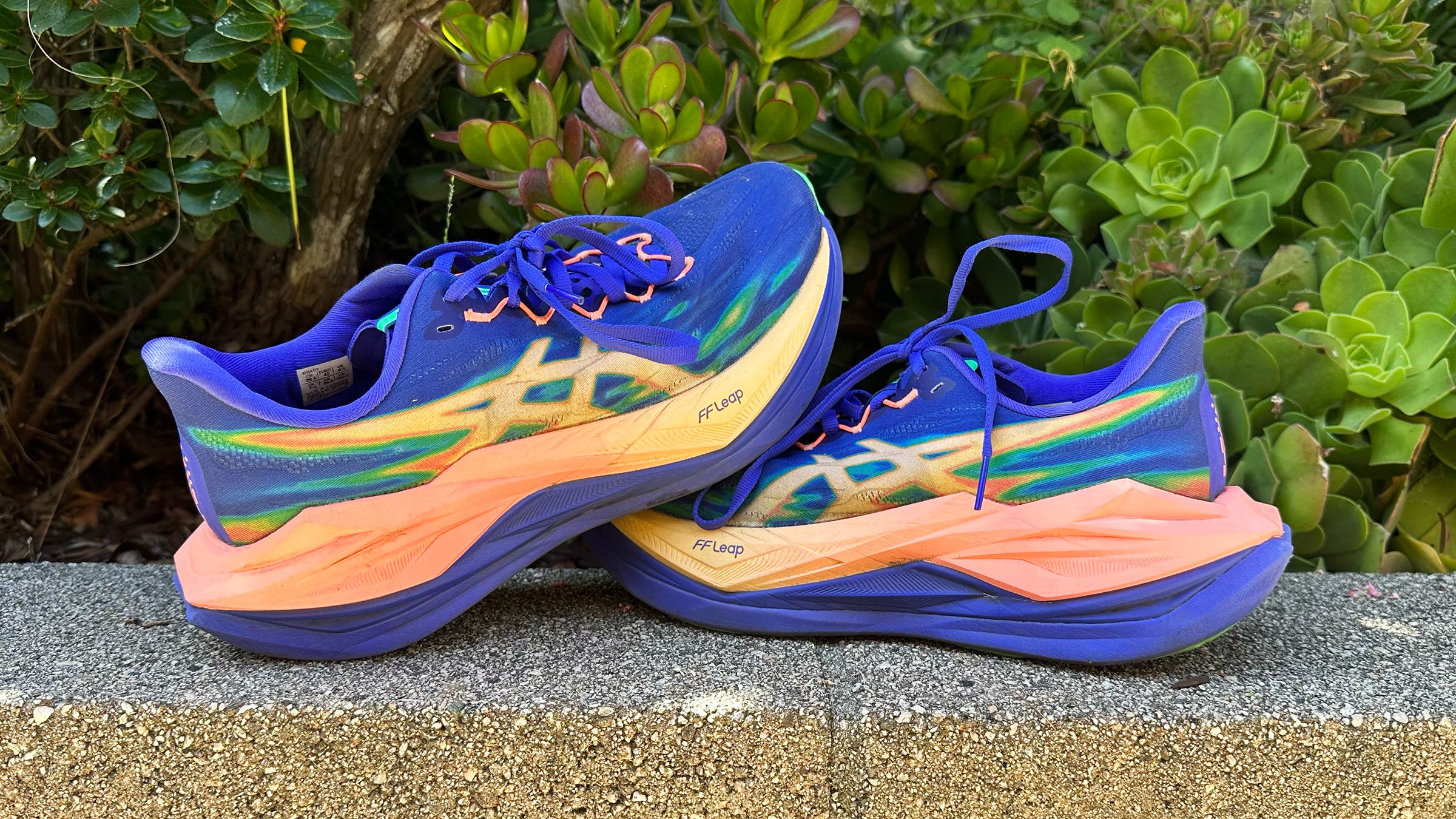
One of Asics’ best everyday and long run shoes, the Superblast 3 also makes a great marathon raceday shoe for those who want a light but max-cushioned ride that’s soft and springy without a plate. At 46.5 millimeters under the heel, it’s remarkably lightweight, quick, and surprisingly stable.
The midsole is dual-density, with firmer foam closest to the ground for durability and stability, and Asics’ latest A-TPU superfoam directly under your foot for a soft, bouncy ride. A slight forefoot rocker helps you transition from heel to toe smoothly, while the wide platform and extended heel bevel provide stability to the soft, tall midsole. The upper is made from a soft, smooth recycled polyester and has a padded heel collar for a more comfortable fit than its predecessor.
The outsole pattern, with flex grooves and strategically placed ASICSGRIP rubber, is designed to compress and rebound in a trampoline-like effect. There seems to be more rebound than with a full-length outsole, but the lack of durable rubber led to some early abrasion wear.
Despite having similar specs as the Megablast, the Superblast 3 is much softer and accommodates slower paces better, making it more suitable for back-of-the-pack runners looking for an energizing, supershoe-type ride.
Most Stable
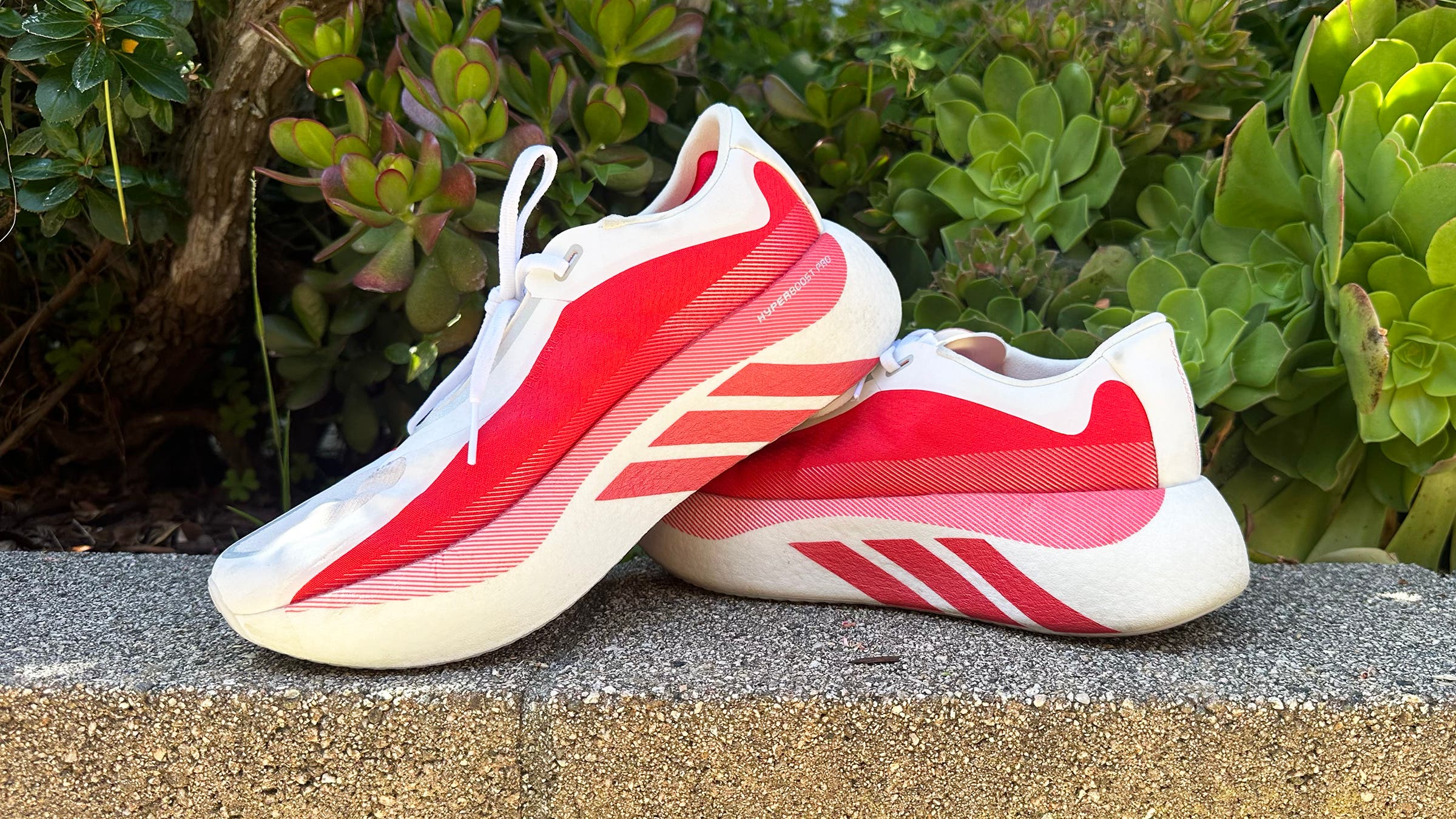
Adidas Hyperboost Edge
Weight: 9 oz (men’s 8.5, women’s 10)
Stack Height: 45–39mm*
Drop: 6 mm
Sizing: 5.5-19 (men’s)
*exceeds World Athletics legal stack height, read more.
Pros and Cons
+ Stable for the amount of cushioning
+ Secure upper
– Some may find it too firm
Launched in March 2026, the Adidas Hyperboost Edge debuts an all-new midsole foam called Hyperboost Pro, using a similar material found in the $500 adidas Adizero Pro Evo supershoe, but in a pelletized form reminiscent of the original Boost. The foam runs firm but responsive. While it’s not as bouncy as the Megablast and Superblast 3, once I locked into a steady-upbeat pace, it fell into an energetic, smooth rhythm that felt great.
The upper is made of a well-structured woven material, and while it’s not the plushest, it does a great job of securing the foot. Two padded bubbles line the inside of the heel to keep it locked down.
The outsole is a full-length layer of Adidas’s thin, lightweight Lighttraxio rubber, which can be found on their high-end racing models. Besides looking good, I found it provided excellent traction.
Runners who like a firmer, more stable ride in a max-cushion shoe will enjoy what the Adidas Hyperboost Edge has to offer.
Read our full review of the Adidas Hyperboost Edge.
Bounciest Non-Plated Marathon Shoe
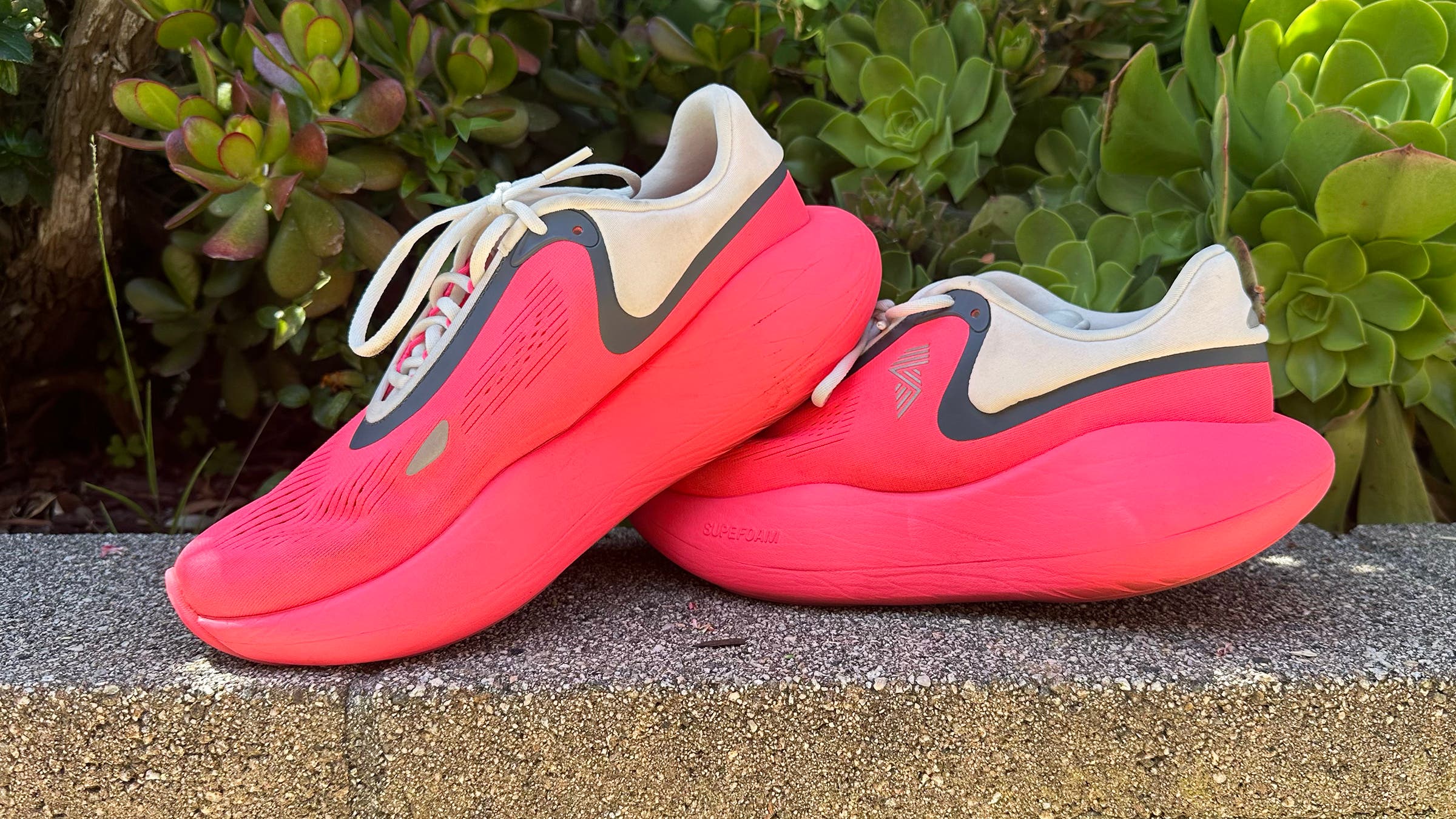
R.A.D. UFO
Weight: 9 oz (men’s 8.5, women’s 10)
Stack Height: 45–39mm*
Drop: 6 mm
Sizing: 4.5-13 (men’s), 6-14.5 (women’s)
*exceeds World Athletics legal stack height, read more.
Pros and Cons
+ Stable for the amount of cushioning
+ Secure upper
– Some may find it too firm
Over the past few years, we’ve seen a flood of new brands getting into the high-performance running shoe market. An acronym for Rally Against Destruction, R.A.D. started in the footwear business in 2019 and normally focuses on CrossFit and hybrid athletes. This last year, however, they dipped their literal toes into the running market with the release of the UFO.
Fitting into the non-plated super trainer category, it features a dual-layer PEBA midsole that’s on par with, if not exceeds, the top brands in performance. A softer layer sits closest to the foot, while the slightly firmer bottom layer provides durability. Right out of the box, the UFO is smooth, comfortable, and impressive for any brand’s first foray into running shoes.
The midsole has one of the softer foams we’ve tested, but thanks to a wide, flared platform, testers never felt out of control. While it measures 38 millimeters under the heel and 30 millimeters under the forefoot, it feels closer to the ground than most shoes at a similar stack height, especially under the toes, and delivers a connected push-off.
The spacey-looking upper is generously padded, particularly the tongue, for a plush fit. The toe box, however, is pointed and low-volume, so runners with wide feet or those who prefer room for splay may find these too tight.
Best Low-Profile Marathon Race Shoe
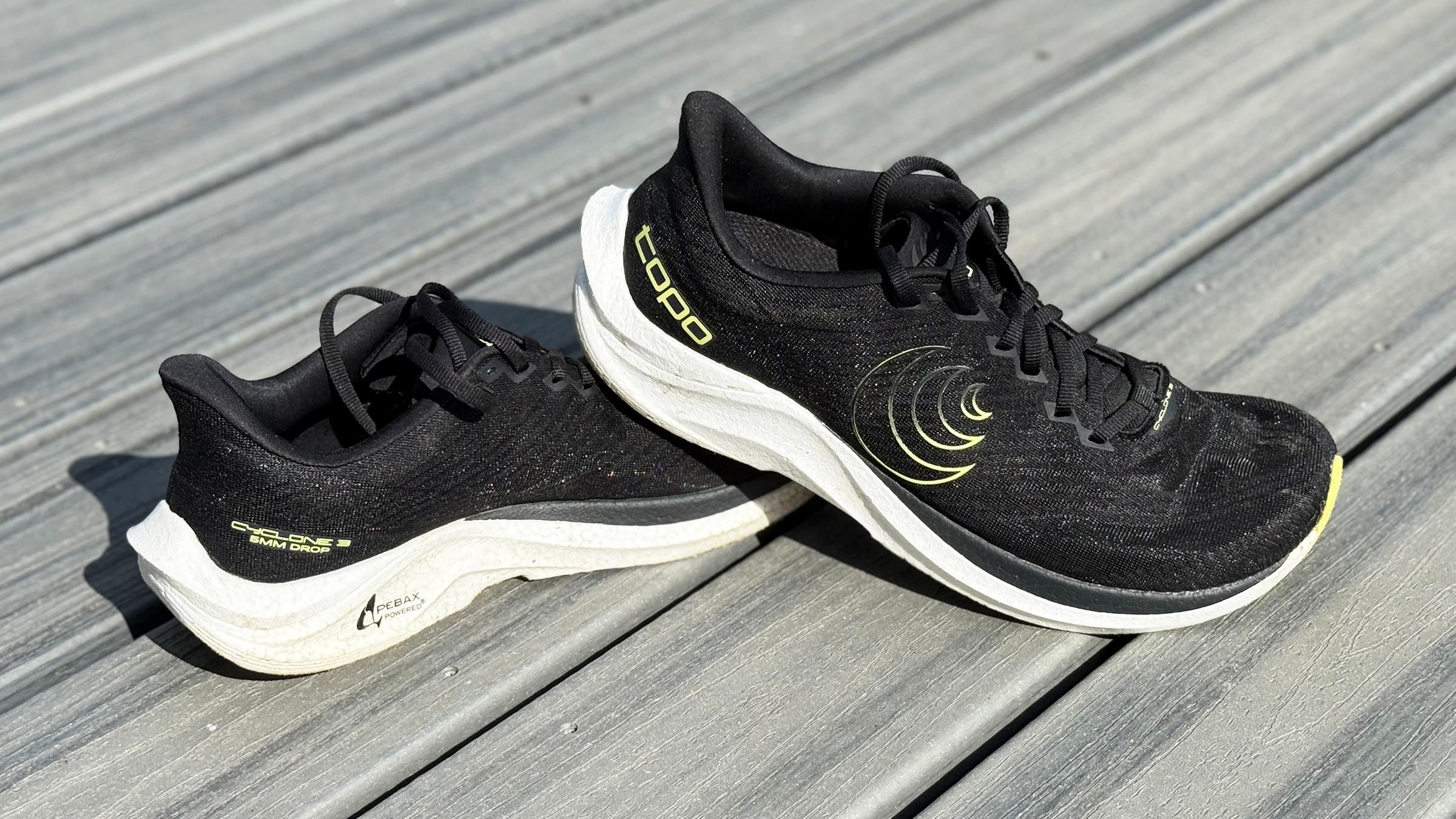
Topo Cyclone 3
Weight: 6.9 oz (men’s), 5.5 oz (women’s)
Stack Height: 28–23 mm
Drop: 5 mm
Sizing: 8-13 (men’s), 6-11 (women’s)
Pros and Cons
+ Superb fit
+ Unrestricted, natural, proprioceptive ride
+ Soft, bouncy midsole
– Cushioning is too thin for some
– Sole is too flexible for some
As foams have become increasingly lighter, marathon racing shoes are getting significantly thicker and more cushioned. Rather than allowing your foot to react to the ground and move naturally, these thick-soled shoes blunt the underfoot feel and dictate how your foot moves through the gait cycle to various degrees. While this works well for some runners, others prefer a more minimalist ride.
If you’re the kind of runner who finds today’s thick cushioned shoes squishy, cumbersome and as restrictive as a stiff suit of armor, look no further. The Topo Cyclone 3 is a free and flexible lightweight racer that lets your foot control the shoe, not the other way around. Testers described the ride as “nimble” and “flexible” with a “slipper-like” feel.
Except for the new upper, this version remains the same as its predecessor. The Cyclone 3 still relies on Topo’s PEBAX midsole to deliver the soft feel and springy response of a super shoe, but the comparatively thin stack height (28mm/23mm) keeps the squish and bounce moderate, and lets you feel the ground under the cushioning. You won’t find a plate embedded in the flexible midsole—instead, there’s a slight rocker profile to help smooth the transition from stance to toe-off.
We’ve always found that Topo Athletic makes some of the best-fitting shoes on the market, and the Cyclone 3 certainly follows suit. The updated upper brings a few subtle tweaks, including a lower-sitting tongue to prevent rubbing and a redesigned engineered mesh for improved ventilation, although we didn’t notice a significant difference. A tailored midsection with excellent lockdown gives way to a roomy anatomical toe box that complements the flexible sole and lets your feet move and engage naturally.
Another strong option, if you’re looking for a low-profile, flexible ride with some rotational support is the Brooks Hyperion GTS 2, which has a moderate stack height (34/26mm), responsive cushioning, and gently guides the gait with firmer, raised sidewalls alongside the rearfoot.
Read our full Topo Cyclone review.
More of Our Recommended Marathon Shoes
- On Cloudboom Strike – The On Cloudboom Strike, which was our runner-up for the title of best marathon racing shoe in the fall, delivers a soft, bouncy, and highly cushioned ride that feels lively and fast. Its secret lies in a thick, removable PEBA insole directly underfoot that boosts energy return and cushioning, making it feel taller than its legal stack height.
- Diadora Gara Carbon 3 – Diadora isn’t as widely known in the U.S. as other running brands, but the Italian company has a strong tradition in athletic footwear. Sporting an über soft underfoot feel, the shoe’s geometry and the midsole’s rebound keep it surprisingly stable. The one knock is the $320 price tag, making it the second-most expensive super shoe we’ve tested.
- New Balance Supercomp Trainer Elite V5 – It’s not the springiest option among today’s supershoes, but this model stands out for its extremely smooth cushioning. The soft, fluid ride suits a wide range of abilities. Runners who want a comfortable, non-aggressive super trainer should consider this one.
How to Choose Marathon Shoes
After dedicating countless hours to marathon training, it’s just as crucial to invest time and effort into choosing the right running shoe for race day. Unlike your everyday trainer, a marathon racing shoe must strike a balance between providing enough stability to maintain your form over 26.2 miles and offering sufficient cushioning to protect your legs from the constant impact, while not weighing you down or holding you back. Here’s what you must consider when buying the ideal marathon racing shoes.
Stability
As running shoes become thicker and softer, they can start to feel unstable and wobbly. This instability forces the stabilizing muscles in your feet and legs to work harder, which can lead to premature fatigue and even injury. To prevent this, it’s crucial to choose a marathon racing shoe that provides a stable enough platform for your stride, ensuring consistent support throughout the race, even when you grow tired and your stride becomes less efficient. Stability is built into a marathon racing shoe by using embedded plates, firmer midsoles, a widened base, and a more structured heel counter and rearfoot hold.
Cushioning
Cushioning refers to the perceived underfoot firmness of a running shoe. While cushioning levels are a matter of personal preference, wearing softer running shoes during the marathon can be beneficial. One 2022 study with 32 recreational runners found that wearing highly cushioned running shoes improved performance by 5.7 percent and reduced oxygen consumption by 3.2 percent during incremental treadmill tests. However, runners must balance cushioning benefits with stability and propulsion needs.
Fit
Given the length of the marathon it’s crucial to make sure your marathon racing shoes fit well. Since over the course of the 26.2 miles your feet may swell, you should make sure you have enough room in the toe box to accommodate this swelling. A good general rule of thumb is to make sure you have at least a thumb’s width of space between your longest toe and the front of the shoe. You should be able to wiggle your toes without them bumping up against the front of the shoe. While you want space for your toes to splay, the upper should hold your foot securely around the heel and instep.
Marathon Shoe FAQs
Should You Train in a Carbon Fiber-plated Shoe?
While this is a highly debated topic, the current thinking is to limit the amount of time spent training in carbon fiber plated shoes. These shoes are built with a thick, highly cushioned, and unstable platform, and a rigid rocker profile. Unlike more flexible running shoes that allow your foot to move naturally, carbon fiber shoes dictate the way your feet strike the ground and roll forward, potentially altering your natural gait, which can lead to injury. In addition, the powerful bounce magnifies any instability, causing more stress on your muscles, tendons, and joints. Ideally, limit your carbon-plated shoes to race day and a few speed sessions. Ideally, limit your carbon-plated shoes to race day, a few speed sessions, and a moderately long run to test how your stride reacts to the shoes when fatigued. Super trainers—with the same high-end foams but more flexible plates—can be a great alternative for weekly speed sessions or fast-finish long runs.
How Long Do Marathon Racing Shoes Last?
The lifespan of marathon racing shoes varies on a runner’s weight, stride efficiency, and model of shoe. Typically, lighter runners who have an efficient stride will realize longer shoe life, while heavier runners who spend more time on the ground will see less. Generally speaking, you should get somewhere around 100 to 200 miles from your marathon racing shoes before the midsole begins to decompress (even ultralight models). Visual cues, such as worn down outsole, uneven midsole compression, or holes in the upper, can be your best indicator that it’s time to replace your marathon shoes. Outside of that, I’ve found that if you start to question whether it’s time to replace your shoes, it’s usually time.
Should Beginners Race in a Carbon Fiber Shoe?
There are a few factors beginner runners should consider before choosing a carbon fiber shoe. First, most carbon fiber running shoes are designed with fast, efficient runners in mind. Studies have shown that slower runners get less improvement in their running economy from the shoes, and the shoes actually make running harder for a significant number.
If you have developed solid mechanics, you may benefit from a carbon fiber shoe. However, if your form is still a work in progress, the stiffness of the carbon plate and the hyper-responsiveness of the foam could actually magnify poor mechanics, reduce your performance, and increase the risk of injury.
Additionally, every carbon fiber shoe is built differently—the placement and shape of the carbon plate, geometry of the midsole and properties of the foam are all different, model to model. This means no two carbon-plated shoes will run exactly the same. It’s important to match your individual gait to a carbon fiber shoe by testing several options for the one that feels the best. In general, beginners should be cautious and make sure they’re fully comfortable in carbon fiber shoes before racing in them.
How We Test Marathon Shoes
Our exhaustive testing process involves evaluating every recommended marathon shoe on the market, sometimes as long as two years, with input from more than 20 experienced wear-testers. They each fill out a detailed testing questionnaire evaluating key points such as fit, comfort, cushioning, and speed. The completed questionnaires are compiled and combined with testing feedback from lead tester Cory Smith, who brings over a decade of experience testing running shoes for Outside. Shoes that excel in specific areas are then ranked and categorized in relation to their strengths.
Meet Our Lead Tester
Cory Smith
Cory Smith, a former Division One runner at Villanova University, has been running since the mid-1990s. With over a decade of experience testing and reviewing running apparel and shoes for publications like Outside and Runner’s World, he continues to compete as a masters athlete, boasting a masters personal best of 4:31 in the mile at the age of 44. He consistently logs 30 to 40 miles per week on roads, trails, and the track.
