

Published April 28, 2026 01:16PM
By now you’ve probably read a headline or seen a social media post about the lengthy delay on Mount Everest caused by dangerous ice towers in the Khumbu Icefall.
Perhaps these stories and Instagram updates prompted a simple question to pop into your head: What the heck is going on?
Here at Outside, we sometimes forget that not everyone is as obsessed with Mount Everest as we are. Our Everest fixation hits a crescendo in the spring, which is when hundreds of climbers venture onto the peak. We stay awake until the wee hours of the morning to read the latest dispatches in Nepali newspapers. We scan social media for updates from the peak. And we send our longtime Everest expert, Ben Ayers, to Base Camp to report on the storylines and drama that always pop up.
We’ve put together a helpful explainer to get you up to speed on everything you need to know about the Khumbu Icefall delay, and why this story has captivated Everest fanatics across the globe.
What Is Everest Season?
There are 365 days in a year, but only a handful of them see calm and clear enough conditions on the summit of Mount Everest for humans to survive. For the rest of the year, the peak is buffeted by violent winds, frozen by sub-zero temperatures, and pounded by snowstorms. The only time when the summit experiences consistent stretches of calm, sunny conditions occurs in May. That’s when climbers try to reach the top.
What Is the Khumbu Icefall?
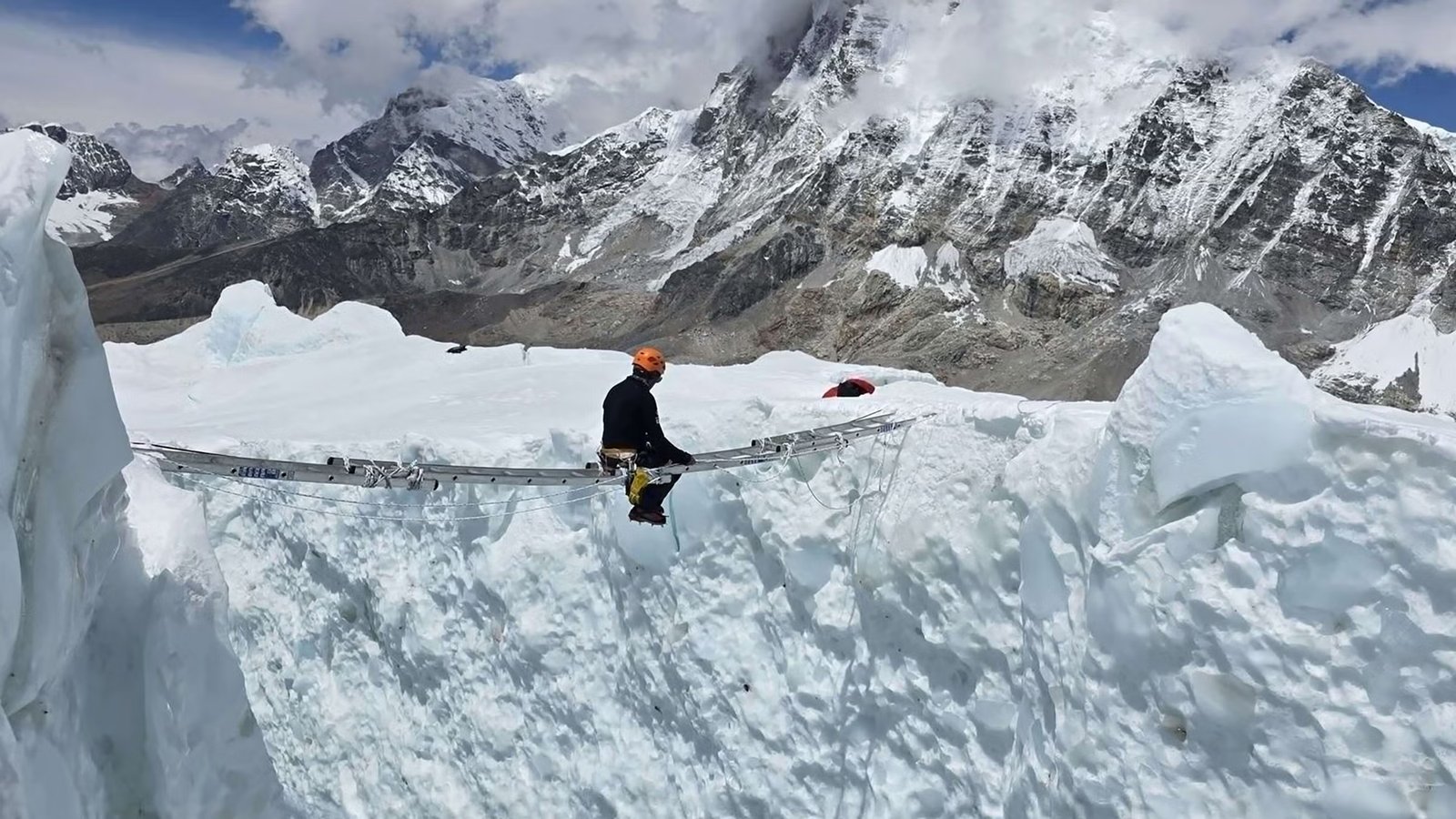
The Khumbu Icefall is the first section that climbers must navigate when they depart Mount Everest Base Camp for the summit. And it is the most deadly and dangerous section of the entire ascent.
As the Khumbu Glacier inches down a large, wide valley at 21,000 feet between Everest and Lhotse (a section called the Western Cwm—pronounced “coom”), it pitches over a steep rock face and tumbles down to the foot of the mountain. Climbers coming from the Nepal side of Everest have no other option but to pass through this massive maze of broken ice to get up Everest. The glacier is riddled with crevasses and massive ice towers that sometimes collapse without warning. Yeah—it’s a dangerous place.
“An icefall is like a frozen waterfall in a huge river of ice,” Jon Kedrowski, a climatologist and Everest guide, told Outside from a lodge just a few miles south of Everest Base Camp. “When this ice goes over a steep slope, it breaks apart into a million pieces—these pieces can weigh thousands of tons each. It’s extremely difficult and dangerous for any climbers trying to find their way through because it’s so unstable.”
Why Don’t Climbers Just Take a Different Way Up?
The icefall is the most direct route up into the Western Cwm and onward to the higher slopes on Everest. It’s flanked on each side by sheer rock faces that only the most skilled alpinists would attempt. And these rock walls are strafed by avalanches and rockfall.
So, despite the icefall’s dangers, it remains the most efficient and safest way for hundreds of people to get onto Everest.
In 2021 and 2022, a French alpinist named Marc Batard and a team of local climbers tried to chart a route onto the Western Cwm that circumvented the icefall. They left Gorak Shep, the last town before Base Camp, and then traversed the lower reaches of Nuptse, just south of the icefall. Then, they rappelled down the steep rock face on Nuptse into the Western Cwm.
While Batard and his team did find the new route, it has not caught on with Everest guiding companies. The Nuptse ridge is prone to avalanches and rockfall, meaning climbers taking this route would be exposed to those dangers. And the long rappel into the Western Cwm may not be an efficient way for the hundreds of trips that the entire Everest community makes during a typical season.
Who Are the Icefall Doctors?
The Icefall Doctors are a specialty team of Nepali workers and guides who, each year, build the route through the Khumbu Icefall. Most are of the Sherpa indigenous ethnic group. They are employed by the Sagarmatha Pollution Control Committee, a non-government organization that oversees waste control on Everest.
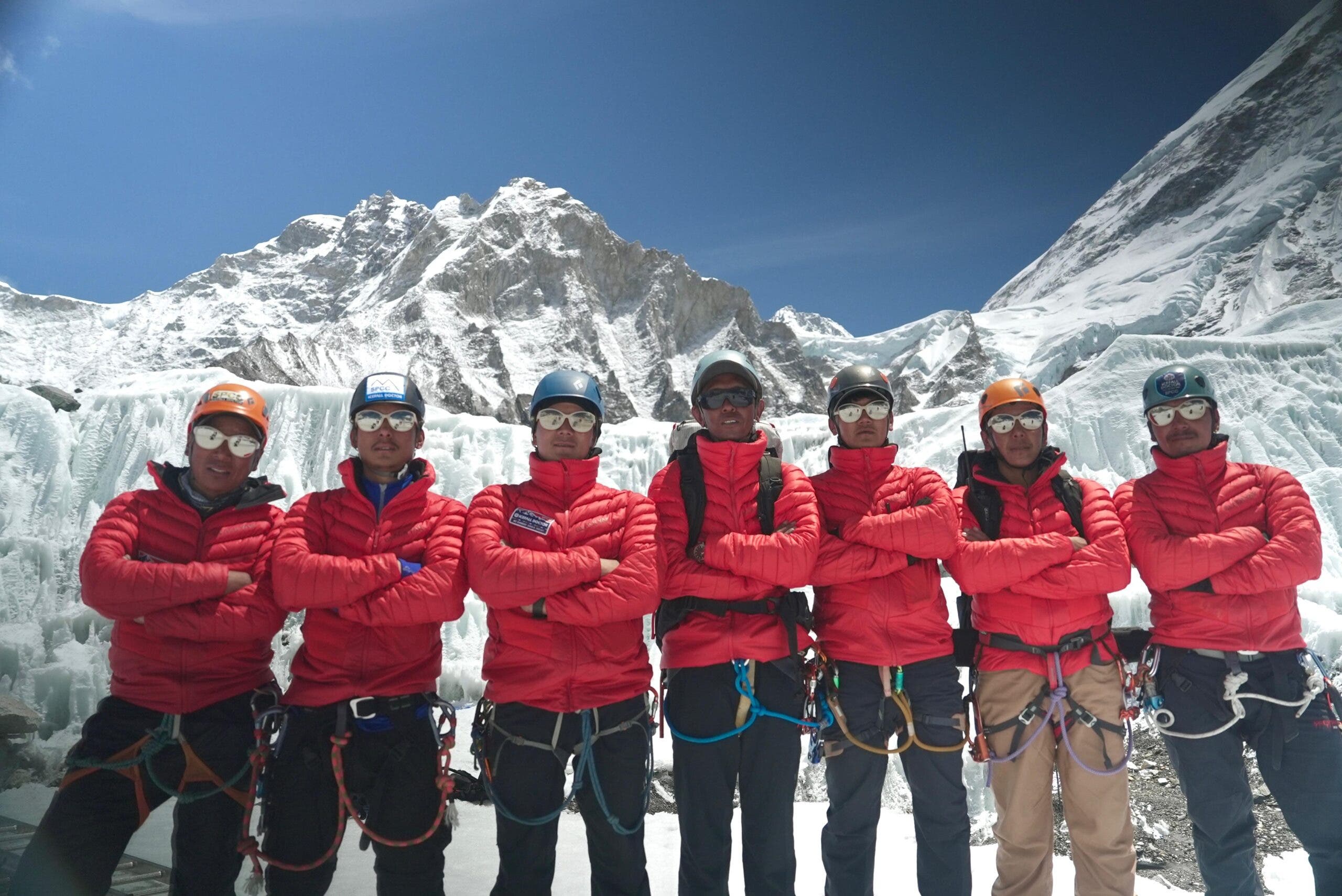
The team usually comprises eight workers, all of whom have ample experience on Mount Everest. They are the first to arrive at Base Camp, often in May, and spend several weeks flying drones and scouting to find the safest way through the glacier. Then, they haul metal ladders, ropes, and anchors up the slope and physically build the path. Throughout the season, they repair ropes and reset ladders.
What Is a Serac?
Seracs are towering, unstable ice blocks that loom over the Khumbu Icefall. Sometimes they fall, and believe me, you don’t want to be below one when it tumbles down.
“These are the villains of the Khumbu Icefall, they look terrifying and come in all shapes and sizes,” Kedrowski told Outside. “But regardless of how they look, if they fall on you, you’re dead.”
How Did a Serac Cause a Delay on Everest?
Back in early April, the Icefall Doctors were making their first few ascents through the glacier when they saw several massive seracs near the top. These ice towers are about 90 feet tall—the same height as a seven-story building.
“Seracs are a ticking time bomb,” Kedrowski said. “They can fall over at any moment, and there is no way to predict when this will be.”
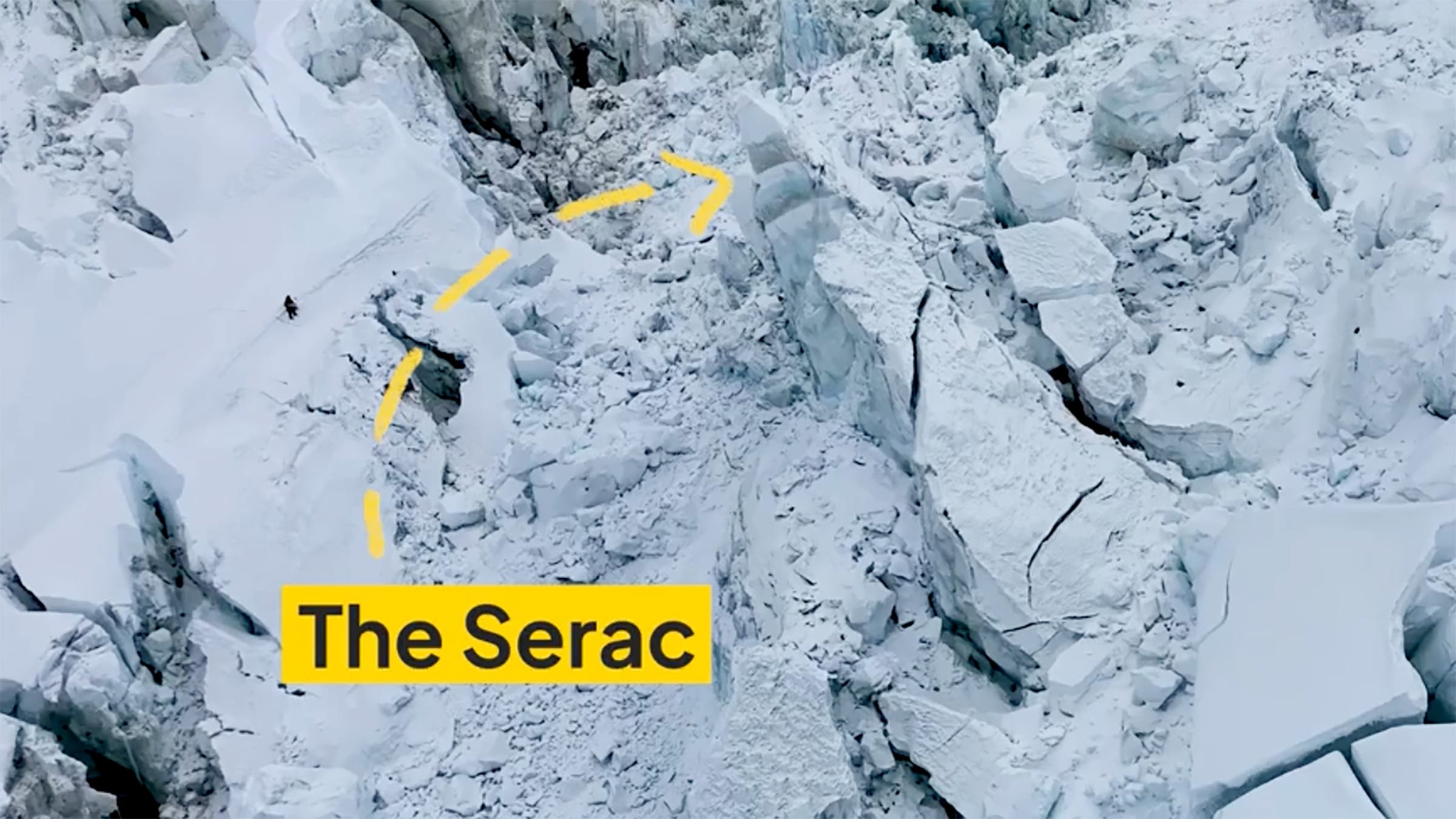
The route they were pursuing would need to pass directly under one of these dangerous blocks of ice. But when the Icefall Doctors examined the serac, they predicted it was on the verge of crashing. So, the team decided to retreat to Base Camp and wait for it to fall over.
Three weeks after they chose to wait it out, the serac still hasn’t toppled over.
Couldn’t They Have Just Blown It Up?
In Europe and North America, workers have used explosives to trigger avalanches for decades. But in Nepal, there is no precedent for blowing things up on Mount Everest.
Everest, or Chomolungma in the Sherpa language, is considered a highly sacred place within the local community. Early in the delay, the idea of using explosives was briefly discussed. But the consensus opinion, Outside has heard, was against the plan. Detonating explosives could upset the mountain spirits, and lead to additional risks that the Sherpa guides and workers were unwilling to take.
Why Don’t Climbers Just Take a Helicopter Up to Camp I?
Climbing purists often criticize the guiding industry on Mount Everest as being devoid of ethics and style, citing the use of supplemental oxygen, fixed ropes, and paid guides. But even within Everest climbing, you can’t just take a helicopter up the mountain and then say you climbed it. The use of any machinery to ascend the peak invalidates your climb.
The Himalayan Database, the website that records ascents in Nepal, won’t list your climb if you just chopper up. Climbers needing rescue sometimes get a ride down from the peak in a helicopter. This will earn your name an asterisk in the Himalayan Database. Climbers are reluctant to lose the official validation of their climb, and the additional cost involved could be daunting.
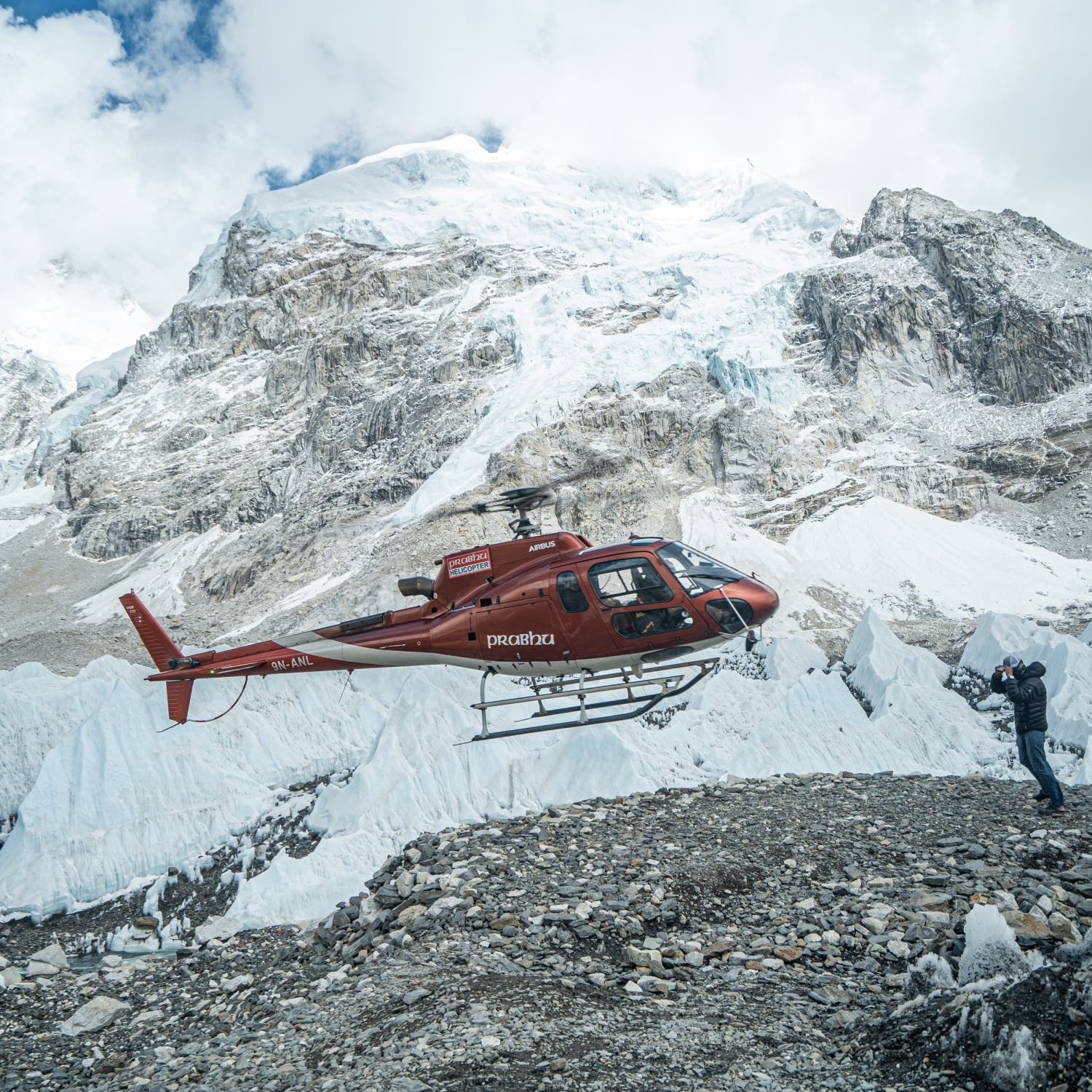
Beyond the ethics, however, using helicopters to ferry people up to Camp I is just too expensive and cumbersome to be a realistic option. The cost would be astronomical, too.
How Did Guides Open the Khumbu Icefall Route?
According to the Sagarmatha Pollution Control Committee, after extensive searching and numerous proposed alternative routes, the pressure was mounting to open the route, and they had no choice but to place the route directly under the serac in question. Officials have urged extreme caution for all expedition workers and climbers, and issued special rules to speed expeditions through this dangerous section.
“Given the circumstances and the limited time remaining before the climbing season, the team had no alternative but to open the route passing below the serac,” the SPCC wrote in a press release.
So, Is It Still Dangerous?
You bet. The Khumbu Icefall has been the site of some of the worst disasters in Everest history. In 2014, a serac collapse triggered an avalanche that killed 16 Nepali porters as they were hauling gear up the glacier. The disaster, the deadliest single event in Everest’s history, led to the cancellation of the climbing season.
In 2023, a collapsing ice tower killed three mountain workers.
It’s no secret that climbers and guides who will head onto Everest in the coming days will be putting themselves at tremendous risk. But that’s part of the experience on the world’s highest peak.
Frederick Dreier contributed to this report.
