

Published May 21, 2026 08:30AM
Key Takeaway: The best mountain bikes under $2,000 are the Polygon Xtrada, Specialized Status 140, State 4130, and Ozark Trail FastFlow FS 3. We tested all four on the trails in Sedona, Arizona, evaluating geometry, suspension, components, and overall trail performance. All four bikes are capable of handling a wide range of terrain and are strong options for newer riders looking to progress quickly without overspending.
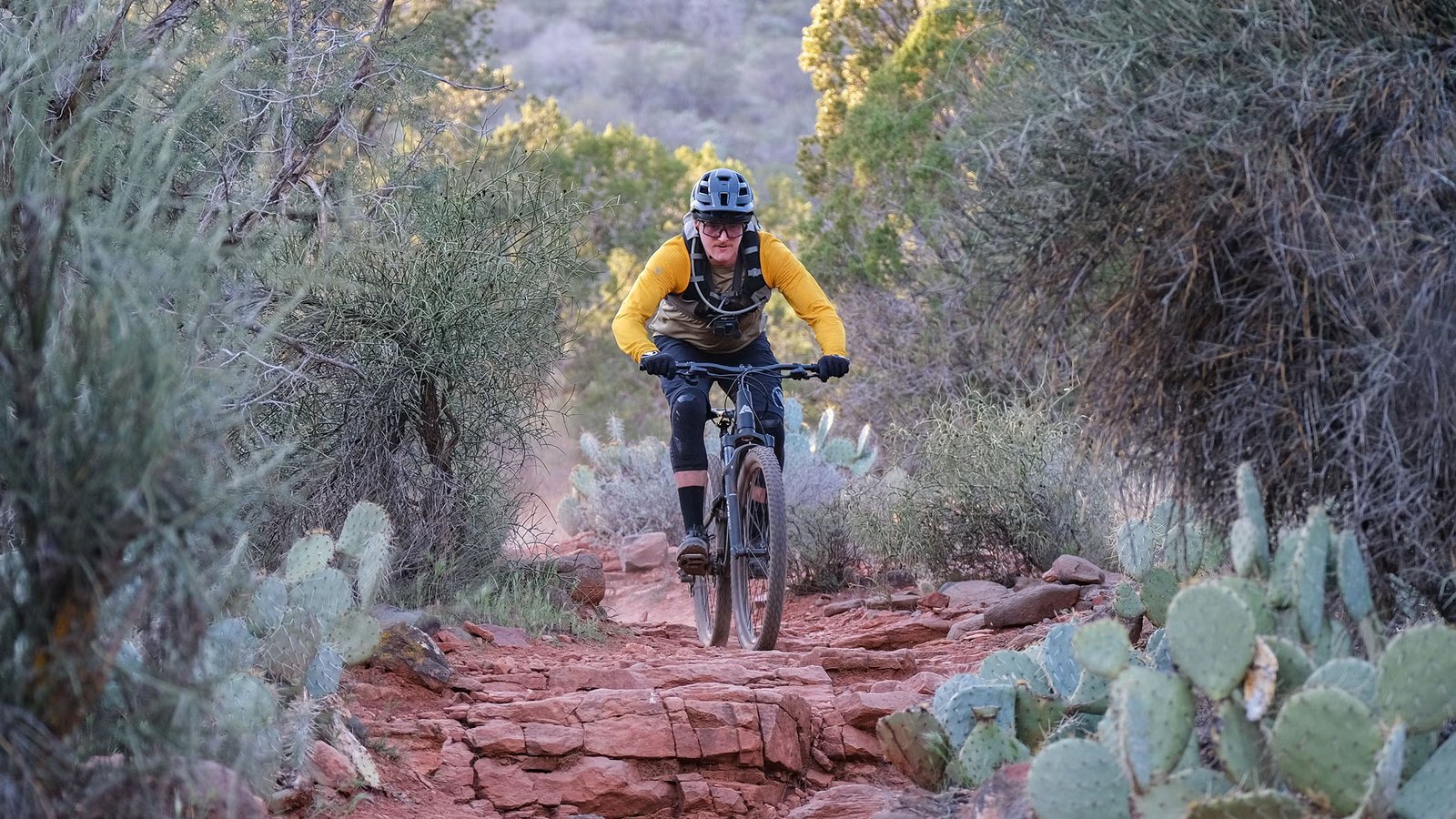
The price of the highest-end mountain bikes keeps climbing, but good deals still exist on the other end of the spectrum. We tested six affordable mountain bikes at Pinkbike’s annual Value Bike Test, focusing on bikes that retail for $2,000 or less and work especially well for newcomers to the sport. Don’t mistake them for beginner-only machines, though—every affordable mountain bike on this list can handle a wide range of terrain.
We tested each bike on trails that matched its intentions. We didn’t try to tackle the gnarliest downhill trails around, but we also didn’t just ride pancake flat gravel paths. Short, punchy climbs and moderately technical descents were on the menu—the kinds of trails that appeal to a wide range of rider abilities.
To evaluate trail performance, we looked at geometry, which shapes how a bike handles on climbs and descents, along with the component packages. Functional brakes, a dropper post that lets you quickly drop the seat before a descent, and appropriate tires were all non-negotiable for any bike that made the final cut.
Best Affordable Mountain Bikes: At a Glance
Best Budget Mountain Bikes: The Reviews
Best XC Hardtail Under $2,000: Polygon Xtrada 7
Type: Hardtail
Wheels: 29”
Pros and Cons
+ Efficient pedalling
+ Sensible build kit with little compromise
– Less capable in rougher terrain
The Xtrada leans toward the cross-country end of the spectrum, built to cover ground as efficiently and quickly as possible. Despite those intentions, it’s a perfectly capable trail bike on fast-rolling, less technical terrain—quicker and more responsive than its serious XC pedigree might suggest. The build kit delivers strong value: a 120 millimeter XFusion fork, SRAM Eagle 70 12-speed drivetrain, and a dropper post. The aluminum frame looks and feels like a higher-end item, thanks to a snazzy paint job and clean lines.
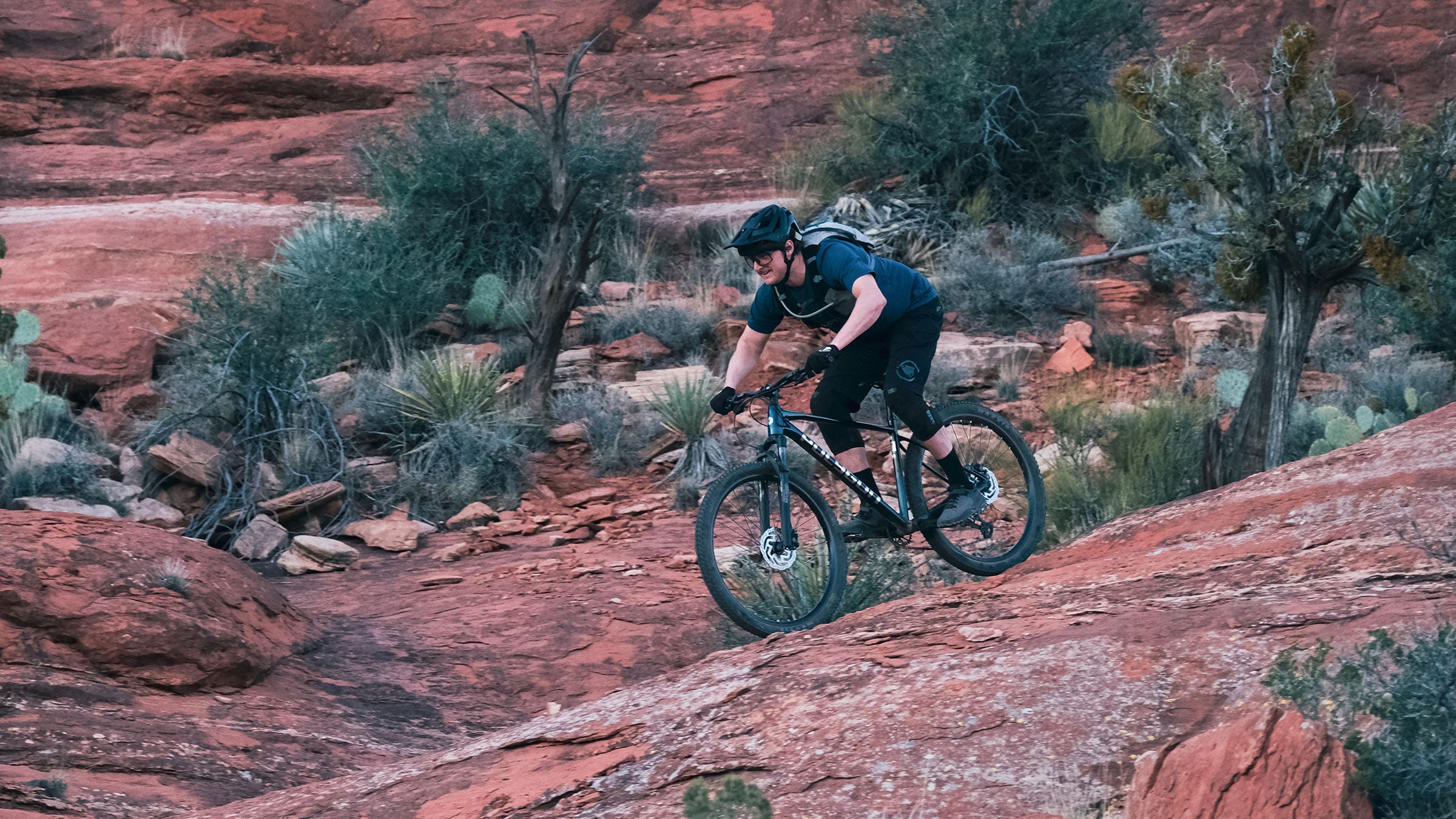
We tested the Xtrada on Sedona’s infamously chunky and technical trails and came away impressed. Even on terrain pushing past its intended use case, the bike was eager to get into it. For cross-country performance at this price, we were hard-pressed to find a better option. A sensible spec throughout, with no meaningful compromises, solidifies the Polygon as a top pick for riders who favor faster-rolling, smoother terrain.
We found the build kit largely up to the task, but riders looking to push harder in technical terrain will likely want to upgrade the XFusion Migo fork first. Like the State 4130, this hardtail straddles the mountain bike and bikepacking realms well — offering a bit more utility and a greater appetite for covering ground than full-suspension counterparts.
Best Affordable Full-Suspension MTB: Specialized Status 2 140
Type: Full-Suspension Trail Bike
Wheels: Mixed
Pros and Cons
+ Poppy and playful
+ Enough travel for a wide range of trails
– Not the most stable due to the short back end
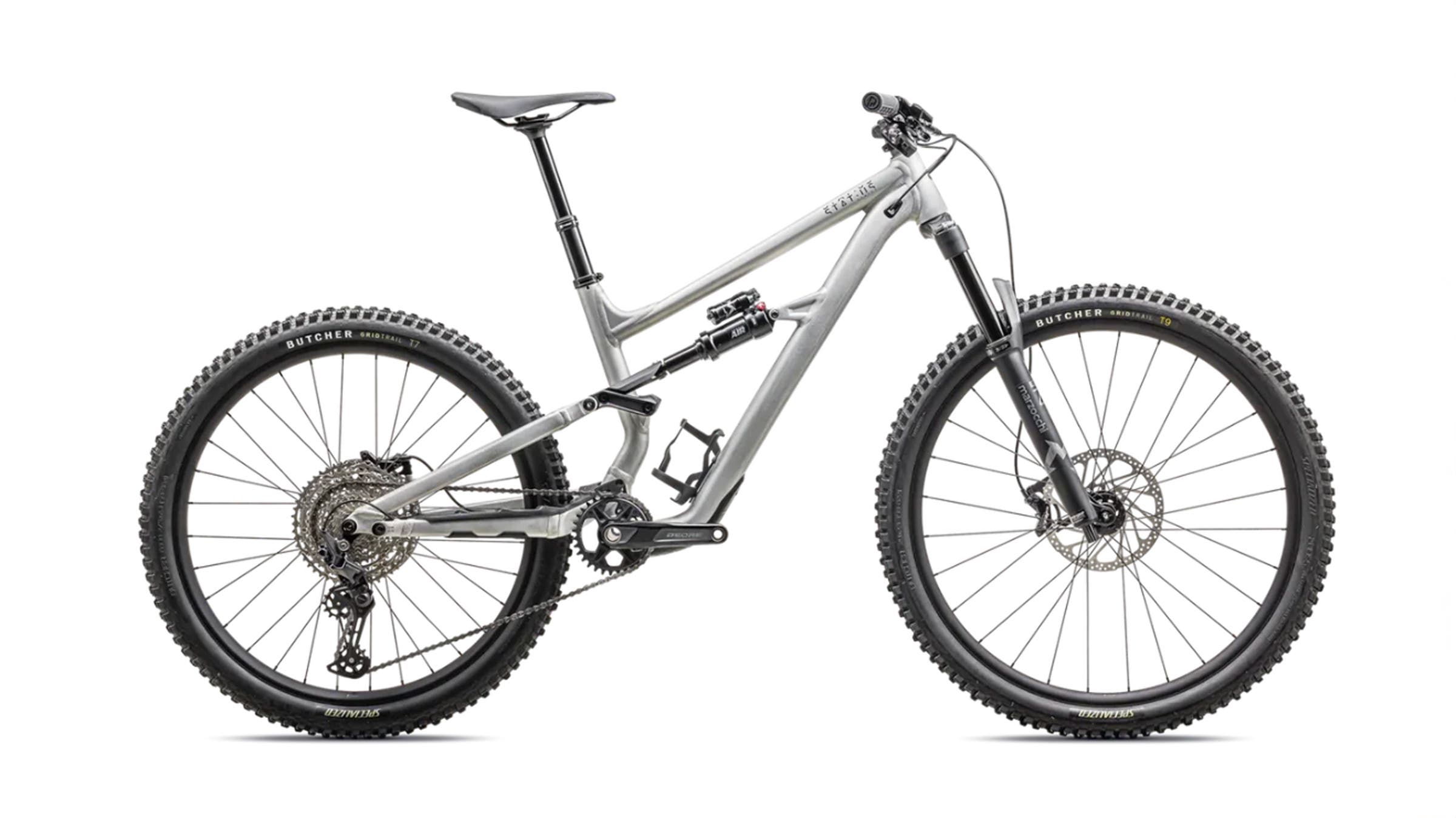
The Specialized Status 140 is for riders who prefer air time over trainer time. With 140 millimeters of travel front and rear, it sits squarely in the middle of the typical trail-riding range—balancing climbing and descending, fun and stability—but make no mistake, fun is the primary goal here.
That starts with the mixed-wheel layout: a 29-inch front wheel paired with a 27.5-inch rear. That configuration pays dividends in steeper terrain, on jumps, and in tight corners. Short chainstays make it easy to pop the front end into a wheelie or rip quickly around a corner.
For the price, Specialized packed in a lot where it counts, focusing on the meaningful stuff: suspension, tires, and brakes. A Marzocchi Z1 fork pairs with a Marzocchi Bomber air shock, both easily adjustable for dialing in the perfect setup. A no-nonsense drivetrain handles the abuses of fun, and the frame is quality enough to keep around for seasons to come. It’s a great bike for new riders who are hoping to progress quickly in order to hang with their more experienced riding buddies, or for any rider who wants a tough trail bike that’s a blast to ride.
Best Value Steel Hardtail: State 4130
Type: Hardtail
Wheels: 29”
Pros and Cons
+ Great value
+Includes long travel dropper post
– Requires full assembly
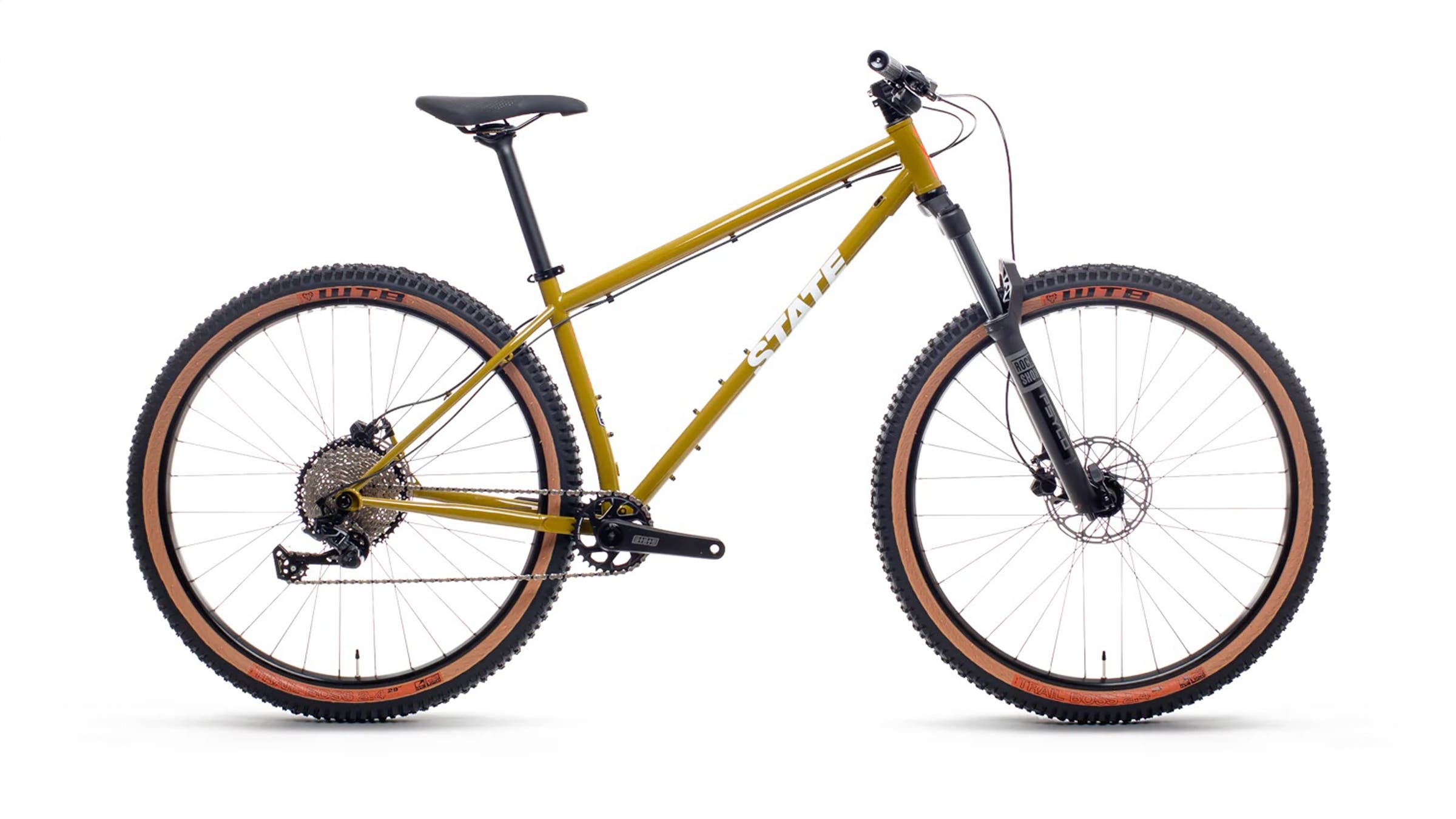
State Bike Co. is more often associated with their fixed gears, gravel bikes, and road-focused offerings, but the 4130 proves that they have one foot in the dirt. This hardtail’s geometry creates a practical and fun bike that feels at home on trails of all sorts.
The simple frame does everything you need it to, without any extra fuss. With plenty of bottle mounts, you’ll be able to load up for a long ride, or even attach some cargo for a bikepacking mission. The geometry leans towards the aggressive end of the spectrum, which allows it to feel right at home in steeper terrain, but we found the handling to be solid and predictable on all sorts of trails.
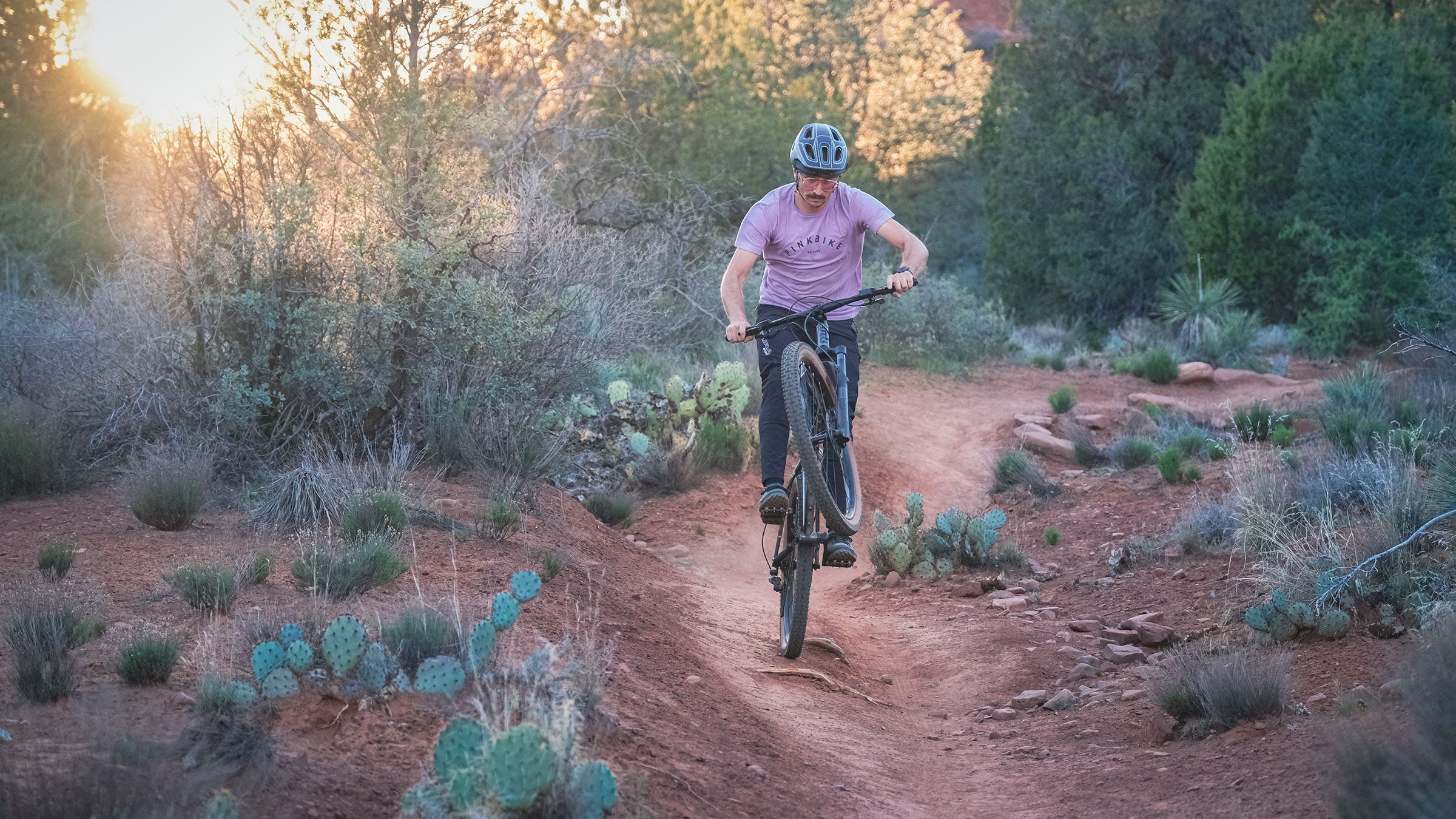
The build kit is well-selected, with a mix of parts that feels well considered. The RockShox Psylo fork is comfortable, tuneable, and more capable than the average on a bike at this pricepoint. The long-travel PNW dropper post is a key detail, and feels like an upgrade right out of the box. The one weak point on the State is the state (pun intended) that it comes in: full assembly is required, which means you’ll have to rely either on your own know-how, or take it to a bike shop and spend some extra cash.
Still, the State 4130 is a great first bike for someone just getting into mountain biking, as well as the seasoned rider who wants a sturdy, versatile hardtail that won’t break the bank.
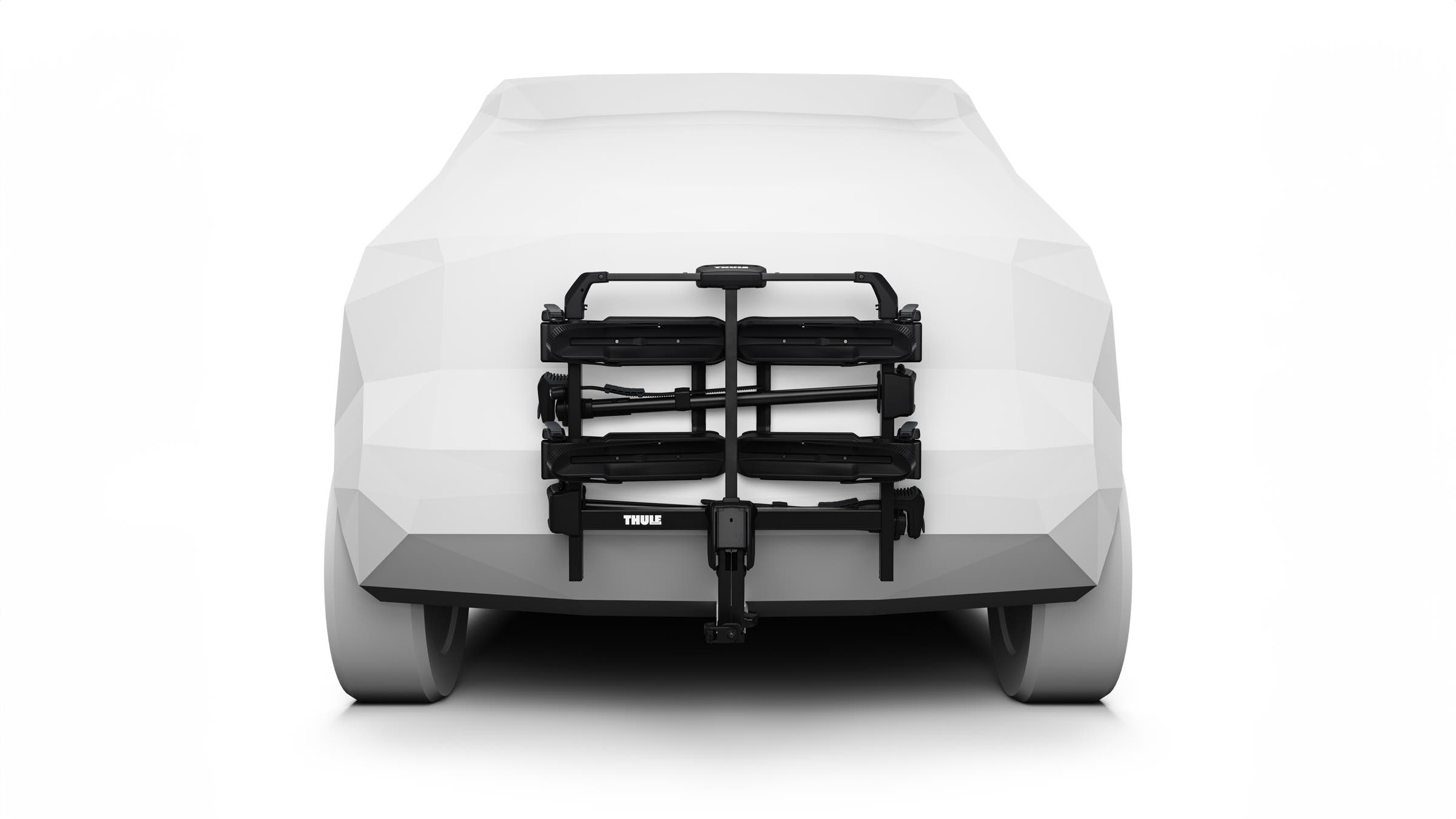
Paid Advertisement by Thule
Thule OutPace Hitch Rack
The compact, lightweight Thule OutPace hitch rack makes loading up for the trail a breeze. Weighing just 29 pounds, it’s easy to mount and remove, yet strong enough to carry up to 110 pounds (55 pounds per bike). Adjustable arms provide a secure fit for a wide range of bike styles, and when not in use, it folds down for convenient storage in your vehicle or garage. Plus, the optional Thule OutPace license plate holder kit keeps your plate visible while you’re transporting bikes.
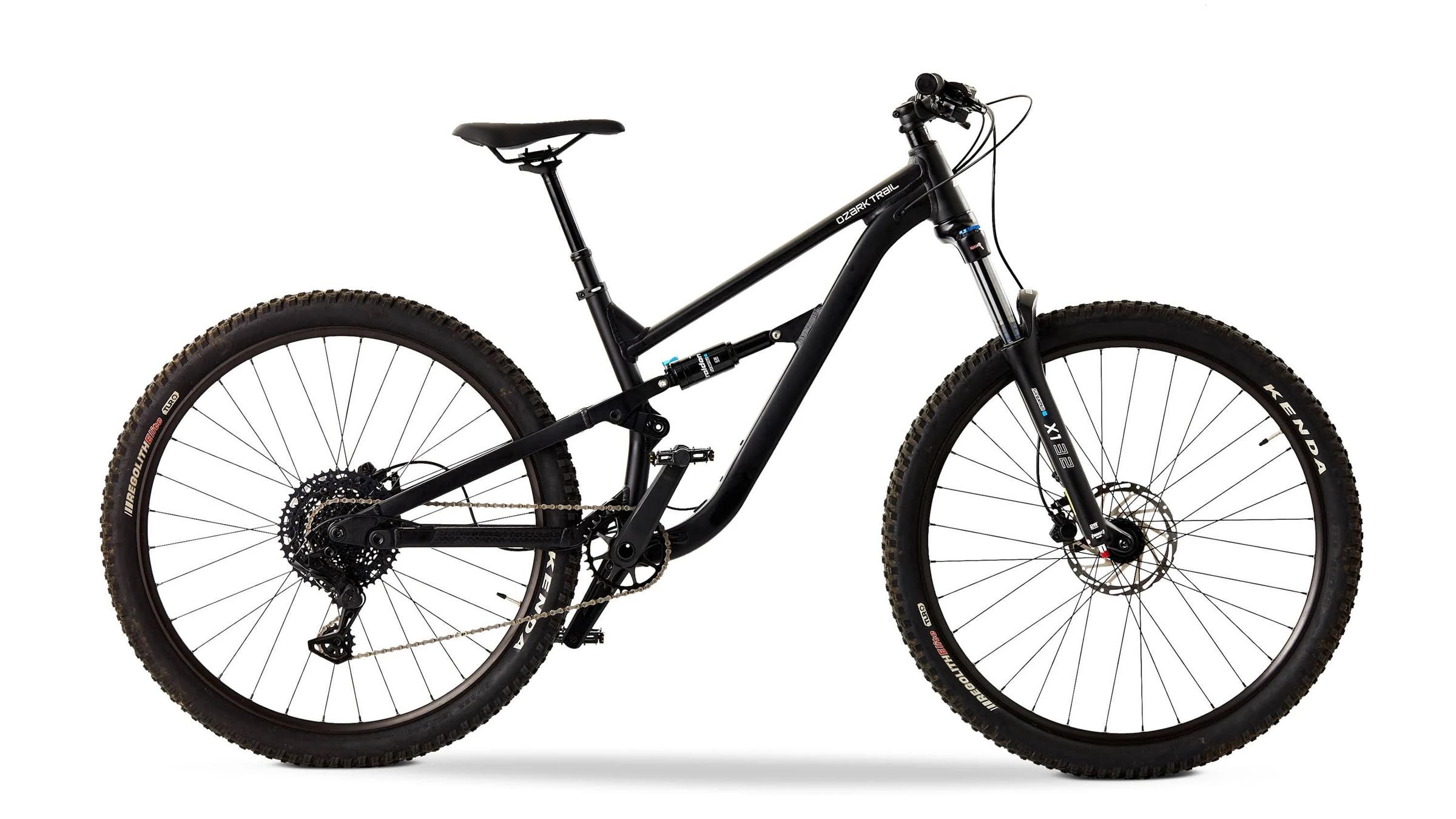
Best Mountain Bike Under $1,000: Ozark Trail FastFlow FS 3
Type: Full-Suspension Trail Bike
Wheels: 29”
Pros and Cons
+ Incredible value
+ Plenty of confidence
– Wheels won’t handle much abuse as riders progress
An Ozark Trail? Really? Walmart’s in-house brand isn’t typically associated with high-end quality, but it is known for hitting aggressive price points. Here’s the twist: the Waltons (yes, those Waltons), heirs to the Walmart empire, are legit mountain bikers. They’ve poured millions into the trail network in Bentonville, Arkansas, and the FastFlow is a clear example of their push to grow the sport from the ground up.
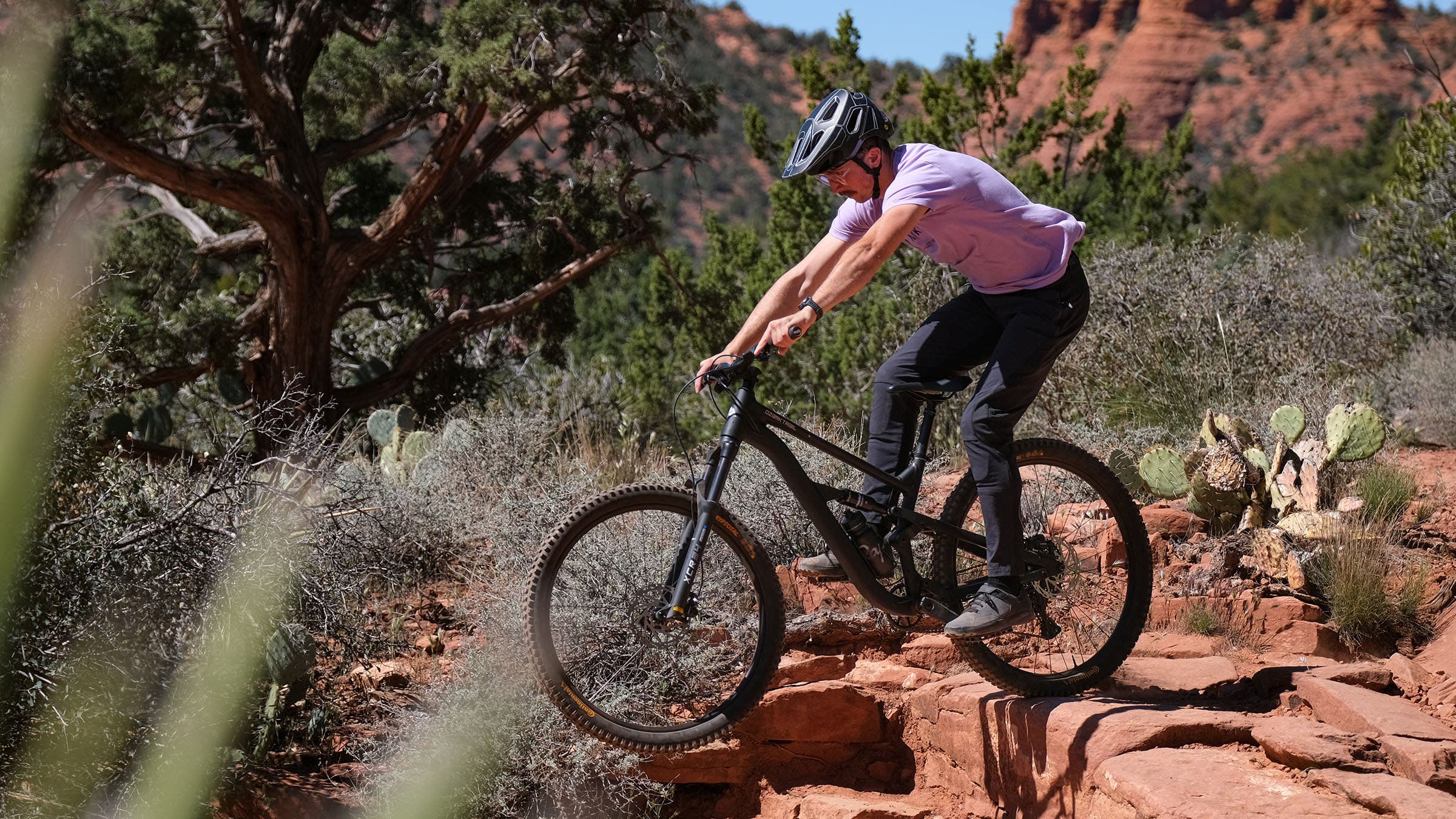
The FastFlow FS 3 is built around a robust alloy frame with 120 millimeters of front travel and 130 millimeters out back, using a four-bar, Horst-link suspension layout. Don’t worry if that doesn’t mean much—the important part is that it’s a widely used, proven design found on bikes costing two to three times as much. Modern essentials round out the spec: thru-axles, a tapered head tube, a universal derailleur hanger, hydraulic disc brakes, and a wide-range 10-speed drivetrain. In plain terms, it’s a solid foundation that riders can upgrade over time as they progress.
We tested the FastFlow across a range of terrain in Sedona, Arizona: technical climbs, square-edge hits, and fast, flowy—pun intended—descents. In the sub-$1,000 category, we were hard-pressed to find anything as capable for the money. The frame itself punches well above its price point. More experienced riders will likely outgrow some of the stock components—especially the suspension, wheels, and brakes—but those can be upgraded incrementally.
It’s genuinely impressive what Walmart has pulled off here: a true entry point into full-suspension riding that doesn’t feel like a dead end.
Frequently Asked Questions
What’s the difference between a hardtail and a full-suspension mountain bike?
A hardtail has a suspension fork up front but no rear shock, which keeps the design simpler and the price lower. A full-suspension bike adds a rear shock to smooth out rougher terrain, making technical trails easier to navigate. Hardtails are perfectly capable machines, especially on mellower terrain, but full-suspension bikes have a clear advantage when trails get chunky and technical.
What type of mountain bike is best for beginners?
A trail bike is the most versatile starting point for most new riders. Trail bikes are designed to handle a wide variety of terrain, with rear travel typically ranging from 125 to 150 millimeters. Modern geometry makes them confidence-inspiring on descents while still manageable on climbs—a true all-rounder that won’t box you in as your skills develop.
How much does a good mountain bike cost?
Entry-level full-suspension bikes start around $2,000 and come equipped with hydraulic disc brakes, wide-range drivetrains, and basic suspension. Around $6,000 is where bikes stop needing upgrades even for more advanced riders. The hardtail mountain bikes in this guide come in under $2,000, making them an accessible entry point—particularly for riders newer to the sport.
Is a $2,000 mountain bike worth it?
At this price point you’re largely looking at hardtails and entry-level full-suspension bikes, and the value can be strong if you prioritize the right components. Functional brakes, a dropper post, appropriate tires, and a solid frame are the things that matter most, and several bikes at this price deliver on all of them without meaningful compromise.
How much travel do I need on a mountain bike?
It depends on the terrain you plan to ride. Cross-country bikes typically run around 100 millimeters of rear travel and are built for efficiency on rolling terrain. Trail bikes sit in the 125–150mm range and handle almost anything. Enduro bikes push into the 150–170mm range for rougher, steeper riding. The more travel, generally the more downhill-focused the bike.
Where should I spend and where can I save on a mountain bike?
The frame is the best place to focus your budget—make sure the geometry suits your riding style and that it’s a good fit. Hardtails cost less than full-suspension bikes but can be more challenging on rougher terrain. Aluminum frames are another way to save over carbon without sacrificing much. For the biggest savings overall, buying used is hard to beat—Pinkbike BuySell and local classifieds are good places to start, just make sure the bike is in solid working condition before pulling the trigger.
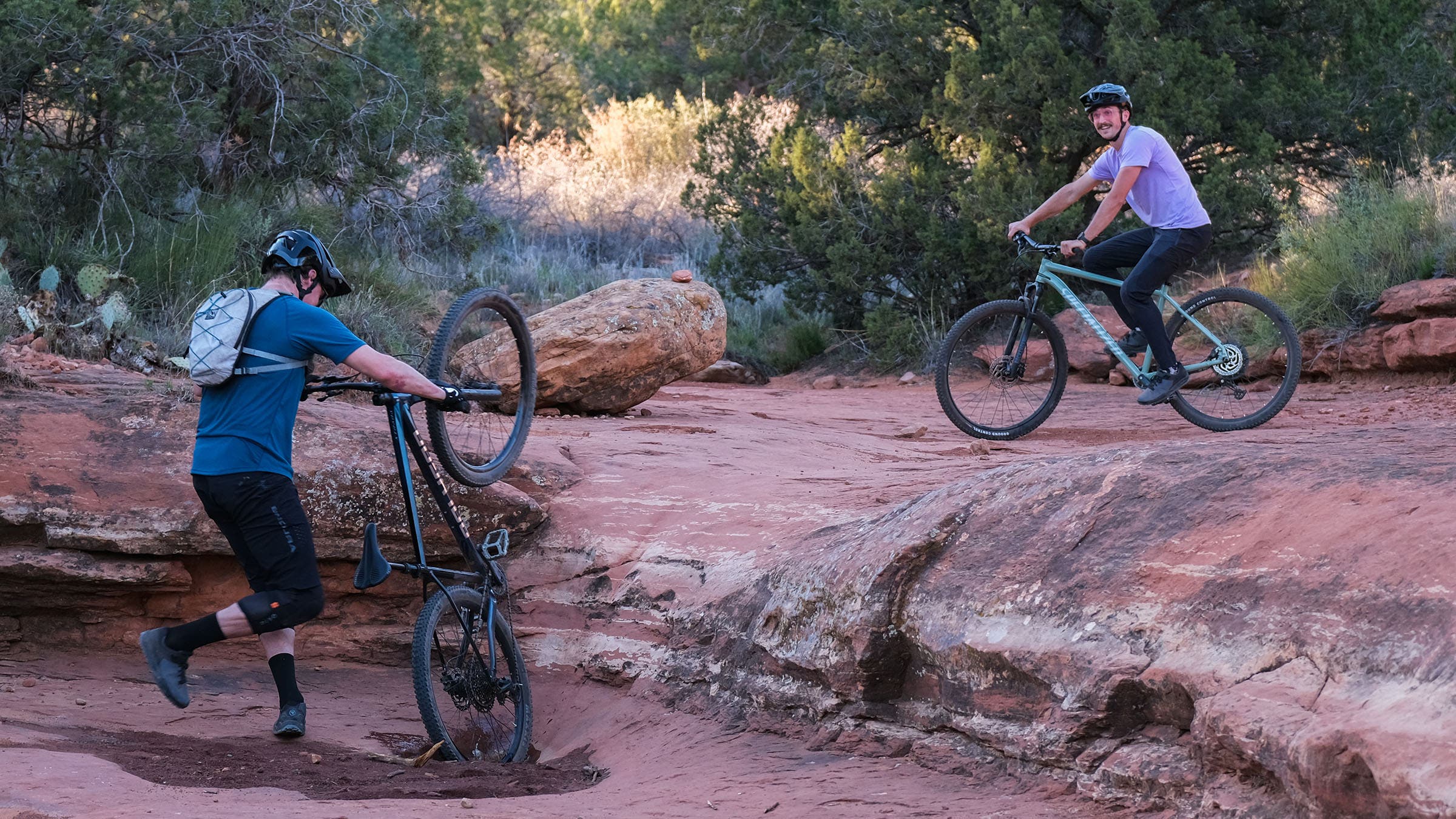
How We Test Value Mountain Bikes
For our most recent round of value mountain bike testing, we headed to Sedona, Arizona, and put each bike through its paces on a mix of trails—from smooth, flowy singletrack to rocky, cactus-lined technical terrain. Our testers rode every bike multiple times on the same loop, then compared notes on where each one excelled and fell short. We also ran dedicated climbing and descending challenges, pitting the bikes head-to-head—the fastest way to surface real differences in handling and trail performance.
