

Published July 21, 2026 03:41AM
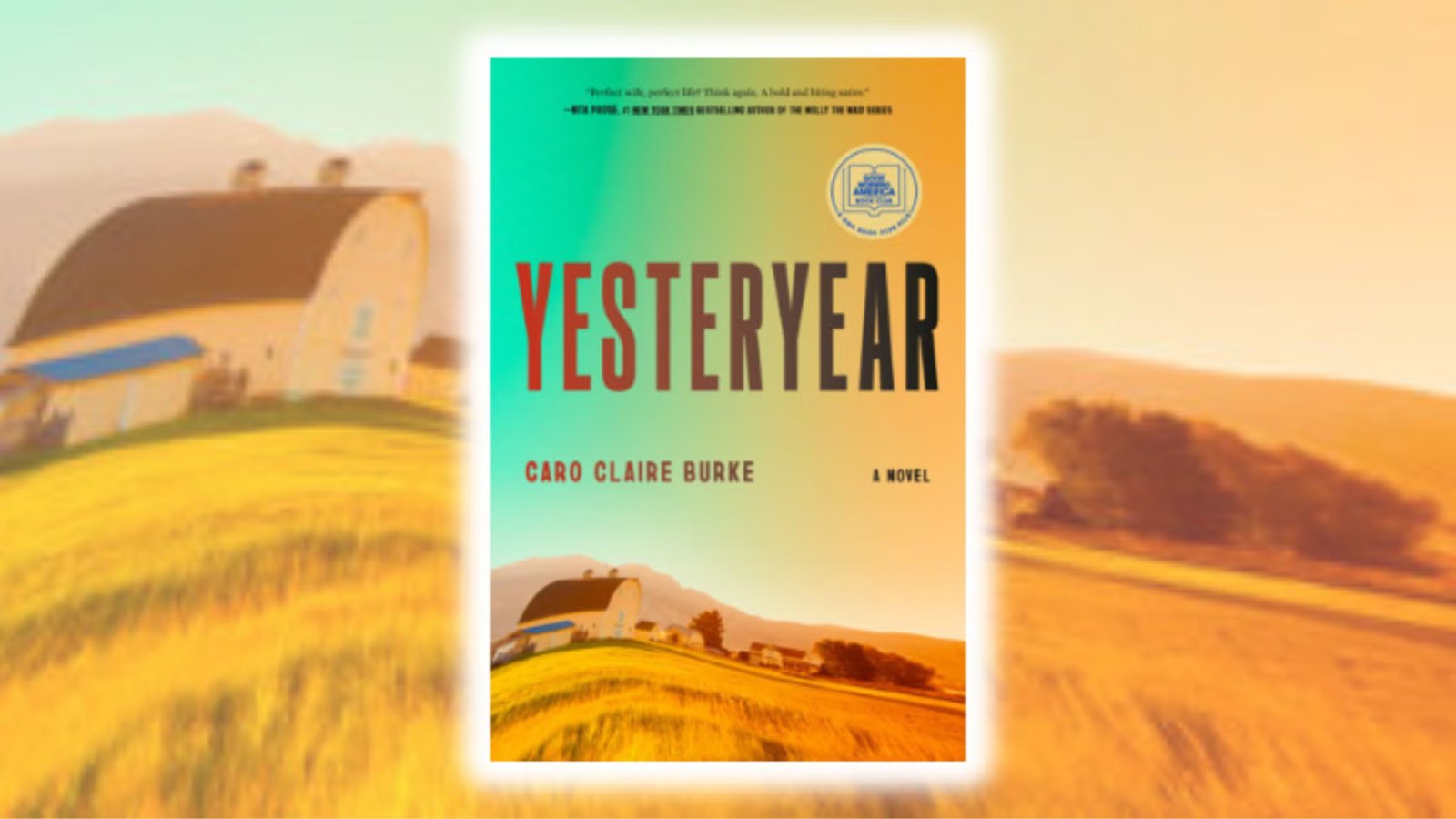
Caro Claire Burke’s 2026 novel Yesteryear is a hit. With multiple weeks as #1 on the New York Times hardcover bestsellers list and an Amazon MGM movie starring Anne Hathaway in the works, its story of a trad wife influencer named Natalie Heller Mills who wakes up in 1855 living the very real pioneer life she’d been portraying online has clearly been connecting with audiences.
On the surface, Yesteryear wryly caricatures people like Hannah and Daniel Neeleman, the “trad” homesteading couple behind the massively successful Ballerina Farm accounts and brand of consumer goods. Many readers see the novel as a skewering portrayal of the hypocrisy behind the ways some influencers use modern forms of marketing and consumer culture to sell old-fashioned ideals, values, and ways of life that they themselves do not fully embody.
However, one of the things that makes the book complicated and interesting is that a handful of the guiding values Natalie’s online presence represents, however poorly, are also some of the north stars for those of us who love the outdoors: sustainability, minimalism, self-sufficiency, and anti-consumerism, to name a few. Aren’t those good things? To my mind, the novel never lands on a definitive damnation or salvation for Natalie and the digital influencer lifestyle she represents. Instead, it explores the very human desires and tensions that live behind our tiny, modern screens.
To better understand the realities behind influencing in the homesteading and outdoor spaces, I talked to three very different digital creators: Katie Boué, an author and influencer with a half-acre homestead near Salt Lake City; Jill Winger, podcaster, author, and the influencer behind the massively popular The Prairie Homestead; and DJ Brandt, professional free ride mountain biker, self-described “half influencer and half mountain biker,” and my soon-to-be brother in law. They walked me through the realities of what they do, and I think I can confidently say there’s not a Natalie Heller Mills in the bunch.
Editor’s Note: Reader, beware. Spoilers abound below.
“Authenticity” Is a Tricky Business
Hopefully in the year 2026, it’s no secret that the version of a person you encounter online is just a version, a curated set of images or videos that create a character, which may or may not approximate who that person is in real life. However, no matter how obvious this versioning may seem, we can all feel parasocial connections to people we’ve never met, attached to their online presentation, rooting for its wins and brokenhearted when it comes up short of our expectations by being … real. For their part, influencers seem to either embrace the gap by pointing toward it in the content they make or reject it by refusing to acknowledge the things their audience can’t see that would undermine it.
Yesteryear is clearly interested in the latter type of influencer, staging this tension in a paradigmatic modern consumer-culture locale: a Target with an in-store Starbucks. As Natalie and her daughters participate in a most hallowed caffeinated consumption ritual, she bumps into a high school classmate who quickly groks the gap between online Natalie (who would never shop somewhere like Target) and the real Natalie standing before her, happily floating “along beneath the mind-numbing fluorescence.”
When I asked Boué, Winger, and Brandt questions about the “real” vs. the “online” of themselves, each brought a unique perspective, but they converged on one point: no matter how hard you try, there’s no way for all the real messiness of life to come through on the feed. But that doesn’t make trying not worth the effort.
“That’s something that’s always been really important to me: thinking about the community and the audience, readers, consumers, followers,” Boué said. “You have to treat them well and respectfully. And I think that part of that is showing the whole truth.” To do that, Boué has done things like creating a series of mulch hauling videos so her Instagram audience can see more of the un-aesthetic realities behind what she does day to day.
But she’s also clear about the lines between her time devoted to content creating and the time she needs to actually run a homestead: “to be totally honest, when I’m shucking the shit out of my chicken coop, I’m not thinking about setting up my tripod. I’m working; that’s not content time, and I found it is really hard to consistently share homesteading content because when you’re working, you’re sweating your ass off. You’re hot, you’re really busting one out, and you’re not really thinking about…Instagram.”
For her part, Winger has recently spent time navigating her audience as she publicly shared that she and her husband are in the process of a divorce, a reality that doesn’t necessarily jibe with the persona she’s built over the past decade. “I got tired of the happy clappy basic homesteading content I was producing in the past,” she says. “It felt right then; it just started to feel disingenuous, and so I had sort of prepped my audience inadvertently to like, ‘hey, Jill’s doing different things. Jill’s having some awakenings. Jill’s running a restaurant now. She’s doing other entrepreneurial things. She’s a homesteader, but not just.’ … Divorce was not a part of that equation at that point. When I did announce it, like two months ago, I had probably more folks than I would have who were supportive and understood. Of course, I had the clunkers. There were a couple days I had to shut my phone up and just cry because it was rough.”
Despite the choppy waters her announcement created, though, Winger is clear about what she believes, regardless of whether it’s online or real life: “I try to be the same.”
As a professional athlete, Brandt has sponsorships he has to bear in mind when it comes to what he posts, and he sees this as mildly affecting his choices online but not at the expense of denying his authentic self: “Trying to stay authentic, feed the algorithm, and keep the companies stoked—it can be a weird line to try and walk,” Brandt says. One way he walks it is by only promoting products or clips he actually believes in. “I can’t be one of those people that just pumps out a bunch of bullshit and shoves it down your throat just because I know the algorithm wants to see it. I can’t really get behind posting a clip or promoting a product that I don’t think is halfway good.”
First Comes Love, Then Comes Persona
Natalie is a deeply flawed protagonist in Yesteryear. She’s hard on the people around her. She doesn’t acknowledge the hidden money and labor that make her life possible (her husband’s father is a presidential frontrunner who bankrolls most of her life). She doesn’t take responsibility for the ways in which her online persona contributes to a toxic political discourse.
But even as you encounter Natalie doing all of these things, you also have insight into the early life that forms her, the college experiences that radicalize her, and the pressures of adult- and motherhood that drive her to create her Yesteryear persona. Because of this, there’s something fundamentally human about Natalie that you can’t just dismiss; she doesn’t come up with Yesteryear and work her way backward into being a person. The story unspools in the opposite direction.
So how did it work for the real creators I talked to? What comes first, the love of the thing or the business it can generate?
For Winger, love of getting her hands dirty outside grew into a type of influence she never could have foresaw. Winger tells me she started her journey in 2010 with “no grand aspirations.” She explains: “I had just newly wed, and we had a new property, and I had this urge to make it productive and make it mean something for me and the family. There wasn’t anything online about homesteading or anything at that point … I just wanted to tell someone I was so excited about yogurt and chickens, and so it started off as a journal kind of personal thing, and then it morphed over the years” into the Prairie Homestead. “I always expected it to be a fringe thing forever. That’s why I was attracted to it because I like a little bit of fringe. I like a little bit off the main path.”
Brandt has had a similar trajectory in the sense that his online presence grew from the things he loved and the communities he was authentically a member of, rather than being created as a canny way to monetize people’s attention. “I made my Instagram account in 2012, so I was a little behind, but not super behind on early Instagram … I think the reason the social media stuff attracted me is because even before that, [the biking community] had a mountain biking blog website called Pinkbike, and that was like the source of anything and everything mountain biking.” Brandt tells me that getting Picture of the Day or Video of the Day on Pinkbike, which is now owned by Outside Inc., meant everything to him. And before all of that, Brandt says he just “loved making videos with my friends and taking photos with my friends.”
From this place of love, the kinds of sponsorships that meant Brandt could quit his day job eventually came in 2017. Brandt says it’s hard for him “to attribute how much of that was me being good at biking” versus things he was posting on social media. “Now it’s very obvious with my contract breakdowns, but earlier in the game, I really don’t know.”
And Boué echoed the same teleology. “We moved to this property in 2020, during the height of the pandemic, seeking wider open spaces. I was really burned out after the election cycles and working in the outdoor industry for so long on political stuff and really wanted to do something with my hands. I really just felt this call to get back to making something that mattered and that contributed to society in some way and just got super into this.”
(Some) Influencers Like Reading About Influencers
Yesteryear is a novel about the pressures and realities of modern influencer culture. Naturally I had to ask Boué, Winger, and Brandt if they’d read it.
“Carol Claire Burke is a friend of a friend of mine and Hannah [Neeleman] is a friend of a friend of mine, and it’s all just fun and playful and a good story,” Boué said. “Let the raw milk just wash over you” and enjoy it. And Boué had a recommendation for anyone who loved Yesteryear; she says to try Everyone is Lying to You by Joe Piazza.
Winger, who also read Yesteryear, told me she was more entertained by Burke’s portrayal of “the duality of the influencer’s life because I have seen that in other influencers, and I have actually purposely set up my life … in a way that was not that … I’ve been very stringent with myself in my content to make sure that’s not what I’m doing. So I thought it was entertaining in a snarky way.”
As for Brandt? He told me he hadn’t heard of it, and he wasn’t particularly familiar with the Neelemans or Ballerina Farm either.
