

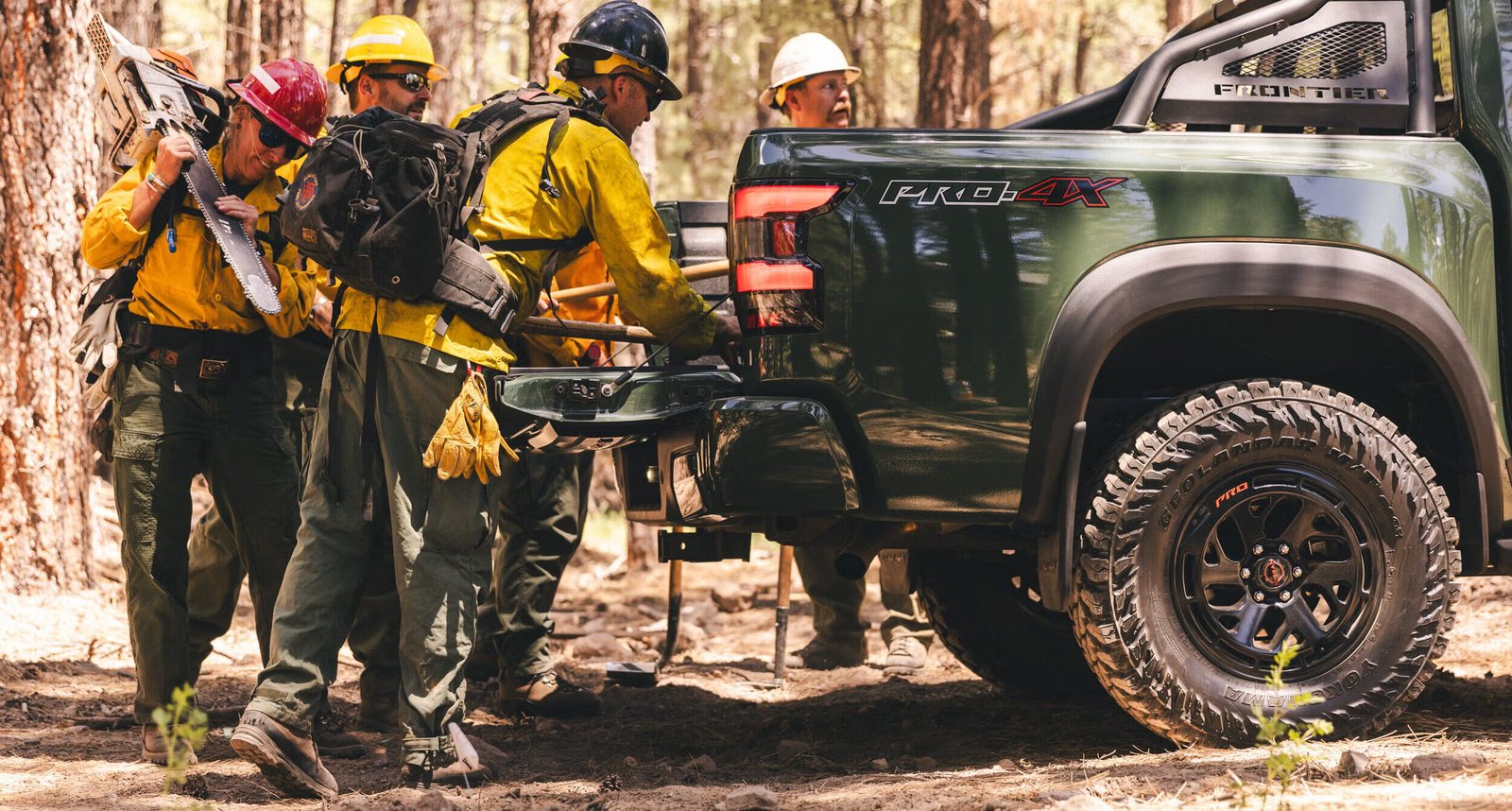
After watching 36 homes burn in real time, Mike Felts knew he had to protect his community. That’s when he stumbled on a cutting-edge technology that could change the game for good.
Published July 29, 2026 11:38AM
Every New Year, Ed Shaw sets his Christmas tree on fire. Then, one year, it refused to burn.
Shaw tried everything, including gasoline. When that didn’t work, he called Mike Felts, battalion chief for the local Flagstaff Fire Department and a longtime friend. Together, the two traced the conifer’s origins back to the tree lot and then back to the farm. There, they discovered, it had been doused in a fire-retardant spray.
For Felts, it felt like a lightbulb moment.
Just a few years prior, Felts had watched 36 homes burn down in real time during the deadly Palisades Fire in California. The destruction had been devastating. Ever since, he’d been desperately searching for a solution that could stop that kind of thing from happening to his own community. And now, his pyromaniac buddy had finally found it.
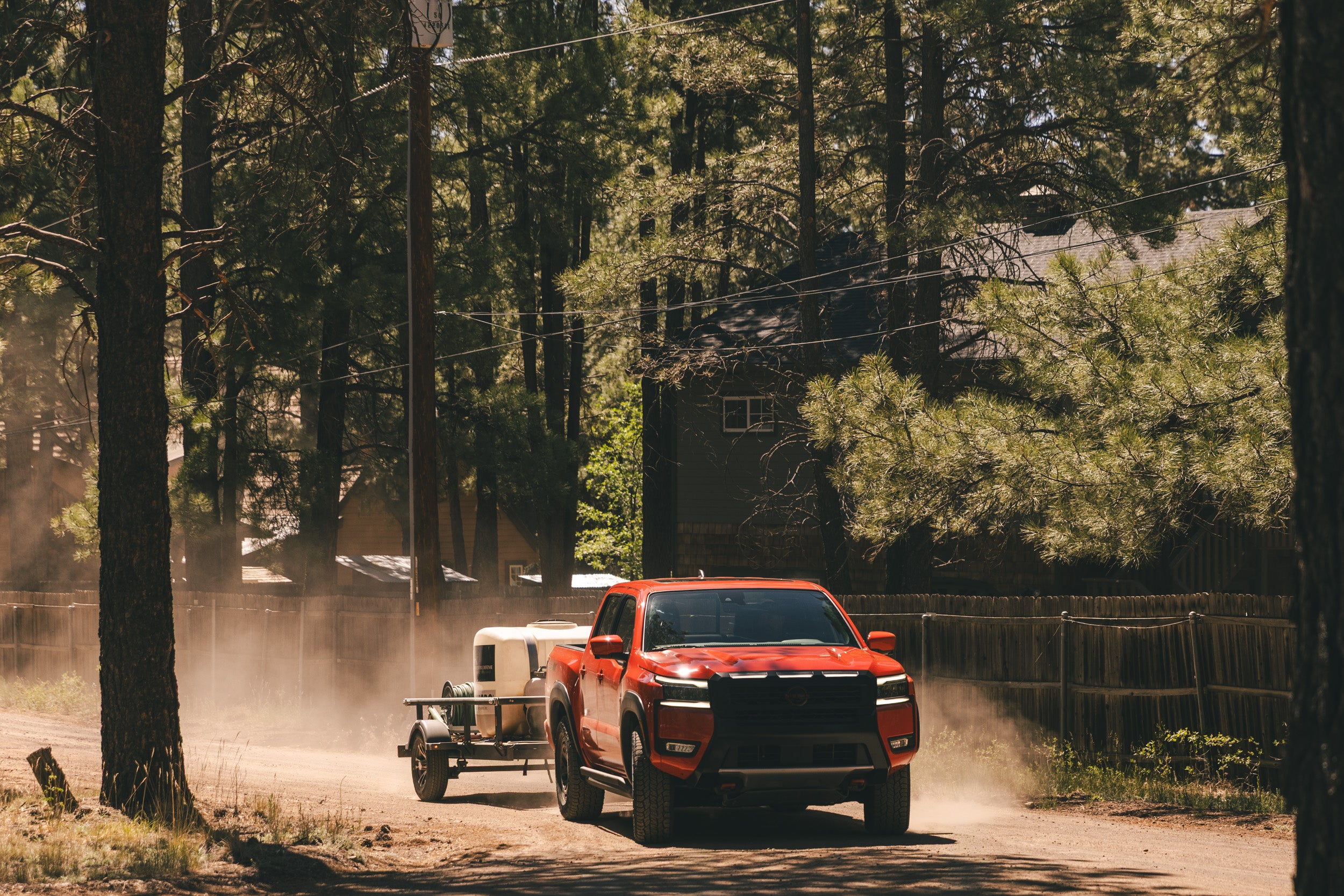
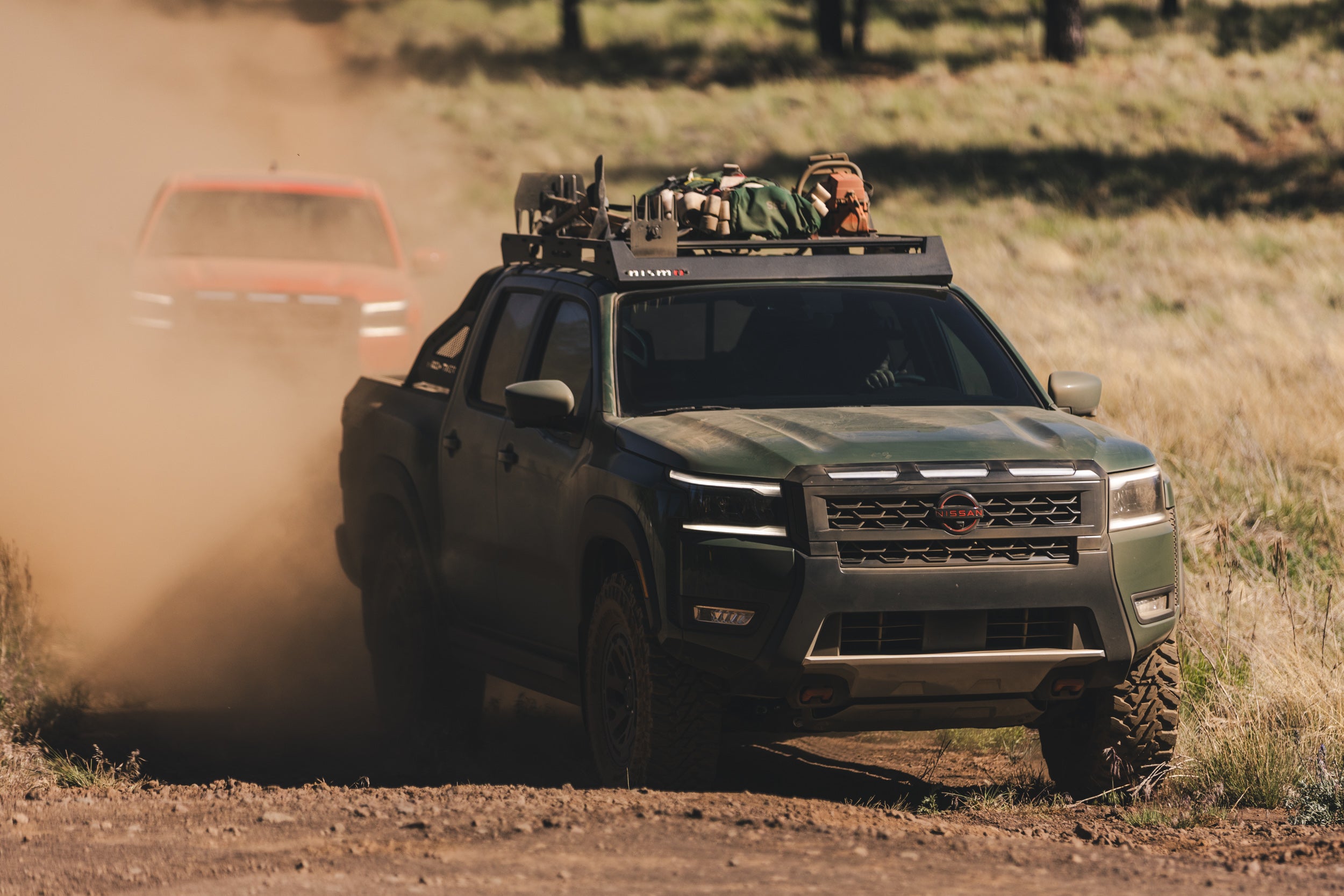
Felts took that technology and ran with it. Today, he operates a company called Advanced Fire Defense, which uses an eco-friendly spray called Komodo to fireproof homes in some of the most remote timbered terrain in the West. When he’s not working at the fire station, he’s hauling hundreds of pounds of fluid and construction equipment down 20-mile dirt roads, trips a Nissan Frontier (and its whopping 7,150-pound towing capacity) has helped him handle without thinking twice. The work has saved some structures outright. It helped others regain insurance after numerous big companies pulled coverage in the wake of the Palisades Fire.
2026 Nissan FrontierMorahan Visuals
It’s not an exaggeration to say that this kind of technology is a game-changer. In fact, it’s among some of the first big innovations firefighting has had in years.
For centuries, wildland fire fighting tactics remained essentially unchanged. The protocol: Send in a bunch of guys with shovels and axes. Cut lines, eat smoke, dig trenches. It was pretty blue-collar, but it worked—until it didn’t.
About a decade ago, wildfires in the West started to become uncontrollable and catastrophic. Between drought and climate change, smoky summers became the norm. As people found themselves living in constant fear of fire, they started to wake up to the yawning gap in firefighting innovation. The arms race began.
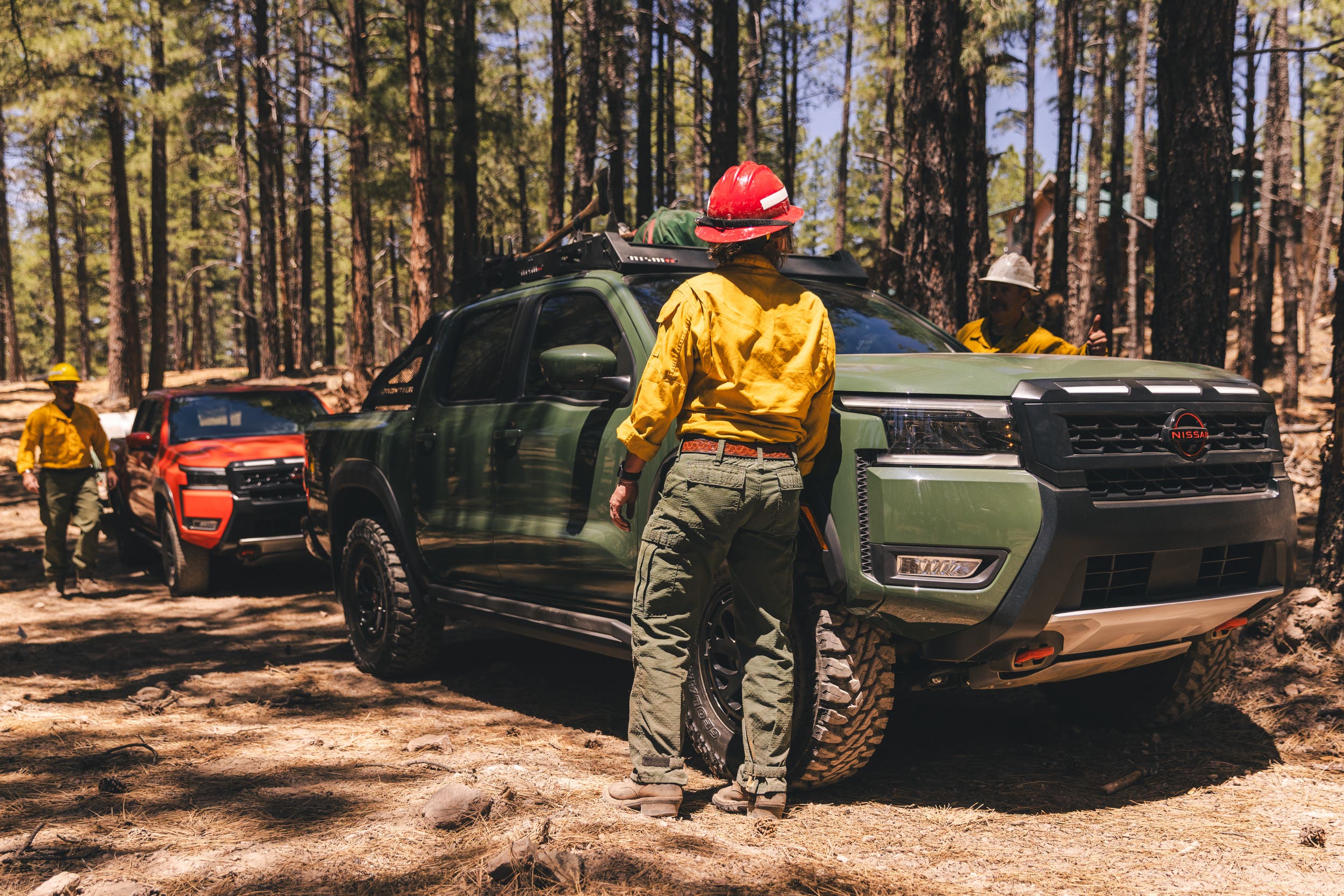
In the last year alone, a spate of new fire-minded startups (including one Felts is working on) have invented early wildfire-detection systems using satellites and high-flying drones. Others have built robots that can crawl up steep slopes to thin vegetation, and bulldozers that can dig lines and spray water at the same time.
“It makes me feel extremely hopeful,” Felts says. “It’s scary when a wildfire comes through and you have to leave your home, and you’re not sure if it’ll be there when you get back. I want to give people the peace of mind to know there’s a good chance their home will make it.” Even more than that, he wants to ensure a fire-safe future for his family.
“Flagstaff is such a beautiful place,” he says. “I want to protect my community, and I want my kids to enjoy it the way I have.”
Nissan North America, Inc., headquartered in Franklin, Tennessee, delivers innovative automotive products and services that inspire and move people. As a global leader in electric vehicles and advanced automotive technology, Nissan offers a full lineup of vehicles, highlighted by the new 2026 Nissan Frontier. Driven by a commitment to sustainable mobility and thrilling performance, Nissan aims to transform the way people live and drive. For more information, please visit Nissan USA.
