

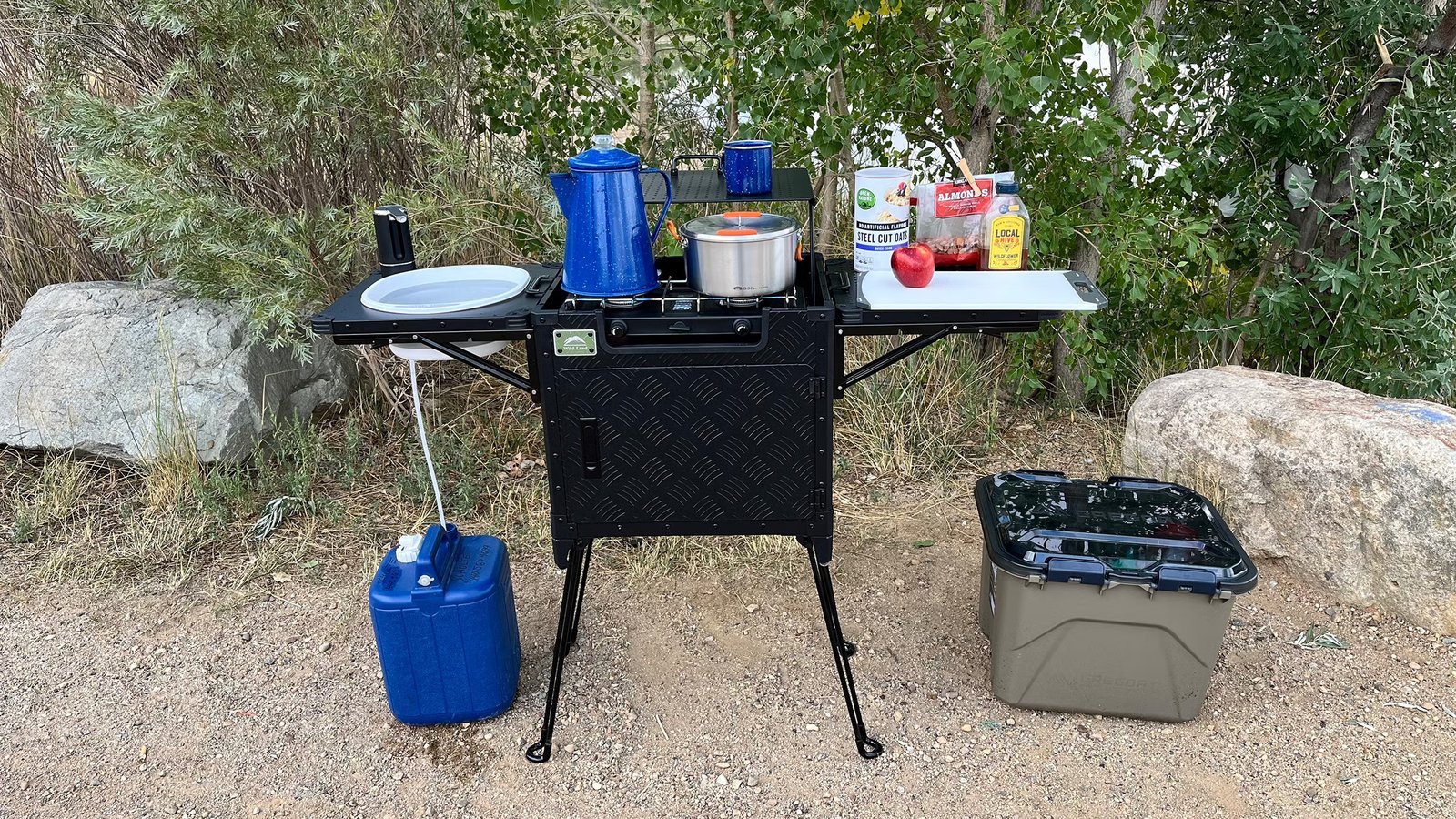
The Cinch Kitchen Cruiser isn’t perfect—but the standing-height prep space, sink, and faucet more than make up for its flaws.
The whole system: a water jug feeds the electric faucet at the push of a button. (Photo: Jenny Wiegand)
Published August 28, 2026 06:00AM
I’ve never been jealous of the camper or teardrop-trailer crowd—too much hassle and maintenance, if you ask me—except for their built-in kitchens. A dedicated spot for cooking that doesn’t swallow the entire picnic table has always seemed like a luxury worth splurging on, and after two mostly-successful camping trips with two toddlers this summer, I’ve decided it’s one of only two things worth paying real money for when it comes to camp gear. (The other is an ultra-plush queen air mattress. Different review.)
I spent the summer testing the Cinch Kitchen Cruiser, an all-in-one camp kitchen unit with a sink, stove, and storage that folds into a single box and unfolds to standing height—about as close as a car camper gets to a built-in kitchen without towing anything. Cinch is better known for rooftop tents, made in partnership with Wildland, a manufacturer with decades in the tent and outdoor gear business. The Kitchen Cruiser is a bit of a departure for them, but they have solid credentials in the space. Testing took place on an overnight trip to Curt Gowdy State Park in Wyoming and a weekend at Buffalo Creek, Colorado, and included: two adults, two toddlers, a lot of dishes, and even more dirty pacifiers.
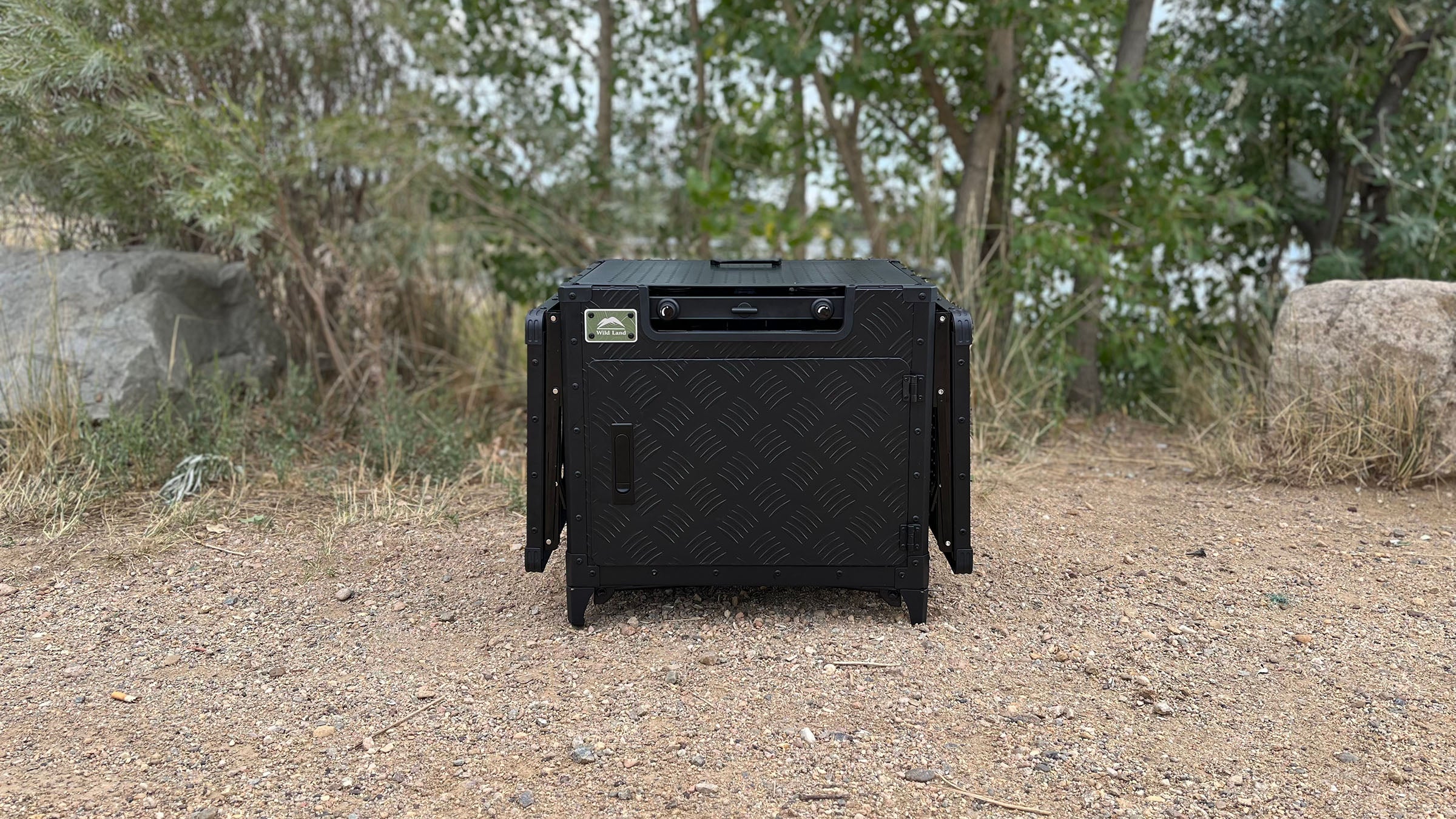
Packed down, it’s roughly the size of a standard camp gear box.Jenny Wiegand
Cinch Kitchen Cruiser
Packed dimensions: 50″ x 27″ x 36″
Weight: 43 lbs
Standing height: 35.5″
Pros and Cons
+ Push-button double-burner stove
+ Sink and faucet
+ Ample storage
+ Standing-height prep counters
– Heavy to carry
– Deploying and folding legs is a pain
A Real Kitchen, Not Just More Picnic Table
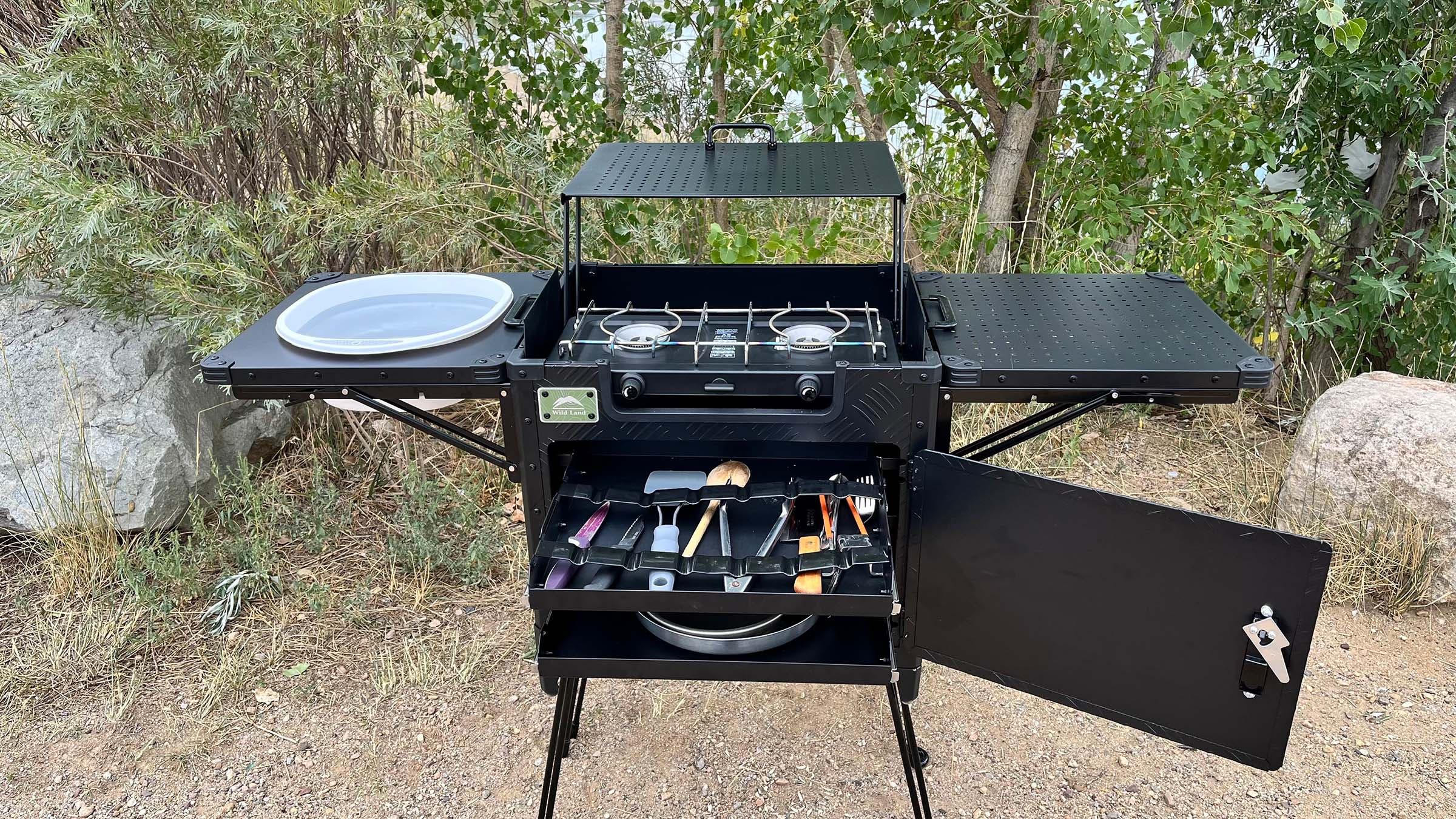
The single biggest upgrade here isn’t any one feature, it’s that cooking happens somewhere other than the picnic table. My go-to camp kitchen setup—an ancient Coleman two-burner stove and a cutting board set up on the campsite picnic table—turns the one clean communal space at camp into food prep, dish drying, and dinner seating, and it turns into a junk show in two seconds flat. The Kitchen Cruiser gives you an actual dedicated food-prep station: counter and storage space that keeps food and knives out of the way, and a prep area at a standing height (35.5 inches), so you don’t have to bend over a low camp table to chop vegetables. That sounds like a small thing until you’ve spent a week doing camp prep hunched over like Gollum.
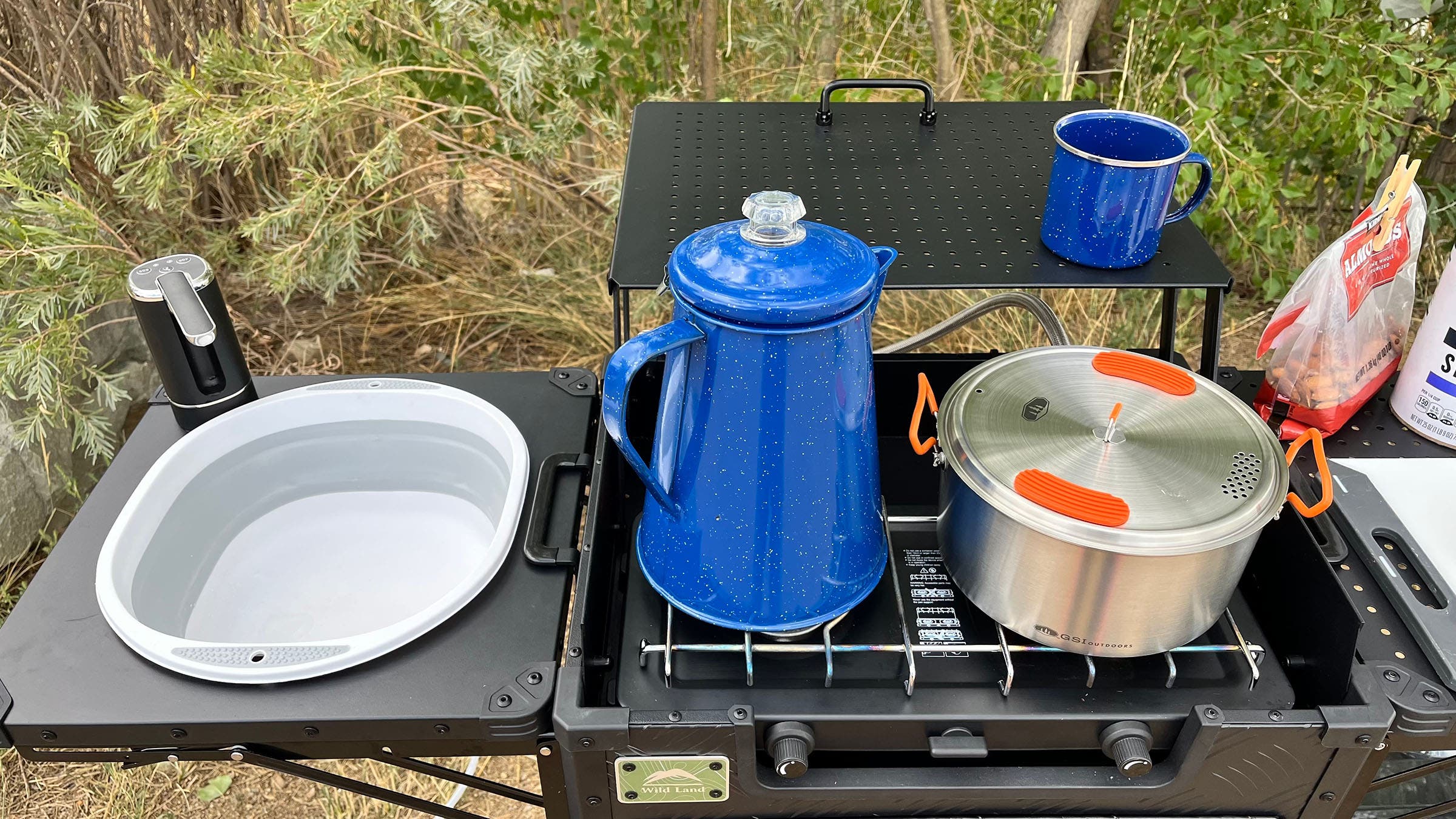
The two-burner stove ignites at the push of a button—no matches or lighter required—and Cinch rates it at 3.2 kW combined, which is enough cooking power to boil a full pot of water in about 6 minutes. We ran two pans at once without either losing heat, and had pasta water and coffee boiling quickly both trips.
Packed down, it’s the size of a standard camp gear box and slides into our SUV trunk with the rest of our gear. It unfolds to full standing height in under two minutes, and—the best part compared to other camp kitchen setups I’ve seen—everything lives inside the unit itself. Stove, sink, cookware: it all stays organized in two slide-out drawers and a compartment tall enough to house pots. No second bin of accessories riding shotgun.
The Sink and Running Water Is the Real Headline
If the standing-height prep space is the upgrade, the built-in sink and electric faucet is the life-changing feature, and the reason I’d buy this tomorrow. The rechargeable faucet comes with a hose you can drop into your water jug, pulling water up and depositing it into the collapsible silicone sink at the push of a button. It’s the single best improvement we’ve made to family camping, full stop. It makes camp cleanup infinitely easier and more enjoyable.
Where this Camp Kitchen Unit Falls Short
None of this comes without some hassles and disappointments. Unfolding the legs while the unit is fully loaded is awkward—you have to tip the whole box on its side to deploy them, which sends everything in the drawers sliding around. The legs don’t telescope, so you need reasonably level ground to get a sturdy surface. The included wind shields aren’t tall enough to fully protect the burners, which becomes a problem the second you get any real wind.
Fuel was our other sticking point. This unit runs on 230-gram EN417 screw-on canisters and burns the same isobutane/propane mix as a Jetboil or MSR backpacking stove—rather than the 465-gram Coleman propane bottles we normally use on car camping trips. At full power, a single burner burns through roughly 116 grams an hour, so a standard canister buys about two hours of continuous full-power cooking on one burner. That math caught up with us: we ran out of fuel after three days of using the stove for two meals a day. (Worth noting: Cinch plans to ship future units with an adapter for Coleman propane bottles.)
It’s also heavy—despite being built from aerospace-grade aluminum, the Kitchen Cruiser weighs 43 pounds unloaded. The heft means it’s not flimsy; it held up fine through two trips of rough handling. But it’s a real pain to unload from the car and carry any distance into camp.
Is It Worth It?
I’ve never tested a piece of gear with this many obvious flaws that I was willing to overlook. Yes, it’s heavy, and the legs are a pain to deploy. But I’ve decided this thing could weigh 100 pounds and I’d still find a way to cart it to every campsite. The drawbacks don’t outweigh what this unit fixed for my family camping trips: a convenient, organized, comfortable place to cook standing up, plus running water on demand.
At $599, it’s not cheap, but it’s not an outlier—the Chuck Box, a similar camp kitchen unit, runs $665, and doesn’t come with a sink or faucet built in. For $66 less, you’re getting a separate wash station included instead of bolted on. For what the Kitchen Cruiser replaces (a folding table, a two-burner stove, a wash setup, a bin of loose gear), I’d say that’s a fair trade.
