

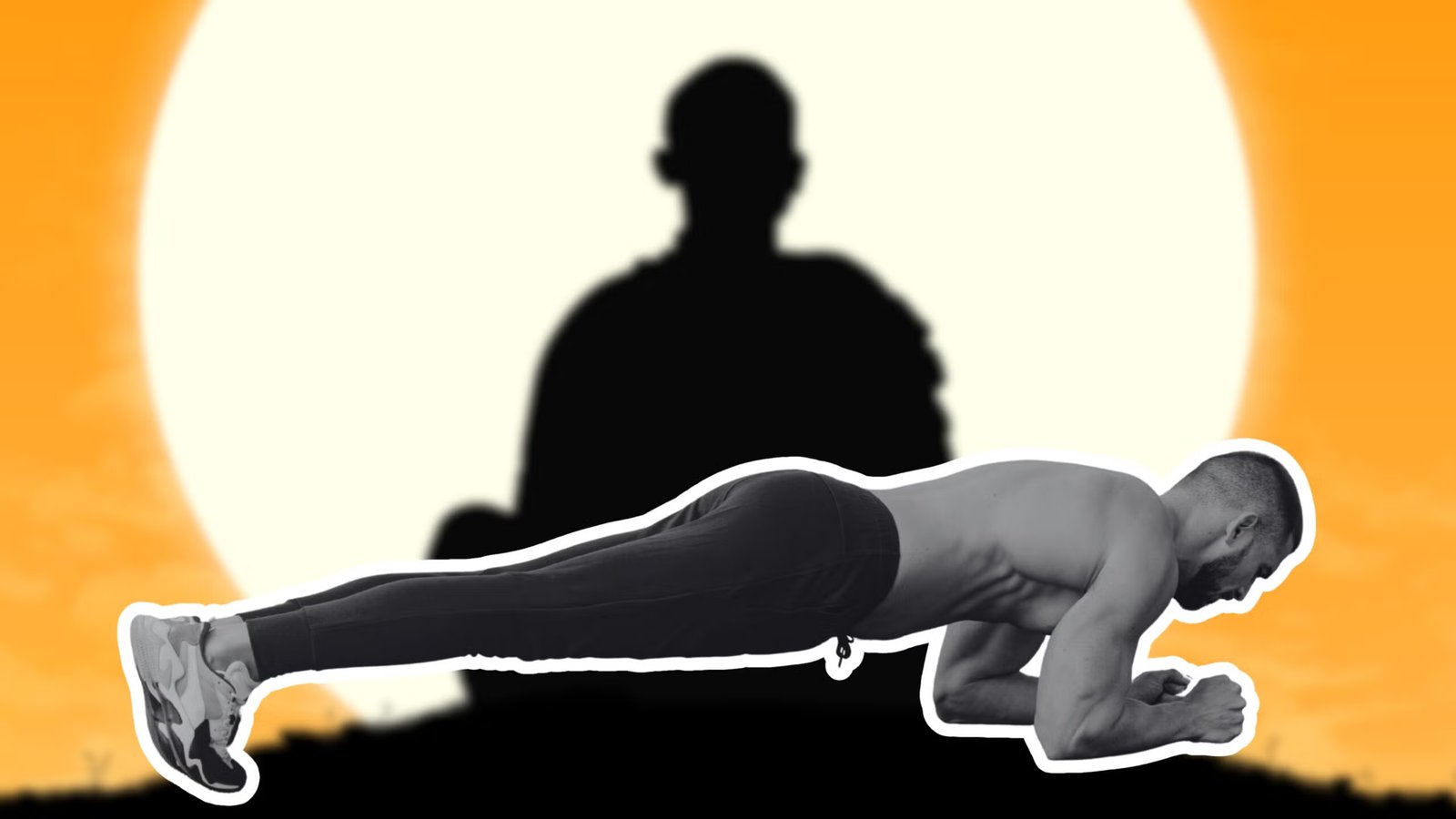
The trending one-arm, one-leg plank looks simple. It isn’t. Here’s what it takes to nail it—and why the attempt is worth making for anyone who hikes, runs, or climbs.
(Photo: Ayana Underwood/Canva)
Published August 28, 2026 01:47PM
As a certified personal trainer and avid outdoor athlete, I’m a big fan of planks and the core stability benefits they provide. So when I saw something called the “monk plank challenge” trending on social media, I wanted to give it a shot.
But my curiosity quickly morphed into embarrassment: approximately three seconds into my first attempt, I realized I couldn’t even get into the pose—let alone hold it for any period of time.
Keep reading to learn why it’s so challenging, how to do it, and how mastering the move can make you hike, run, and climb better.
What Is the Monk Plank Challenge?
The monk plank challenge is an advanced plank variation that requires significant mobility, balance, strength, and stability.
You start by getting into a runner’s lunge, hooking your left arm around your front left leg, and then shifting your bodyweight forward as you raise your right back leg and right arm up so that they’re in line with your torso. Your only points of contact with the ground are that left hand and the ball of your left front foot. This means all of your weight is supported by just one side of the body (unlike a Bird Dog, where the opposite arm and leg stay elevated; the diagonal line helps with stability; in the Monk Plank, there’s none of that). The goal is to stay balanced in this position and hold your body as still as you can. Then you do the same on the opposite side.
My husband described the monk plank challenge as an amped up version of Warrior 3 combined with a shiva squat (two yoga poses), which isn’t far off.
What Makes the Monk Plank Challenge So Hard?
It’s way harder than it looks. And that’s saying a lot, because it looks really tough. First, there’s the mobility aspect: you need a good amount of hip and ankle mobility to get into the runner’s lunge position. I have chronically tight hips—something I’m trying to improve—so this was my limiting factor.
Next, you need serious strength in your glutes, legs, and core to lift your back leg off the ground and hold it in line with your torso. Your hips naturally want to rotate when you do this, so you also need rock-solid hip and core stability to prevent that from happening.
Also necessary: ample shoulder and wrist stability, so that you can support the majority of your bodyweight with just one arm. Once you’re in the pose, you need incredible core stabilization and mental focus to stay balanced.
“It’s one of the toughest poses I’ve ever held,” fitness trainer Sajedeh Arefi wrote under an Instagram video of her completing the challenge. “Every second felt like a battle.”
How the Monk Plank Challenge Can Make You a Better Outdoor Athlete
I’d reckon most people who attempt the monk plank challenge do it as a one-time thing (like I did); it’s not the sort of pose you see frequently sprinkled into workouts.
But if you complete it regularly, you’ll build next-level core strength and stability. And that would benefit you in any outdoor activity, from hiking to trail running to climbing.
For instance, the pose activates the transverse abdominals, core muscles that serve as a natural corset around your pelvis and spine, providing foundational stability. These same muscles help support the weight of a backpack, for example, or help balance on skis. Core stability protects your spine as you move and also allows your body to efficiently transfer power between your upper and lower halves, propelling you forward on a trek or a run.
This move will give you stellar hip stability, too, which would reduce your risk of knee pain and injury as you walk and run outdoors. So, give it a shot. If you don’t fall on your face like I did, bravo!
About the author: Jenny McCoy, CPT, is a certified personal trainer and senior fitness and health journalist based in Colorado. As Outside‘s Moves columnist, she covers the best fitness routines for outdoor athletes. She earned her credentials through the National Academy of Sports Medicine (NASM). In her free time, she lifts weights, plays word games, and goes on outdoor adventures with her daughter, husband, and dog. In a previous story for Outside, she recommended the best standing exercises that can help improve stability in your favorite outdoor sport. You can read it here.
Want more Outside health stories? Sign up for the Bodywork newsletter. And for tips on how to train, fuel, and recover better, sign up for the Sweat Science 101 newsletter.
