

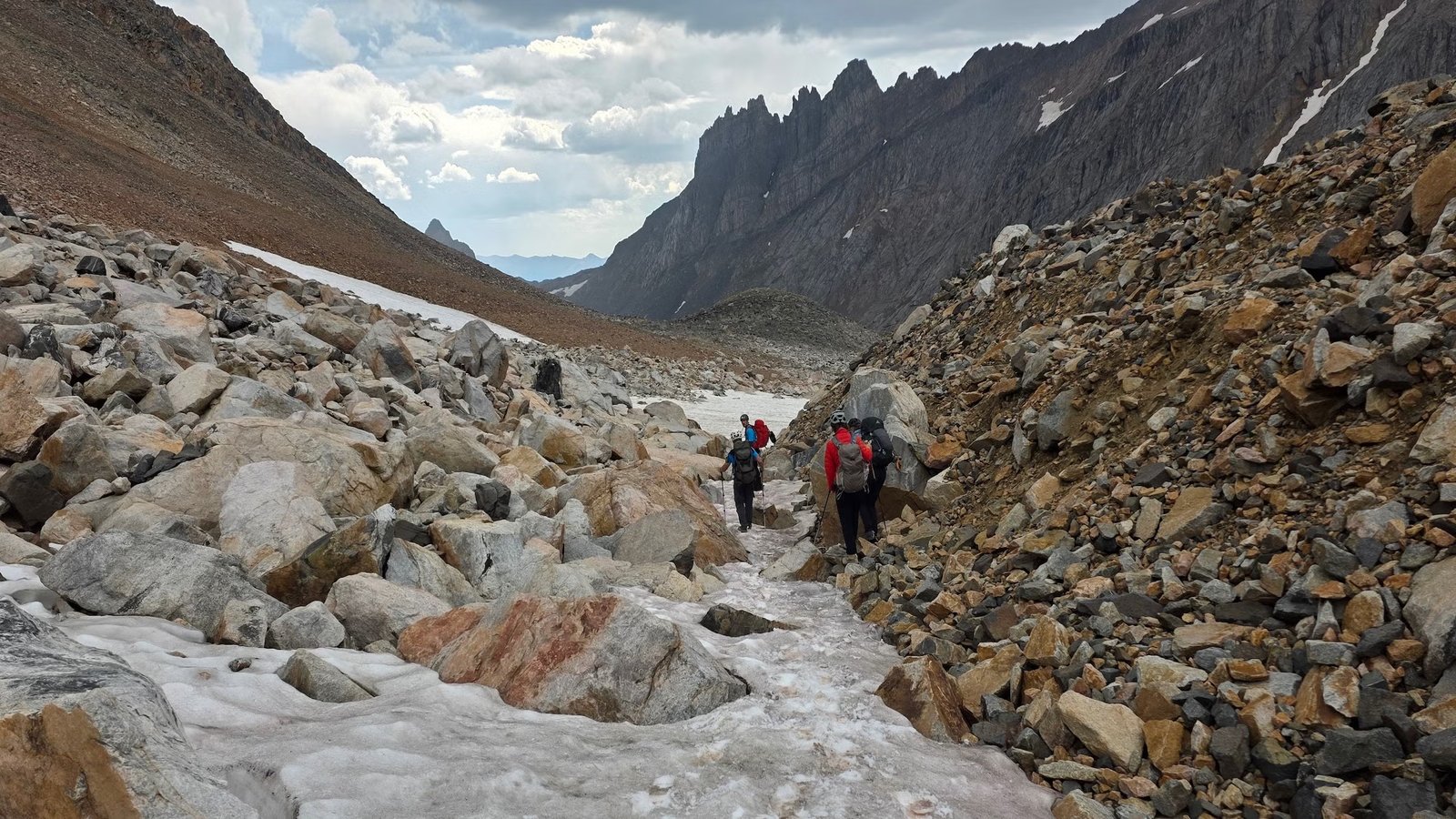
At roughly 12,800 feet, Granite Peak is widely considered one of the Lower 48’s most dangerous high points. The death is under investigation.
(Photo: Courtesy of Tad Dykstra)
Published August 28, 2026 01:41PM
A 21-year-old hiker from Bozeman, Montana, is dead after falling 800 feet from Granite Peak, Montana’s highest mountain, on August 24. Authorities have not released the man’s name.
Sheriff Tad Dykstra with the Park County Sheriff’s Office told Outside that the man was familiar with hiking, but he was ill-prepared for such a strenuous ascent. At roughly 12,800 feet, Granite Peak is widely considered one of the most dangerous and technical high points in the lower 48, and experts routinely compare the route’s exposure and difficulty to the climb up Wyoming’s Grand Teton.
“Granite Peak is all of the above: It’s high alpine, all above tree line, large boulders, steep, rocky terrain,” Dykstra said. “And then there are the weather issues, whether that means high winds or passing storms. It’s a mountain that you need to have experience in order to climb. It’s just super dangerous, and people die.”
An Experienced Hiker Who Lacked Mountaineering Skills
According to Dykstra, the man was an experienced hiker but lacked the high-alpine mountaineering skills required to summit Granite Peak. He met another person at the trailhead, and the two decided to hike together from Mystic Lake Trailhead, some 22 miles below the summit. The other hiker summited the mountain alone. When he didn’t see the 21-year-old on his descent, he called in a missing person’s report.
Authorities began searching on August 25 and recovered the man’s body on Thursday, August 27, responding agencies wrote in a statement.
Granite Peak sits in a geographic triangle bordering Park, Stillwater, and Carbon counties. Because access points and peak locations cross county boundaries, search-and-rescue operations involve extensive multi-agency collaboration. Rescuers located the hiker by using a spotter helicopter.
Knowing Your Limits in the Backcountry
The death is under investigation by the Park County Sheriff’s Office, which Dykstra says is standard for any fatality in the backcountry. Authorities do not suspect foul play, but do say the tragedy is a reminder to stay within your limits. Just because a peak isn’t Mount Everest, Dykstra says, doesn’t mean it’s not deadly. Smaller, unknown mountains can be equally as dangerous.
“Granite Peak is in an in-between zone where people think it’s accessible enough that they can just go out there and do it, but it’s far enough away that it’s an event to actually get it done,” Dykstra said.
Prospective hikers should gather as much information as they can, talk to experienced people, and make sure their skills and ability match what they’re setting out to do, he adds. Hike with others, bring the right equipment, and “dress like a skittle” so that you’re easy to find.
Most importantly, knowing when to turn around should always be in the back of every peakbagger’s mind.
“I don’t think anybody should feel bad about looking at something and saying, ‘This is out of my capabilities. I need to turn around and go home,’” Dykatra said. “If it takes you five times before you actually reach that summit, that’s perfectly OK.”
“You can make the decision to go home and stay alive,” he said.
