

Published September 9, 2026 03:28AM
The past few years have been blissful for aurora borealis hunters, with colorful lights dancing as far south as Texas and Florida. This magic sparked during the roughly 11-year peak in northern lights activity, known as solar maximum.
Unfortunately, that period is behind us as we move toward the stretch of quieter auroral activity, known as solar minimum, which should hit around 2030. This doesn’t mean the aurora is disappearing; in fact, I witnessed my first lime ribbons during the heart of the last solar minimum. It was December 2019 in southern Iceland, with a display strong enough I could watch with my naked eye. I’ve since chased them over 50 times.
If you’re on the fence about aurora hunting post-solar maximum, here’s why and how to plan a northern lights trip in 2026 and beyond.
Don’t Cancel Your Aurora-Hunting Getaway
I’ve seen headlines and social media posts urging readers to hurry and see the aurora before it’s gone. I can promise you, the northern lights aren’t disappearing. Where you scout them may need to change.
“There’s always aurora at high latitudes, even during solar minimum,” says Vince Ledvina, a professional aurora chaser and doctoral student at the University of Alaska Fairbanks. What’s less likely is spotting the ribbons in the lower 48 states. “The aurora is not going to make its way down to more equatorial regions as often because we won’t have these big geomagnetic storms, especially at solar minimum.”
That means now is the time to plan a trip up north, and not just because it’s where the lights are visible. Ledvina says this declining period of the solar cycle can bring more regular and reliable displays.
A quick space-weather lesson: In the years following solar maximum, we see an increase in the number of coronal holes, which present as dark, cooler regions on the sun’s surface. These holes allow solar wind to flow up more quickly than normal, says Ledvina. Solar wind is an aurora catalyst; it transports the charged particles that eventually collide with our atmosphere to spark northern lights shows. More coronal holes, heightened solar wind—this is all music to any aurora hunter’s ears. The only stipulation? You’ll need to head north, toward the auroral oval, to reap this phase’s rewards.
Where Is the Auroral Oval?
The northern lights dance in a donut shape above the Earth’s geomagnetic north and south poles. During periods of strong geomagnetic activity, that hub swells toward southern Canada and the lower 48 states. This is how we saw those spectacular light bursts in the southern U.S. in 2024.
Now, there is still a chance for contiguous U.S. visibility. “If you live in Minnesota or Wisconsin or along the U.S.-Canada border, you have a shot probably once a month for some naked-eye visibility, and it’s probably going to be low on the horizon,” says Ledvina. These are the kinds of displays you’re likelier to see with your phone camera than the naked eye.
Up near the auroral oval, you can often see—truly see—the lime ribbons sashaying overhead. For that, think latitudes between around 60 to 75 degrees. This includes:
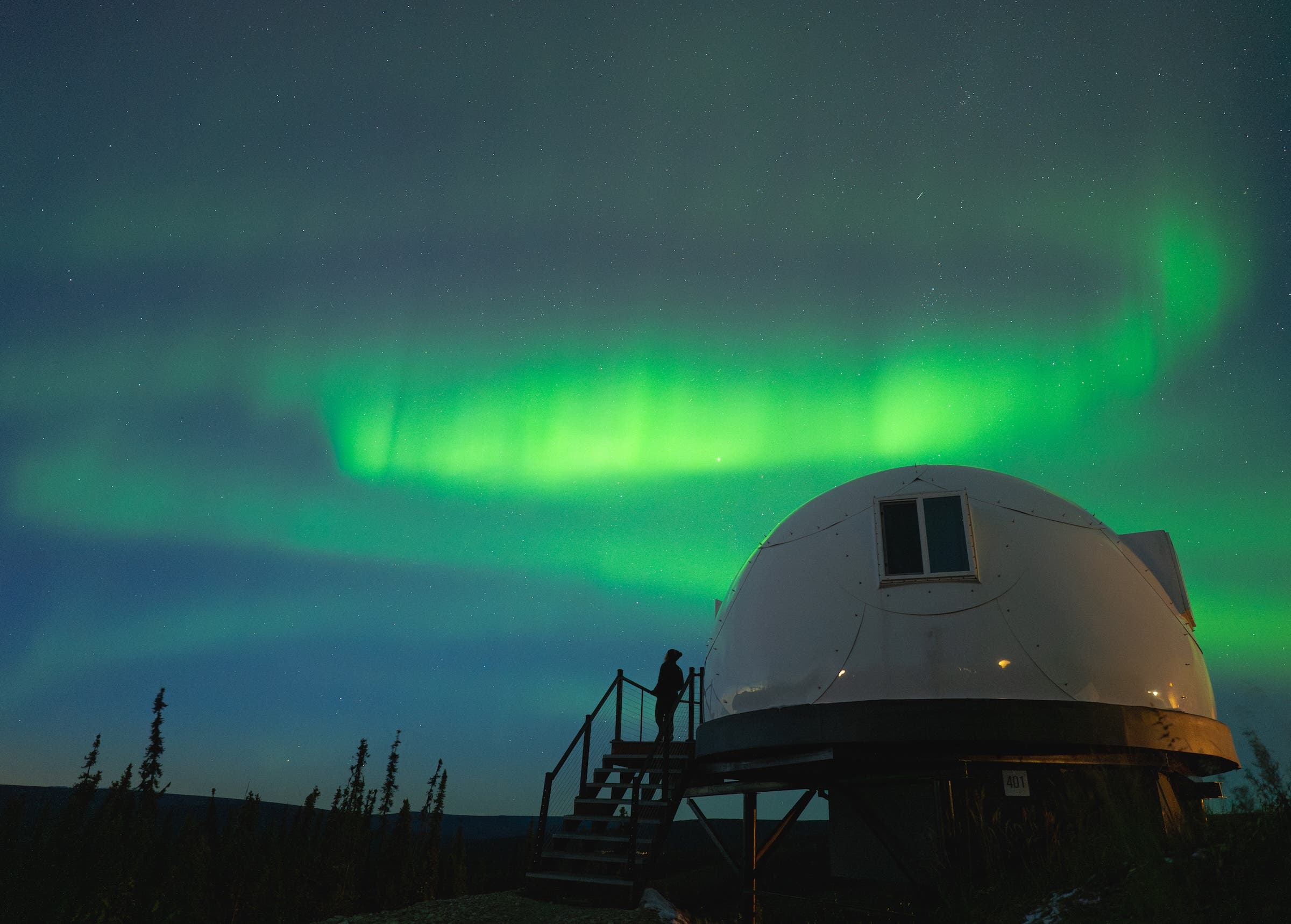
- Fairbanks, Alaska: Located around the southern edge of the auroral oval, Fairbanks is perhaps the best place to see the northern lights in the U.S. During strong displays, you can spot the lights from downtown, but it’s best to get away from city lights with a guided tour. Or try an aurora-centered accommodation like Borealis Basecamp, where clear-walled igloos let you watch the sky squiggles from bed.
- Ilulissat, Greenland: Tucked within not only the auroral oval, but the Arctic Circle, is one of my favorite lights-chasing spots: Ilulissat. This is one of the most reachable destinations in Greenland. From fall through spring, fly from Iceland or Denmark to Greenland’s capital, Nuuk, then on to Ilulissat. Stay overnight in Hotel Arctic’s Aurora Cabins to watch the lights dance above icebergs—all without leaving your heated glass-wall igloo.
- Yellowknife, Canada: There are many reasons to chase northern lights in Yellowknife. It’s within the auroral oval, the inland climate brings fewer clouds, and you can easily escape city lights. The local guides are another big draw—particularly Indigenous lights tracker Joe Buffalo Child, who helps you understand the cultural significance of the swirls.
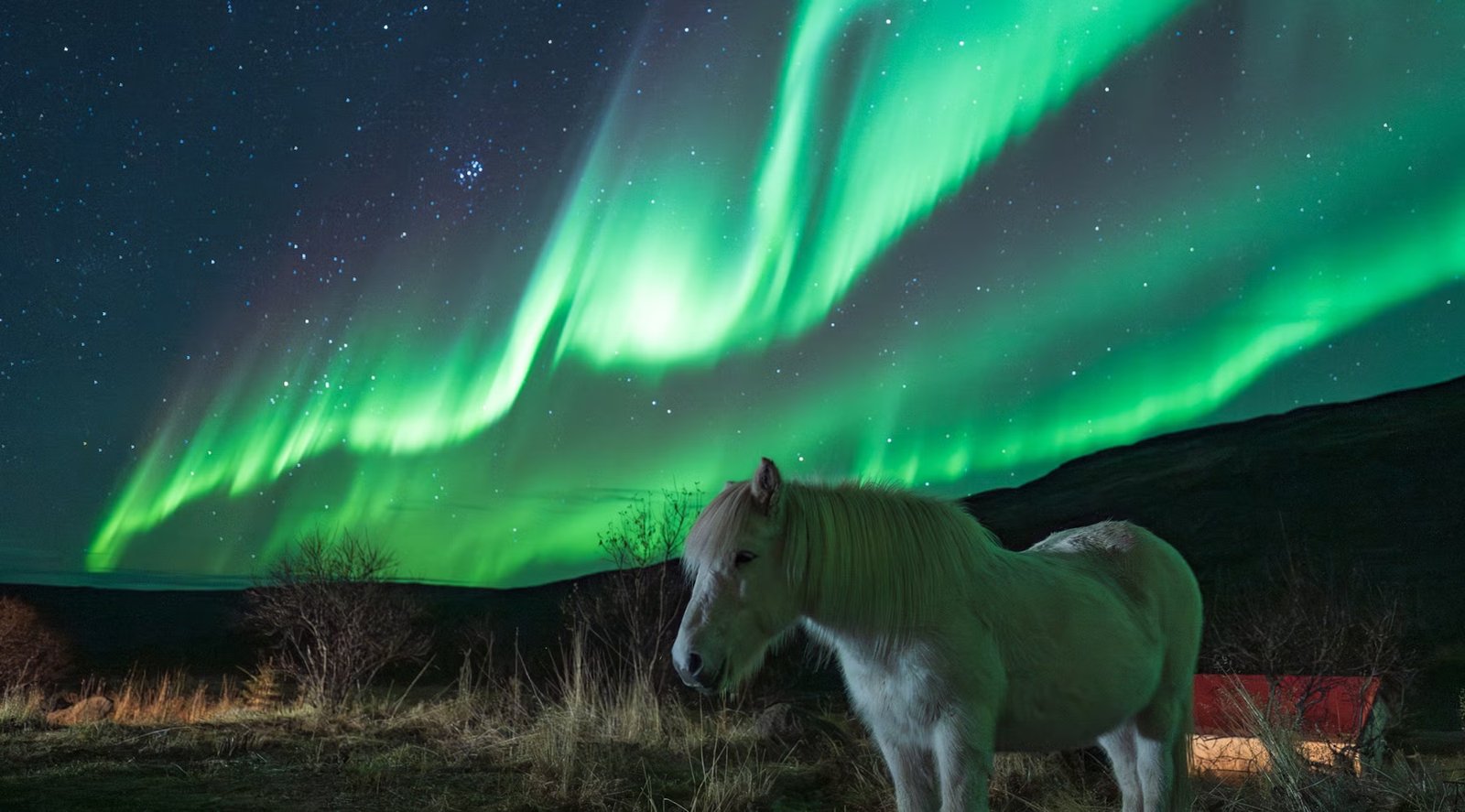
- Westfjords, Iceland: I’ve witnessed at least a dozen aurora displays in Iceland. My favorite? Sky-watching from Heydalur guest house and horse farm in the Westfjords. It’s a roughly five-hour slog to get up here from Reykjavik, but this remoteness leads to some of Iceland’s inkiest skies. And at Heydalur, you can watch the heavens erupt alongside resident ponies, or from the onsite hot spring.
Does Time of Year Matter for Aurora Hunting?
One of my favorite things about chasing the aurora in the contiguous U.S. is that even warm summer nights get dark enough to spot the lights. Since it’s best to journey north for aurora in the next few years, though, we need to avoid summer’s all-hours midnight sun.
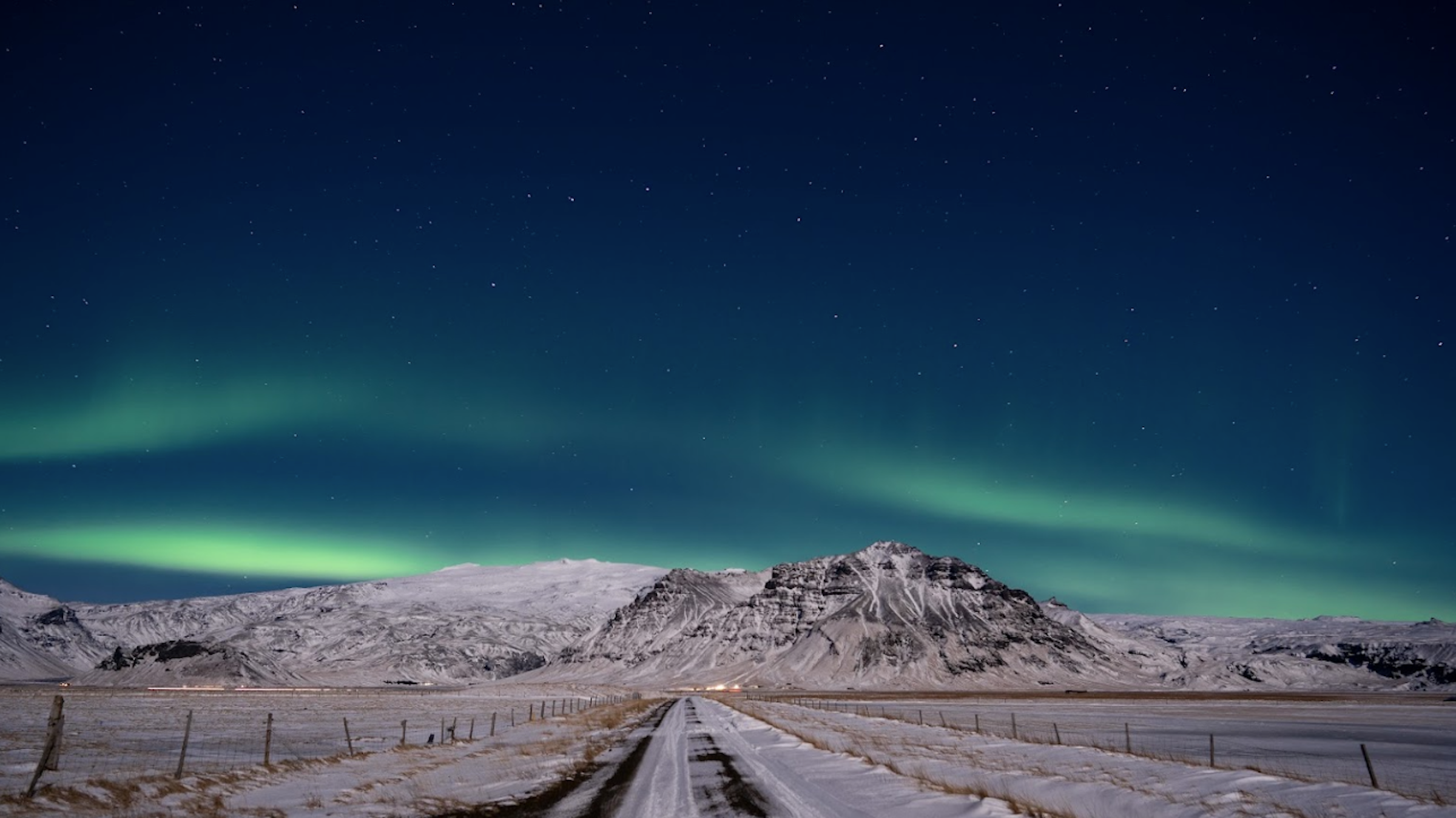
In high latitudes, the skies get dark enough to see the sky scribbles from around mid-August into April. With clear skies, you can typically spot it most nights. Traveling around the equinoxes could improve your chances.
It’s due to the Russell-McPherron effect, which suggests a link between the spring and fall equinoxes and an uptick in geomagnetic activity. Ledvina cautions that this phenomenon isn’t fully understood; traveling during the equinoxes won’t guarantee a good show. In theory, though, it could bring more activity in the sun’s current waning phase, he says. And there’s a bonus: weather.
I typically plan my lights pursuits around the equinoxes because I get more daylight hours for outdoor adventures. As a photographer, autumn is my favorite, with fall foliage shots by day, and timelapses of neon ribbons after dusk.
Of course, cloud cover is always a gamble. I’ve been lucky with clear skies and powerful auroras on late September aurora hunts in Iceland, northern Canada, Alaska, and Greenland. Ledvina says March is best for travelers to Fairbanks and the surrounding areas. “When you look at the data, it’s the clearest [month].”
How Long Should You Plan a Post-Solar-Maximum Aurora Hunt?
You need two things to see the northern lights: at least partially clear skies and some geomagnetic activity. This post-solar-maximum stretch could support the latter. Traveling during the least-cloudy months, which vary by location, is also wise.
Still, weather up north can be finicky. And even when they’re more reliable, northern lights are never guaranteed. Some destinations recommend giving yourself three nights to spot the aurora, but personally, if I’m traveling specifically for the lights, I aim for five or more.
That’s because I don’t just want a glimpse; I want a show. “The more nights the better, and eventually it does switch from seeing the aurora period to seeing a good aurora,” says Ledvina, noting three nights may suffice if you simply want to tick off the experience. Just know these “sightings” may be faint, or only visible through your phone’s camera.
If you give yourself five to seven nights, there’s a greater chance for strong geomagnetic activity—the kind with visible lime swirls and eye-popping red bursts that’ll keep you coming back for more, just like they did for me.
