

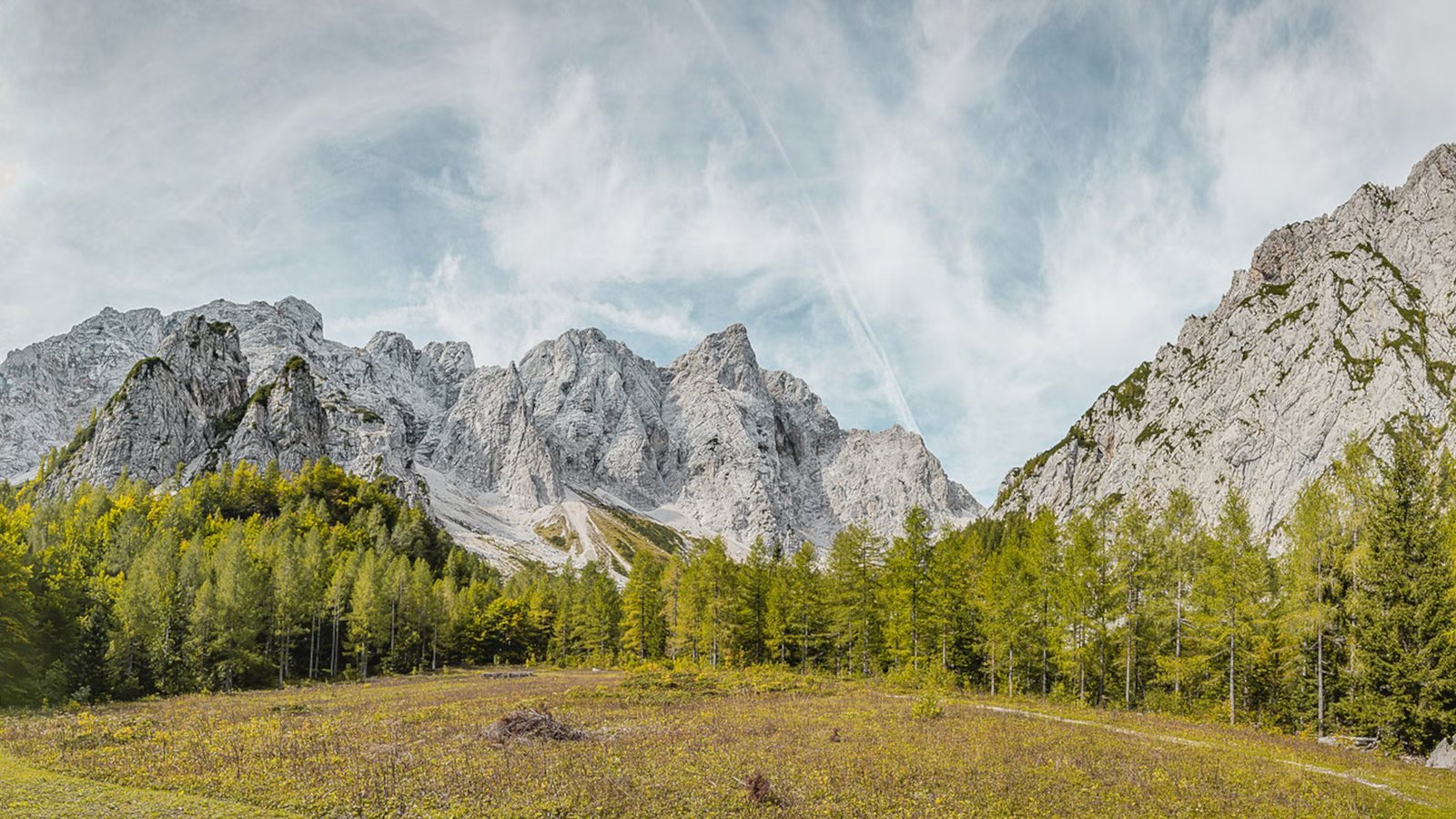
With incredible mountain views, trail towns serving up local delicacies, and easy logistics, Slovenia’s Kamnik-Savinja Alps Water Trail should have a place on any globetrotting hiker’s life list.
Logar Valley (Photo: Mediaspeed, foto: Jan Godec)
Published September 9, 2026 12:19PM
The trail passes through the 3,000-foot-high Logar Valley cinematic as a Peter Jackson sequence: Gnarled apple trees and wildflowers line long, narrow fields of bright green grass, and forests of knobby conifers sweep toward a horizon of snow-capped peaks. Historic stone and plaster homes with low-slung shake roofs huddle near the woodline.
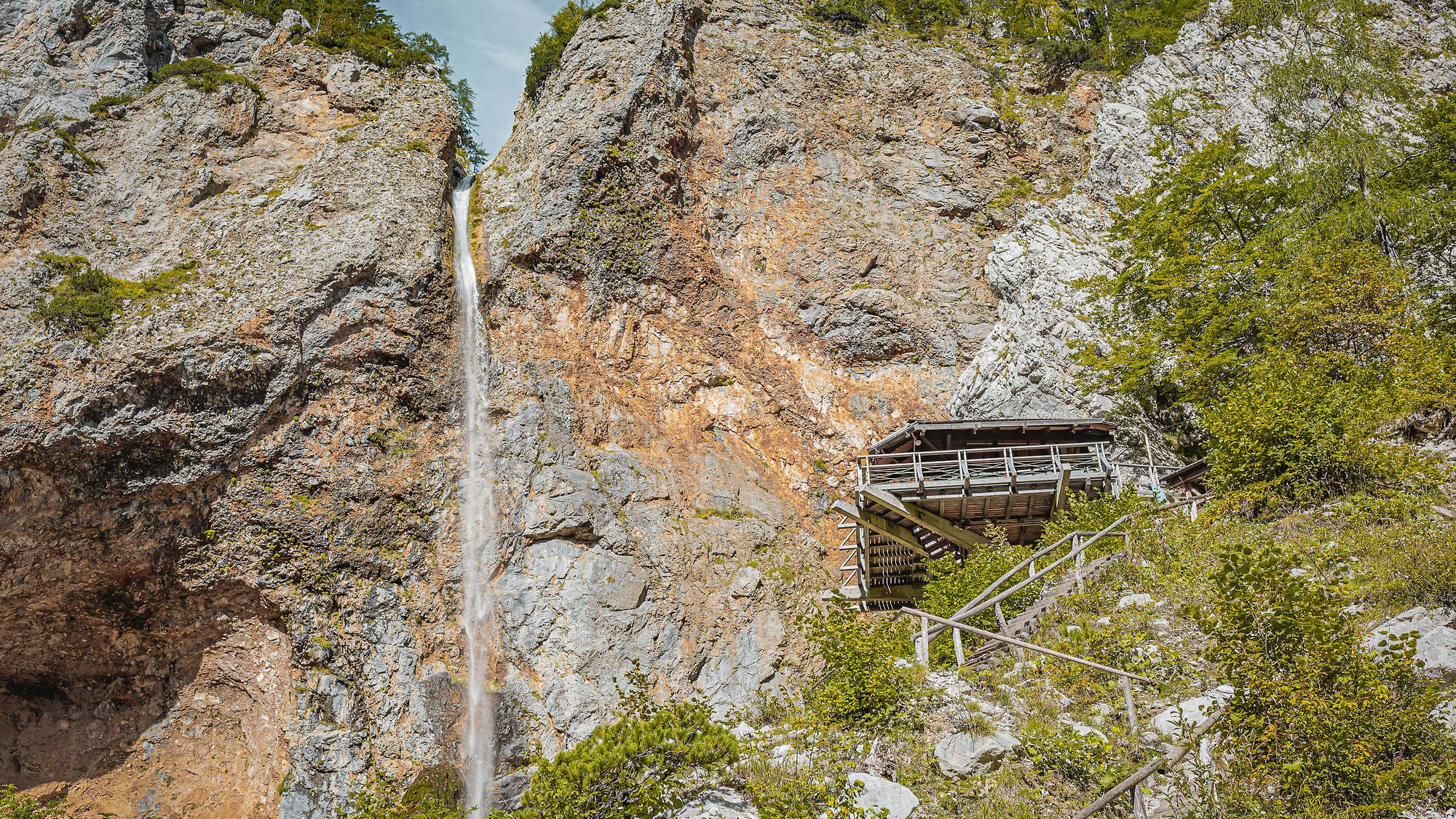
The path follows the upper Savinja River, which flows clear and aquamarine over a bed of off-white rock. It passes into silvery linden and elm forests as the valley narrows. A tiny, log cabin-style pub offering wild-fermented wines, žganje (berry liquors), and Carniolan sausage plates overlooks the entry to the cirque. Stairs climb toward a high, bowled ridge. The sound of crashing water echoes off stone. Another bend and Rinka Waterfall erupts from a notch in the sheer cliffside, plunging 300 feet into a bright blue pool.
Trekkers can admire the action from the deck of a cantilevered, hike-in bar and café that clings to an escarpment about halfway up the falls, or walk another half-mile to take in the view from an alpine meadow where villagers once summered sheep. A Scandinavian-style mountaintop lodge operated by the Alpine Association of Slovenia offers cheap and comparatively luxe overnight accommodations for thru-hikers.
The walk and stay are part of the nation’s newly designated Kamnik-Savinja Alps Water Trail (KSAWT). The 191-mile route connects numerous preexisting paths in a loop that showcases the aquatic resources of Slovenia’s second largest mountain range. The trek is divided into 11 stages that link more than a dozen historic villages and towns, and features three lakes, four rivers, numerous waterfalls, and more than 200 springs and streams.
“The international backpacking community has started to call Slovenia Europe’s hidden gem,” says hiking enthusiast and Trail Angel Central (TAC) founder, Scott Vanderlip. The retired software engineer and serial entrepreneur operates a seasonal hiker camp on the Pacific Crest Trail. He’s traveled the world to connect with trekking communities for the TAC and logged miles on many of Europe’s most notable long routes—including the new water trail.
“To me, Slovenia is a treasure trove for long-distance backpackers,” says Vanderlip. Particularly those who prefer their alpine views with a hardy side of cultural history and traditional foods, yet want to avoid big crowds.
Europe’s most popular long trail, the Camino de Santiago, attracts more than 530,000 thru-hikers a year. The Alpine Association of Slovenia, meanwhile, says just 10,350 people have completed the nation’s cross-country Mountain Trail since it was founded in 1953. What’s more, Slovenia—which borders Northern Italy to the west and Austria to the north—is about the size of Massachusetts and home to some 6,200 miles of hiking trails. That gives its 1.7 million annual trekker tourists plenty of room to space out.
The notoriously tough Mountain Trail features more than 23 miles of cumulative elevation gain and 14 peaks above 7,000 feet. The KSAWT, however, is a more laid back adventure. Stages average 10.6 miles a day, inviting hikers to soak in the views and indulge in picturesque swimming holes. The route climbs to high points like the overlook above Rinka Waterfall, but forgoes tough-to-reach peaks like 8,392-foot Grintovec in favor of more accessible alpine valleys, meadows, and the banks of the pristine waterways that flow through them. Mountain huts and lodges pepper the route with affordable places to sleep. Electric shuttle vans patrol nearby roads and make it easy to slackpack to and from amenity-packed stopovers like the Medieval fortress town of Kamnik. Points of aquatic interest like Lake Črnava—which is backed by a 16th century castle and bowl of 7,000-foot peaks—are showstoppers. But the trail was actually inspired by less visible resources.
The loop was the outgrowth of a 2022 project to map and raise awareness around the region’s abundant springs. Local stakeholders and conservation groups joined forces with the Slovenian Tourist Board and European Union Common Agricultural Policy Network to map and analyze the most productive natural founts. The group identified fifty-four pristine watering holes, including carbonated iron and mineral springs. Infrastructure like hardened treads, stone headwalls, spring boxes, and outflow pipes were added to both invite and protect sites from hiker visits. Annual drinking water festivals were organized to showcase the aquatic wealth and how it influences local products like wine, beer and spirits.
“Then we thought, why not connect these amazing resources in a network that provides a very different kind of experience than your usual mountaineering trail,” says Slovenian Tourist Board spokesperson, Maša Puklavec Polutnik. The KSAWT linked trails to the 54 springs and some of the most scenic portions of the waterways they feed into in 2023. Signage provides insight into their geology and historic importance.
“These mountains have acted like a natural water tower that supplies clean, potable water to settlements and villages for millennia,” says Polutnik. Hikers are encouraged to challenge their palates and try to distinguish the subtle differences between springs. They can then compare their own observations to scientific breakdowns with exact mineral compositions and taste-notes for each.
“It’s a really cool side quest to do as you’re passing through these astoundingly beautiful and historic areas—and unlike anything that I’m aware of in the U.S.,” says Vanderlip. He encourages trekkers to up the culinary ante by immersing themselves in local foodways. “Every town and village you pass through has its own version of popular regional dishes and drinks,” says Vanderlip. “And they all take deep pride in those differences and traditions.”
Wines, for instance, feature unique and often much older grape varietals compared to those typically found in western Europe and the U.S. That and ancient techniques like whole-cluster fermentation (where the stems are left on) or the use of native yeasts brings wildly different flavors than your typical chardonnay or merlot. Pair them with traditional cured meats like zgornjesavinjski želodec—a mix of fresh pork leg and shoulder meat, cubed bacon, sea salt, pepper, and garlic water that’s pressed flat during curing—and iconic cheeses like Trnič, which shepherds on the high-elevation Velika Planina plateau craft from cottage cheese, cream, and salt.
“There’s just so much to love,” says Vanderlip. “On one hand, the hiking is world-class and filled with scenery that would more than justify a visit without any of the other perks.”
But when you factor in refreshing spring water, historic villages, delicious eats, and nifty cultural traditions? That elevates the KSAWT to a bucket list walk.
