

Published September 18, 2026 01:04PM
I’m hiking alongside several fellow seven-year-olds up a rocky gully below a scorching summer sun. We turn a bend, and suddenly, a marvel of Mother Nature comes into view: a massive expanse of gleaming snow and ice that, despite the heat, stretches on and on. We sprint toward the slushy oasis, and some kids begin pelting each other with snowballs. I reach into my pack, pull out a plastic garbage bag, and then slide down the snowy expanse, my hoots and hollers of pure kid glee echoing off a nearby ridge.
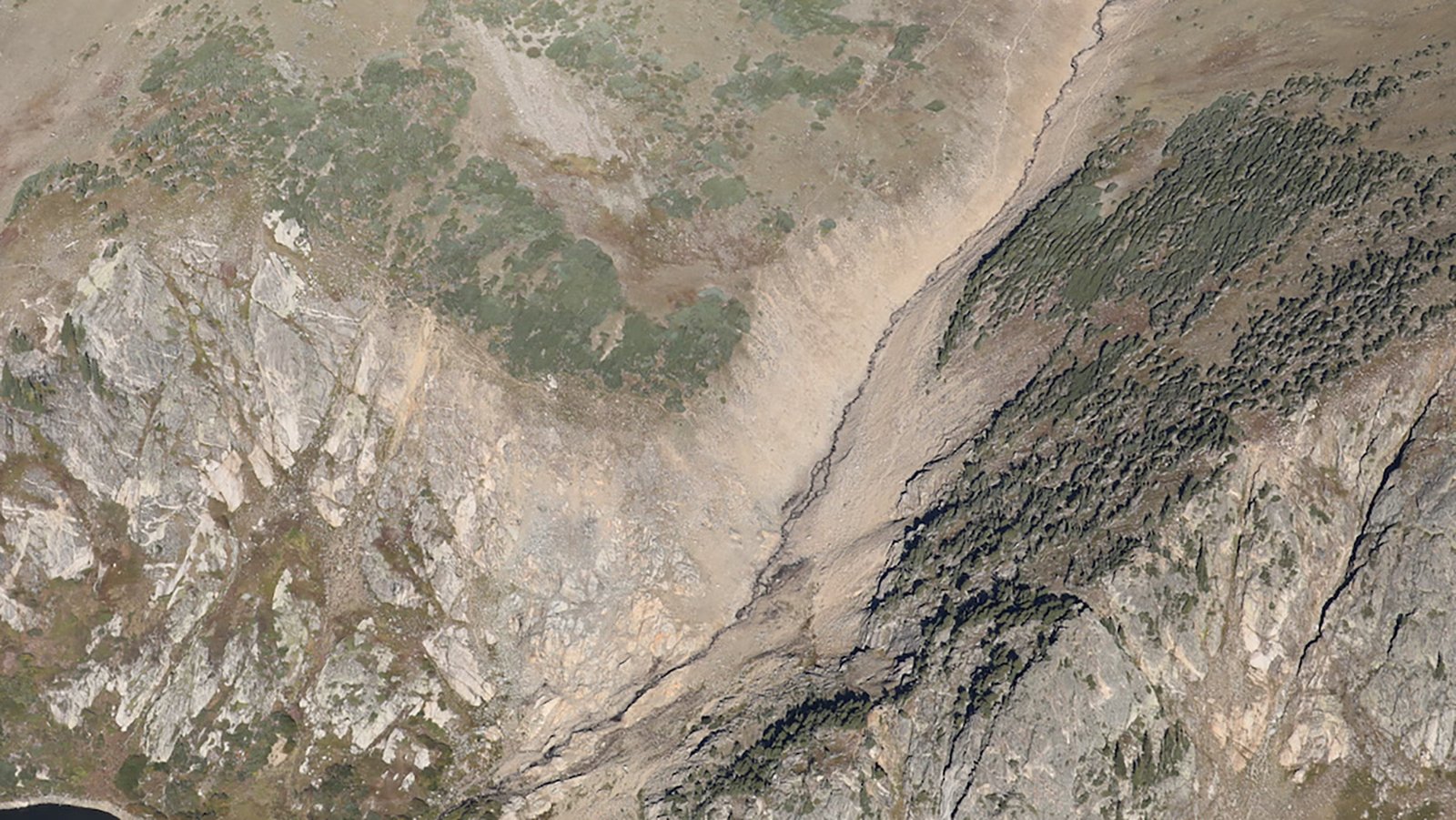
This faded memory from 1988 popped into my mind this week as I read the dismal news from Colorado’s Front Range. St. Mary’s Glacier, a cornerstone of my childhood summers and the site of this joyous recollection, melted into a puddle for the first time in recorded history.
For those unfamiliar with St. Mary’s Glacier, a quick primer. No, it’s not technically a glacier, but instead a year-round snowfield. It’s the closest such feature to the Denver metro area, just 45 minutes from nearby Golden. Victorian-era city dwellers hiked up to it to escape the summer heat more than a century ago. During my lifetime, it’s been a destination for local summer camps and school field trips. And it’s the place where dedicated Front Range skiers go to in July, August, and September to carve the few slushy turns that grant them year-round skier status.
And now, it’s gone.
To be fair, Coloradans have long known that St. Mary’s Glacier was on life support. Across the globe, the warming climate continues to do to glaciers what a hair dryer might to an ice cube. Summertime photographs of St. Mary’s—this one from 2014, or this one from 2016—have showcased its rapid retreat.
All it took to send St. Mary’s Glacier to a watery grave was the wrong combination of climate and weather, which is what Colorado experienced over the past 12 months. The worst winter snowpack in 40 years was followed by the hottest summer anyone can remember.
“It was not surprising that St. Mary’s melted out,” Dan McGrath, a professor of geosciences at Colorado State University, told me. “The last year has highlighted just how sensitive Colorado’s glaciers and snowfields are to climate.”
McGrath is a glacier expert, and he studies the retreat of Colorado’s glaciers—especially those along the Front Range. He and his team use aerial Light Detection and Ranging (LIDAR) imagery to map the size and shape of glaciers, which has allowed them to chart their annual wintertime growth and summer shrinkage.
“All of these glaciers are on a one-way street to their eventual disappearance,” he said. “The rate of melting is variable. Some years you may see hem only thin by a few inches, but the overall trend is one-way.”
Yes, glaciers and snowfields expand greatly in the winter as wind and avalanches deposit snow in shaded gullies and cirques. St. Mary’s Glacier sits in a deep drainage that blocks out direct sunlight for much of the year. But then, when the heat comes, the period of shrinking begins.
McGrath points to his research at nearby Andrews Glacier in Rocky Mountain National Park to illustrate the contemporary dynamics that killed St. Mary’s. Between 2010 and 2020, Andrews Glacier lost about six inches of length each year. From 2020 to 2024, that accelerated to 3 feet annually. Then came the winter of 2025-26.
“We just crunched the numbers, and it thinned by 11 feet,” McGrath said. “That’s a three-times increase in just one year.”
Andrews Glacier survived. The Arapahoe Glacier, which dominates the skyline above Boulder, is barely hanging on. Isabelle Glacier, near Brainard Lake State Park, is down to a few patches of crusty brown ice.
But St. Mary’s Glacier, and its century of history, is toast.
So, could St. Mary’s Glacier ever return? Sure, McGrath says, since Mother Nature will still send snowstorms and ice into the gully. But it will never be what it once was. He likened the glacier’s future to that of a savings account maintained by someone with a shopping addiction.
“With Saint Mary’s, the savings account has been drawn down and depleted,” he said. “You could rebuild it for one year, sure. But it will take many years of saving to build it back to what it once was.”
And given the hotter summers, that’s unlikely to happen.
Science, of course, has a way of viewing these dynamics through a dispassionate lens. Glacier retreat is happening across the globe, causing rising sea levels, avalanches, and catastrophic floods. We all know why, even if not everyone wants to acknowledge it. Scientists are there to measure the losses, report the findings, and try to analyze what’s to come.
But even McGrath understands the emotion that I and, no doubt, thousands of other Coloradans felt when we read the news and saw the eye-popping images of the rocky puddle where St. Mary’s Glacier once stood.
“It’s been a part of the culture of Colorado for decades,” he said. “From a recreation perspective, from an identity of Colorado perspective, it’s really significant.”
Those gleeful summer camp hikes. The goofy mid-August sessions on rock skis. The snowfall fights in July. The sledding. They are gone now, just fading memories of the way things used to be.
