


Published September 22, 2026 10:13AM
In June, a carefully curated group of running influencers all over the country were unboxing the new Radical AirFlow shirt from Nike’s All Conditions Gear (ACG)—and apparently, organically, losing their shit.
“I flatlined when this box showed up,” one New York City–based influencer wrote in the caption to her reel. She donned the crop-cut, hole-punched long sleeve and declared, “It’s chic as hell.” Another influencer wondered: “Am I out of line for thinking this thing looks pretty sick?” A third quipped: “‘Running isn’t a fashion show.’ OK, bet.”
The Radical AirFlow—or what Nike cleverly dubs its “Holey Shirt”—features what seems to be real technology: holes that start wide on the outside of the shirt and then shrink in diameter, pulling air over the skin for a cooling effect. Nike athlete Caleb Olson won the Western States 100-Mile Endurance Run last year in a prototype version. But runners also covet this crazy-looking shirt as a statement piece, says Lei Takanashi, a correspondent for industry publication The Business of Fashion. “It just looks different,” he says. “You don’t have to be a marathoner to wear it. It attracts everyone.”
Nike’s ACG outdoor line has been around since 1989, but the company relaunched it in February with a decidedly un-Patagonia vibe: the marketing around ACG is irreverent, slightly unhinged, and very streetstyle, hearkening back to the nineties MTV era in which the sub-brand was originally born.
What Nike is trying to do, in terms of appealing to a broader and more urban outdoors set, is “happening at the perfect time,” Takanashi says. The term “gorpcore,” coined in 2017 by The Cut to describe tech bros in Patagonia fleeces and runway models wearing Arc’teryx, has come to feel outdated as outdoor and streetwear have converged. Clothing that once seemed so incongruent in an urban environment that it warranted its own label “has just become part of everyday wear,” says Takanashi.
The best proof point for this might be footwear brand Salomon. In the late 2010s, after the company’s XT-6 trail runner began showing up on runways and Rihanna, Salomon launched its street-oriented Sportstyle line, which featured its most popular models with the “gorp turned down and style turned up,” as Takanashi puts it. Not unlike how Air Jordans were popularized as street shoes even as Nike released more cutting-edge models for the court, today Takanashi wouldn’t even call Salomons trail shoes. “They’re just dope sneakers,” he says.
How did this happen? There are practical and unsurprising reasons, starting with the fact that everyone appreciates clothing that’s comfy and functional, says Rachel S. Gross, an environmental and cultural historian at the University of Colorado, Denver. And in general, Americans (already among the most laid-back dressers in the world, Gross says) continue to clothe themselves more casually in the workplace and beyond, allowing athletic apparel to creep into more of our everyday lives.
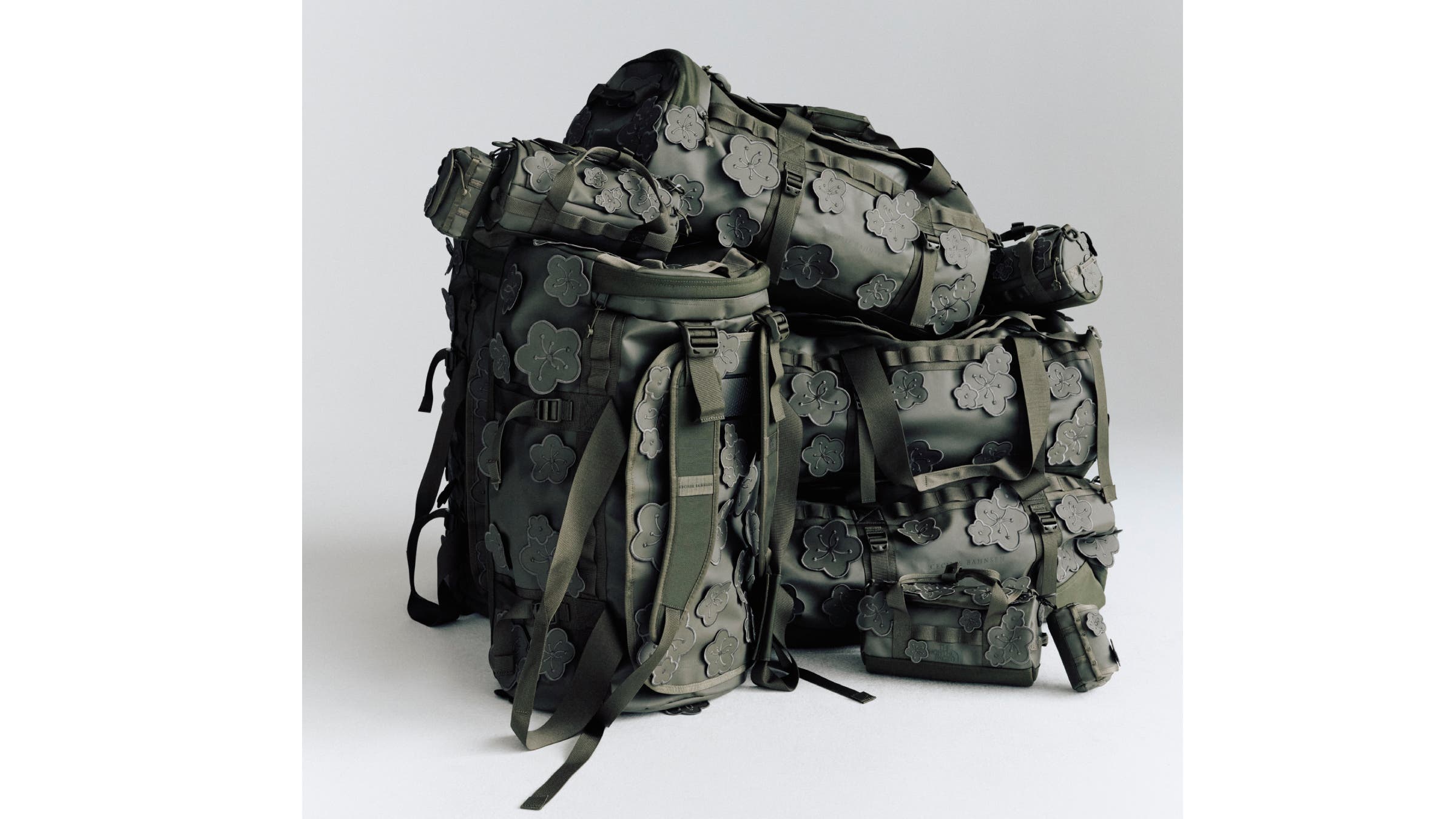
The explosion of interests in wellness and outdoor activities, both accelerated during the pandemic, have also driven a mainstreaming effect for outdoor culture and clothing, as well as a change in its lewk. Recent growth in outdoor participation has largely come from diverse and casual participants, says a 2025 report by the Outdoor Industry Association, and David Whetstone, design director of global collaborations at The North Face, tells me that those new participants have brought their own perspective to outdoor style. But what’s probably also true is that brands are attempting to capture more of that audience by reflecting their tastes—and that those tastes are more urban, casual, and diverse. Look no further than ads for The North Face x Skims that featured Kim Kardashian, or more recently, the brand’s buzzy collabs with Danish fashion designer Cecilie Bahnsen, which resulted in products like The North Face’s Base Camp duffels covered in Banhsen’s signature flower appliqués. “The fashion girlies are going to be feral for this one,” wrote a reviewer of the latest collection, for The Cut.
The trend has its detractors, but they’re not new or original in their thinking. In the seventies, some longtime executives at Eddie Bauer groused about the brands’ expansion from serious expedition outfitter to mall brand for suburbanites, Gross says. And as that case study proves, concerns about brand dilution should be taken seriously. But leadership at The North Face could be excused for shrugging over claims that they’re losing their way by not catering to the corest of the core—as the brand has recently reported double-digit quarterly revenue growth while continuing to equip athletes like Jim Morrison, Conrad Anker, and Jimmy Chin.
“I kind of think it’s bullshit,” says Whetstone of that critique.
Gross, too, is skeptical of the lamentations. “At least since the fifties, there have been a bunch of grumpy old white men,” she says, “complaining that ‘now everyone buys this stuff.’” She continues, “It captures the attitude that outdoor clothing has lost something when it becomes normalized.”
Instead, some within the outdoor community say that trailwear has leveled up thanks to its streetstyle melding. Stuff looks better, for starters. “There has been quite a movement to increase style in the outdoors,” says Hadley Hammer, a former professional big-mountain skier and the cofounder of the outdoor-fashion Substack Togs. (Hammer was also sponsored by The North Face.) She points to brands like Hikerkind, which makes products like a merino hiking polo, and Halfdays, which makes ski apparel in fashion-driven silhouettes, and to mainstream brands that have recently entered the outdoor space, including Zara and Vuori. These companies have pushed heritage brands like Patagonia and Arc’teryx to dial up their designs, too, says Hammer.
Gorp’s mainstreaming may also bring a new level of resources and exposure to the outdoor space, as Nike’s reentry demonstrates. The material for the Radical AirFlow shirt originated within Nike Innovation, the company’s research lab, before wear testing among athletes revealed trail running to be the best application for it, Nike ACG senior design director Margaret Mussman tells me over video chat. And as the skillfully orchestrated buzz around the “holey shirt” suggests, Nike’s marketing engine should bring more eyeballs to both trail and road running. Mussman, who says that Nike decided to relaunch ACG after seeing the surge of new participants within the outdoors, sounds serenely—and strategically—vague when she describes the ACG customer: “We like to say we’re building for the wild one. We like to think of all the ways that people get outside and continue to encourage that behavior.”

Besides being good for sales, this catchall definition is also good for participation (which, OK, is also good for sales). Clothing can be a gateway, or an obstacle, to the outdoors, Hammer believes. She says she started Togs out of her own frustration with how “narrow” the “outdoor uniform” was, reasoning that if she as a professional skier didn’t feel like herself in it, there must be others who felt even less in their own skin in technical apparel. Her Substack aims to broaden the scope of what’s acceptable to wear outside in the hopes of making it a culture in which more people can join without feeling like they have to compromise who they are. “If we widen everything,” she says, “more people will participate and more people will love nature, you hope.”
Whetstone says this is already happening. “When we did Skims, we had real athletes, some of the best skiers in the world, in that campaign,” he says. “But we also invited people to the mountain, period.”
Nike’s holey shirt is an apt embodiment of what’s happening not just to outdoor apparel but outdoor culture in general: it’s becoming more porous and transmutable, more facilitative to the inflow of ideas—and more influential in the world beyond it. However you feel about it, today’s outdoor culture, and the community that makes it, is less insular, less niche, and less siloed from the rest of society. Don’t think you’ll see some version of the holey shirt worn casually on the street someday? OK, bet.
This article is from the Fall 2026 issue of Outside magazine. To receive the print magazine, become an Outside+ member here.
