

Published September 25, 2026 12:12PM
What You Need to Know
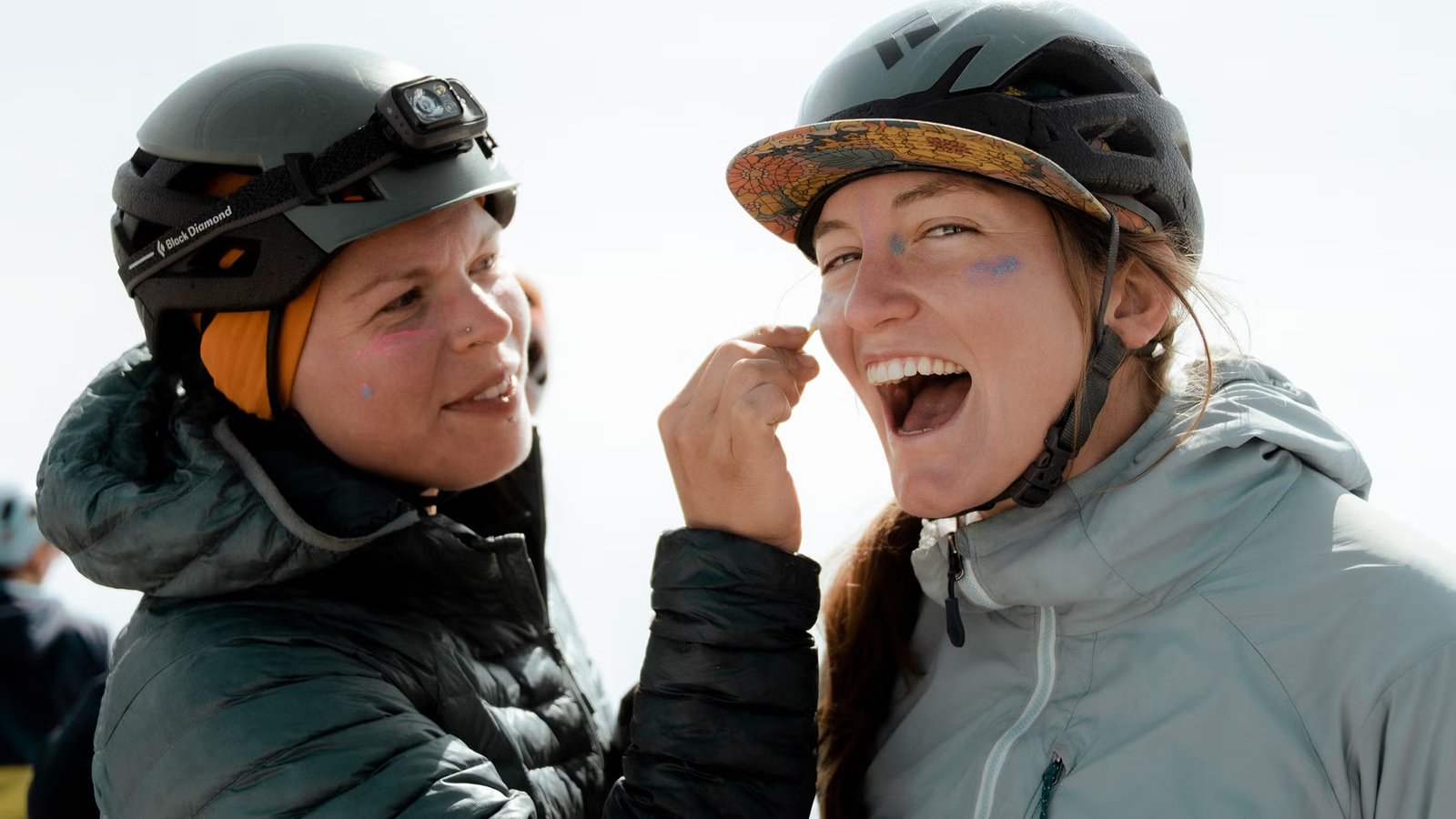
Sparking face glitter is becoming popular at marathons and bike races, and even in non-competitive outdoor activities like whitewater rafting and skiing. Athletes say the sparkly accessory helps reduce the pressure they feel to perform, and adds a boost of fun when a race becomes a test of suffering. Enthusiasts say glitter reduces the fear of participating in dangerous outdoor activities, and helps them express their personalities to their peers.
Face glitter is having a moment in outdoor culture. If you’ve sat on a chairlift, floated down a river, or competed in a bike race recently, you might have already noticed this. Ultramarathon racer Jennifer Lichter finished the Western States 100-mile endurance run in June, setting a new course record, with orange glitter splashed across her cheekbones. Thru-hikers are glittering themselves on the Continental Divide Trail. Even wildland firefighters are bringing glitter into the woods.
The rise of glitter on summits and at finish lines can be at least partially attributed to elite athletes rocking it on a national and global stage in recent years. Jessie Diggins, the prolific cross-country skier with four Olympic medals, four World Cup overall titles and seven World Championship medals, sparkled her way through the 2026 Winter Olympics in Italy. But her use of glitter goes much further back.
Diggins started wearing glitter when she was 19 years old and first competing in the World Cup, she told Outside.
“When I was a younger athlete, I used to get so nervous for races, to the point where it would take all my energy,” she said. “Of course, I still get nervous for races, but back then, it really sucked the fun out of the experience. Deciding to put on glitter before a race was a way to reclaim that joy and fun.”
It’s hard to take yourself too seriously, Diggins added, when you have glitter on your cheeks. Today, Diggins smears on glitter right before she leaves the hotel for the race venue for an extra dose of positivity. “The glitter became my most important pre-race ritual,” Diggins said.
Olympic runner Alexi Pappas is one of glitter’s trailblazers in endurance sports. Pappas first wore glitter—along with rhinestones and butterfly wings—when she ran the New York City Marathon in 2021. Still recovering from a hamstring surgery, Pappas was nervous that she’d run slower than her usual blistering pace. But dancing through the streets, blowing kisses and wearing glitter was like protective armor against her fears. The sparkles communicated to the crowds that she was OK with her performance. In fact, Pappas was better than OK. She was full of joy.
“It wasn’t random,” Pappas told Outside. “There was meaning behind it. There was purpose behind it.”
Pappas has worn glitter at races ever since.
Glitter Helps Athletes Transform
Fed up with using harsh eyelash glue to stick loose glitter on her face, Pappas is now launching her own sweat-proof aesthetics company, Glop, at the Chicago Marathon on October 9. The first product: pouches of glitter that fit in your running vest. The brand’s name is inspired by the “glop” that caterpillars emerge from on their way to becoming a butterfly; all the colorways are inspired by animals that similarly metamorphose. Pink and purple glitter, for example, mimics the strawberry sea anemone.
“We wanted to make products that help people transform,” Pappas said.

Glitter seems particularly popular amongst athletes competing in sufferfest endurance races where a little extra something might just be what gets you across the finish line. Legendary ultrarunner Ann Trason, winner of 14 editions of the Western States Endurance Run, discovered the power of glitter while pacing a runner during the Javelina Jundred 100k in 2018. Her runner was struggling with 13 miles left to go, but after an aid station tent with glitter and a few sips of Coke, he was ready to keep running. “I look at it as this happiness powder,” Trason said. “It’s a mood booster. It’s better than any kind of pills, if you ask me.”
Despite living with painful rheumatoid arthritis at age 66, Trason had just completed three races in successive weekends when we spoke this fall.
While other runners have also embraced glitter this summer—Rachel Entrekin wore glitter when she crossed the finish line in second place at the Ultra-Trail du Mont Blanc, Mikey Mitch had glitter on his cheeks, chest, and shoulders during the 2026 Leadville 100, where he placed fourth—it’s far from just elite athletes stepping out with sparkly cheekbones. Mountaineers, ski instructors and raft guides have embraced glitter, too.
Sparkles in Backcountry Sports, Too
The guide training for Upwards Transitions Institute, a female-owned guide company in Bellingham, Washington, offers pots of glitter to participants. “It’s what we consider part of the guide kit at this point because it does so much for morale” Victoria Garvin, owner and guide, told Outside.
Mountaineering can be scary, but it should also be enjoyable, she said. “We use it when we’re heading out to cut that fear and remind people that we’re doing this because it’s fun,” Garvin added. Glitter’s impact on trips is both “really complex and really simple,” she said.
“We can have a hard conversation about anything—conditions, physical readiness, whatever—but if there’s glitter on my face, people will just respond better,” Garvin said. “It’s a magical thing.”
Brooke Hornbeck, a guide at Glacier Raft Company in northwest Montana, said that glitter “is a daily thing for me.” When we spoke, blue glitter with star and moon shapes sparkled on her face. “I put on glitter before I brush my teeth in the morning,” Hornbeck told Outside.
She brings glitter on her float trips, offering it to entire buses of people before they head out for the day. For Hornbeck and others, glitter can be a way of expressing femininity in traditionally male-dominated spaces, like mountain summits and burly rapids. “Yes, you can be a woman in the sport and you don’t have to hide your femininity at all,” Hornbeck said. “Your femininity can be a strength.”
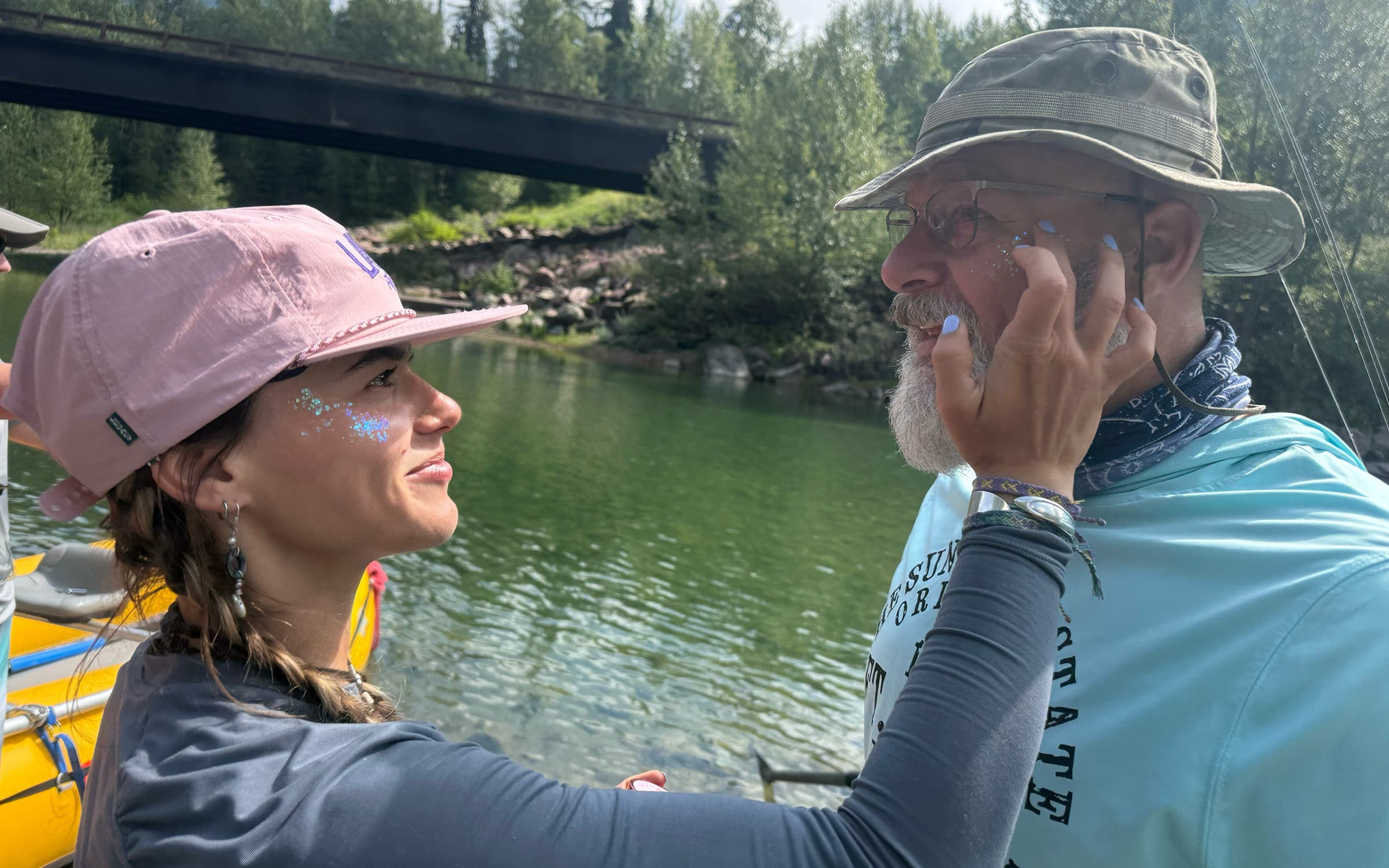
Hornbeck guides on the Middle Fork of the Flathead River, a Wild and Scenic River. Garvin and her team lead trips to remote mountaintops. Neither wants to leave microplastics behind for the sake of whimsy. “We don’t want glitter on our glaciers and on our snow,” Garvin said. But they’ve found a solution: wearing biodegradable glitter gel from Montana-based Adorn Glitter, which is made from Eucalyptus tree plant cellulose film. (Both are brand ambassadors.)
Ali Bierman founded Adorn Glitter in 2022. She was “never a sparkly person” growing up, but after making glitter party favors for friends, the business took off.
“People responded to it in a way that I never expected,” Bierman said. “There’s never enough glitter.”
She attributes glitter’s soaring popularity to an overall explosion of color, creativity, and playfulness in outdoor gear in recent years, in large part due to small, women-owned brands bucking traditional colorways and norms. People are embracing self-expression and playfulness in outdoor recreation, and glitter is just another component of that.
“When you put on glitter, it’s like you’re putting on a superhero cape,” she said. “I think it reminds you that you are capable of doing hard things. It helps you be brave.”
