

Published October 27, 2026 07:21AM
What to know: This guide includes the 15 best unisex and women’s snowboards, narrowed down from a crop of over 100 snowboards (44 from this year) ridden by expert testers in the Sierra, Wasatch, and Rockies. The overall favorite is the unisex Salomon Highpath for its versatile, stable ride with tons of pop. In women’s specific shapes, our test crew was most amped on the CAPiTA Artemis, an all-mountain freeride charger that loves to straightline.
Whether you’re an intermediate poking into the park or a veteran freerider straightlining a technical face, having the right snowboard under your boots feels like a cheat code. Tricks come easier, sketchy landings get stomped, and shred homies get left in a powder cloud of dust, confusion, and shame. Every season, our team of diehard snowboard testers hunts for these magic snowboards—decks that inspire confidence and encourage riders to level up.
After months of testing new unisex, men’s, and women’s models (and comparing them to last season’s favorites), our crew landed on this list of the 15 best snowboards of 2027.
Best Unisex and Men’s Snowboards: At a Glance
Best Women’s Snowboards
Best Snowboards Comparison Chart
| Snowboard | Price | Genre | Profile | Size Range (cm) |
| Editors’ Choice: Salomon Highpath | $700 | All-mountain | Rock Out Camber (raised flat section between the feet, rockered nose and tail) | 147–165W (unisex) |
| Best Park/Freestyle Snowboard: ThirtyTwo T32M | $550 | Freestyle/All-mountain Freestyle | Camber sandwiched by flat sections at the nose and tail | 148–161 (unisex) |
| Best Freeride Snowboard: K2 Commonwealth | $700 | Freeride | Twin camber | 146–163 (unisex) |
| Best Freeride-Meets-Freestyle Snowboard: Jones Howler | $700 | All-mountain/Freeride | Rocker/camber | 152–164 (men’s and women’s) |
| Best Quiver-Killer: Nitro Alternator FX | $600 | All-mountain/Backcountry freestyle | True camber | 142–162 (unisex) |
| Best Alternative All-Mountain: Jones Mind Expander 2.0 | $630 | Alternative All-Mountain/Freeride/Powder | Rockered nose, camber underfoot | 142–166 (unisex) |
| Best All-Mountain Snowboard: Rome Viper Pro | $630 | All-mountain | Camber underfoot, rocker at contact points | 142N–162W (men’s) |
| Best Powder Snowboard: Venture Storm | $699 | Freeride/Powder | Flat | 152–167 (unisex) |
| Best High-Performance Snowboard: CAPiTA Matriarch | $730 | All-mountain/Freeride | Camber | 155–161 (men’s) |
| Most Fun: Lib Tech Mayhem Libzilla | $850 | Freeride/Powder | Camber | 188 |
| Editors’ Choice (Women’s): CAPiTA Artemis | $680 | Freeride/All-mountain | Camber underfoot, rocker in nose and tail | 144–156 (women’s) |
| Best Freeride Snowboard (Women’s): Rossignol After Hours | $650 | Freeride/All-mountain | Camber underfoot, rocker in nose and tail | 145–156 (women’s) |
| Best All-Mountain Snowboard for Intermediates: Burton Women’s Feelgood | $650 | All-mountain | Rockered nose and tail, camber underfoot | 142–152 (women’s) |
| Best All-Mountain Snowboard for Advanced Riders: Gnu Barrett | $600 | All-mountain | C3 Camber (camber-dominant hybrid with mild rocker between the feet) | 146–155 (women’s) |
| Best Powder Snowboard (Women’s): CAPiTA Navigator Women’s | $650 | Powder/All-mountain resort | Hybrid camber | 143–151 (women’s) |
The Reviews: Best Snowboards of 2027
Editors’ Choice
Salomon Highpath
Sizes: 147, 151, 153, 156, 159, 159W, 162, 162W, 165W cm (unisex)
Genre: All-mountain
Profile: Rock Out Camber (raised flat section between the feet, rockered nose and tail)
Pros and Cons
+ Stable and capable
+ Tons of pop and ample float
+ Surprisingly versatile
– Too demanding for intermediates or lighter riders
Salomon pro-slash-engineer and 2026 Natural Selection champ Nils Mindnich heavily revamped the hard-charging Highpath for this season, and the result was our favorite snowboard of 2027.
The biggest visible difference from last year’s board is that the squared nose and moontail have been reshaped into a more classic, rounded, popsicle-stick-like silhouette, which seems to ride and float switch better. Testers were stoked by the homage to traditional silhouettes, and especially stoked that the Highpath handled switch riding, jumping, and landings extremely well for a tapered directional shape. “I went clean on my first back nine I tried,” said a Tahoe tester who voted the Highpath board of the year.
The most notable changes, however, are under the hood. “Our main target for the F26 Highpath was bringing more life to the board, aka pop,” says Mindnich. Salomon’s board brainiacs swapped in a lighter, springier core, adjusted the core profile to improve stability, and added basalt reinforcements to amplify snap and dampening.
The result: The Highpath is responsive and powerful without any twitchiness. The build complements a hybrid camber profile with a raised flat section between the feet and a rockered nose and tail. Combined with a quadratic sidecut and thinner core at the waist, the Highpath delivers prodigious snap, toothy edgehold, and fluid carves.
“Most stable board I’ve ridden,” commented a rider. One of our most aggressive testers compared the Highpath to a Tacoma with winter tires: “Take it anywhere, you’re guaranteed to have a good time.”
Consensus was that the Highpath’s stiff flex requires a veteran’s input, and lighter riders or intermediates should look elsewhere. Testers also agreed that the only thing more fun than watching Nils put the Highpath through its paces in the backcountry was riding the directional, do-it-all deck ourselves.
Best Park/Freestyle Snowboard
ThirtyTwo T32M
Sizes: 148, 151, 154, 156, 157W, 158, 160W, 161 cm (unisex)
Genre: Freestyle/All-mountain Freestyle
Profile: Camber sandwiched by flat sections at the nose and tail
Pros and Cons
+ Poppy and fun in the park
+ Predictable
+ Durable
+ More capable than expected out of the park
– Excells at jumps more than jibs (minor gripe)
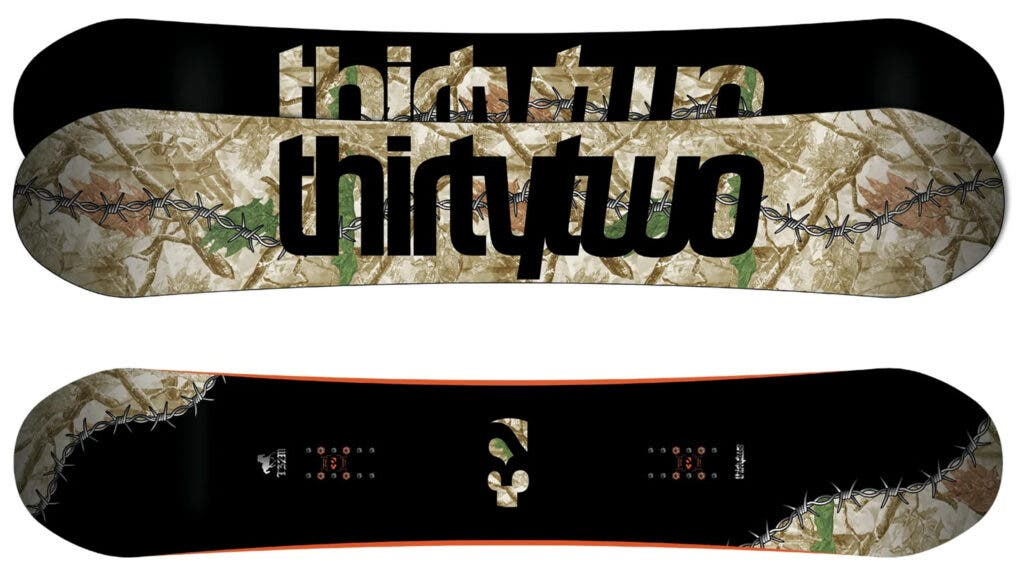
ThirtyTwo is best known for boots, but the T32M knocked our socks off. This park-annihilating twin features camber underfoot for ollie expertise, and a medium-flexing, poplar-and-paulownia core that delivers a springy feel for predictable takeoffs and steadfast landings. “My favorite jump board I’ve ridden in a long time,” one park tester said after tossing tricks at Palisades.
The T32M might be a consummate jumper, but it’s no slouch on the steel either. Testers found the twin versatile enough to slide sideways through kinked rails. And the profile features flat sections flowing into the kicked nose and tail that make presses doable with some rider input. “Gives the best of both worlds with snap and strong landings, all while feeling like I can still press when needed,” reported one tester. However, the T32M’s core stiffness, he says, is best “for a park rider who picks the jump line over the rail line.”
Testers pushed the ThirtyTwo outside the park, too. The sidecut was smooth and stable in medium-radius turns, and despite a centered stance, another Tahoe all-mountain tester said the T32M “held its own at speed on off-piste terrain.” For riders who treat the entire mountain like a playground, that translates to fun side hit sessions and transition snipes. The build also earned high scores for durability after one tester landed so backseat on a seven that he thought he’d snap the tail (but didn’t), and the bomber sintered base showed no core shots after scratchy spring testing.
Best Freeride Snowboard
K2 Commonwealth
Sizes: 146, 149, 151, 154, 154W, 157, 157W, 159W, 160, 162W, 163 cm (unisex)
Genre: Freeride
Profile: Twin camber
Pros and Cons
+ Fast and floaty
+ Responsive and aggressive
+ Jack of all trades
– Not as forgiving as the similarly shaped Passport
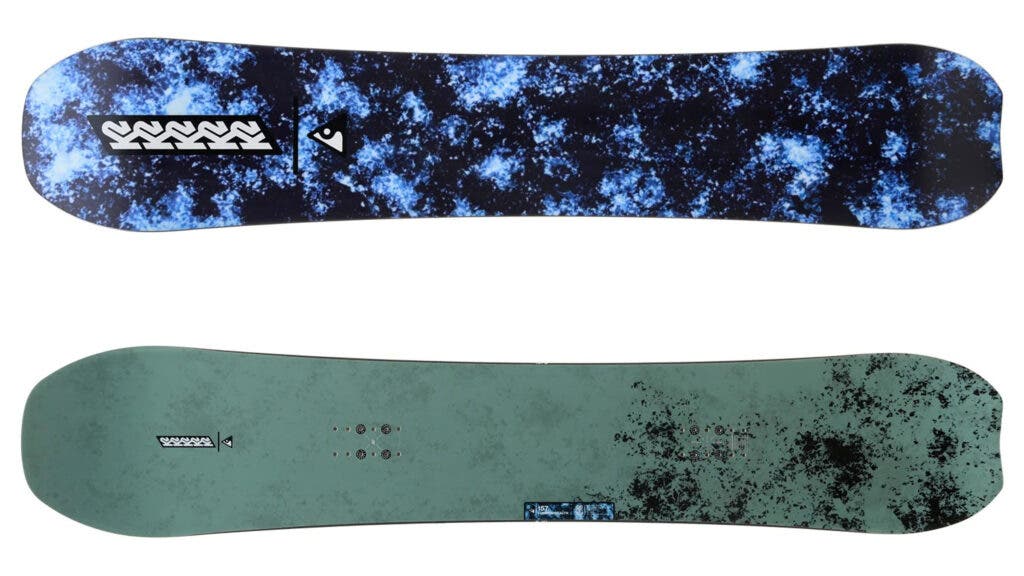
The K2 Commonwealth is like a stock car that’s been upgraded with an aftermarket engine. It’s built on the same chassis as the popular, easy-riding K2 Passport, but with a souped-up engine and full camber for a more responsive ride.
One of the biggest differences is that the Passport features more rearward camber with an early-rise nose, while the Commonwealth is a twin-camber purist for increased edgehold and power. Testers confirmed turn initiation is easy as pie, and the camber helps make the shape a “natural-feeling turner that does exactly what you ask.”
Both the Commonwealth and Passport sport the same subtle taper, setback stance, versatile nose, cutaway tail, and blended sidecut. “Love the shape,” approved another Tahoe ripper who carved through slush, rallied through rough conditions, and freestyled through the park. “I could not get the Commonwealth to skip a beat anywhere.”
Much of the Commonwealth’s prowess in variable snow comes from a torsionally stiffer glassjob and K2’s Spectral Braid tech: carbon stringers that are tight in the nose and tail for stiffness and loose underfoot for workability. The resulting flex pattern is more responsive than the Passport, without sacrificing the fun factor, though one of our heavier riders wanted more backbone.
Intermediates and cruisier advanced riders may prefer the Passport, but directional resort rippers who don’t discriminate against terrain will happily consider this a capable quiver of one.
Best Freeride-Meets-Freestyle Snowboard
Jones Howler
Sizes: 152, 155, 157W, 158, 160W, 161, 163W, 164 cm
Genre: All-mountain/Freeride
Profile: Rocker/camber
Pros and Cons
+ Jack of all trades and a master of them, too
+ Trustworthy in gnarly, technical terrain
+ Freestyle pop
– Might be too much for intermediates
– Doesn’t ride switch as well as twinnier shapes
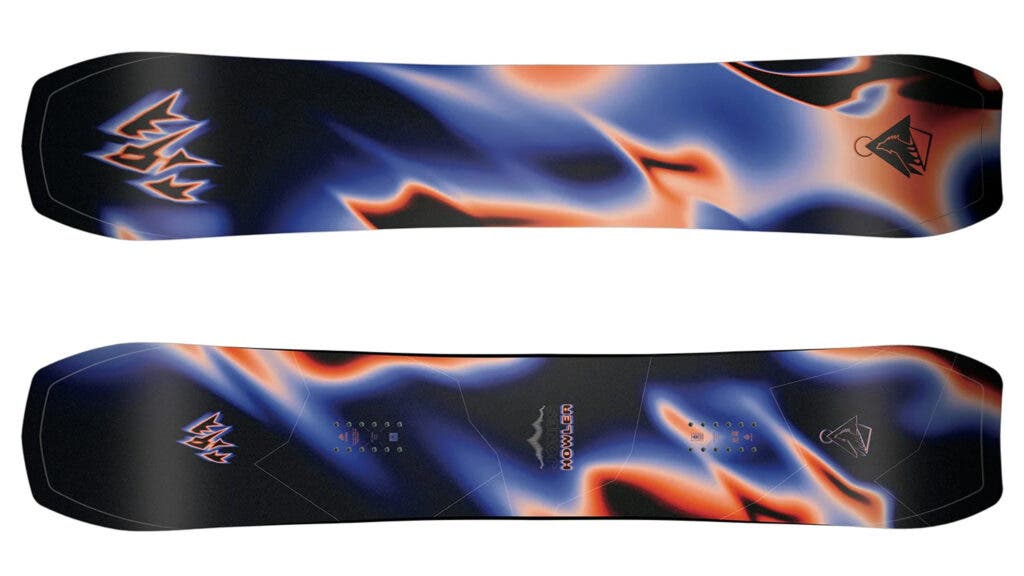
The new freeride-meets-freestyle Jones Howler clocked the most perfect scores in the history of our test, earning it our coveted Editors’ Choice award twice in years past. The directional deck has a sultry moontail and a boxy, buoyant, bulldozer-like nose that inspired confidence when we pointed it through slushy moguls and refrozen chunder. “It’s extremely hard-charging—most stable board I’ve ridden,” said one rider.
The extended sidecut and effective edge help generate stability, as does a chunder-gobbling, mid-stiff paulownia core bolstered by poppy bamboo stringers. Responsive carbon and shock-absorbing flax laminates run from the inserts to the contact points, and a Koroyd insert (a cluster of hollow straws) in the nose adds dampening while cutting weight.
Three micro-bumps along each edge provide grip in icy hardpack. Combined with aggressive traditional camber, the 158 we tested felt as reliable as a 161 when straightlining. It rails turns like “a Ginsu knife,” according to one tester, and pops “like a balloon at a six-year-old’s birthday party,” according to another. Despite an innate proclivity for charging, testers found it surprisingly agile in glades and the park. “It can pop, turn, slash, and trick. I rode it in slop and icy groomers, and it inspired confidence in both,” reported another tester.
Critiques were minimal. A couple of lighter, less aggressive riders suggested sizing down to better control the longer effective edge and warned that cruisy intermediate riders won’t take advantage of the Howler’s hell-raising capabilities. Another pointed out that despite the minimal taper and kicked tail, riding switch in tech terrain isn’t the Howler’s strong suit (although it lands switch in powder well given the setback). But overall, the Howler is as close as it gets to being a jack of all trades and a master of them, too.
Best Quiver-Killer
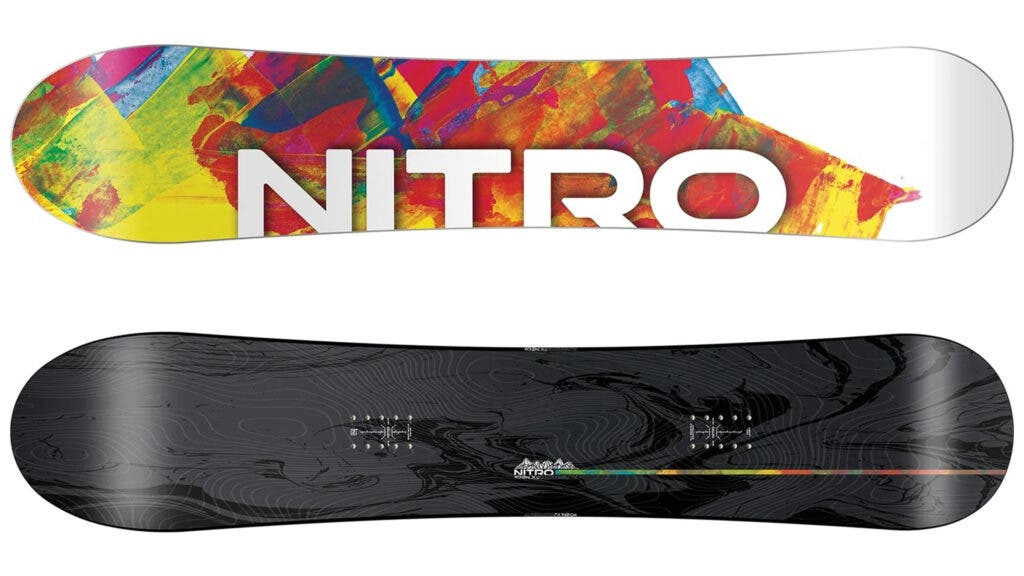
Nitro Alternator FX
Sizes: 142, 146, 149, 152, 154, 157, 160, 162 cm (unisex)
Genre: All-mountain/Backcountry freestyle
Profile: True camber
Pros and Cons
+ Jack of all trades
+ Lightweight
+ Responsive
– Not forgiving for less experienced riders
– Not as much float as tapered, wider shapes
The Nitro Alternator is a no-bullshit quiver-killer that’s stayed on our list since 2025, when it earned our coveted Editors’ Choice award. The Alternator can rip groomers, charge steeps, drop cliffs, and straightline sketchy runouts like it’s trying to break the sound barrier. Snowboard purists will appreciate the Alternator’s frills-free traditional camber profile. “It holds a strong edge, and loads behind the back foot for explosive pop,” commented a freestyle-forward rider and longtime board tester.
After getting the Alternator airborne during our test week and beyond, a lifelong board nerd praised the stability provided by the mid-stiff, high-grade poplar core, reinforced by nose-to-tail carbon stringers. “No fear of looping out or going over the bars here,” he reported. “In fact, [the Alternator] saved my ass a few times when I thought I was about to go over the nose.”
The classically directional deck sports subtle setback and minimal taper, as well as an early rise nose and a kicked tail. While the Alternator wasn’t the best in test when it came to float in powder or switch stomping and ripping ability, the design provides what testers agreed is a solid balance between the two. Testers also loved the Alternator’s carving prowess, which comes courtesy of Nitro’s Dual Degressive sidecut—a smaller-radius sidecut between the bindings that’s bookended by larger-radius sidecuts at the nose and tail.
Testers noted there are more forgiving boards out there for intermediate riders, and resort rippers concerned with technical jibbing should look elsewhere. They also reported that the standard-cambered Alternator doesn’t plane as well as wider, rockered shapes in slow, low-angle powder, so if you’re looking for a powder stick and between sizes, they recommend sizing up. At speed in the steeps, though, it’s a dream.
Best Alternative All-Mountain
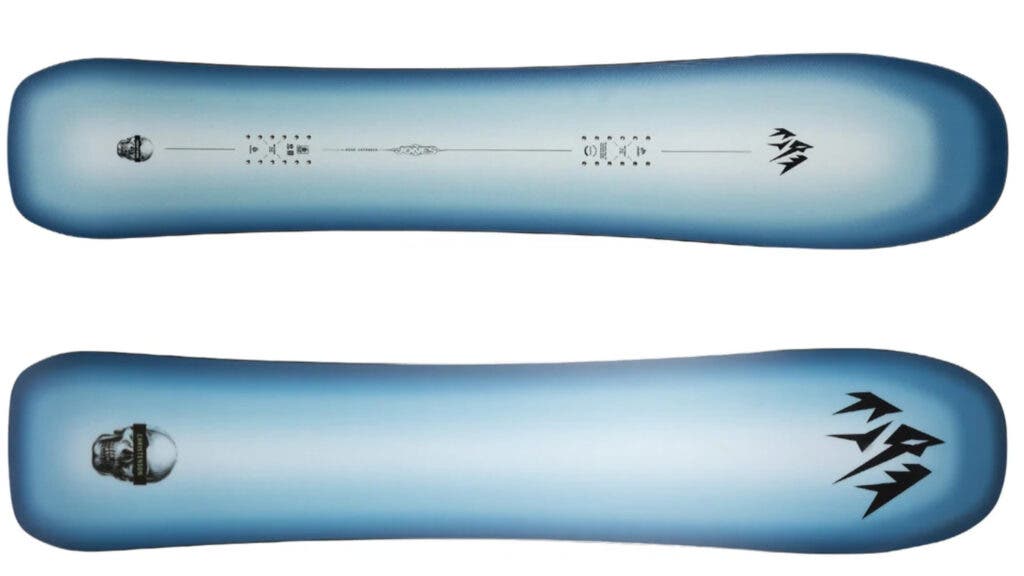
Jones Mind Expander 2.0
Sizes: 142, 146, 150, 154, 158, 162, 166 cm (unisex)
Genre: Alternative All-Mountain/Freeride/Powder
Profile: Rockered nose, camber underfoot
Pros and Cons
+ More versatile than previous Mind Expander
+ Surfy and radical on rail
+ Speaks to a range of rider abilities
– Too soft for aggressive riders
Despite looking nothing like its predecessor, the reimagined Mind Expander 2.0 improves versatility without sacrificing its shaka-inducing soul. The redesign has a rounder, spooned nose and flatter tail with less taper. A new dual-radius sidecut is smooth, not serrated, and a more subtle, stable camber profile provides more reliability on uninspiring days. A new core made of medium-flexing poplar and paulownia, bolstered with a carbon and flax stringer, balances dampening and snappiness.
One tester called the ride a “surfy yet stable alternative shape that has a groovy time at medium speeds across the mountain.” A Euro-carving specialist, he adored the new sidecut’s on-rail performance and dubbed the three-dimensionally contoured nose’s turn initiation second to none. He appreciated the profile updates in particular, noting that the “camber supplies enough stability for most conditions.” The spooned shape and malleable core, however, were overwhelmed in icy steeps.
This shape is for anyone looking for a fun, effortless, and floaty ride, though it’s too soft for chargers in search of a quiver-killer. Intermediates and even progressing beginners that aren’t put off by a directional shape will enjoy it, though true beginners should check out the Jones Frontier 2.0 for similar surfiness and a softer, more forgiving flex.
Best All-Mountain Snowboard
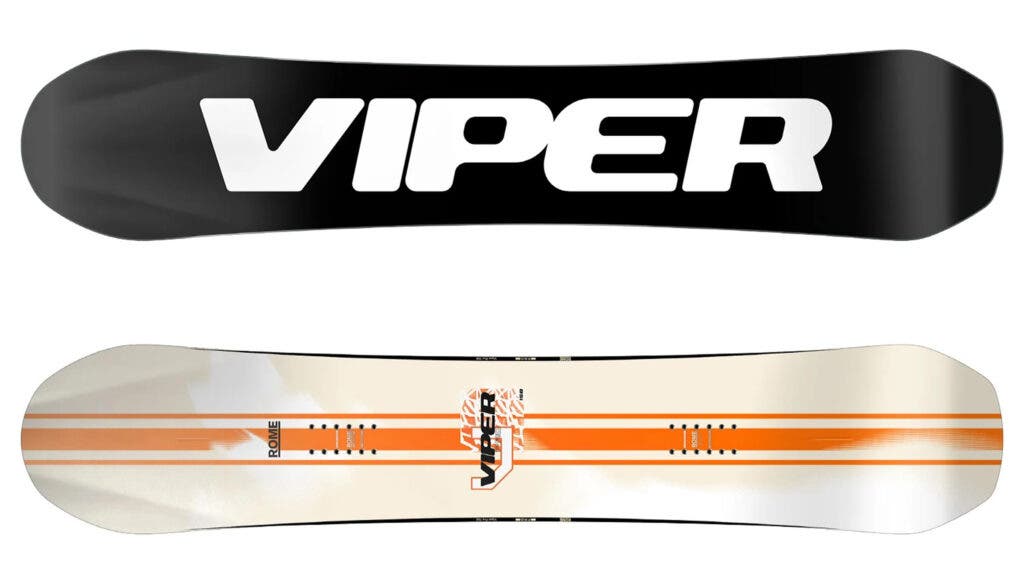
Rome Viper Pro
Sizes: 142N, 146N, 150N, 154, 156, 158, 160W, 162W cm (men’s)
Genre: All-mountain
Profile: Camber underfoot, rocker at contact points
Pros and Cons
+ A true all-mountain crusher
+ Speed demon
+ Rides switch well
+ Consummate aerialist
– Not as floaty as tapered directional shapes
– Not as forgiving as the standard Viper
Don’t let the Viper Pro’s retro topsheet fool you: It’s loaded with new-school tech that made it our favorite all-mountain board of 2027. The directional twin features a stiff wood core sandwiched between reactive triaxial fiberglass laminates. Two vertical carbon rods are milled into the core, one in the nose and the other in the tail. The resulting flex is stiff enough to charge down the fall line while remaining ultra responsive torsionally, and delivers immediate edge-to-edge transitions that testers loved.
A floaty, contoured, early-rise nose helps the Rome flow into turns like molten quicksilver, while the multi-radius sidecut and camber underfoot crushed medium to longer, drawn-out carves. A Tahoe tester with countless banked slalom podiums under his belt opined: “It’s reasonably nimble at slower speeds, but rides best with throttle open.” This remained true when he straightlined down freeride faces and charged through variable snow, solidifying the Viper Pro’s case for our top all-mountain pick.
With traditional camber underfoot and a stout flex, the Viper Pro was a standout in high-speed freeride terrain, tracking through variable snow like a hunting dog and straightlining at will. It impressed in bigger jumps, too. “Pop was dynamic without sending you to the moon, and camber pulled you back into place on shakier landings,” raved a tester. Dampening flax mats located at each set of inserts help absorb jarring landings, too.
Because it’s best for seasoned riders, intermediates might want to check out the more approachable but similarly shaped Rome Viper and women’s Viper, also approved by testers.
Best Powder Snowboard
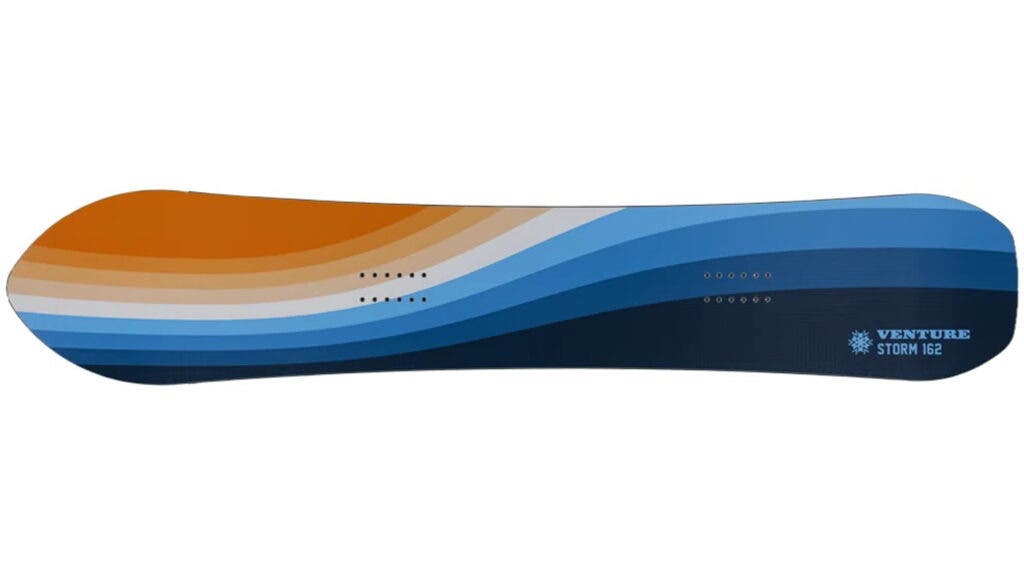
Venture Storm
Sizes: 152, 157, 162, 167 cm (unisex)
Genre: Freeride/Powder
Profile: Flat
Pros and Cons
+ Floaty and fun in soft snow
+ Slays variable conditions
+ Ultra durable
– Heavy
– Not the poppiest option
– Limited size run
Venture’s factory is nestled in Silverton, Colorado, where a collective of powderhounds handcraft some of the most durable decks on the market. The Storm is no exception. A hardwearing sintered base, textured topsheet, P-tex sidewalls, and high-carbon steel edges protect a mid-stiff-flexing poplar-and-maple core that’s laminated with triaxial fiberglass. “Feels like a deck I cannot break no matter what,” said an impressed Utah rider—which is saying something after the Wasatch’s scratchy season.
Not only is the build durable, but it’s damp and reliable enough for riders of all abilities to charge through chunder with flow and ease. The flat profile underfoot and slightly softer rockered tip and tail made the torpedo-shaped Storm one of our favorite powder boards, and a versatile, mid-range sidecut was a revelation on rail. “Edge initiation and release feel like sinking a samurai sword into pre-softened butter,” gushed a Colorado tester.
The Storm is not the poppiest board, nor does it ride switch particularly well due to its tapered, directional perspective. It’s also not the lightest—durability and dampening come at cost. But for freeriders who want to invest in a well-made, adaptable powder board that should last for seasons, we can’t point you toward a better option.
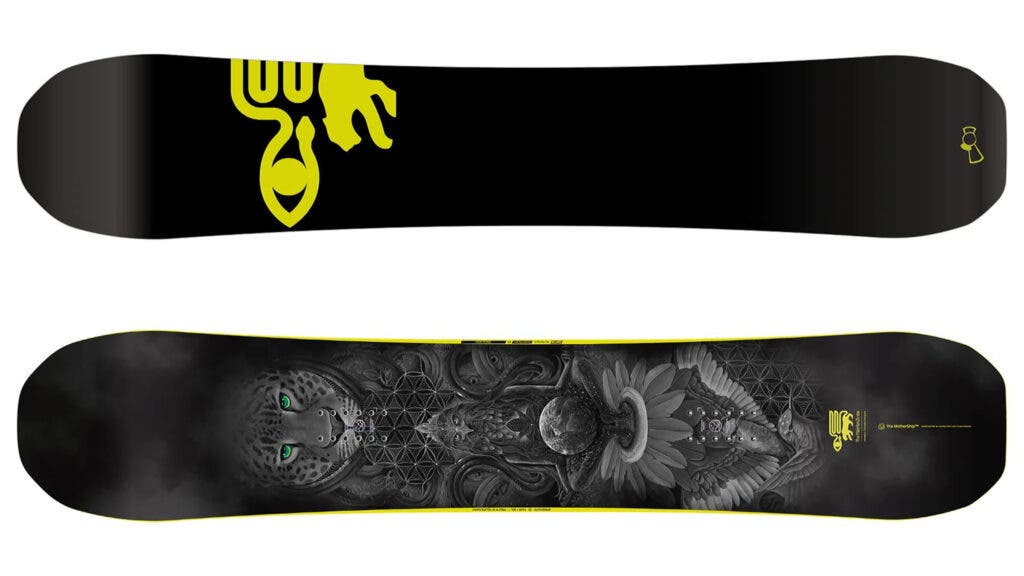
Best High-Performance Snowboard
CAPiTA Matriarch
Sizes: 155, 158, 161, 157W, 160W cm (men’s)
Genre: All-mountain/Freeride
Profile: Camber
Pros and Cons
+ Jump destroyer
+ Lightweight yet stiff and responsive
+ Buoyant
– Overkill for most riders
– Feels shackled by lower speeds and smaller turn sizes
Torstein Horgmo’s pro model, the heavily hyped, lightweight Matriarch, lived up to testers’ high expectations off the jump. Literally. The Matriarch popped off everything from sketchy sidehits to XL park jumps like a balloon on a blind date with a porcupine.
Our most aggressive park rippers and freeriders agreed that the deck was built to handle rutted, sketchy, and bombed-out landings better than most. “Torstein made this for filming big-boy jumps,” said a Tahoe tester and filmer who loved the minimally tapered shape’s ability to land switch or regs as needed, and jokingly dubbed this his ideal board for filming a backcountry-freestyle video part.
The construction nails the fickle balance between low weight and high performance, with a featherweight wood core buttressed by two vertical, snap-injecting bamboo stringers, a responsive carbon-woven glassjob, and two stiff carbon strips crafted from recycled aerospace scraps lining the blended sidecut. “Very powerful—stiff, but never too stiff,” said another elite Tahoe tester.
Combined with a longer, big-mountain-ready sidecut, the sturdy Matriarch prefers faster speeds, elongated turns, and steep, gnarly, wide-open terrain. “If I were to pick any board to take to AK, this might just be the one,” said one of the Tahoe riders. “It does not like to noodle around and play around with tight little turns and slow speeds.”
While elevated contact points help transition edge to edge, consensus was this board is just like the best freeride terrain at your local hill: Leave it for the experts.
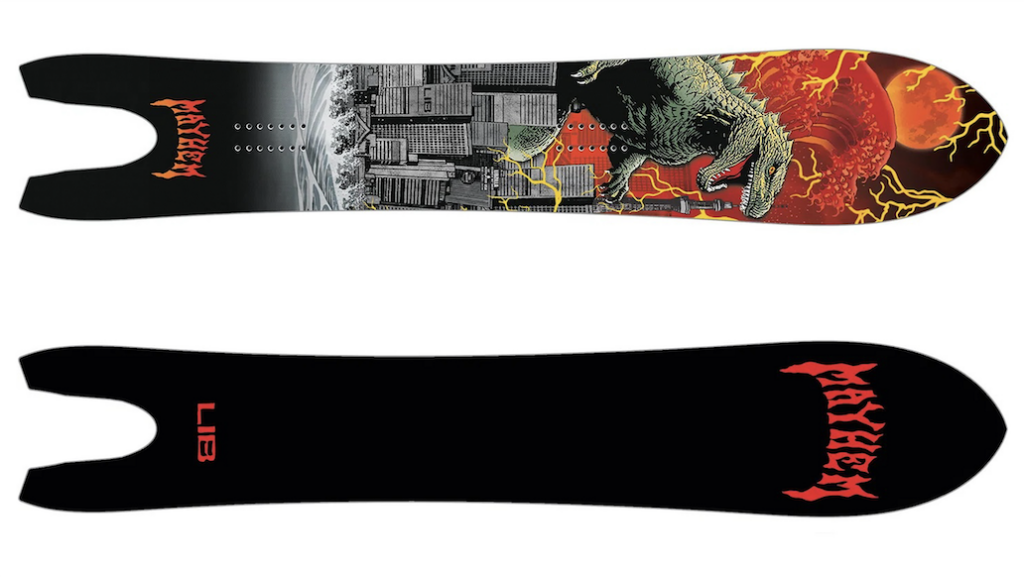
Most Fun
Lib Tech Mayhem Libzilla
Sizes: 188 cm
Genre: Freeride/Powder
Profile: Camber
Pros and Cons
+ As buoyant as it gets
+ Loves to carve
+ Fun for a range of riders
– True quiver shape
– Doesn’t love trees or moguls
This king of reptiles is available in one size: a whopping 188. For most snowboards, a one-size run would infuriate our test team and be a seriously limiting factor. But this niche shape is designed to do two things: blow your mind carving corduroy and float like a blimp in blower pow. It’s not a daily driver, but rather an addition to your quiver (and the ultimate chairlift conversation starter).
The extreme length provides such outrageous float and fun that it’s going to push virtually any rider out of their comfort zone and into the zany, outlandish realm of oversized guns. Case in point, one of our heaviest testers, a 6’2″ knuckledragger, and one of our lightest riders, a 5’0″ ninja, both had a blast on the 188 Mayhem Libzilla—so long as they stuck to corduroy and pow.
Length aside, the Libzilla has a spear-like schnoz, significantly sliced swallowtail, and beefy tri-radial sidecut to match. That sidecut melds with setback camber and a just-right-of-medium flex (courtesy of an aspen-and-paulownia core with birch-braced sidewalls) to gouge through groomers. “Definitely a niche snowboard, but perfect for an experienced turner who wants a little Mayhem in their life,” reported the 6’2″ tester—shouting out Libzilla co-designer Matt “Mayhem” Biolos of …Lost surfboards, a surfboard shaper who’s collaborated on some of our favorite Lib Tech models over the last decade.
That tester actually won a pond skim contest on the Libzilla, as the deck’s generous surface area helped him plane across the water like a pontoon boat. While the float is unmatched in deep snow (and deep ponds), the Libzilla throws a temper tantrum in tight trees or moguls. To be honest, if you decide to point a 188 gun into a tight mogul field, we’re inclined to call any subsequent dismay “user error.”
Best Women’s Snowboards
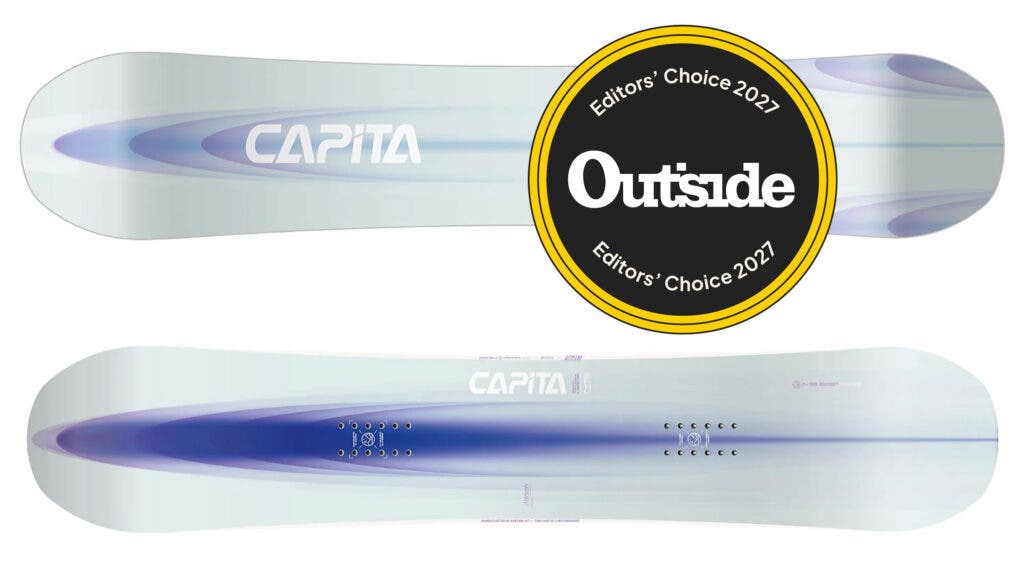
Editors’ Choice
CAPiTA Artemis
Sizes: 144, 147, 150, 153, 156 cm
Genre: Freeride/All-mountain
Profile: Camber underfoot, rocker in nose and tail
Pros and Cons
+ Aggressive, fast, and responsive
+ Floaty in pow
+ Solid pop and landing gear
– Can be overwhelmed by tighter turns
– Best reserved for advanced riders
Ladies with a need for speed should beeline to the CAPiTA Artemis. A freeride weapon that shares similar features with the tester-beloved Mercury, the Artemis has a poplar-and-paulownia core, reinforced with two suspension-enhancing vertical flax-and-aramid strips, camber underfoot, and a directional outline—specs that had one tester blasting through low-vis moguls on her first lap. After that, it was game on.
“It’s intuitive and strong edgehold and stability gave me confidence to drop into Main Chute in the Palisades for the first time,” she reported, noting that the powerful build and loadable camber helped snap ollies off side hits and stomp cliff drops, too. A more surfy, laid-back rider found the relatively shallow sidecut excelled at medium- to large-radius turns but was less nimble in tighter spaces. Still, the catch-free properties of the rocker in the nose helped with turn initiation, and maintained a sense of playfulness despite the stiffer backbone. And when our crew scored spring pow days, the early-rise nose combined with the taper boosted float.
Consensus was this speed demon would rather point through those misty moguls than try to dance between bumps, and testers warned it’s best reserved for advanced riders.
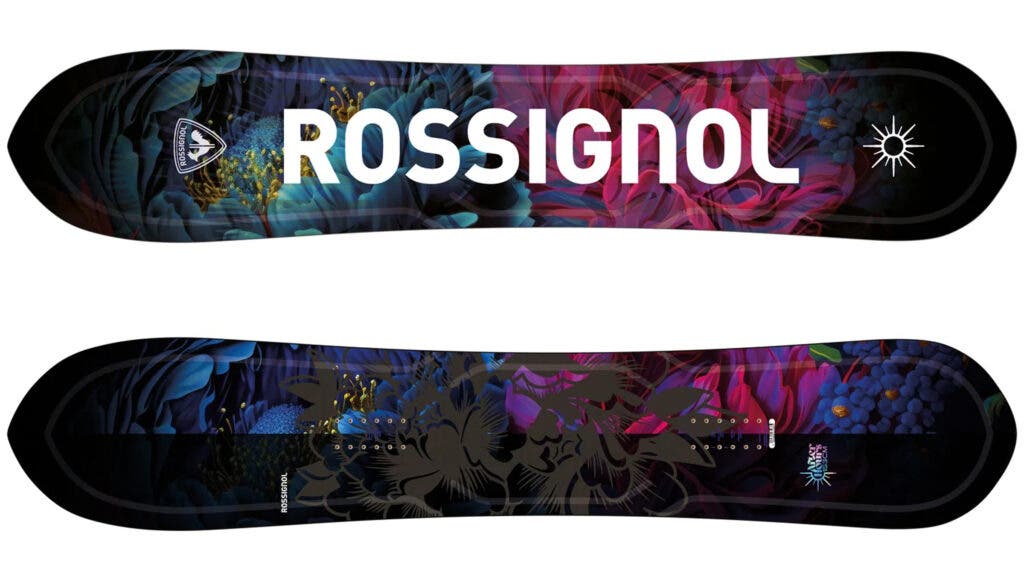
Best Freeride Snowboard
Rossignol After Hours
Sizes: 145, 149, 153, 156 cm
Genre: Freeride/All-mountain
Profile: Camber underfoot, rocker in nose and tail
Pros and Cons
+ Excellent landing gear
+ Reliable and responsive for freeride terrain
+ Great carver and dependable edgehold
+ Floaty and fun in powder
– Requires some athleticism to pop well
The weapon of choice for four-time Freeride World Tour and Natural Selection champion Marion Haerty, the Rossignol After Hours is no stranger to the start gate. The directional descender is reliable on edge and a blast in powder.
A floaty, broad, stable chassis with a deep, progressive sidecut provides a balance between agility and float. A camber-dominant profile and mid-stiff, urethane-bolstered, FSC-certified core adds stability and performance at speed. One South Lake Tahoe freeride competitor fell in love with the deck from day one, reporting that she would happily follow Haerty’s bootpack and strap into the After Hours in her next comp. “Extremely trustworthy in any snow conditions,” she reported. “Sturdy off-piste.”
She loved the After Hours’ gorilla-strong edgehold for turns, whether she was laying carves on corduroy or traversing to far-out pow stashes, as well as the stout tail’s stomping prowess. “If you’re planning on chucking your carcass off massive rocks, then you can guarantee the After Hours will stomp the landing,” she said.
That said, the After Hours isn’t the easiest board to load up or pop, so it’s best suited for athletic riders. Testers felt the flex pattern was prohibitive for beginners, but found the lightweight build made it easy to transition from edge-to-edge—great for intermediates looking to progress into steeper (and ideally, deeper) terrain. Unsurprisingly, the After Hours isn’t winning any awards for its butter or jib skills, but one surprise was a twinny vibe that encouraged spins and trickery off natural features. “Although this is technically a directional snowboard, it rides switch really well,” a tester claimed.
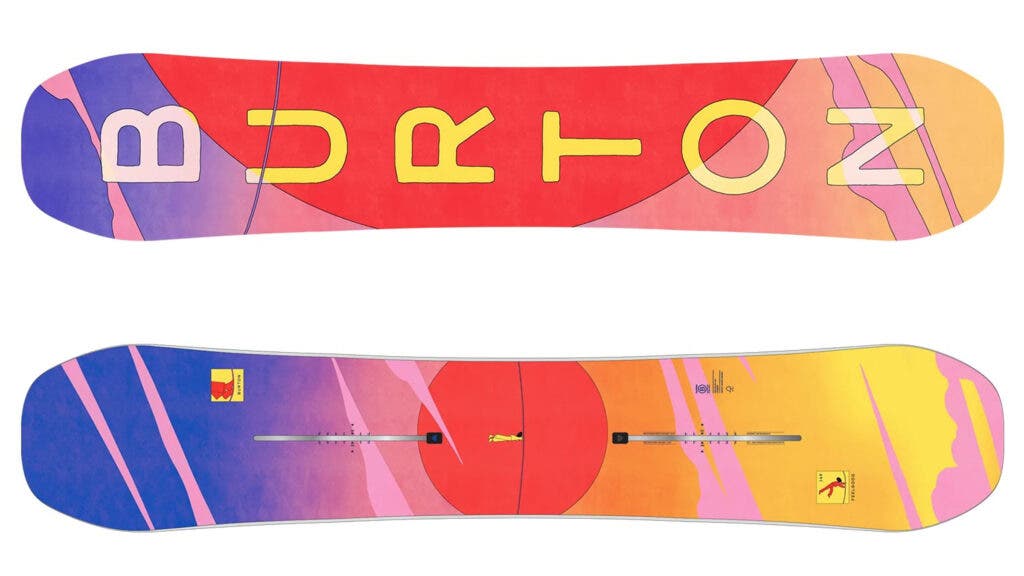
Burton Women’s Feelgood
Sizes: 142, 146, 149, 152 cm
Genre: All-mountain
Profile: Rockered nose and tail, camber underfoot
Pros and Cons
+ Loves park laps
+ Rides switch well
+ Solid edgehold in icy conditions
– Not as floaty as tapered directional shapes
– Freeriders may want more stiffness
You can’t go wrong with a good, old-fashioned directional twin like the Burton Feelgood. A longer nose and shorter tail add float and all-mountain chops, while a middle-of-the-park twin flex pattern and classic camber profile allow it to swerve, snap, and stomp switch.
“Pretty dang poppy, and lots of fun in the park,” reported a Mammoth tester. Springloaded camber, as well as a sustainably harvested wood core with a carbon-beamed backbone that’s laminated with triaxial fiberglass, helps supply fun, powerful ollies while retaining torsional maneuverability. Another freestyler tested the Feelgood in icy conditions and was impressed by the Burton’s ability to handle dust on crust and blue ice. “I even took it for an icy park lap, and it handled the sketchy medium jump with amazing pop.”
The Feelgood earned additional kudos for a lightweight build that speaks to lighter riders and also helps progressing park riders dial up their spins. It excels at medium-sized turns but can handle quicker, tighter wiggles and longer, drawn-out arcs.
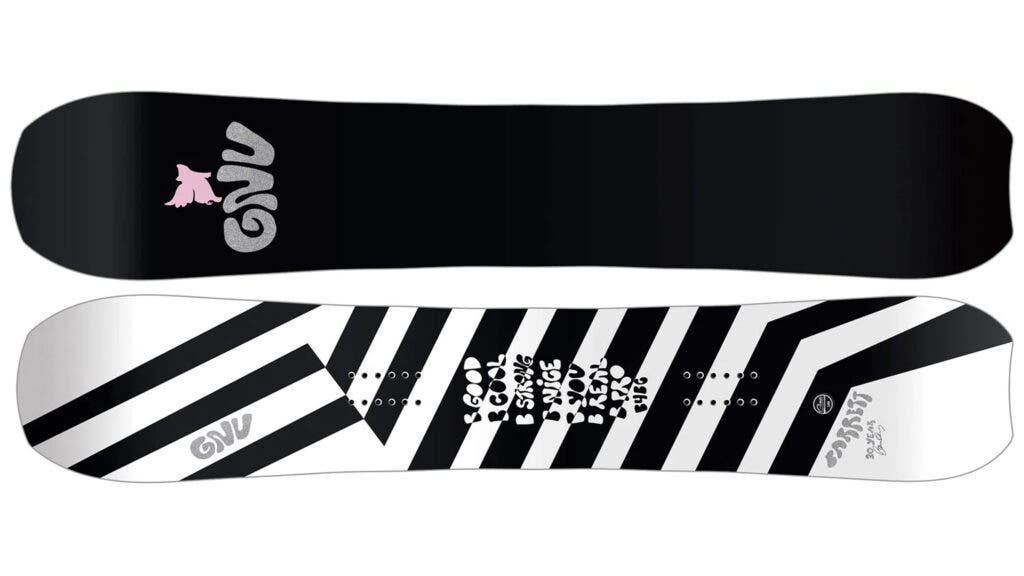
Best All-Mountain Snowboard for Advanced Riders
Gnu Barrett
Sizes: 146, 149, 152, 155 cm
Genre: All-mountain
Profile: C3 Camber (camber-dominant hybrid with mild rocker between the feet)
Pros and Cons
+ Balanced, reliable yet fun quiver-killer
+ Energetic pop
+ Excellent edge hold
𑂾 Too much board for beginners
𑂾 Better suited to jumps than jibs
Gnu first submitted the Barrett—the long-running pro model of snowboard legend Barrett Christy—to our annual snowboard test a few years ago, and it arrived like a meteor. Christy’s pro model has been a staple in the Mervin lineup since the mid-90s, but the board has evolved over the years, and the iteration that wowed our team was a mid-stiff, moon-tailed, all-mountain-assaulting, line-lacing, directional deck. In fact, we’ve awarded it Editors’ Choice honors twice in the last few years.
“Gnu nailed it with the Barrett,” applauded a Tahoe banked slalom trophy collector, Euro-carving connoisseur, and all-around ripper. “It’s equally fun in pow, groomers, chunder, and park. I couldn’t find its weak point—a true quiver killer!” She dug the progressive Magne-traction, a design update that features a smooth sidecut in the front half of the board, transitioning to Gnu’s characteristic serrated sidecut in the back half of the board. “The Magne-traction delivers a precise ride with superb edge-hold fit for a queen, and the Barrett performs well wiggling through the trees and arching long turns alike,” she reported.
She also loved the energetic flex pattern—supplied by the Forest Stewardship Council–certified aspen and paulownia core, and reinforcing carbon bands—which she found balanced enough for all types of terrain. A Mammoth snowboard coach agreed after ripping the Barrett on fast and steep groomers, wind-loaded tree stashes, and even the park. “I had a blast everywhere. I found this board to be the perfect stiffness that manages chatter really well, but at the same time soft enough to flex and pop effortlessly,” she said. She gave kudos to the Barrett’s versatile 8.1-meter radius sidecut and poppy, hardpack-gripping C3 camber profile (a camber-dominant hybrid with mellow rocker between the feet).
The only ones who wouldn’t have fun on this whip, said another Sierra tester, are “pure park rats and beginner riders.”
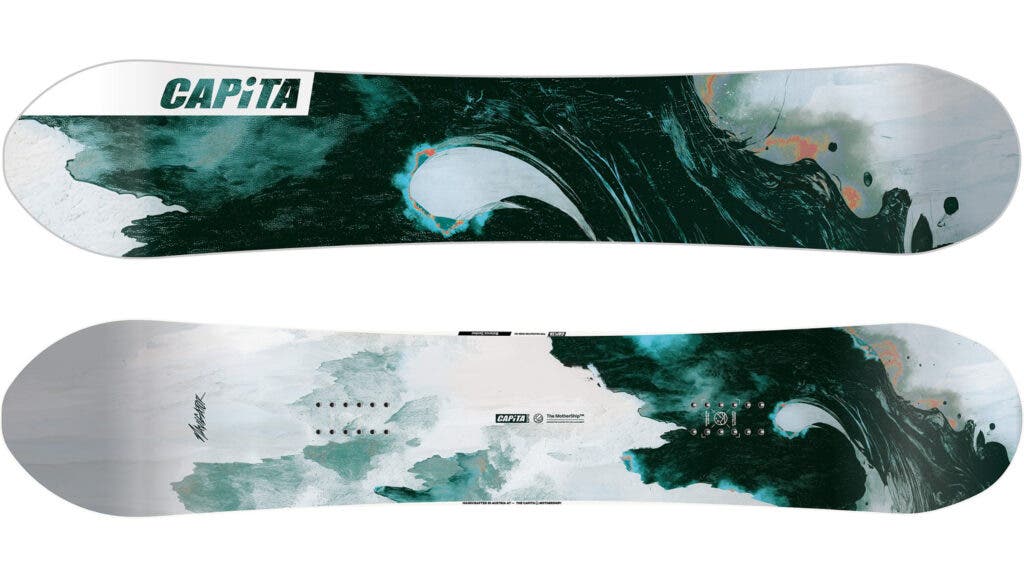
Best Powder Snowboard
CAPiTA Navigator Women’s
Sizes: 143, 147, 151 cm
Genre: Powder/All-mountain resort
Profile: Hybrid camber
Pros and Cons
+ Lightweight
+ Workable flex
+ Floaty nose
+ Agile turning
𑂾 Bucked by variable conditions
Capita’s Navigator Women’s has flex appeal. The featherlight, lightly tapered directional powder craft sports a medium-soft poplar and paulownia core, bolstered by two parallel strips of shock-absorbing, ollie-enhancing interwoven flax and aramid fibers. The resulting ride? “Super fun! Light and easy to get off the ground. It’s soft and buttery—not soft and floppy,” said a Tahoe ripper.
An aggressive Tahoe freerider and test veteran agreed, calling the Navigator a “flexy stick with personality that navigates the whole mountain with style and ease.” She appreciated the pop powered by the dual-wood core and the flax-and-aramid strips, describing the Navigator as a “launcher with plenty of spring.” However, she did voice a critique common with lighter, softer boards: while the Navigator handles pow and fresh corduroy like a dream, she found it was bucked by frozen ruts, high-speed hardpack, and choppy snow.
A lighter-on-her-feet, less aggressive, and more freestyle-oriented rider felt otherwise. “This board would be my weapon of choice on a powder day, even if you live in a resort town like Mammoth, where everything gets completely tracked out about 45 seconds after the chair opens—because not only does it float through powder, but it also manages chatter well and allows you to power through any choppy technical terrain,” she explained.
There was no debate, however, whether the Navigator was agile. The directional deck sports traditional camber underfoot for edge hold and pop, which transitions to floaty, catch-free rocker just outside the inserts before kicking up into the steeper nose and tail. Combined with a parabolic sidecut that’s tighter at the waist and longer toward the nose and tail, the Navigator’s contact points are naturally raised off the snow. Snowboard nerd talk aside, this combination provides fun float in powder and the maneuverability necessary to confidently glide through glades. “Nimble turner,” voiced a Tahoe snowboard instructor.
A South Lake Tahoe rider tested the Navigator during a few classic spring powder days that let the lightweight build and wide, rockered nose shine. “While it’s a great all-mountain directional board for intermediate to expert riders, it stands out in powder conditions,” she claimed. “It gives you the ultimate surfy feeling without you having to put all the weight into your back leg.”
How to Buy the Best Snowboard
Shopping for snowboards is like dropping a cliff: It’s equal parts exciting and nerve-wracking. But if you do your homework before you send, chances are you’ll ride out just fine. Here are a few tips to help you stick your landing:
Ride as Many Boards as Possible
Demo boards from your local shop or at resort demo days, swap with your friends, and do whatever it takes to ride as many boards as you can. Whether you’re an old head or relatively new to the game, testing a diverse range of boards will expand your snowboard lexicon. You can read reviews of the best snowboards all day long, but nothing informs your decision-making like time on snow. One word of advice: Complete newbies should learn to turn properly on a board they’re comfortable with before going on demo sprees.
Shop by Riding Style
Here are the three most common snowboard styles:
- Freestyle Boards: Freestyle, or park, boards are on the shorter side, which makes them easier to spin. They’re either true twins, meaning they’re symmetrical from nose to tail, facilitating landing and riding switch, or directional twins, symmetrical in shape but not in flex pattern or profile, or vice versa.
- Freeride Boards: Freeride boards are designed for speed and stability when charging groomers, riding off-piste, and ripping backcountry conditions. They’re usually directional (the nose and tail are defined) and tapered (the nose is wider than the tail). Directional shapes float and carve well, but riding switch isn’t a cakewalk. Most freeride boards are on the stiffer side, supplying stability for big mountain charging.
- All-Mountain Boards: All-mountain shapes blend the freestyle elements of park boards and the big-mountain chops of freeride decks. They can ride switch through the park one lap and bomb a hike-to chute the next. If you’re unsure of where to start or you only have a budget for one board, go with a versatile all-mountain board.
Consider Profile
Profile refers to the curvature that’s visible when you lay a board flat on the ground and look at it from the side. It is a critical element of board design, as it dictates how and where a board interacts with snow. There are two primary profiles to be familiar with: camber and rocker.
- Camber is the time-honored, traditional profile that looks like an upside-down U when laid flat. The board will touch the ground near the nose and tail, but the center will be raised off of the ground. This curvature supplies drive, stability, and edge hold, allowing riders to flex into the deck and dig into the snow. It’s also a principal ingredient in pop production—if you like to send ollies to the moon or carve aggressively on groomers, camber is your launch pad.
- Rocker is reversed camber. Lay a rockered board flat, and it’s shaped like a subtle U. You’ll find a single low point in the center of the board while the nose and tail float off the ground. Rocker provides a fun, skate-like ride. It’s easy to turn, and it enables you to weight your back foot and float through deep powder. However, it’s not as reliable in technical steeps, on icy hardpack, or on high-speed straight lines.
- Hybrid profiles mix rocker and camber. These combos usually attempt to blend the skate-like, buoyant, easy-turning aspects of rocker with the pop, stability, and edge-hold of camber.
Sizing Tips
Sizing a board can be just as tricky as picking one in the first place. Sizing depends on a number of factors, both in terms of the board itself and the rider who’s rocking it. One outdated sizing method is comparing board length to rider height, which doesn’t account for weight or board width. Instead, focus on these considerations.
- Rider Weight: Weight enables a rider to flex a board and engage its camber profile.
- Skill Level: If you’re a beginner, look at softer, forgiving shapes—and if you’re between sizes, err shorter. A smaller board is going to be much easier to turn and better suited for learning. If you’re an intermediate, size in the middle of your weight range and consider slightly stiffer all-mountain shapes—these boards will allow you to progress and build upon the skills you developed on a softer, shorter shape. If you’re an advanced rider, your board sizing depends more on riding style.
- Riding Style: As we mentioned earlier, different boards are meant for different objectives. That said, most people can’t afford a full quiver. So, when in doubt, go with an all-mountain shape and size to get the most versatility for your buck.
- Snow Conditions: Powder-specific boards are usually longer, wider, or both, providing more surface area and float in deep snow.
- Boots: If you have large boots, particularly in relation to your height and weight, you may need to consider a mid-wide or wide board. The last thing you want is toe or heel drag, which will happen on a board that’s too narrow for your boot length.
- Volume-Shifted Shapes: Some boards, referred to as volume-shifted shapes, are meant to be ridden shorter than traditional snowboards. Volume-shifted shapes condense the surface area and float of a longer shape into a more maneuverable package. Usually, a brand will supply sizing recommendations for volume-shifted shapes. Once you figure out your standard board sizing, you’ll be able to size volume-shifted shapes accordingly.
- Demo Multiple Sizes: Again, the best way to develop your understanding of snowboard sizes is to keep demoing boards. Don’t just demo different boards from different brands, either—if possible, demo the same board, from the same brand, in slightly different sizes, and test them in varied conditions.
Unisex, Women’s, and Men’s Snowboards
Women’s snowboards are generally smaller and more flexible compared to men’s snowboards. Other than those key attributes, the biggest difference between men’s snowboards and women’s snowboards often comes down to graphics, which might impact the aesthetic of your kit, but not the way a board performs on the hill. But don’t let gender dictate what boards you can and can’t ride. Many of our male and female snowboard testers ride unisex boards, which are becoming increasingly popular as brands turn away from largely unhelpful gender constraints. Instead, focus on factors like flex, board length, recommended rider weights, board width (especially regarding your boot size), and other riding features.

How We Test the Best Snowboards
- Number of testers: 34
- Snowboards tested: 100+ (44 from this year)
- Brands represented: 25
- Biggest spin of the test: Backside 900
- Pond skims won while wearing a Speedo: 1
- Silver-dollar-sized core shots: 1
How did we land on these boards? Over the past several years, our snowboard testers have thrown down at weeklong snowboard tests at ski resorts in Tahoe, including Sugar Bowl, Kirkwood, and Diamond Peak. This past season, we did things differently, sending out snowboards to our testers from the Rockies, Wasatch, and Sierra to put them on the chopping block at their local hills. The mission? Test boards, hard, across an entire spring’s worth of conditions. Clusters of testers swapped boards among themselves—but didn’t swap notes—and then filled out comprehensive review forms as the lifts stopped cranking. The snowboard reviews above reflect that time- and turn-intensive process.
After riding these decks all spring, testers scored boards on overall performance, responsiveness, turning ability, pop, and performance at speed. We also asked them a handful of qualitative questions, including if they’d spend their hard-earned cash on each board.
Finally, our test director sorted through mountains of feedback forms before identifying top picks and writing these reviews. Lastly, we compared top picks from this year’s test with those from last year so we could carry over favorites that are still available and competitive with the newer models. If it ain’t broke…
Meet Our Testers
Drew Zieff is a Tahoe-based freelance writer and a lifelong snowboarder. In addition to directing Outside’s snowboard and splitboard gear tests—a role he’s handled since 2016—he directs Backcountry Magazine’s splitboard test and nerds out on snowboard gear and travel for REI, Gear Junkie, Gear Patrol, and Whitelines, among others. He spends his winters testing snowboard and splitboard gear in his backyard backcountry zones or up at Palisades Tahoe, as well as chasing stories and storms to snowboard meccas like Japan and Norway. His summers? They’re mainly spent at his desk, sifting through review forms and spec sheets, compiling our snowboard reviews—although he occasionally disappears in his custom-built 2006 Chevy Express for a few days when there’s swell on the coast.
The only thing more eclectic than Chris Cloyd’s riding style is his resume. A former touring musician, former personal trainer, and still-holding-on endurance athlete who lives in June Lake, CA, Cloyd spends his winters splitboard guiding, teaching AIARE courses, and handling administrative duties for Blackbird Mountain Guides. In his free time, you can find him crushing couloirs deep in the Eastern Sierras or putting solid boards through their paces at June Mountain and Mammoth. A fan of strong coffee and heavy metal who often combines the two on his way to shred, Cloyd is not remotely gentle on his gear—he lives to thrash.
A longtime member of the Outside magazine test team and an indiscriminate all-mountain charger, John Lauer is a snowboard buyer and boot fitter for Truckee’s own Tahoe Sports Hub. When the consummate gear nerd isn’t slanging snowboards, you can find him sending cliffs at Palisades, dusting off the tricks of his youth in the terrain park, splitboarding in his backyard, or chastising his very bad but very cute dog, Wendy.
