

Published November 24, 2026 03:30AM
Seth Ruhling was ten days away from racing in the 2023 World Mountain Running Championships when he first felt the pain. It woke him up. It tingled down his arm. It ached along the whole length of his spine. A nurse working out of the operating room at a local hospital in Louisville, Colorado, Ruhling took an aspirin just to be safe. Surely, he thought, this is not a heart thing. He got up and rolled out his back. He didn’t think much of it. He went to sleep.
The next morning, Ruhling pulled on his scrubs and went to work. The pain had not relented. He turned to one of the doctors on his floor and described the symptoms. The pain in his chest, the way it hurt when he bent over. At best, the doctor said, it’s nothing. At worst, he continued, you’re having an aortic dissection and you are about to die. Ruhling walked across the building and checked himself into his own hospital’s emergency room.
The answer was somewhere in between. Electrocardiograms (EKGs) and blood work told the story of a potential heart attack. Nurses and doctors who Ruhling knew personally turned, in that moment, from coworkers to aides. They hovered over him, checking in. It was then that Ruhling thought, maybe the worst is happening. He started mentally preparing himself. He realized he should call his wife in case he died. Thankfully, the worst was not happening. Despite the fact that so many of the signs pointed to a heart attack, those same signs also pointed to Ruhling’s official diagnosis: pericarditis—an inflammation of the pericardium, a sac of fibrous tissue that surrounds and protects the heart.
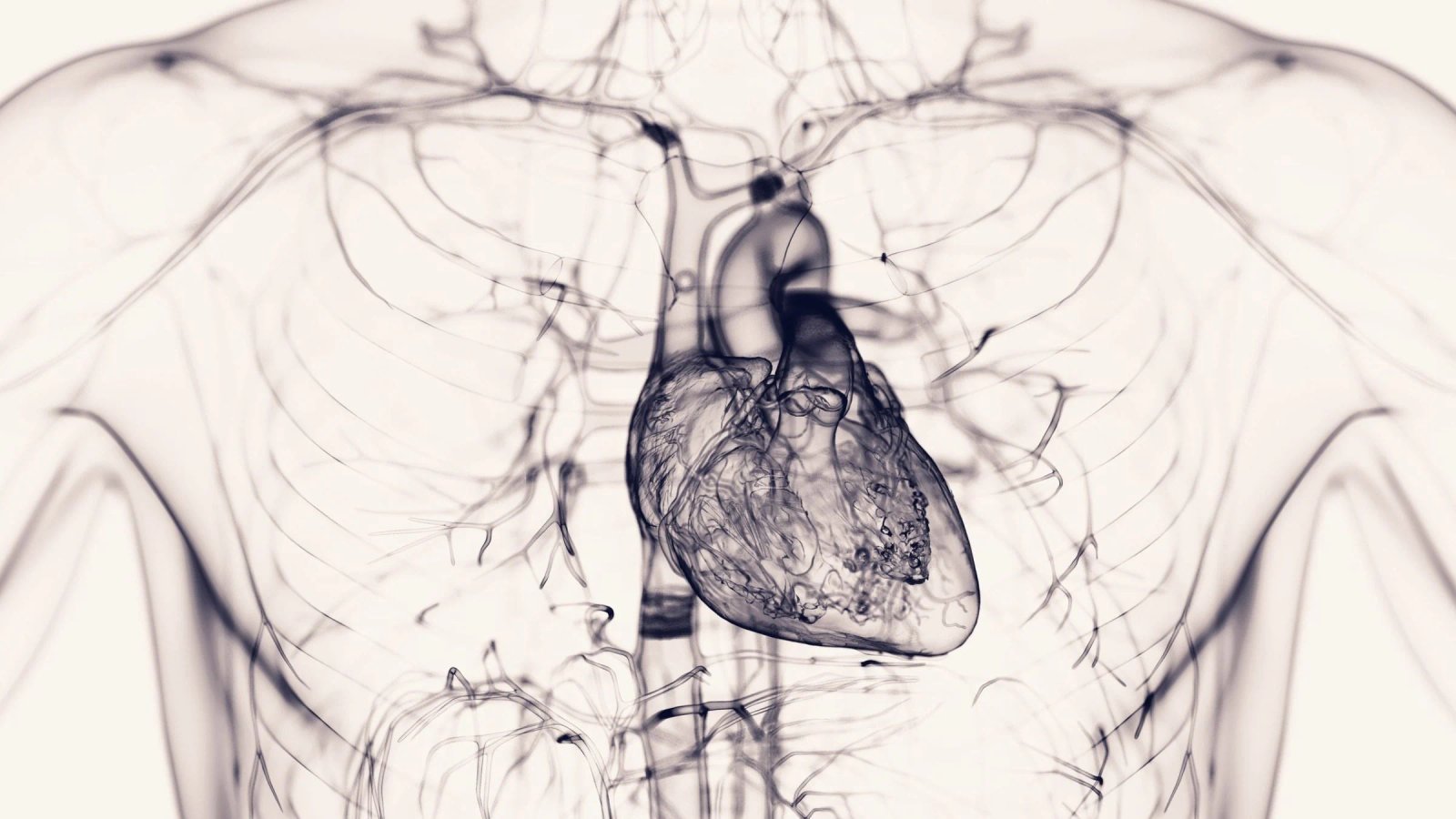
In essence, the heart is a simple enough thing. A muscle that can be made stronger so that you can live longer. This is why it is the subject of metaphor, of symbolism. The heart as the soul; the heart as the ticking second clock of our lives. The heart as what you care about the most, and the heart as what makes you capable of care at all. But in reality, the heart is a many-layered thing of rooms. There are parts of the heart that sound as if they are craters on the Moon. Superior Vena Cava. Fossa Ovalis. Vena Cordis Magna. Sometimes, in the darkness, listening to the sound of my own heartbeat, I cannot stand the mystery. I turn on a fan to cut out the noise. It is strange that something is ticking inside of me without my permission. It is stranger still that I depend on it. Even stranger still that, if it stopped, so would I.
For runners and endurance sport athletes, the heart is one of the most measured things on the planet. It starts with heart rate but continues with heart rate variability, cardiac output, stroke volume, and more. I imagine most serious runners could tell you their resting heart rate and their max heart rate, that they could look at you mid-run, without glancing at their watch, and tell you where exactly their heart rate is pinned, entirely by feel alone. One-hundred-forty beats per minute. One-hundred-fifty-two. One-hundred-sixty-five, their chest heaving as they say the words. And yet, for all this data, I also imagine that most endurance athletes take their heart for granted. They worry about sore tendons and ligaments, the stress a bone might be bearing, and whether or not their piriformis will continue to remain as tight as it feels. An injured heart is out of the question. It awaits us later in life, maybe. Surely not now. But what happens when it’s the heart that’s the matter? The heart—the very soul of it all?

Years ago, attending the funeral of my wife’s grandfather, I blacked out and came to with a paramedic standing over me. I was splayed and sweating in the middle of a church, and there he was, his face in my face, a man I had never seen before. His hat—I will never forget—was the kind of Red Sox hat only true loyalists can ever hope to wear, a hat so worn and sun-stained that it contained every shade of red and every shade of blue. The funeral went on as I was attended to. People filed into the aisle for communion as I was shepherded into a back room and then into an ambulance. Before he wheeled me into the emergency room, the paramedic slapped me on the shoulder. “Good luck, buddy,” he said, “you’re probably going to need a pacemaker for the rest of your life.” I looked up at his face against the cool blue of the sky and felt a fear I could not understand. I had run, up to that point, 21 marathons, over a dozen ultras, more than 100 miles in a day. Surely, I thought, this can’t be my heart.
For over a day, I stayed in a hospital and moved from one room to another as people studied my heart. Somewhere many floors below the ground, a man rubbed gel over my chest and used an instrument that turned the inside of my body into a beating, pulsing thing on a screen. I couldn’t look at it; I felt naked and dreadfully exposed. I spent the night in a room next to an older man whose heart was failing him and whose response to such failure was an anger that bordered on rage. People were worried; I was distraught. Later, I ran on a treadmill as it ascended to an impossible gradient. I was wearing hospital underwear that kept falling off and dozens of wires that dripped with sweat. Everything beeped. I was very stressed; it was called a stress test. For weeks, I walked around with a lump under intentionally baggy clothes: a monitor; it measured every beep, even while I slept.
Some say that each person is born with a predetermined number of heartbeats. That the heart is perpetually counting down. That one day, at a given number, it will stop. If this is true, then runners and cyclists and people out there expending effort over miles and miles and miles are people who play with fire—going out each day into the world to increase their heart rate in the hope that, for every waking and sleeping hour that follows, their heart rate will be lower for all of that raising. The heart is simple enough when it works in this way, beating faster and then slower, working for you as you work and then resting with you as you rest. This is the way it is supposed to go—in the background, without your consideration or your knowledge. But really, the heart is a terrifying thing. Because of this fact, you learn, I think, to forget it, the way you forget about your breath. But when you cannot forget it? When you are made to be reminded? You think about how fine the line is upon which you walk. The truth is that we all live there, on that slim thread, our broken bodies ticking like broken clocks.
It is perhaps an all-too-common assumption to think that runners and cyclists are immune from injuries of the heart, that their sport protects the heart, strengthening it rather than hurting it. But lately, the hearts of such athletes have been thrust into the limelight. Jenny Simpson, one of the most lauded middle-distance runners in American history, collapsed earlier this year while running at the Sir Walter Running Pop-Up Mile. She had gone into cardiac arrest and would later go into cardiac arrest again while at the hospital. Her diagnosis: arrhythmogenic right ventricular cardiomyopathy—a life-threatening condition brought on by scar tissue in the heart. She will never race, let alone run, again. A few months later, while racing UTMB, one of the most prestigious and grueling ultramarathons in the world, Jeff Browning, a fixture at the top of the ultrarunning circuit for years on end, suffered a heart attack. Surgery and multiple hospital stays soon followed. He may run again, but it will not be the same.
It is that sameness you lose when you are reminded that you have a heart, and that it can be broken. There is a before, and there is an after. In that blissful before-time, your heart is your superpower. You can run for hours—so why wouldn’t you have a heart so strong that it doesn’t need to be considered? So strong that you can assume it is one of the best things working within you? It takes one moment, one diagnosis, one brief bit of faltering to leave such a moment of naivety and enter whatever comes after. It takes fainting in a church, back pain just days before you are supposed to race up a mountain. Wearing that heart rate monitor after my hospital stay, I walked around with a kind of shame, covering my body up with sweaters, not wanting myself—or anyone—to know that this ticking, beating muscle I had once taken for granted might be broken. I listened carefully to it, like I never had before. I hardly slept. I felt everything that could be a murmur, some aberration. Everything changes when it is your heart that’s the matter.
There’s no way that can be my heart. That’s what Megan Roche thought when, not long after one of the best 20-mile training runs of her life, her chest ached suddenly and sharply. She denied the possibility for days, refusing to go to the hospital, until she was forced to walk up hills she used to run over. It was then that she went to an emergency room and was diagnosed with myocarditis—inflammation of the heart muscle itself, rather than the lining of the muscle. She took six months off of running. She had a baby. She rested. She felt better. She was ready to return to her competitive form. But then, over the next five years, she suffered six different bouts of recurrent pericarditis, including the most recent one, earlier this year, which landed her in the hospital with a cardiac catheter.

She is back on the mend, racing and running again, but not without the existential meditation that such an injury brings on. For Roche, her injured heart has called into question her running mortality—the thin fragility of one of the very things that gives her life meaning. “I think it’s made me contemplate: What would it look like to exist in a life without running?” she said. “A lot of people have been there for various reasons, and this one just feels so visceral. At the end of the day, I’d be OK with it. I don’t think I’m going to die from pericarditis, but I do think it could end my athletic career. I’ve processed that running mortality so many different times.”
Dr. Jason Tso, the Medical Director of Stanford’s Sports Cardiology program, has seen plenty of endurance athletes who are processing that same feeling. He studies the relationship between extended endurance exercise and the heart. The science, he told me, is still developing, but it has become clear that all endurance sports carry some degree of cardiac risk. Tso rattled off a bunch of conditions that endurance athletes see more of than regular folks: AFib, coronary disease, calcified coronary disease. All of these are more common in endurance athletes, and specifically male athletes. I had a hard time listening to him, thinking of all the miles I had logged and all the ways that I thought they made me better, fitter, healthier. It felt like some strange, uncanny world, where what you thought was good for you was actually bad—everything upside down, the heart hating the person that tried to make it stronger. “There are really only a few things that exercise probably makes worse,” said Tso. “And pericarditis and myocarditis—heart inflammation—that’s one of them.”
“But if you also look at it, healthy athletes live longer than non-athletes,” continued Tso. He supposed the following: that, maybe, despite the fact that athletes are diagnosed with certain heart ailments more frequently than non-athletes, they’re not, as he said, “dropping dead all the time from them.” Maybe, Tso wondered, their fitness and health offer some protection against the magnitude of certain diseases. One recent study, in the European Heart Journal, backs up this claim. In two groups of people with pericarditis, those who were athletes had fewer instances of recurrence than those who were not.
And yet, even if exercise doesn’t make your heart issue worse, it seems that mentally, there’s no real way to forget a heart incident. “I remember going on runs a couple months later, and every once in a while, you just have a thought pop in your head: What if this is worse than they said?” Ruhling told me. “When it’s your heart, there’s so much more unknown.”
It took him a long time to get to a place where he didn’t think of his heart, which also meant that he didn’t think of dying.
Dying is the scary word here. It took me just over 2,000 words to write that one word, but dying is the word that kept me up at night those years ago, my monitor fixed to my chest, measuring every beat. I was thinking about dying. It’s a word that is inseparable from the heart, mostly—and paradoxically—because the heart is inseparable from life. My wife and I welcomed a baby boy into our lives earlier this year, and it was his heart we heard first—this pulsing, undulating, flickering little thing on a screen, beating away at 160 times a minute when it was not much larger than a sesame seed. “He’s working hard,” the doctor said. “He’s growing.” Now, putting him down to sleep, I place my hand atop his chest and listen for it, still hammering away, this reckless and beautiful sign of life that says I am here and I am working hard and I am growing.
At some point, I think, we stop putting our hands on our own chests. We take our hearts for granted, which means we take our lives, too, for granted. One breath becomes another until we are 30, 40, 50 years old, unaware that we are waiting for the day to be reminded that there are a finite number of days in our finite lives. This reminder is akin to Megan Roche’s idea of “running mortality”—this notion that we practice letting go all of the time. We practice being finite, fragile, and futile. Even the things that bring us joy might come with a second-hand ticking away alongside them. The heart has that second-hand built into its architecture. It is a reminder that the word “mortality” sits next to everything we do.
Mike Foote—who finished third at UTMB in 2012 and has placed second at the prestigious Hardrock 100 three times—is still contemplating his own running mortality. In 2024, after a multi-day fastpacking trip out in the mountains, Foote started to feel chest pain that then radiated down his back. His workups came back with the same diagnosis as Ruhling—pericarditis—and he was told not to allow his heart rate past 110 beats per minute for months. For an endurance athlete, this feels like some kind of unholy punishment. A brisk walk can push the heart rate above 100 or 110. “It took the wind out of my sails,” Foote told me. “It was really stubborn and smoldering and not really wanting to go away.”

Even after the months of recovery, his pericarditis kept coming back. At a specialty clinic, Foote was told that the goal for pericarditis patients was for them to be able to walk around at the mall, not to run up a mountain. It echoed something Roche told me—that, during her bout of myocarditis, even walking up the small hill of her driveway was one of the hardest things on earth.
“It’s hard,” Foote told me, “having to decouple from that identity and the loss of opportunities to be social with friends. There’s just a whole other component to it that was also really hard to navigate. I mean, anybody with an injury can identify with that, but this one was so long and so uncertain. I was like—oh, I just might never run again.”
For Foote, pericarditis might forever change his relationship not just to running, but also to his life. “I’ve had echocardiograms done and all these other things that show that I have a really strong, efficient heart,” he said. And yet, because of his relative inactivity, so many of those once-strong numbers associated with his heart health have regressed. “That’s really scary,” he said. “Not only do I feel these symptoms, but here’s objective data of my heart becoming less healthy in just the last year.”
It’s difficult for him not to be anxious about it. Though he still worries about returning to running now, he worries more about his health, his lifestyle, and his ability to be active with those he loves. “What does this mean about how I am with my family?” Foote said. “What does this mean for my lifespan?”
Not long after racing in the Unbound Gravel Race in Emporia, Kansas, Keith Kelly—former NCAA Division 1 Cross Country champion at Providence College—was out on an easy bike ride. He had left the sport of running a long time before, beleaguered by constant injuries, the kinds of things runners might expect but don’t hope for: cartilage damage, knee pain, joints worn until they’re just bone on bone. He had faced enough injury in his life, and the switch to biking gave him great joy, and a pain-free future of sport that he could imagine. On that ride, though, Kelly started not to feel like himself, his body working harder than it should’ve, a strange sensation in his chest. He looked at his Garmin bike computer to find that his heart rate was pegged at a whopping 234 beats a minute. The last time he checked, he was not a hummingbird.
It kept happening. He’d stand up from the couch, and his chest would vibrate in this unsettling way. Drink a beer, chest humming and hopping. Zone one ride on Zwift, barely trying to break a sweat—chest rattling in its cage. Keith Kelly had AFib. His heart, for minutes on end, would short-circuit, zipping and zapping and misfiring all over the place. When it happened, Kelly would ask his wife to place her hand on his chest, and she could feel it, too. He was anxious. She was anxious. Kelly felt no small amount of doom. How surreal it was to be going about your day, relaxing on the couch, only to stand and find yourself in the middle of an episode where the inside of your body—that ticking, perfect clock of the soul—could not get the ticking right. Kelly remembered his countless knee surgeries, how his joint had little to no cartilage. He had been forced to hang up his spikes, to give up running and racing for good. But this was different. When the injury was his heart, it felt like it could strike senselessly, in the midst of a blue sky day, and become all he could think about. It felt, too, like the worst could happen. He didn’t even want to think about it. It was his heart, after all.
After months of doctor’s visits and heart-rate monitoring and waiting, Kelly had an ablation. Doctors threaded a little zapper, as he called it, through his groin and up an artery, where they shocked the parts of his heart that were misfiring. It worked. He woke up, he said, as if from a nap. He’s back riding now. He’s holding out hope.
In the end, perhaps the real truth is that no joy comes without some degree of risk. It’s hard to comprehend the fact that risks lives everywhere, even in the midst of activities that seem to be geared toward mitigating such risk. Sudden cardiac deaths during marathons are not common at all—one study found 176 incidents of cardiac arrest, which were not always fatal, among over 29 million marathon runners—and yet, when such incidents happen, they garner significant media attention. They make even the most seemingly healthy activity feel like it hovers close to the edge of mortality. And even as endurance sports mitigate some health risks, the increased volume of exercise may influence the possibility of hurting not just your ligaments and tendons and bones, but also your heart. One study linking excessive endurance training to AFib risk names this a “paradoxical phenomenon”—that the more someone engages in “high-volume endurance training,” the more likely they are to contract AFib. Another study offers the picture of a “U-shaped relationship.” Too much endurance activity, and you’re at risk of AFib. Too little endurance activity—also at risk of AFib.

I guess every activity in this world should come with some sort of warning label that asks: What risk are you willing to take on? For runners and endurance athletes alike, is it the increased risk of an unhealthy heart by not running marathons? Or the ever-present possibility of some kind of heart injury because of running and training for marathons? In a culture so fixated on biohacking and maxxing, fitness can seem like some endless pursuit of invincibility, where every metric can be fine-tuned and optimized in the hope that nothing bad will happen at all. And yet, even then, as Dr. Tso told me with a kind of wryness: “Some of these guys go keto, and their cholesterol numbers look…I don’t even know how they get that bad—it’s horrible.” Even if the body can go the distance, can lose the weight, can digest the food—the heart might pay the price.
All of these athletes share a kind of suddenness, a sharp demarcation between the moment their heart was their superpower and their heart was the matter, when the heart moved from being the unthinking engine behind all their miles into something inflamed or broken or twitching or scarred. Sports remind us that we live in frail and fragile bodies as often as they remind us that we live in strong and valiant ones, but they don’t often remind us that we live, always, in mortal ones. For the ones who have recovered, like Seth Ruhling and Keith Kelly, they move forward with burn marks on their heart, traumatic memories of thinking about one’s final words to one’s wife. And then there are the ones whose recovery is ongoing, who place words like “mortality” next to words like “running” and wonder if any of it—life or sport—will ever be the same again. This is the power, I think, of beautiful things. Beating things inside of us with names that belong on the moon. Their influence swings in two directions; they are paradoxical phenomena; they give us life, and, with a sharpness, remind us that those same lives can end.
I get a heart workup every year now as a part of my annual physical. It scares the shit out of me. I tell myself to be brave, but I ready myself for the worst. I expect to hear of inflamed things, vibrating things, enlarged things—these injuries to the heart, an organ invisible to us as it keeps us alive. Everything has been good lately, but I get worried for when it won’t be, which, I guess, is true of everything. Maybe that’s part of what makes the heart so apt for metaphor and symbolism. It keeps you alive, and yet it is easy to forget about. But when it fails, briefly, or when it trembles or murmurs or swells or aches—it becomes the only thing you think about. We take it for granted—how much goes into this whole thing we call being alive. Taking for granted is a kind of forgetting. For people who know the pain of the heart, there is no forgetting. There is only living, which is another word for the space between two heartbeats.
