
Published November 27, 2026 03:05AM
You know the scene from National Lampoon’s Christmas Vacation. Clark Griswold, played by comedian Chevy Chase, is on a quest to provide an unforgettable holiday for his family when he leads his less-than-enthused wife and kids into the snowy woods, his eyes gleaming with excitement. He’s on a mission to find the Christmas tree of all Christmas trees. This classic holiday movie is almost 40 years old, but the drive to cut down your own tree is still very much alive today.
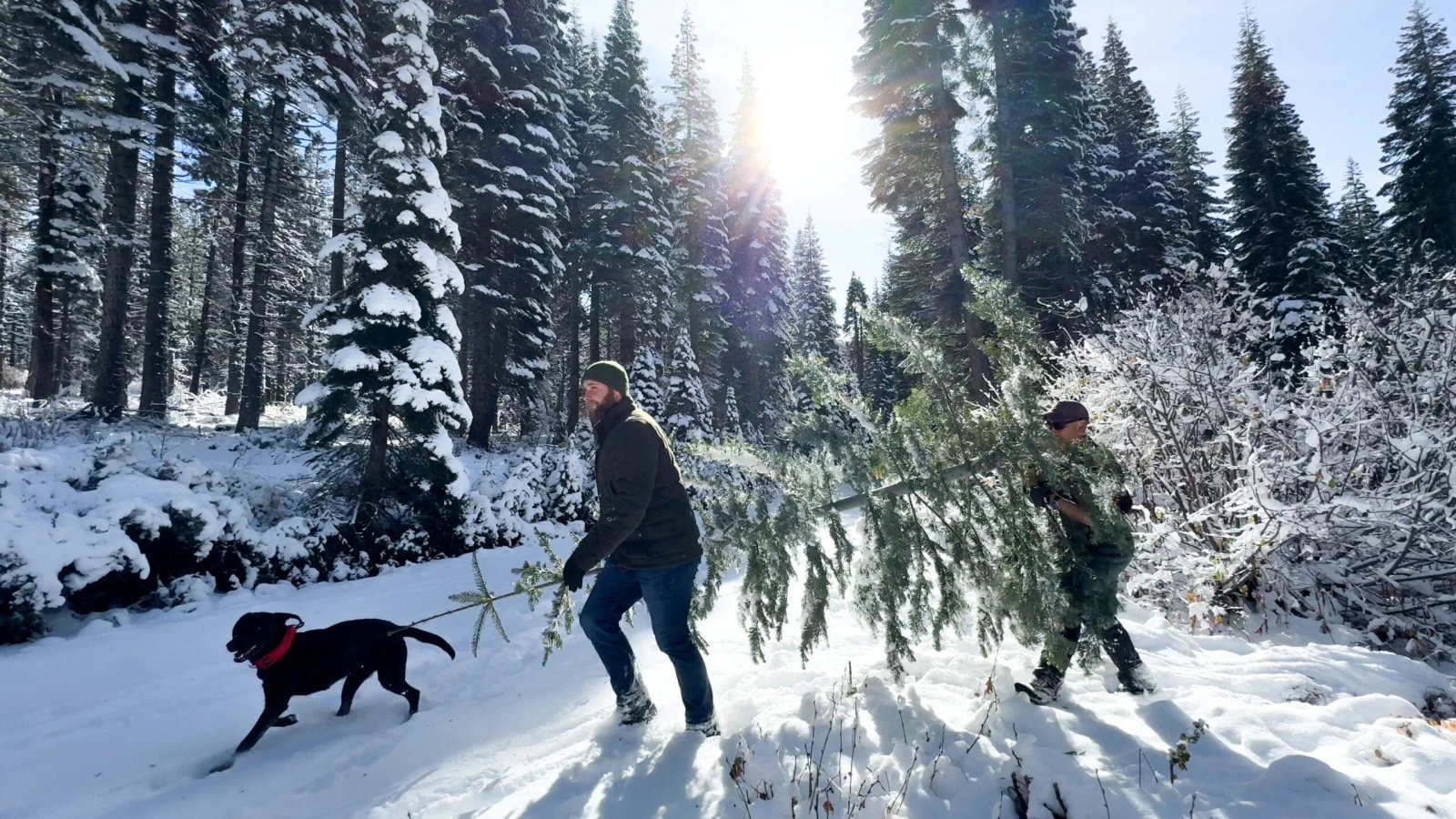
While you cannot simply waltz into any forest and begin chopping down trees, you can absolutely fulfill your dreams of being your own Clark Griswold this festive season. Instead of buying a tree from a lot in town, choose-and-cut Christmas tree farms and a special U.S. Forest Service permit program allow you to do as the name suggests: find your own tree and cut it down yourself.
These permits range from $5 to $20, and they’re as much of a win for the woods as for those wanting an authentic Clark Griswold experience.
“In the West, one of our biggest challenges is wildfire risk,” Marcus Selig, chief conservation officer for the National Forest Foundation, tells Outside. “When you’re cutting a Christmas tree [through this permit program], you’re cutting out the small trees that create what we call ladder fuel, so thinning out those little trees and allowing the big trees to have the resources they need to grow bigger and stronger and more fire resilient is good.”
Selig says this thinning out trees is something the National Forest Foundation and U.S. Forest Service spends thousands of dollars per-acre to accomplisheach year, so allowing people to cut Christmas trees helps that cause. Cutting down smaller trees can also help improve wildlife habitat and the other trees around it.
“With climate concerns, trees are more and more stressed as we go through droughts,” Selig explains. “Cutting out the small trees is like weeding a garden and means the big trees can do better.”
Some choose-and-cut farms also lean into sustainability using a regenerative farming method called coppicing, where a portion of the tree’s trunk and a branch or two are left after it’s cut down, stimulating new growth. A new tree can sprout up from the same trunk and can do so over and over again.
“We have a few stumps that you can see where they’ve been regrown at least nine times,” Christy Carico, farm manager at Crest Ranch Tree Farm in Santa Cruz, California, tells Outside. Carico refers to the method, one her family uses on their farm, as “stump culture.”

For your own choose-and-cut adventure, these eight spots have plenty of holiday cheer and even more fir, cypress, pine, and spruce Christmas trees, among other varieties, to choose from. Just double-check your ceiling heights before you head out, and check for any pesky stowaway squirrels before bringing your tree home.
U.S. Forest Service Christmas Tree Permit Program
Over 80 locations across the country.
Roughly 300,000 people participate in this true Clark Griswold experience—the U.S. Forest Service Christmas Tree Permit Program—each season, a program that requires you to trek into a national forest, choose and cut your tree with a hand saw, and haul it back to your car on your own.
Pay attention to the areas each forest has designated for this program, and select a tree that will help thin out the forest, not one that’s standing alone.
Selig recommends strapping the tree on top of your car with the trunk closest to the front windshield to get it home. That way, the wind will flow with the direction the branches are lying, reducing any potential for damage.
“It’s amazing what trees can take,” Selig says. “They’re made to withstand strong winds in the wild, so they’ll be all right.”
John T. Nieman Nursery
Hamilton, Ohio
What’s the best benefit of opting for a choose-and-cut Christmas tree? “You know exactly where your tree came from and know it’s fresh,” says Tim Nieman, COO for the John T. Nieman Nursery. “These trees will last way longer than a tree you buy at a lot that’s been pre-cut probably one or two months ago.”
About 5,000 families tromp through this choose-and-cut Christmas tree farm about 30 minutes north of Cincinnati during the holidays. You can fell your own tree or have one of the team members, likely one of the roughly 25 Nieman family members who help out for the season, do it.
There’s also a Hallmark-worthy Christmas shop on site, with free hot chocolate and cookies, a warm fire usually burning in the fireplace, and holiday items like wreaths and ornaments for sale.

Red Barn Tree Farm
Newland, North Carolina
Red Barn Tree Farm has 40 acres of Fraser fir Christmas trees and sits adjacent to Linville Falls Winery near Boone, North Carolina. The Wiseman family has owned the property since 1998 and has always operated a choose-and-cut farm on it. In 2012, they opened the winery’s tasting room.
“Our family joke is that we always encourage customers to pick their tree first before they visit the winery next door, or else their ceilings start getting taller,” says co-owner Lindsay Wiseman.
Hop on a hayride from the base of the farm up the hill to start your search. After choosing the perfect tannenbaum, their team will do the honors of cutting it down.
Shell’s Christmas Tree Farm
Tuscumbia, Alabama
Shell’s Christmas Tree Farm grows eight different tree varieties across 20 acres, including the blue ice cypress and Virginia pine, and has been selling trees for four decades. All of these species are able to grow in warmer weather as opposed to popular Christmas tree varieties like the Fraser fir, which need much cooler temperatures to thrive.
The farm typically doesn’t officially open until close to Thanksgiving, but eager customers can go ahead and visit to tag their dream tree before the season starts for a small fee.

Maple Row Farm
Easton, Connecticut
Maple Row Farm is a family-owned and run choose-and-cut farm that has been growing Christmas trees for over 100 years. Now, according to general manager and ninth-generation farmer Scott Edwards, the 250-acre farm has a “few hundred thousand trees” at any given time. They grow nine different varieties, from white spruce trees to Fraser fir and Norway spruce trees.
During the holiday season, the farm is as known for its tailgating as it is for its trees. It’s a quirky tradition that’s just as much a must-do for customers as is choosing their own tree. “People come and bring their neighborhood, or sports team, or friends,” Edwards says. “They’ll make food and usually bring a good selection of drinks as well. It’s different, but a cool thing.”
Spring Creek Growers
Magnolia, Texas
Choose-and-cut Christmas trees are only part of the allure of Spring Creek Growers, a southeast Texas family-owned farm. Plan on making a day trip out of it if you have little ones; the epic treehouse and hayrides are must-dos, and you can buy s’mores kits from the on-site bakery to make over one of their outdoor fire pits.
During the holidays, the farm offers experiences such as doughnuts with Santa[[,]]and Tinsel and Tackle, a fishing experience for the littles.
Everything is bigger in Texas, and the same goes for Spring Creek’s trees: this year, customers can find Christmas trees up to 13 feet tall to take home.

The Rocks Christmas Tree Farm
Bethlehem, New Hampshire
The Rocks Christmas Tree Farm sits on 1,400 acres that were gifted to the Society for the Protection of New Hampshire Forests in 1978, with the condition that the land always be used for crops. When Nigel Manley, senior outreach manager for The Rocks and a farmer himself, started working there in 1986, it was a dairy farm. But it transitioned to growing trees shortly after he arrived.
“We decided on choose-and-cut Christmas trees as the crop because it would bring people to a conserved property,” Manley says. They used to plant 7,000 new trees a year, but Manley says warmer and wetter conditions as a result of climate change have meant scaling back to just 2,000. Keeping the former scale would have meant needing extensive field drainage or building raised beds.
Any profits from tree sales go back into things like educational programs and conservation efforts for the society.
Crest Ranch Tree Farm
Santa Cruz, California
California’s oldest Christmas tree farm, Crest Ranch, has been operating since 1948 and has been owned by the same family all 70-plus years. It’s such a beloved part of the community that even in the wake of the devastating CZU Lightning Complex wildfire that swept through the Santa Cruz Mountains in 2020 and destroyed much of the property, people still came to buy their trees.
“We were about to throw in the towel,” Carico says, “but our customers pushed us through post-fire and came that year and bought burnt trees to show their support.”
The farm has started to recover, but there are still sections of their fields that will remain closed this season, limiting how many trees they’ll be able to sell. Post-fire, Carico and her team planted a host of Monterey fir trees, endemic to the area and a fast-growing variety, but customers will also find species like white firs and Arizona cypresses available.
Buttonwood Farm
Redmond, Washington
Washington is known as “The Evergreen State” due to its abundant forests, making it a natural spot for Christmas trees to shine. There are a number of national forests across the state, including Olympic, Gifford Pinchot, and Mount Baker-Snoqualmie, that offer Christmas tree permits if you’re feeling up for a walk in the woods.
If not, there is an abundance of U-pick farms, too. Buttonwood Farm says they are the state’s only 100 percent certified organic Christmas tree farm and that they don’t use any chemicals to manage the farm.
You can schedule an appointment to choose and cut your tree, but walk-ins are also welcome. For the ultimate experience, you can go to the farm, pick the perfect tree, and then have their team deliver it to your house.
