

Published April 1, 2026 03:16AM
In 1992, an anthropologist named Neil Whitehead arrived in the capital of Guyana, a small, heavily-forested country on the northern edge of South America. From there, he took another small plane from Georgetown to a village in the forest-covered Pakaraima mountains.
At the time, Whitehead was researching the archeology of a remote part of the country, near the borders of Venezuela and Brazil. He was working with the Walter Roth Museum of Anthropology to document the presence of urn burial sites.
The British academic had studied at the University of Oxford, and colleagues say he was a brilliant historical researcher. Decades of work convinced Whitehead that there were dense, wealthy societies in the region, as in the myth of the city of gold known as El Dorado. This vision challenged 1980s anthropological beliefs, but in 1990, freelance gold miners brought a gold chest pendant called the “Mazaruni pectoral” into the Walter Roth Museum. It had been dredged from the bottom of a river, and the design didn’t belong to any known metalworking tradition.
Whitehead suspected the pectoral had been produced by a large civilization, on the so-called Guiana Shield, a geological region in South America that spans Guyana and the surrounding countries. He believed that urn burial sites indicated signs of a more complex, settled civilization. So he set out to search the area where the lost city might have been. But soon after he arrived in the village of Paramakatoi, he was interviewing a nurse, who told him what he should really be investigating: kanaima.
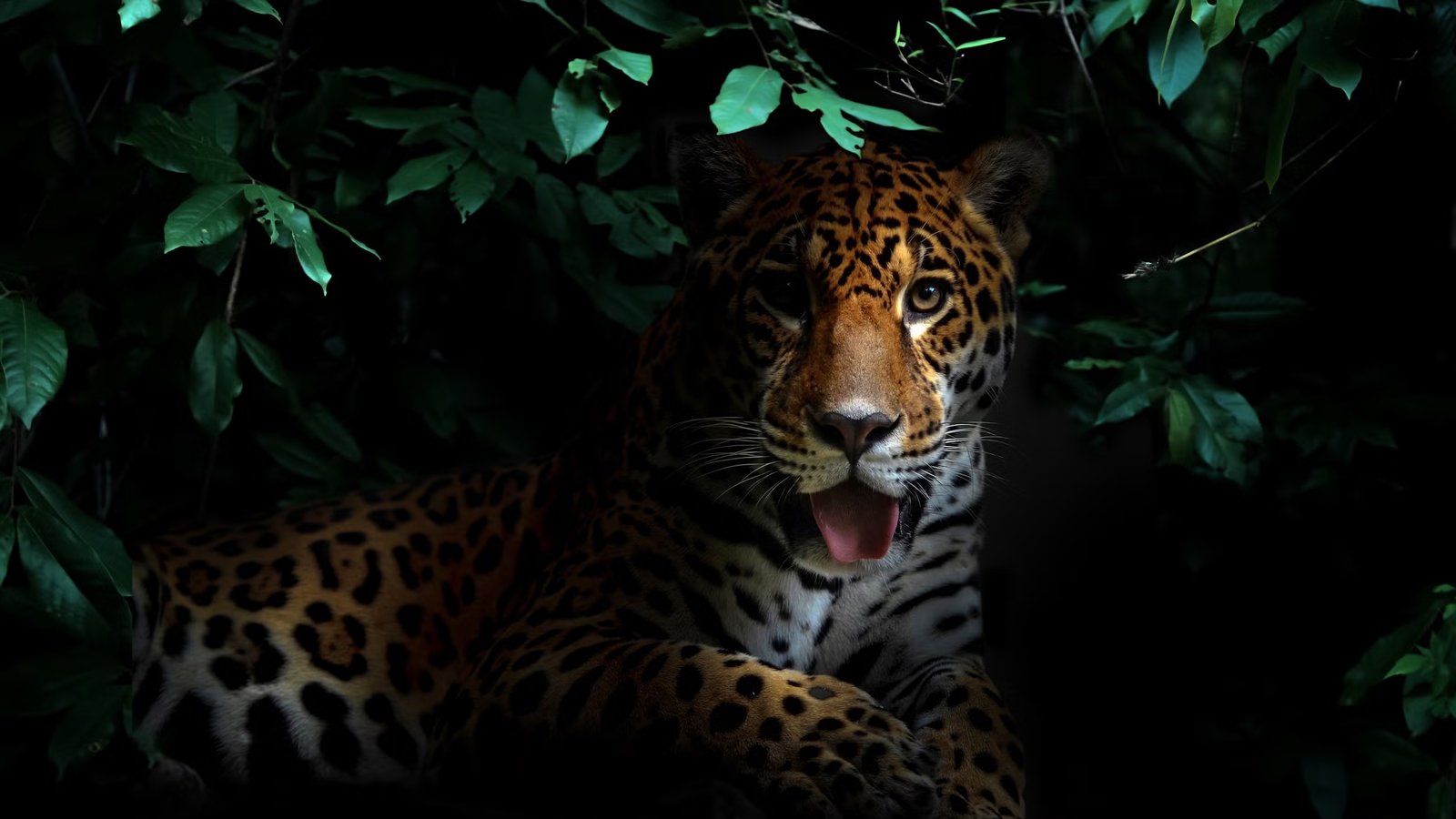
Kanaima was the name given to people with strange powers and stranger rituals in northwestern Guyana, eastern Venezuela, and south into Brazil. They were said to transform into jaguars or anteaters. They could travel instantly over vast distances. And they were much-feared because they were known to attack lone victims as they walked through the forest. Considered by some to be “dark shamans,” kanaima emerged from a wider landscape of “assault sorcery” that stretches across Amazonia. But there were also aspects of kanaima–such as the role certain plants play–unique to the region.
There are many ways of becoming ill in Guyana, but the nurse in Paramakatoi told Whitehead these victims had telltale signs of a kanaima attack: swollen tongues and faces, with distinctive bruise marks on their bodies. They suffered from fever, diarrhea, and, on closer inspection, their anus had been opened and the muscles stripped with the tail of an iguana, or an “armadillo,” so they would pass a “blood-stained liquid.”
The nurse said she had seen between 20 and 25 such cases during her 30 years.
This was intriguing to the anthropologist, who was planning to trek through the mountains for six to eight weeks to a village where he would catch another flight back to the capital. Nonetheless, he set out. Not far out of Paramakatoi, they hiked into a valley, which had a cave with what he suspected might be a burial urn.
When they entered the cave, Whitehead was disappointed to find the burial vessel was too small to contain a full set of human remains. Near it was a small offering bowl. None of the local Patamunas in the group would touch the vessels. But Whitehead’s Lokono companion, an archaeologist, moved them around so Whitehead could photograph it. The larger pot contained “human skeletal and tissue material,” Whitehead later wrote, of which he took a sample.
After they exited the cave, some of the group insisted they stop by the nearby home of a man to whom those pots belonged, who Whitehead refers to as “Pirai.” When they called on him, he grew “very excited and upset.” Although he didn’t know the language, as they spoke, Whitehead heard the word “kanaima” uttered several times. He later was told that Pirai was “the principal kanaima in Paramakatoi,” and the bones were presumed to be from one of his victims.
After that, the group returned to the village.
That night, Whitehead was staying at a boarding school. A woman came to make dinner for him and his archaeologist companion. She spoke little English, but Whitehead heard her say the word “kanaima,” even though he hadn’t mentioned it. The food she prepared, he wrote, was “execrable,” and within a few minutes of eating, he felt ill, developed a high fever, and vomited all night.
“Thinking that my illness was a reaction to some form of food poisoning,” he wrote, “I ignored my physical state as well as I could.” The next day, however, someone told him letting the woman cook for them was “a stupid thing to do.” Then they asked, “Don’t you know she lives by Pirai?’’
After that, Whitehead started to suspect poisoning of his food, rather than by it.
Despite his illness, the group set out on their planned trek. Yet as the day went on, Whitehead got sicker and sicker, until he collapsed near the summit of a mountain with severe retching and stomach cramps and had to be carried the rest of the way up. The group had planned to be in the village of Taruka in one day and at Monkey Mountain (another 20 miles) in a day or two more. Now they were forced to camp and were nearly out of food. When they set Whitehead down, he wept.
The next morning, they pressed on for Taruka. At one point, the group stopped at a creek to drink. Just then, Pirai and two young acolytes appeared on the trail behind them. The old man made eye contact with everyone, but didn’t respond to either greetings or insults. Then he and his followers continued on the trail, walking ahead of the group.
That evening, Whitehead and his companions made it to Taruka, but no one in the village would sell them food. That night, he had constant diarrhea and nausea and was barely able to walk. When he stumbled outside to relieve himself, he saw two figures low to the ground. At first he thought these were dogs, but realized they were anteaters.
The next morning, the group managed to get a few eggs and some dried meat. They also located a horse, which Whitehead rode as they set off on the long journey to Monkey Mountain, arriving early the following morning. Once there, they were finally able to buy more food and find a place to stay.
After they had settled in, Whitehead was resting when one of Pirai’s followers they’d encountered on the trail appeared in his doorway. At first he was silent, but eventually started speaking in Patamuna, which Whitehead could not understand. When his companions returned and shouted at the teen, the youth ran away.
Whitehead began to worry that he was putting the whole group in danger, so they used a police radio to call a bush pilot, who landed and flew Whitehead and one friend out.
Once in Georgetown, he wrote that he felt better, “with only intermittent fever, vomiting, and diarrhea.” But a few days later he started urinating blood. His friend, who was Amerindian (the Guyanese term for Indigenous people), suggested he “fight fire with fire.” So Whitehead stepped out of the world he knew and into another. He found someone who knew bush medicine.
“I swallowed what I was given,” he wrote. “I stopped passing blood.”
I first heard mention of kanaima in 2011, when I went to Guyana with a group of travel writers and tour guides. We were there because the government was trying to promote eco-tourism. One day near the Brazilian border, we took an overnight trek into the Kanuku Mountains. Walking through the forest, we were surrounded by the eerie calls of bellbirds and the cries of screaming pihas. I had heard someone mention “kanaima” in this area. Our guide was a Makushi man from a nearby village named Guy Fredericks. He was large with an even larger personality. He was by turns irreverent and hilarious. But he also had a deep knowledge of the forest, so I asked him what it was. He grew serious.
“Kanaima will tear your stomach out,” he said.
“But what are they?” I asked.
“Some people say they are the ones who ran away during the tribal wars,” he added. “You don’t want to meet them.”
“And what if you do?”
“There is some prayer an elder can say for you.”
“What if they don’t?”
“They can kill you. Or they will track you down and kill one of your family—even your son or daughter.”
The subject dropped, but I couldn’t stop thinking about it. Was this kanaima a real thing, or just a story to keep kids from wandering into the forest? What did it mean to “tear your stomach out?” And why would they want to kill me or my family?
By that point, I’d spent much of my adult life, and my writing career, crossing the boundaries of the worlds that people weave around themselves. I was fascinated with how complete these can be, how iron-clad their logic and how compelling their stories. And I was struck, in some cases, by how devastating the consequences of living in them can be. I wrote a book about this in 2016, called The Geography of Madness, which explored everything from magical penis theft in Nigeria, to “wind sickness” in Cambodia to communicable back pain in Germany.
These all emerge from a set of stories and beliefs, and cannot be understood unless you know those narratives. But this world of the kanaima was one I couldn’t quite wrap my mind around. What were the forces at work here? What were the rules? What were the stories? I couldn’t begin to fathom a place from which such a figure might emerge.
After I got home, I read everything I could find on kanaima. But aside from Neil Whitehead’s book, Dark Shamans: Kanaima and the Poetics of Violent Death, which had been published in 2002, I couldn’t find much. Desrey Fox, a Guyanese linguist and former Minister of Education, had done her master’s thesis on kanaima at the University of Kent. But I couldn’t find it, and Fox had died in a car crash in 2009. The eminent anthropologist Audrey Butt Colson had written a chapter titled “Itoto (Kanaima) as Death and Anti-Structure,” in a 2001 anthology which was co-edited by Whitehead, and in which he also had a chapter on kanaima. And there was a 2004 anthology Whitehead co-edited called In Darkness and Secrecy: The Anthropology of Assault Sorcery and Witchcraft in Amazonia. The collection mentioned kanaima in passing but didn’t dwell on it.
The literature, in other words, was not vast, and most of it was written by Whitehead, who lived and taught in Madison, Wisconsin. By the time I felt sufficiently prepared to interview him, I made an alarming discovery: he had died on March 22, 2012, at age 56.
It was reported in obituaries that he died “following a bout with illness” and “from a sudden illness.” But it later emerged that he had “a rare form of renal cancer, which was not curable,” and also that he died of “liver cancer.”
Whatever that illness was, Whitehead largely kept it a secret. Friends, students, and colleagues were shocked by the news. Later, I would find out why.
I looked for other experts on kanaima, but couldn’t find any. I did reach George Mentore, a Guyanese anthropologist who had known Whitehead. He told me most of the experts who’d written about kanaima had died, which seemed slightly ominous. I wanted to know about going to research it myself.
“Is it dangerous?” I asked.
“Yes,” he said, “It is very dangerous. I mean Neil, as you read, got himself in a real pickle.”
Dangerous or not, I knew that if I wanted to learn more about kanaima, I would have to go back to Guyana.
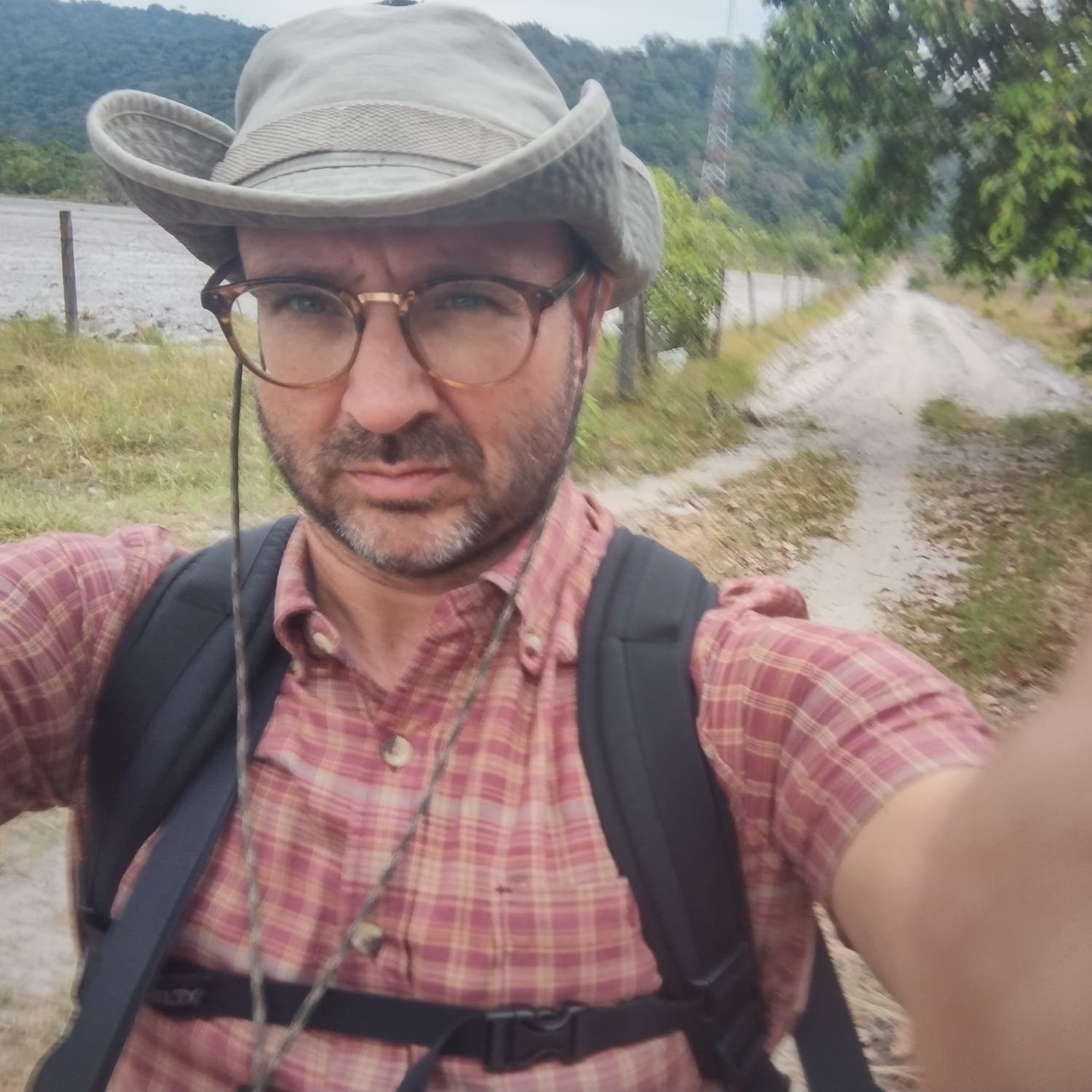
It was October of 2023 before I was finally able to return. By then, Guyana had changed. The first time I visited, the country had a shrinking population of around 750,000 people, with at least as many Guyanese living outside the country as in it. Crime was rife in the capital Georgetown (our previous group of travel writers watched a woman get beaten over a stolen bicycle), and the country’s best-known export was Jonestown. In 2011, ecotourism and mining had seemed like its best bets.
Then in 2015, huge offshore oil reserves were discovered, followed by more in the subsequent years. The economy, which had historically been one of the most stagnant in the world, suddenly became one of the fastest-growing. This change was easy to see when I landed around midnight: the airport was now completely rebuilt and had functioning luggage carousels. I got a taxi, and on the drive into town, the darkened streets were jammed with trucks hauling in sand for Georgetown’s construction boom. Along the way, my driver proudly pointed out a brand-new Ford dealership, and he informed me that 10,000 new cars were on the road every three months.
Guyana wasn’t quite Dubai yet. The British government still advised that “crime levels are significant, and police capacity is low” in Guyana, while the U.S. Department of State in 2023 ranked Guyana at Level 3, meaning “Reconsider Travel.” It added that “Violent crime, including murder and armed robbery, is common, especially at night.” One anthropologist I’d spoken to had a switchblade pulled on him in broad daylight a few years earlier.
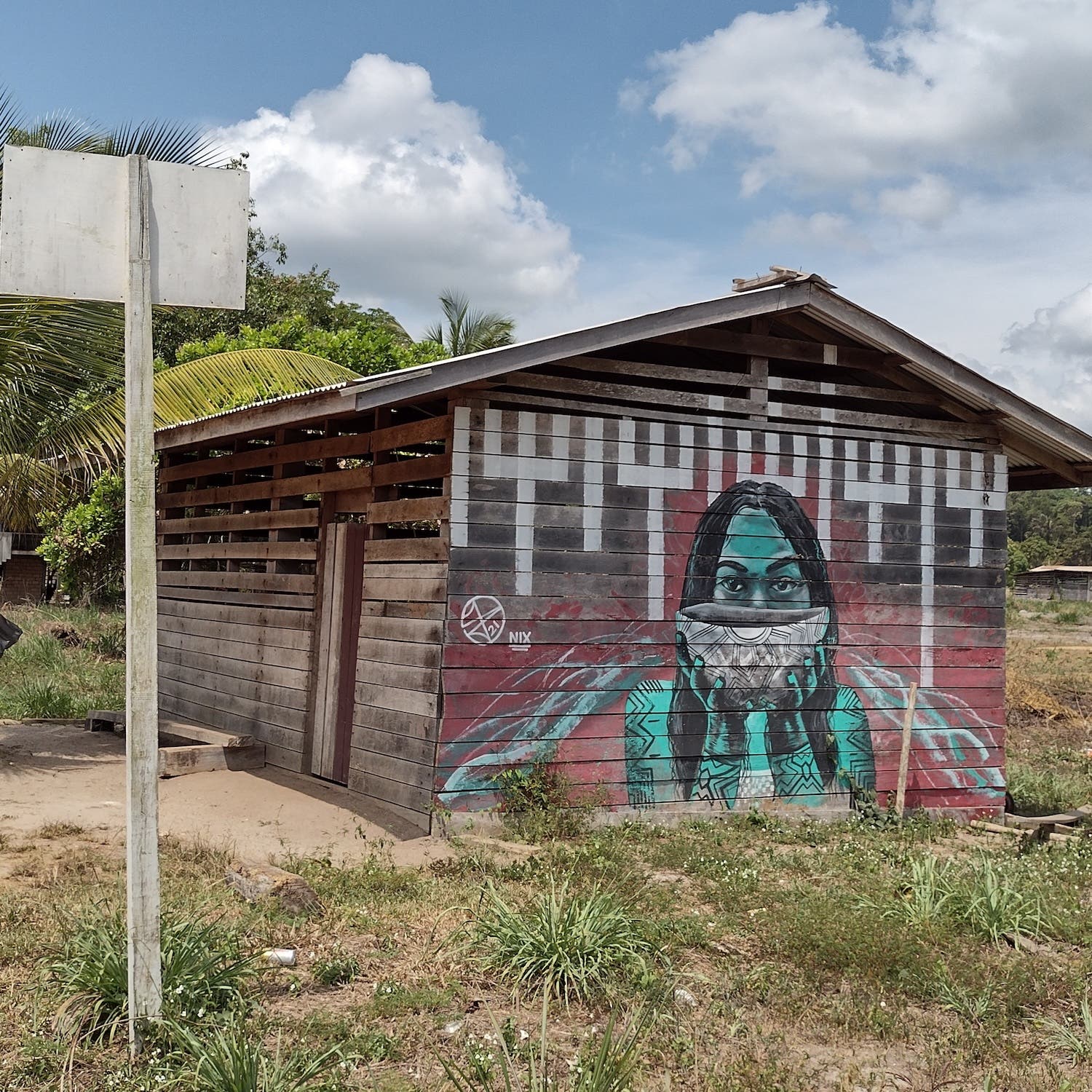
So the morning after I arrived, I taxied over to the Walter Roth Museum, which was housed in a dilapidated, three-story home dating to the late 1800s. The building was covered in two different shades of beige paint and had several broken windows. In the heat and humidity, it exuded an air of lost Conradian grandeur. I was the only visitor.
Inside, the museum was filled with static displays and hokey dioramas of headdresses, hair tubes, dugout canoes, blowpipes, and objects described as being of “unknown lithic origin.” When I climbed up to the second floor, a curator greeted me.
“Do you want to do the tour?” she asked.
“Sure,” I said.
She proceeded to lead me around the room, explaining various aspects of Amerindian life. She pointed to a long mesh basket that was used to press cyanide out of cassava plants. Then we came to a glass case with a round clay pot. There was a coiled snake adorning the rim.
“This,” she said, “is the kanaima pot.”
“What’s a kanaima?” I asked, innocently.
“If you do something wrong in this Amerindian tribe,” she explained, “the kanaima will judge you. They also have certain chants that will allow them to turn into any kind of animal.”
“Like a jaguar?”
“Yes, any kind.”
“Is it real?”
“Yes, but I don’t know if they still practice it like before.”
“What do they put in the pot?”
“Each [Amerindian] nation has their own way of chanting and doing their stuff. They would do a chant with whatever they would put inside.”
“But what would they put inside?
“If you talk to an Indigenous person,” she said, “they might be able to tell you more about it.”
I thanked her and left the museum. It was a glimpse into the world of kanaima, but only that. I couldn’t tell if the curator didn’t know, or didn’t want to say, what would be placed in the pot. But I guessed it was the same thing Whitehead had removed from the cave: in Dark Shamans he wrote, “Professor Henry Bunn examined the bone material, which he judged to be that of a female approximately 16 years old.”
In 1995, Whitehead returned to Guyana. This time, he took “oral histories” in Paramakatoi. He interviewed piaimen, the healing shamans, about kanaima. He even claimed to have talked to “a powerful kanaima.”
“The older kanaimas were much more intimidating,” Whitehead wrote, “less given to freely explaining their motives or procedures, and physically wasted in appearance.” He also sought out alleged kanaimas elsewhere, though, he said, “None of these individuals would admit to any specific incidence of violence, but most were grimly keen to ‘educate’ me in generalities.”
Death by kanaima, according to his research (and corroborated by other accounts), was said to happen like this: During the night, either at your home or in the forest, you will hear the distinct whistle or call of the kanaima. Some say it sounds like a bat, others like a bird. But it also sounds like a person imitating those animals.
If you hear this sound, it means you have been marked. On the side of the trail, you may see a leaf moving wildly on an otherwise still plant. Whitehead saw leaves moving twice.
This is the “period of stalking,” which can last months or years. During this time, you can be attacked. In some cases, your shoulder will be dislocated by the assailant. In other cases, your finger bones will be broken. Your neck may also be injured. But you will live.
Then, when the kanaima have deemed you to be ready, they will find you when you are alone and strike from behind.
Either while you are unconscious or restrained, a snake fang will be used to pierce your tongue, causing it to swell. An armadillo tail, an iguana tail, or a forked stick will be inserted into your anus. Your intestines are then pulled out, tied in a knot, and pushed back inside with the leaves of a certain plant to help sweeten the body for what’s to come. Occasionally, your genitals will be cut off.
Once you regain consciousness, you will stumble back to the village with either no memory of the attack or no ability to tell anyone what happened due to your swollen tongue.
For roughly three days, you will lie in a hammock. Then you will die.
After the burial (usually another three days), when the kanaima judges your interred body has become sufficiently “sweet,” he and his acolytes will come to the grave at night. They will insert a tube, or a stick, into your bloated stomach, from which they will extract a substance and consume it.
The exact nature of this substance, and the reasons for consuming it, are secret and in dispute. Accounts differ, but many agree it has a powerful magical quality.
As Whitehead went on conducting his interviews, things in the village grew tense.
“[T]he atmosphere in Paramakatoi,” he wrote, “began to intensify as more people learned that we had been ‘troubling’ kanaima and, worst of all, had recovered some ritual paraphernalia used by a killer…As a result, I received a very alarming note from Waiking [Whitehead’s main local contact] warning me off further investigation of the topic, and withdrawing his hitherto vital assistance and protection.”
Whitehead began to get warnings that he had “gone too far.” At the time, he was staying alone in a concrete building next to the clinic in Paramakatoi. It had locking shutters and a strong lock on the door.
“Each night,” he wrote, “I would clearly hear the approach of one person, maybe more, followed by the sound of a deliberate scratching at the doorframe and windows. I would call out, but receive no reply. Then, once again, I would hear scratching that moved in a circle around the building, ending back at the doorway each time. I might have taken this as a (not very funny) prank by the young men had it not been that on each occasion, I found afterward a yamali-wok (coral snake) somewhere in the house.”
Word then reached the village that a powerful kanaima named Bishop had left his home five days earlier for Paramakatoi. The village chief warned Whitehead that “bad things were happening.” At night he started to get high fevers, which he felt was connected to the presence of Bishop. So he left and flew back to the U.S.
The fevers continued for two months before doctors discovered he had contracted hepatitis C.
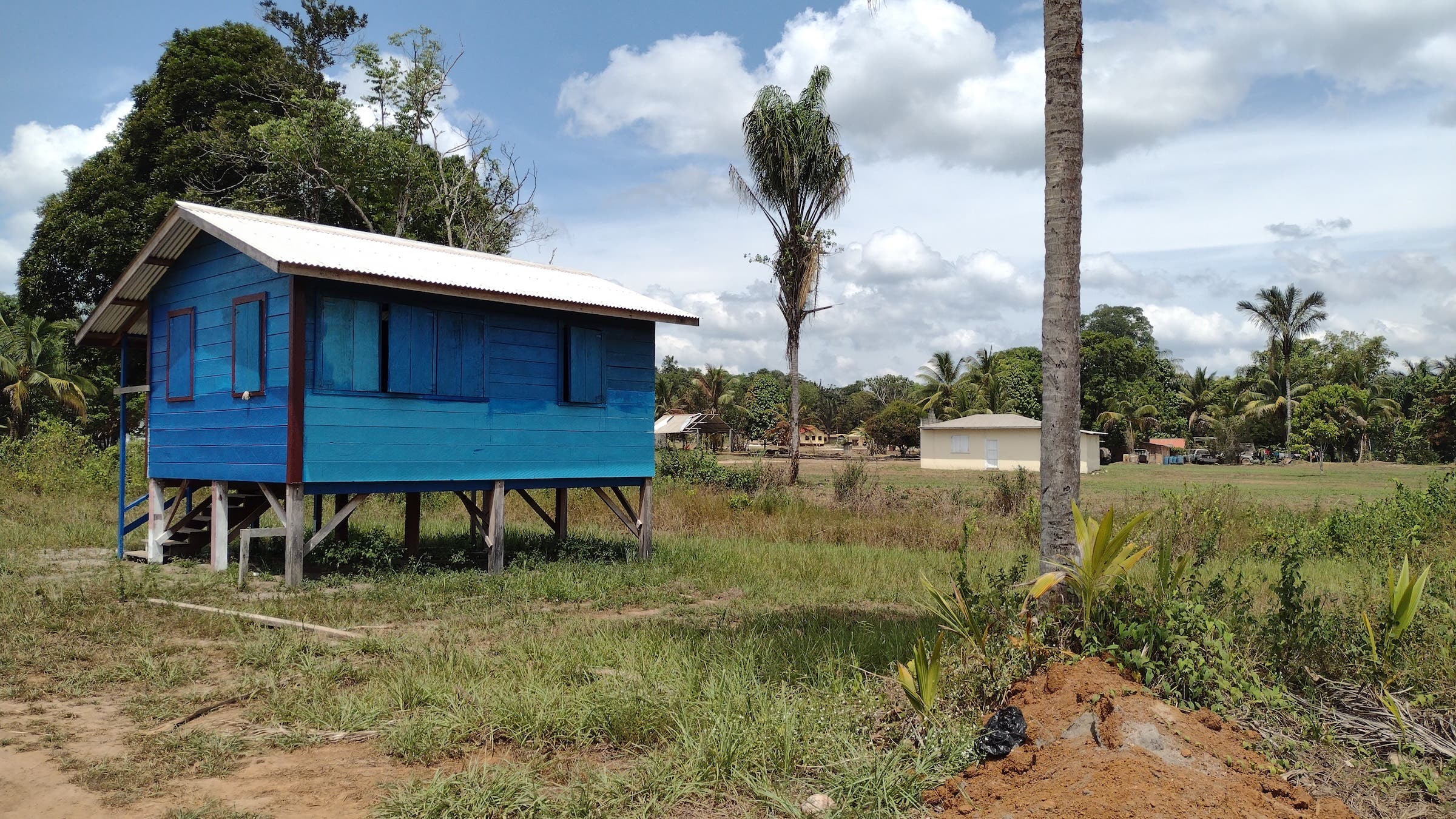
The Guyanese capital of Georgetown sits on the coast of the Atlantic Ocean, not far from the Caribbean. One evening, I climbed into a minibus that was going south to the interior. We drove through the night, into the forest, stopping only for fuel and police checkpoints. Early the next morning, we rolled onto a rickety ferry to cross the wide Essequibo River.
On the other bank, I caught a ride to the nearby Iwokrama River Lodge and Research Centre. I had been here once before and remembered it fondly. It was founded in the mid-1990s as a rainforest preserve and an outpost to research sustainable forestry, tourism, and science.
Today, it’s half academic field station and half ecotourism hub. The grounds are immaculate. That evening, I went to the open-air dining hall that looked out on the river. Sitting on the veranda in the growing dark, I felt like I’d stepped back in time 100 years.
In the morning, I woke up to the roar of howler monkeys in the forest. Then I walked over to the main lodge to meet my guide for a “nature walk.” Since talking about kanaima can put a person at risk, I’ll call him Simon. We walked across the compound together and passed through a small opening in the trees.
The forest was thick and overwhelming. As we moved deeper into it, the sounds of the jungle grew louder. Simon stopped, bent down, and pointed to the dirt.
“Look,” he said. “There’s the track of an agouti.”
We walked on and talked. Simon was a small man with a friendly demeanor. He came from a village deeper in the interior on the Rupununi River. We figured out that he had actually been working at his village ecolodge a decade earlier when I visited with the travel writers. (We drank all the beer they had.) This time, I broached my subject gently.
“The last time I was here,” I said, “I heard about a man in the forest who can tear your stomach out? Do you know about that?”
“Oh, kanaima?” Simon said. “Yes, they come mostly from the mountain people, in the north Pakaraimas. It’s a tradition to them. They pass it on from generation to generation. I don’t know if it’s fun for them, killing your own family, or what.”
On the side of the path, I saw a leaf moving violently back and forth.
“They do that?” I asked.
“Yes.”
“And that’s for real?”
“Yes,” he said, “It’s for real. Let’s say you’re walking on this trail just by yourself. And you will start to hear some noise, a noise you never heard before. That’s how you know there are kanaimas around.”
“A specific noise?”
“Yes, a whistling. These kanaimas would come within ten feet from you, but you wouldn’t see them. You would only see, like, a small bush moving. That’s how you know they marked you. Then you start to get fever, headache, diarrhea. And you now become very weak, and weak, and weak. And when they know you can’t fight back, that is when they come. And then, done with you.
“Sounds dangerous.”
“Yeah, very dangerous.”
“Is it dying out at all? Or is it still around?”
“It’s still around! One week ago in my village, before I came back to work, they had a death. The kanaima people killed the person.”
Simon stopped suddenly. A branch lay across the path. He looked up into the trees. Then he kneeled down and looked at the branch.
“This is a sign,” he said.
“Of kanaima?” I felt a jolt of fear.
“Yes,” he said. “I was here one hour ago with guests, and this trail was clean. If you look up, you don’t see where a branch broke from the top of the tree. No break. That is how they start tricking you. My grandfather said if you move this, they are encouraging you to come back by yourself. He always told me to just leave it there.”
“What’s the purpose of their killing?”
“They say it is to strengthen them. If they kill a person, they will become more…scientific, I would say.”
“But you have to be alone, right?”
“Yes, you have to be alone.”
We walked on together.
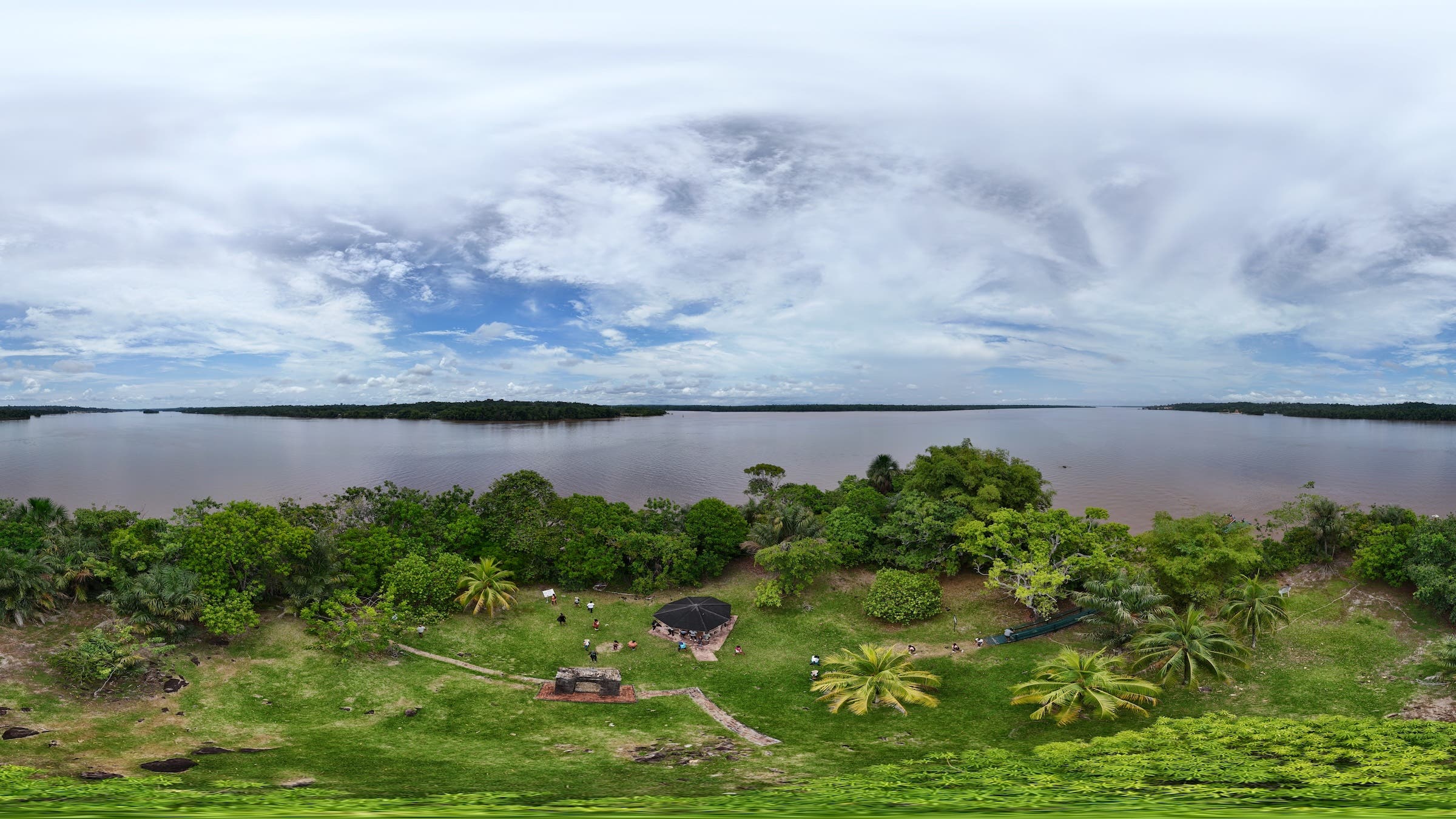
A few nights later, I was staying at a lodge further south when I woke up covered in sweat, shivering from cold. My mosquito net felt like a heat tent. Overhead, a ceiling fan circled, but I couldn’t feel the wind. A wave of nausea washed over me. I ran to the bathroom and vomited. Then I felt a rumble in my bowels and sat on the toilet just in time.
Back in bed, I tried to be rational. It was probably just food poisoning.
Neil Whitehead also thought he had food poisoning.
I went over my meals. I thought I’d been careful. Almost everything I’d eaten had been at buffets with other people. It had all been pretty tasty—nothing execrable. But the world of the kanaima was alive here. I could feel it pulling me in.
The nausea came in waves, and so did the fear.
This was new. In the past when I’d crossed these kinds of borders, I knew I was just a visitor, an interloper. While part of me was drawn to the gravity of the stories, part of me remained firmly behind. I’d felt the beginnings of fear, but only the beginnings. I’d had glimmers of belief, but could still see the stories from a distance.
This was different. The force was stronger. The world of the kanaima felt closer.
Between trips to the bathroom, I drifted in and out of sleep. When I was awake, I thought about the leaf waving on the side of the path I walked with Simon. I thought about the branch lying on the trail.
I thought of George Mentore’s warning. I thought of the stories. My mind followed the threads and was drawn inexorably toward something dark. The fear was catching. The specter of kanaima loomed over me, like a voice whispering in my ear. It said: “Someone did this to you.”
In the morning, however, I felt a little better. All that day, I laid in my room recovering. I tried to eat once, but vomited again. By evening, I was clearly on the mend.
The next day, feeling foolish, I packed my things and continued south.
Whitehead returned to Guyana once more in 1997. He hoped to re-interview people he had talked to in 1995 since, “there were many aspects to kanaimà magic and ritual that remained obscure.” But he found that, “support for this had waned, and those who had previously supported the research were now quite hostile to me.” Some even suspected Whitehead of trying to become a kanaima.
“Given these obstacles,” he wrote, “the opportunity to interview kanaimàs further seemed unlikely, if not foolish.” Instead, he spent his time researching another branch of Patamuna spirituality.
After leaving the country for the last time, he was contacted by Terry Roopnaraine, a UK-born anthropologist whose family is from Guyana. The two had met in England before Whitehead’s first visit and became friends. At the time, Roopnaraine was doing research into the social and economic implications of palm heart extraction in the far northwest. Whitehead asked him to make some inquiries about kanaima there, so he did.
Roopnaraine was told stories about kanaima and their victims. But before long, things got spooky. He had identical nightmares three nights in a row. His hair would stand on end at random. Now and then, for no reason, he would burst into tears.
“I struggle with some aspects of it,” Roopnaraine told me when I contacted him years later at his home in Spain, “But it’s certainly a concept that can invade your head. You’ve got your Western self pulling you in one direction, and the ethnographic reality around you pulling you in another.”
Something similar had happened to Whitehead. When he came back from Guyana, he told his wife there were kanaima in the U.S., and that they even worked at a local big box home-improvement store, according to an interview with his wife published in a 2025 anthology called Sorcery in Amazonia, A Comparative Exploration of Magical Assault. She said that even back home, years later, he was still afraid of kanaima.
“Neil told me he felt he’d been affected in some permanent way by his engagement with kanaima,” Roopnaraine said, “but that was before he got sick. So when he died, I couldn’t help but think of the story of the cave.”
Whitehead also thought of this. I talked to the anthropologist R. Brian Ferguson, who co-edited an anthology with Whitehead, and who remained a close friend.
“I feel comfortable,” Ferguson told me, “in saying that Neil believed that the physical illness he had was the result of kanaima doing things.”
I tried to interview several of Whitehead’s close associates about this, but very few of them would talk to me. They would agree to an interview, then disappear, or simply never respond. Some, like his former graduate student, Tarryl Janik, didn’t respond after questions were emailed, as requested.
In various remembrances and profiles, he was described as charismatic, brilliant, a polymath, as well as being “a transgressive figure,” who wrote about “crossing borders and violating boundaries.” But I’ve never had so much trouble getting people to talk about someone, especially a person who they ostensibly liked and who’d been dead more than a decade. Scrolling through the databases at a local university library, I did find Janik’s Master’s thesis, which included an interview he did with Whitehead in 2012. In it, Janik asked the anthropologist if he would do it all over again.
Whitehead answered: “Not if I had realized the way it always stays with you.…They put something in me and I’ve never been able to get it out. And I’ve had long conversations with people in Guyana about what to do. Well, there’s really nothing to be done…I can’t get back ever, to who I was before that.”
Two weeks after that interview, he was dead.
In Dark Shamans, Whitehead wrote that, “Kanaima has become pervasive in part because it offers thanatology, a means of giving meaning to death.”
Perhaps even his own.
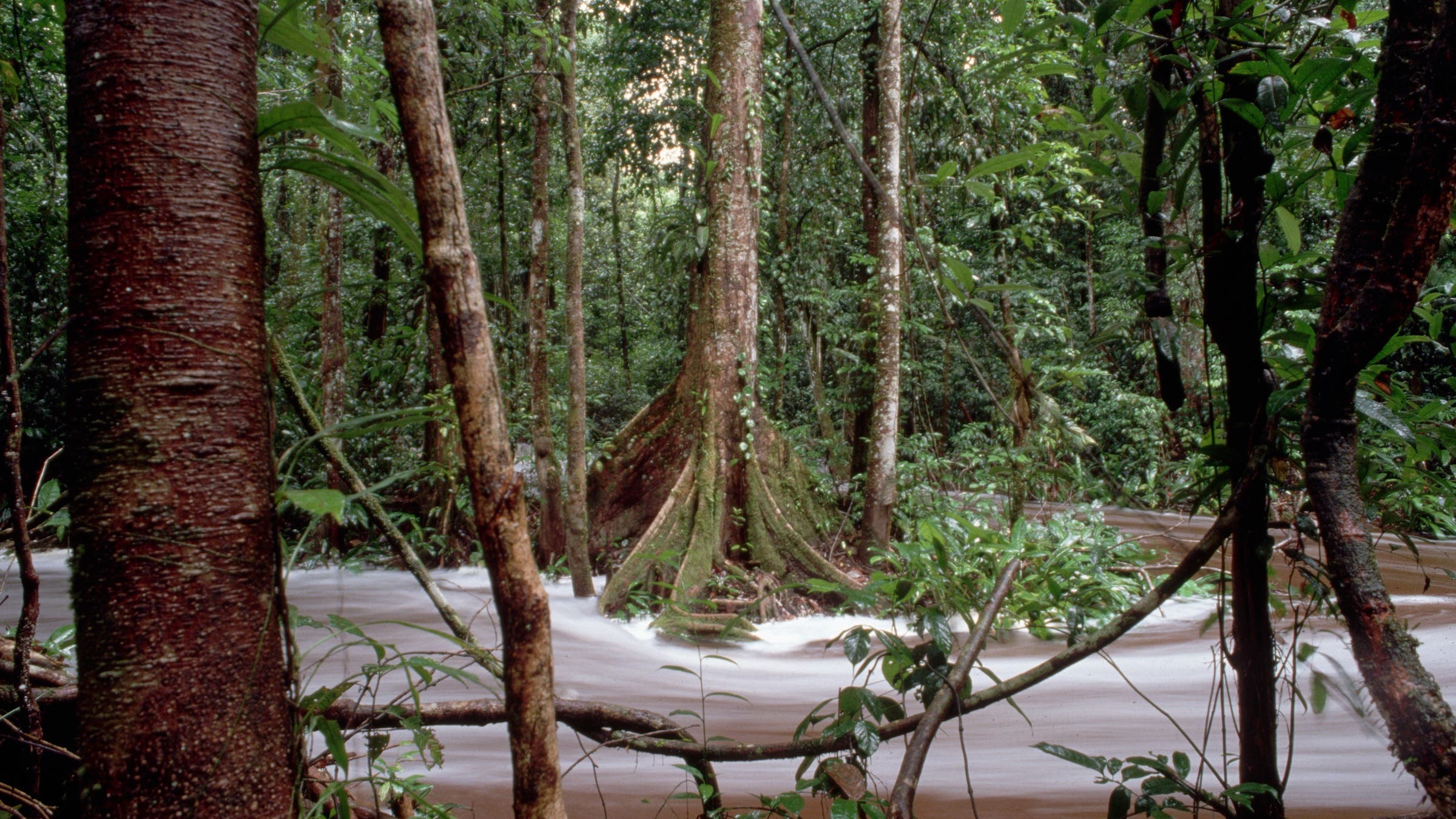
Once I had recovered, I packed my things and went out to the highway to catch a minibus south. I was heading to the town of Lethem, near the border of Brazil. I had managed to track down Guy Fredericks, the guide who had told me about kanaima all those years ago. He agreed to find a place for me to stay and to make some inquiries.
We arrived in Lethem that afternoon. Most of the passengers had left by the time Guy arrived. After more than a decade, I almost didn’t recognize him. I would learn that he’d been through a lot since we last met: he’d been elected as village chief, but then his wife had died of cancer, which sent him into a spiral of depression and drinking, from which he had only recently emerged. But I could see he was still funny, warm, and sharp.
“Tomorrow,” he told me, “we’ll do some interviews.”
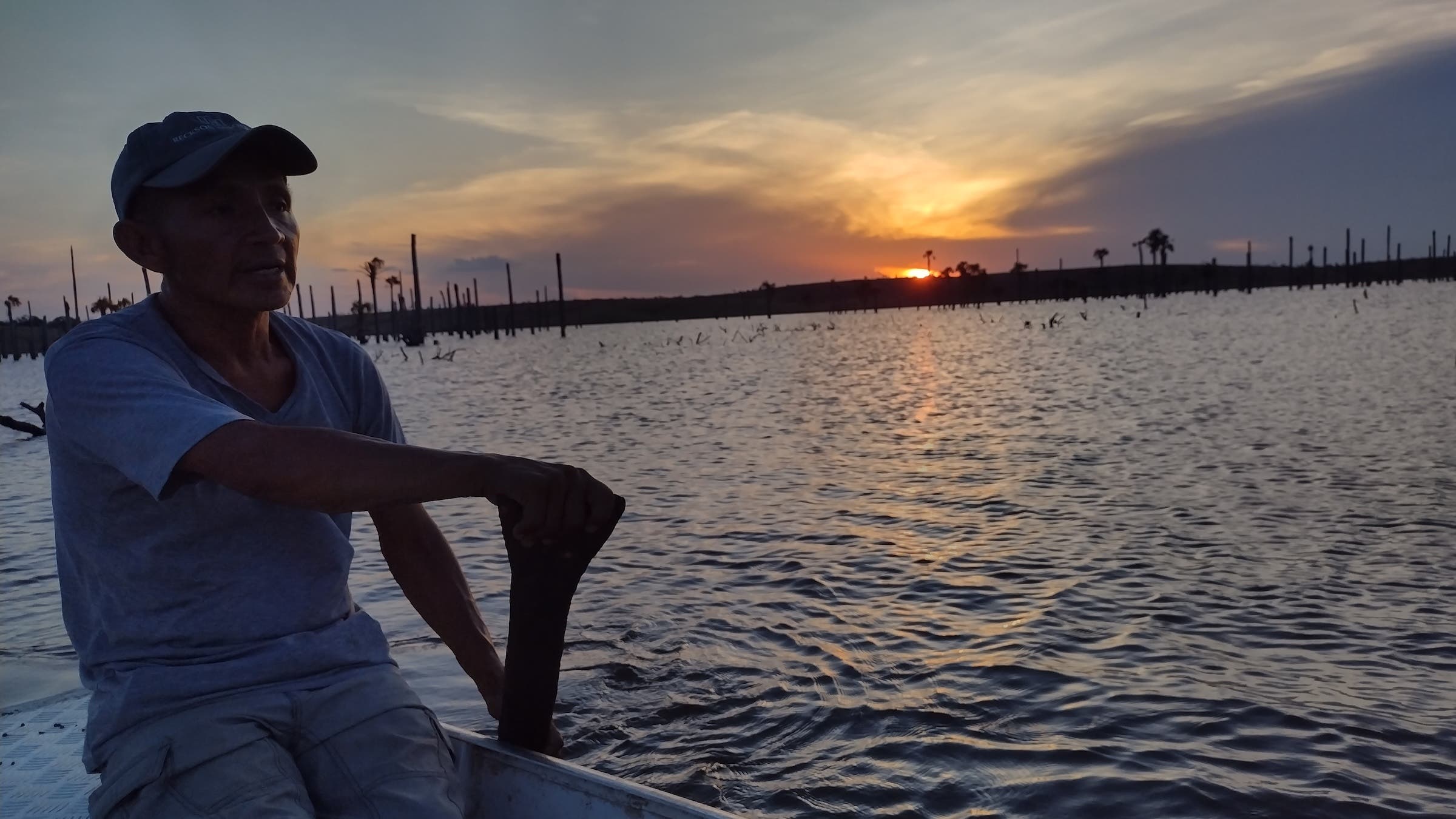
I climbed on the back of his motorcycle, and we rode out to his village in the shadow of the Kanuku Mountains. There we met his brother Egy, and we all went for an evening boat ride on a local reservoir. At sunset, huge flocks of red-bellied macaws circled the lake, then settled in the palm trees.
Back at Guy’s house, the village was quiet. The sun went down, and the mountains grew dark against the sky. We sat outside under a cashew tree, where we ate dinner and drank watery Brazilian beer.
Guy said he’d been asking around and had a few people in mind we could talk to. There were no true piaimen (the healing shamans) left in the village. These “leaf beating” shamans were all gone. There were, however, a few elders who knew the sacred chants. They also knew how to deal with kanaimas.
We talked about the particular plants that kanaima use to travel over vast distances. It was not unusual to find plants that were said to have magical qualities. Many of these plants were also believed to have souls. These were plants with power, called bina. These were plants with agency.
“We actually have plants that are guardians,” Guy explained. “My granny used to raise certain key plants for security. But you have to feed them on a daily basis. If you do not take care of them, they will turn on you. They can even kill you.”
“Really?” I asked.
“Yes,” he said. “One day, Granny was taken by some unknown people. When her family went looking for her, she was way out in the yard, shouting for help. They said, ‘What happened?’ And she said, ‘Some little men just pulled me outside.’ These men—these are the plants—they took her and pushed leaves up her anus, because she was not feeding them properly.”
He paused to let the gravity of that sink in.
“The power of plants,” said Egy, shaking his head.
“Bina plants are serious plants,” Guy said.
The next day, we climbed on Guy’s motorcycle and rode across the village to meet an elder named Uncle Harry. After Guy was bitten by a rattlesnake on his toe, Uncle Harry used healing songs to cure him. (The hospital was out of antivenom.)
Outside Uncle Harry’s mud house, under two towering mango trees, we sat on a wooden bench. He and Guy spoke in Makushi for a long time before I heard the word kanaima creep into the conversation.
Many years earlier, Uncle Harry’s eight-year-old son had been killed. It wasn’t clear exactly how, but some, including Uncle Harry, believed it was kanaima. When Uncle Harry confronted the suspect, the two fought, after which Uncle Harry would see the kanaima and his friends following him through the forest. At night, he could hear them whistling. Then there would be a knock at his door. When he came out and shone his light, no one was there.
“Does Uncle Harry know why kanaima kill people?” I asked.
He put the question to the old man, then translated.
“He says the bina they use—it has created them to kill. So they will always want to kill. But there’s a prayer you can use so you will not be harmed by the kanaima.”
Uncle Harry recited the prayer. He spoke in Makushi for a long time before he finished.
“Where did he learn that?” I asked.
“He learned it from another elderly person. These prayers are passed on to generations who are interested. He used to do a lot of healing, but right now, he’s sick.”
“Has he taught the prayers to any younger people?”
“Nobody’s interested in these things.”
“Does he think kanaima will die out?” I asked.
They talked for a little, then Guy translated.
“He says the practice might continue.”
Our talk with Uncle Harry gave me a sense of just how far I’d come. Not just to Guyana, or to the Kanuku mountains or to the Amazon. I had arrived at a place much further away than that.
I had crossed a border. With Uncle Harry’s and the other stories, I could feel myself moving into this other world, where shamans could be light or dark (or both), where instant travel through space and time was not only possible but perfectly plausible, and where shapes could shift while souls could not.
In this world, animals were not the only predators in the forest. In this world, plants were alive in every sense. As I understood it, they had not only awareness but agendas. They wanted things. They traded for them.
I would learn more about this later. But at the time, I felt like I was getting my first real glimpse of this place: The world from which kanaima emerged. The world in which their motives and murders were starting to make a certain sense.
This was the world into which Whitehead had unwittingly stumbled while looking for the city of gold. And while I didn’t want to go as far into it as he had, I knew I had to go a little further.
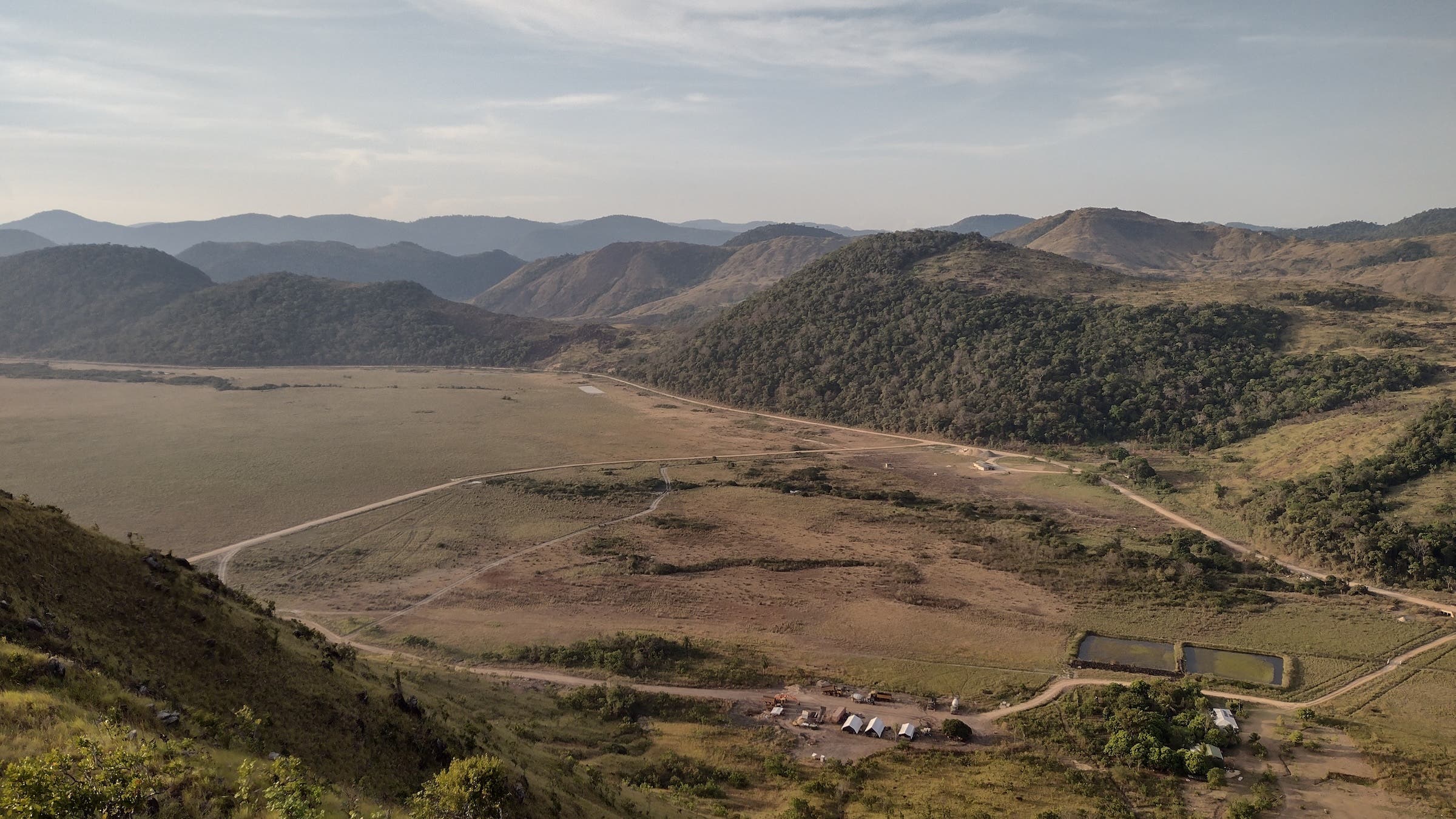
The sun was nearing the horizon when we started out for the last place. It was for an interview that had been tricky to arrange. The man, who I’ll call Raul, was dangerous. Some years earlier, he’d been accused of a crime while Guy was serving as village chief. When Guy had come to confront him, Raul threatened to kill him, then fled the village.
About a year later, he returned and settled uneasily back into village life. But his crime and the death threats were not the most dangerous thing about him.
Raul was Patamuna. He came from Monkey Mountain—the same town from which Neil Whitehead had been evacuated in 1992. And whenever anyone mentioned kanaima around here, their thoughts immediately went to Raul.
There were whispers in the village about he and his brother traveling instantly over vast distances—a known kanaima power. And once Raul and Egy had a conversation about kanaima plants, and Raul had told him things he could only have known if he’d used them.
By the time Egy and I reached Raul’s home, the sky was dark. The house was on the far outskirts of town, which is typical of kanaimas, who tend to be isolated. We greeted him, and he invited us to sit in plastic chairs on the concrete slab under a conical roof. A cool breeze washed off the savanna.
Raul was thin and wiry, with veins that showed on his arms and legs. He wore a soccer jersey and had an air of restrained violence. We brought him cigarettes and rum. He accepted these, then poured a glass of rum for each of us and himself. We sat down and drank.
Egy made small talk for a while, even though Raul already knew why we were here.
After a lull, Raul spoke.
“So how we going to start it now?” he asked. “What kind of story you want to hear?”
“Well,” I said cautiously, “I was talking to Egy about kanaima. He said maybe you had some stories about that.”
Raul was quiet for a minute, then began.
“The kanaima is a human being. It’s no kind of animal. It’s a human being.”
“Not a spirit?” I asked.
“No. Not a spirit. A human being, like us. But they have some strong bina they use to turn kanaima. If you use it, you close your eyes and you go to Lethem. After five minutes, you’ll feel your feet touching the ground. Then you open your eyes and you’ll be over there. That’s kanaima.
“Did you try it?”
“No, no, no,” he said. “A man who did try it told me.”
“So anybody could be a kanaima if they get the bina?” Egy asked.
“Yeah,” Raul said, “the plant is kanaima. Not the person. If you use it, you will start to be kanaima. If you can’t control it—if you have a weak mind—you will turn into kanaima.”
“Do you ever see it in the forest?” I asked.
“Yeah, I see the bina. And it whistles.”
“The plant whistles?” I asked.
“Yeah, the bina does whistle.”
Ice clinked in my glass. I sipped my rum. Egy did too. Raul hadn’t touched his.
“Do you know anyone killed by kanaima?” I asked.
“They killed my sister last year.”
Raul went on to tell the story about his sister. She left a bar late at night, and they found her the next day with bruising all along her back—a sign of kanaima attack. He told us about how his grandfather had killed many kanaima. He explained how the kanaima “kill you bad,” by cutting off your penis and cutting out your tongue. Then they put “wood in your belly.” He told us about all the people kanaima were killing near Monkey Mountain—old men, old ladies, little girls, big men.
“They can kill anybody,” Raul said.
“So what’s all this killing for?” Egy asked.
Raul thought about it for a minute.
“If you go drink rum,” he said, “you feel nice. You talk. You run your head. You want to drink more. You want to dance up. When kanaima kill you, they go bury you under the earth. When you’re rotten inside, they come and dig down and start sucking this thing that’s inside. Then they get stoned till they are drunk and they feel nice. That’s kanaima.”
We sat in silence.
Finally, Raul spoke.
“Kanaima story is a dangerous story,” he said. “People never believe it. People say you’re lying. They say there’s no kanaima. But kanaima is a human being, just like us.”
We finished our drinks. After we talked some more, it seemed like Raul had finished. So we bid him farewell, climbed on the motorcycle, and headed home.
To the north, fires burned on the savannah. To the south, the Kanuku Mountains stood black against the sky.
Racing through the night, the world around me felt beautiful and mysterious and terrifying, like the stories that stitched it together.
I’d come close enough to the world of the kanaima, maybe even to a kanaima himself. I knew if I stayed longer, it would only be a matter of time before I set my other foot inside. But as much as I loved hearing these stories, I realized that I didn’t want to live them through to their end.
It was time to take my own stories and go home.
