

Archeologists at Dry Tortugas have solved a 150-year-old mystery by locating the lost grave of George Tupper, an actor-turned-soldier who died during the 1873 yellow fever outbreak.
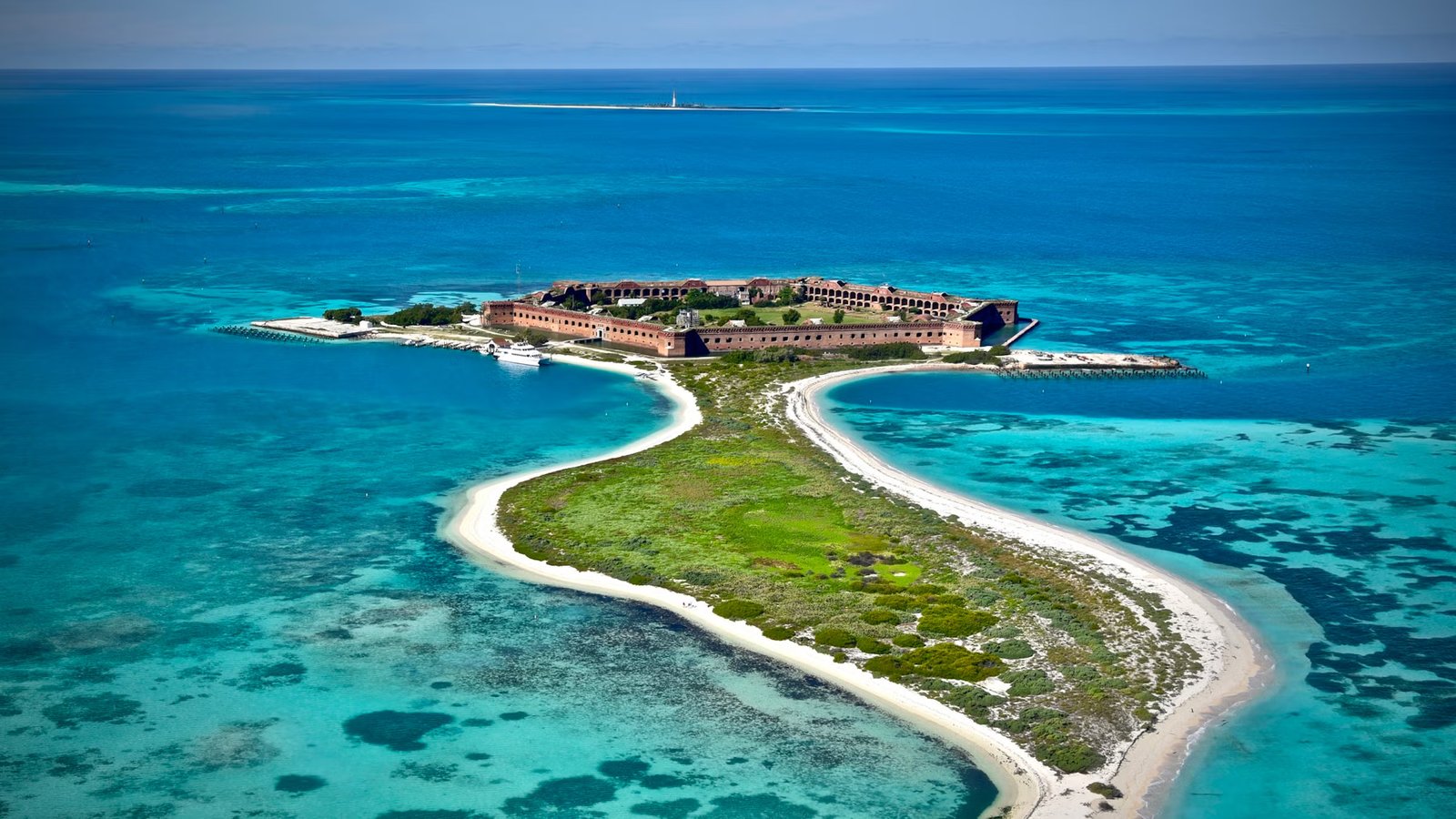
The only way to access Dry Tortugas National Park is by seaplane or boat (Photo: Jeffrey K Collins/Getty Images)
Published April 1, 2026 03:30PM
Archaeologists have solved a 150-year mystery at one of the nation’s most remote national parks. A team of National Park Service (NPS) archaeologists announced on March 31 that they found the lost grave of George Tupper, a soldier who died in 1873 at Dry Tortugas National Park. Tupper is the only known service member to have been buried within the walls of the park’s historic military Fort Jefferson.
Dry Tortugas is one of the most remote national parks in the country. Composed of seven small islands and coral reefs, the park lies 70 miles west of Key West, Florida, and is accessible only by boat or seaplane. At the heart of Dry Tortugas is Fort Jefferson, a 19th-century U.S. military post that the Union used during the Civil War.
“Locating Private Tupper’s original grave allows us to honor him and the service members who lived and served at Dry Tortugas,” Josh Marano, NPS archeologist, said in a statement. “It is also a great reminder of why careful survey work before projects is essential.”
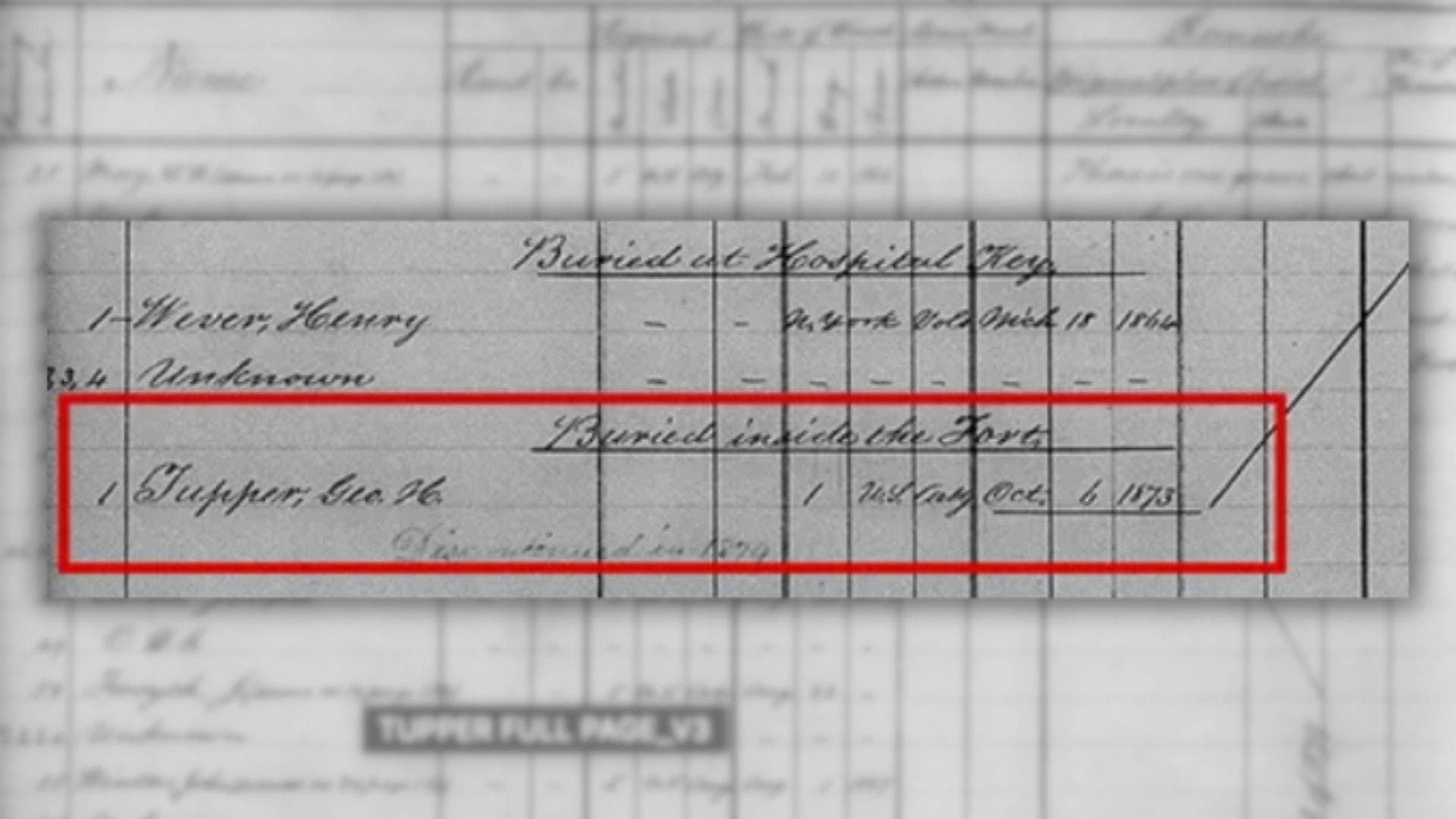
Army records describe Tupper as a grey-eyed 22-year-old originally from Boston, Massachusetts. After enlisting in 1872, he served at Fort Jefferson. Tupper died during the 1873 yellow fever outbreak—one of the deadliest epidemics in American history. His death, just ten days shy of his first year of service, occurred as a hurricane struck the remote island. Due to the storm, Tupper’s colleagues were unable to bury him in the Fort Cemetery.
“The sea was too rough, and the storm too violent to risk life in the attempt to bury him at Bird Key [cemetery], and the commanding officer gave orders to dig a grave for him at the fort,” read a newspaper clipping believed to describe Tupper’s death. “In the midst of the preparations for the burial, the hurricane swept over the fort. The dead soldier was hurriedly lowered into the grave, and everyone took to the shelter.”
Historical records noted that Tupper was buried in a “lime pit, near the parade [procession grounds], being the only remains buried within the fort limits.” At an unknown time, Tupper was later exhumed and reinterred at Fort Barrancas National Cemetery in Pensacola, Florida.
His original burial ground, however, was lost to history.
That is, until June 2024, when archaeologists surveyed the grounds of Fort Jefferson to install a new radio tower. Using ground-penetrating radar, researchers found an empty grave they believe to have belonged to Tupper. The team also recovered centuries-old artifacts during their survey, including buttons, marbles, bullets, and clay smoking pipes.
“The identification of Private Tupper’s burial site underscores the value of this work. More importantly, it allows Dry Tortugas National Park to share the story of a young soldier whose life—and death—became part of the fort’s history,” NPS wrote on its website. “Private George Tupper served less than a year at Fort Jefferson. His story now helps visitors understand the human experience behind the brick walls of the fort.”
Dry Tortuga is also home to an underwater hospital and cemetery located on a submerged island near Garden Key. The area served as a quarantine hospital for yellow fever patients between 1890 and 1900, before climate change and hurricanes inevitably overwhelmed the island.
The project is part of an ongoing mission to better understand the history of America’s remote national park, and to acknowledge those who died there. U.S. Army records indicate that at least 83 people died at Fort Jefferson. NPS archaeologists, however, have identified more than 200 people.
